Death metal vets Master remain furious, cynical on 11th album ‘The New Elite’

If you don’t like music that’s occasionally irritated and pissy, might I suggest you stop listening to metal. This is the perfect medium for lashing out, finding a target and honing in for the kill, doing what one can to do as much psychological damage as humanly possible to its target. It’s part of what makes metal so damn cathartic, and if you’re too sensitive for that part of it, get out now.

Before he went off the deep end and sunk into the ocean, Dave Mustaine was always a fun guy to hear rip apart his victims, and early Megadeth material is as awesome to hear for its thrash goodness as it is for Mustaine’s diatribes. Withered always has done a fine job taking on societal woes and putting a vicious crunch behind their message. While his targets may be different, Leviathan’s Jef Whitehead always has been masterful blistering his own personal opposition, and you come out of his songs with no mystery what he plans to do to satisfy his wrath. These approaches may be dangerous to an extent, but the music should help you relate and adjust.
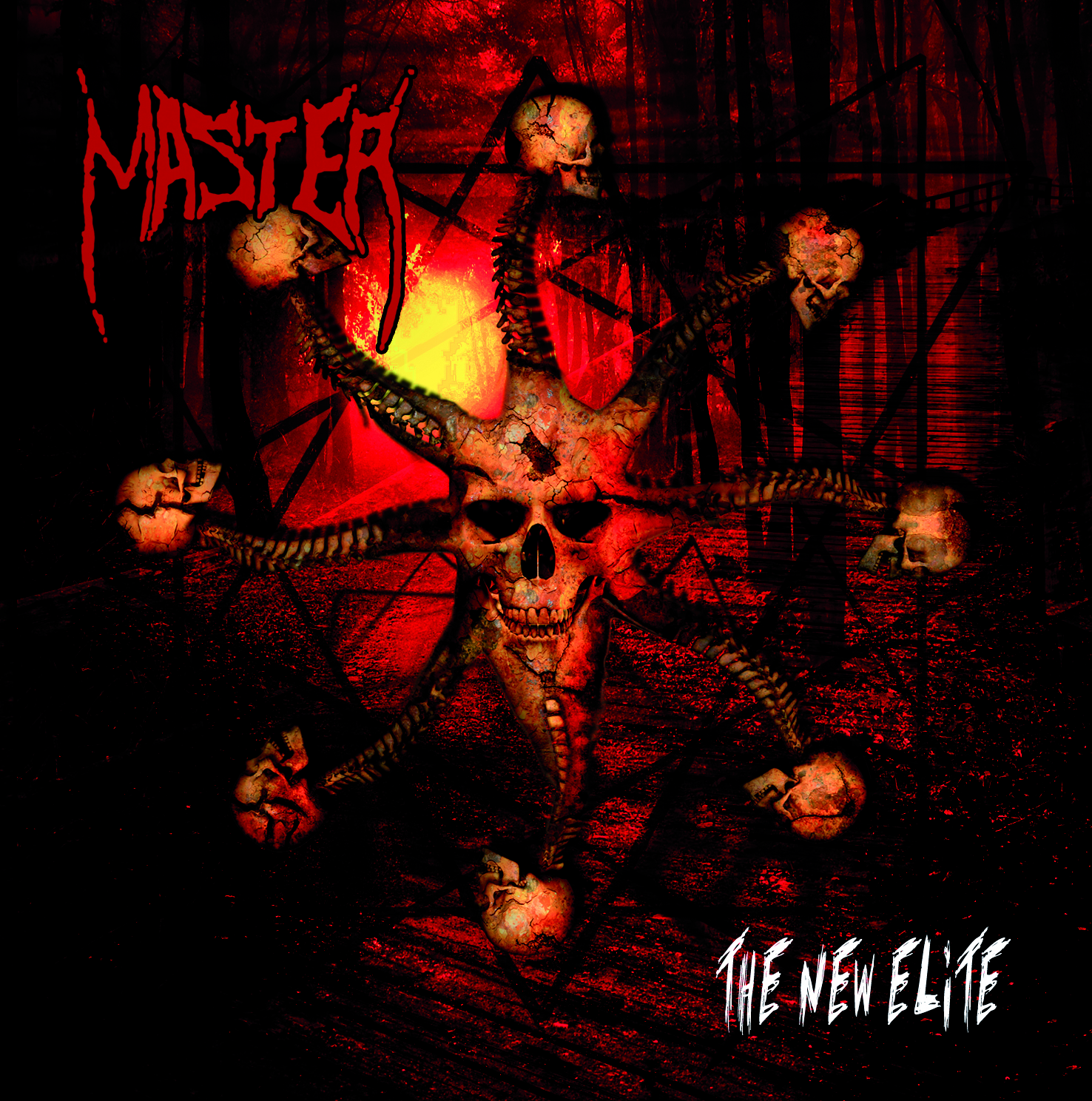
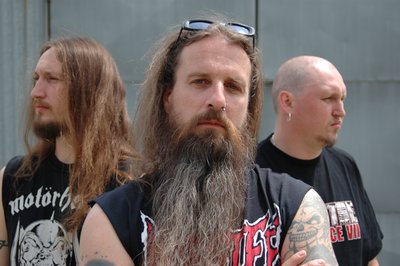
One of my favorite miserable bastards ever is Paul Speckmann, who has been fronting Master seemingly since the dawn of time and never is at a loss for words. Be it societal, religious, or political oppression, Speckmann always takes on his distaste with a clenched fist and deathly howl, and now 11 albums and nearly three decades into his career with this band, he’s hardly slowing down. The band’s latest album “The New Elite” follows 2010’s excellent “The Human Machine,” itself a pretty direct hit against the powers that be that he sees as ruling our every step. Speckmann refuses to have his wrists be put into chains and his motives questioned, and he’s absolutely blistering on this new record.

I imagine this is the point where we address that, “Hey, these guys have been around a long time, and isn’t it amazing they’re so furious,” thing. Look, Master never let up at all. Through their various trials and tribulations as a band, they’ve kept things pretty nasty. Maybe not every record has been a home run, but their intensity and anger never could be questioned. So if you merely want to judge “The New Elite” compared to other bands of their era, there’s pretty much no contest. But if you want to throw Master into the pool of young death metal artists who are trying to carry the genre, those kids mostly be eaten alive by the veterans. These guys remain that hungry and punishing.

While they don’t get nearly enough credit for this, Master is one of the original bands that helped develop the death metal template. Their sound remains grisly and rough around the edges, and there’s also some punk and thrash blended in just for good measure. Speckmann’s vocals are full of spite and protest, and his undeniable charisma as a frontman is part of what keeps him so refreshing to hear. The other part is his lyrical content, that never pulls punches or kicks and certainly would not be taken so kindly by government officials or clergy.

The same lineup that’s been recording as Master since 2004’s “The Spirit of the West” is back for “Elite,” that being Speckmann (vocals/bass), Zdenĕk Pradlovský (drums), and Alex “93” Nejezchleba. They sound as tight and hammering as ever, and on a production note, this record sounds as good as anything they’ve ever put out. They erupt with the menacing title track, that grabs you right out of the gate and drags you to “Rise Up and Fight,” a thrashy, throaty puncher with some sweet dual guitar work; grindy “Remove the Knife”; “Smile As You’re Told,” a cynical, pissed off look at how life’s great atrocities play out in our very living rooms, with Speckmann sneering, “Sit back and watch with your remote control!”

“Redirect the Evil” opens with a bit of a shuffle before exploding into a lightning fast assault, and that takes us into “Out of Control,” a song that laments the world’s dangerous power struggles and war mongering, with Speckmann warning, “There will be no one left alive.” “As Two Worlds Collide” and “Guide Yourself” get into thrashier territory, while “New Reforms” adds some mud and sludge into the pot; “Souls to Dissuade” opens with a thick bassline that bubbles over into a Prong-like assault and some beastly, catchy melodies; and closer “Twist of Fate” is a total storm, with relentless blast beats, some cool loopy lead guitar work, and Speckmann wrestling over the emotions of someone facing execution, knowing only death will silence his inner voices and turmoil. It’s a pretty heavy note on which to conclude the album.

Master’s always been a really reliable source for open-wound, angry death metal, and they’ve never buckled under the pressure to get glossier or more accessible. Their scars and warts are there in public display, their message is ominous and sobering, and their metallic assault is unforgiving. Let’s hope Master never change a bit, and knowing their history, it’s pretty certain they won’t.

For more on the band, go here: master-speckmetal.com

To buy the album, go here: http://pulverised.bigcartel.com/product/master-the-new-elite-super-jewel-box-cd

For more on the label, go here: http://www.pulverised.net/
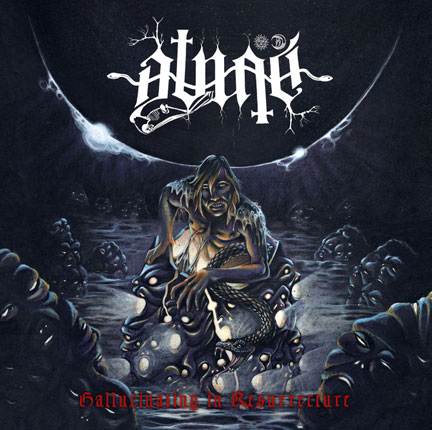
Binah’s ‘Hallucinating in Resurrecture’ mixes old-school death and weirdness

If our modern crop of metal bands do not slow down, I soon am going to have no more money left and will have to ignore all of my bills. Is that what everyone wants?

OK, so that’s a pretty ridiculous thing to say. First, I never could go broke buying all the new music I really want because I have some pretty stubborn tastes, and second, buying music isn’t all that expensive. But nonetheless, I have found myself investing my money in way more new bands lately, and that’s a sign that creativity is at an apex, and my attention span is at an all-time high. It’s a great problem to have. The fact I am paying this close of attention to anything is a miracle.

I now have another new band that’s gotten me excited, this time on the death metal side of things. U.K. trio Binah have a fairly unexciting name, but that doesn’t matter since their infernal, bizarre, and suffocating death metal is such a hellish blast to witness. From my first visit with their debut album “Hallucinating in Resurrecture,” I was captivated by their sound, as it’s uglier, meaner, and far more deadly that much of what other bands claiming to represent death metal pull off these days. With each subsequent listen, my excitement for this band bubbled to the surface, and they’re one of the freshest, more promising new groups I’ve heard this year.

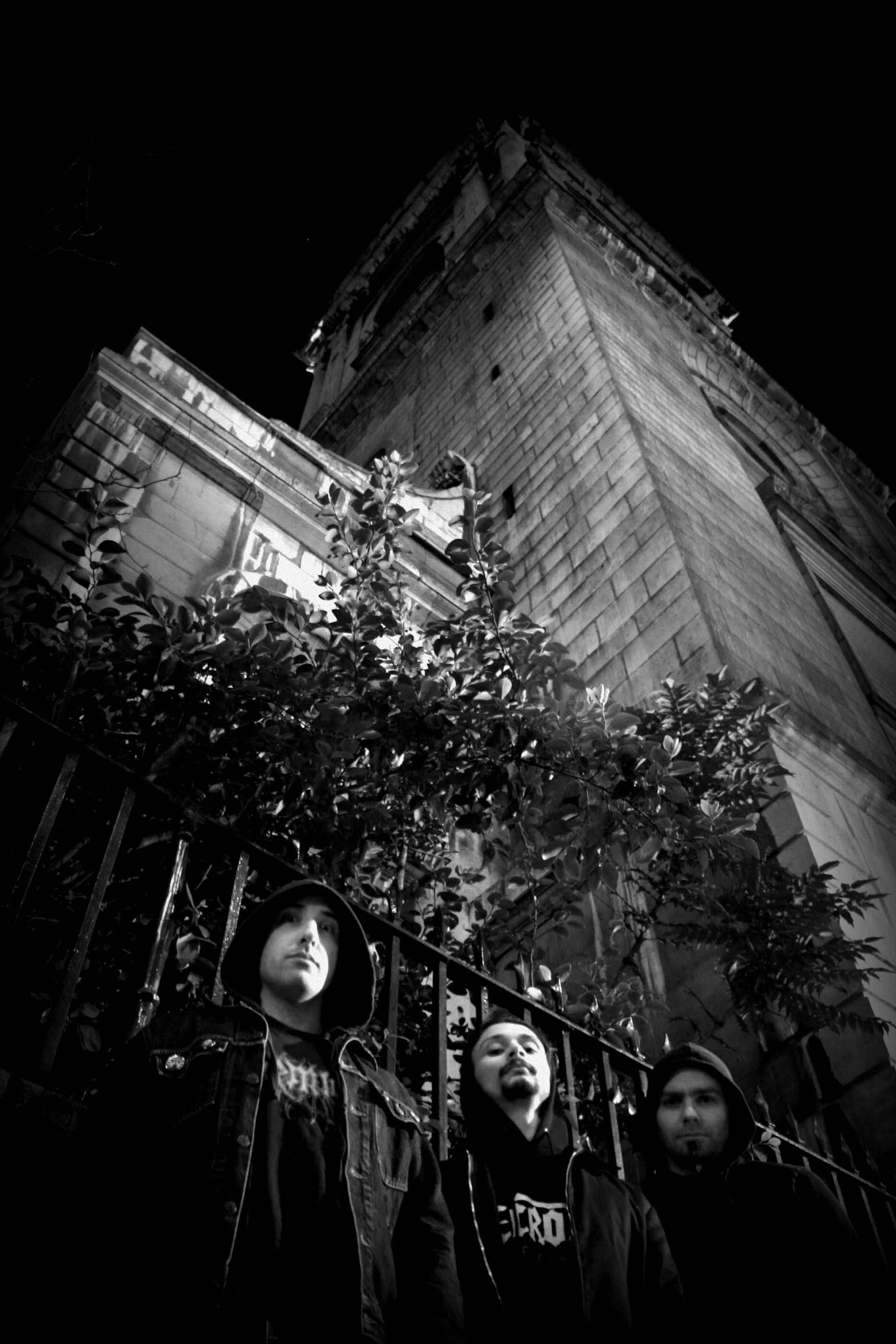
Binah is comprised of Ilia R.G. (vocals, guitars, synth), Aort (guitar, bass, synth), and A. Carrier (drums), none of them newcomers to metal, and their music sounds more like the bands that helped birth this genre. You can hear some Entombed, Morbid Angel and Demigod, as well as hints of other bands such as Portal, Autopsy, and Hooded Menace, and yeah, while there are plenty of other bands going back in time to try to revive the genre’s roots, Binah don’t sound like they’re doing this as some sort of calculated cash-in. This shit is for real, and it’ll leave you in a pile of your own bones when it’s done picking away at your flesh. But on top of simply sounding legitimately influenced by the early days, they inject a sense of weirdness that’s fairly subtle but definitely is present.

The album has a really strange intro with “Into the Psychomanteum,” an instrumental that sounds like the lead-in to a magic show, but then things get ugly on “Morbid Obumbration,” a muddy, doomy, slowly delivered piece that lurches along. The growls are effective and vicious, and eventually the leads guitar work sets in with a fury, and pace kicks up a few notches. “A New Rotten Dawn” has some creepy synth work behind the chaos, and it folds in some excellent crunch and fiery growls, making it one of the most satisfying tracks on the album. “The Emissary” tears out of a doom-encrusted open, and its muddy make up eventually leads to some fast, aggressive playing that is just flooring. “Absorption Into the Unearthly” and “Dissolution” are pretty fast songs, with devastating drum work, and they’re more to the point than the other songs on here. The title track appears to pay some homage to Celtic Frost with its calculated and monstrous display of blackened death, and it maintains an utterly ominous feel through its 7:22 running time. “Crepuscular Transcendence” is the other epic cut at 7:16, and it’s heavy, sludgy, and crushing. It’s an example of how good these guys are at maintaining a sense of savagery and destruction over a longer piece and never running into monotony. They utterly kill the entire time.

I don’t know that Binah are going to become leaders of the underground death metal movement, but this debut album certainly seems to indicate they’re capable of serving in that role. “Hallucinating” is a rock-solid effort from a new band, and it deserves your attention if you’re into the wormiest, most gut-wrenching and uncompromising of death’s minions. Binah is off to a great start, and hopefully things just get deadlier from here on out.

For more on the band, go here: http://www.facebook.com/pages/Binah/304245586256643

To buy the album, go here: http://www.darkdescentrecords.com/store/index.php?main_page=product_info&cPath=1&products_id=2017&zenid=ao2emhlh5ue8gjufqq0hc0pp07

For more on the label, go here: http://www.darkdescentrecords.com/

And here: http://www.mesacounojo.com/

Land of Decay conjures noise with Gates, Thisquietarmy, Cultus Sabbati cassettes

Cultus Sabbati … we think

It’s been one of those weeks. Quite busy. No rest at all. The more you get done, the more it seems you have left to do. I’m physically and mentally exhausted right now, but that’s also a good thing because it means some real, tangible work has been completed. And a lot remains to be finished.

When I have a week like that, I need to hear something that both soothes and stimulates me. I don’t normally turn to testosterone-driven music or black metal or something vicious, because it’s almost too much. I need my brain coated in something adorned in creativity that lets me open my mind, focus, and handle the work in front of me. It can’t be distracting. I’m already racing, and that just makes me panic. But something that works alongside of me, that’s the elixir.

So it was a nice week to get a slew of releases from Land of Decay, a label that is awash with music that can help you escape, chill out, lose your mind, or handle your business. Their most notable band Locrian (who recently signed with Relapse, and whose members own Land of Talk) is one I often turn to when I’m facing a heap of work and want music that’ll keep me motivated and excited but not ready to take off someone’s head with a chainsaw. Another band of that ilk is Toronto’s Nadja, whose dreamy transmissions would sound right at home on Land of Decay. The three releases Land of Decay have ready for you, all in cassette form, can be labeled ambient and drone, but all approach that unique style in a completely different way.

I’ll start off with my favorite of this trio of albums, that being “The Hagiography of Baba Yaga” by the mysterious shadow creatures that are Cultus Sabbati. Like bands such as FALSE and Bosse-de-Nage we talked about last week, this band prefers not to tip their hands, show their faces, and utter a word about themselves. They claim influence such as dark forests, empty spaces, decaying churches and more of that type of thing, and hearing their music, it’s impossible to doubt these things. In fact, it often sounds like the band creates their dark emissions in those spots.

The six-track album is dark and nightmarish, with simmering growls lurking beneath the surface like a growling ghoul in the woods, noise and feedback storms, static drums, and completely hellish fog. The second side of the cassette is a bit more spacey and wooshing, but it’s no less scary and effective. The whole thing feels like some sort of séance or mass a regular human could not comprehend or recreate, and I found most of the music quite unsettling. That’s all a positive for me, because every time this music took a terrifying turn, it kept me on edge and alert, as I knew I couldn’t let my guard down. I’ve enjoyed all of this group’s work, and I’d put up these witching tales along with anything else they’ve done (that you can download from their site, listed below).

For more on the band, go here: http://cultussabbati.org/

To buy the album, go here: http://www.landofdecay.bigcartel.com/product/lod-0-cultus-sabbai

I mentioned Nadja before, and that band’s Aidan Baker has collaborated with Eric Quach, the Montreal-based musician who comprises Thisquietarmy. Under this moniker, Quach has released a pretty hefty collection of music (his site has a really comprehensive list of what he’s done), and his Land of Decay release is a four-track helping called “Phantom Limbs” that is probably the easiest to digest of these three new releases. But that doesn’t mean what Quach does here isn’t intense and totally noteworthy, and much of what TQA accomplishes seems to originate in the cosmos.

The other thing that ties this effort together are the song titles. “Phantom Eye,” “Phantom Brain,” “Phantom Voltage,” “Phantom Pain” not only sound really poetic when spoken in list form, but they also acts as a pretty cool little story that spits fuzz and hisses noise throughout its duration. The guitar often stabs and pokes at you, pockets of melody arise and eventually fade into the ether, things go off-hinge and the music sounds like it’s thinning into nothingness, like on the closing moments of “Brain,” and the whole thing ends with a claustrophobic sense of being strapped into an alien spaceship for a land you do not know and probably do not hope to visit. It’s a really neat listen, and it helped that my first experience with this effort was during morning fog, when nature itself seemed quite disoriented. I haven’t heard much of TQA before “Phantom Limbs,” so it’s time for me to dig deeper into that expansive, impressive back catalog.

For more on the band, go here: http://www.thisquietarmy.com/

To buy the album, go here: http://www.landofdecay.bigcartel.com/product/lod-0-thisquietarmy

I love a nice avalanche of uncompromising madness, which is why I identify with and often enthusiastically embrace bands as thorny and bizarre as WOLD. Some people furiously hate them, and I get why, but I can lie down and relax listening to them. I think they help what’s going on in my head find places to live. I felt the same way when taking on “Eintram” from Gates. This thing aims to suffocate you, and the force over you is so heavy and impossible to conquer that you have no choice but to submit to the darkness. You might be wondering how music I described in this manner can help me do my work. It makes sense to me. Trust me. I sort of look at it like no matter what I have in front of me, it cannot be more immersive and drowning as what Gates unleash.

The three-track album is the loudest of the three. Yeah, Cultus Sabbati are heavy, too, but they’re scarier and more inclined to burn you alive, while Gates are satisfied collapsing your chest with immense power. The swirling of drone and guitar-based fire completely ignite into a volcanic eruption on opener “Glimpse of Overlapping Dimensions,” clobbering your senses and dumping a truck full of angry bees and cement  on your face. “Forest Passageway” bristles at first, but with an eerie calm, before some melodic black metal-style clashing takes center stage, and a chewed-up razor goes overtop to mar any beauty. Closer “Birds Plunging Through the Wall of the Ocean” kind of sounds exactly like that. You probably have to achieve a dream state to see such a thing, but they do their best bringing that syrupy noise vision to life. This is a killer collection that’ll do a fair amount of damage to both your hearing and your psyche. As for me, it’s too late for both. So I forge ahead with my work.

For more on the band, go here: http://gatesritual.bandcamp.com/

To get the album, go here: http://www.landofdecay.bigcartel.com/product/lod-0-gates

To get a package with all three at a discount, go here: http://www.landofdecay.bigcartel.com/product/june-2012-releases-cultus-sabbati-gates-this-quietarmy-cs

For more on the label, go here: http://lndofdecay.blogspot.com/

Deathspell Omega dial back the madness, still obliterate souls on new EP ‘Drought’

It’s time for us to briefly touch on two topics from last week: weirdness and the French. Those topics came up when discussing the latest releases from Bosse-de-Nage and Gojira, and actually, both could be used to talk about each of those bands. See how that works?

One of the bands mentioned last week was weirdo, experimental black metal band Deathspell Omega, a French group that’s been making some of the most unsettling, strangest sounds for years now, typically to much acclaim. Their albums are sprawling with normally epic-length songs, a lot of bizarre goings on, and plenty of spiritual (in the dark sense by way of metaphysical satanism) and philosophical ideals swirling in their cyclone of chaos. They are not an easy band to get to know, because their sound takes some adjustment for most people since it is so unconventional. They also aren’t easy to know personally as they operate in the shadows.

Yeah, we know the creative names of the people behind Deathspell Omega, but that’s about all. We don’t have press photos, very many interviews, live shows or anything like that. It seems their recordings serve the purpose of being the band’s entire statement, and nothing beyond that is a fitting vehicle for what they have to say or mean to the universe. That also helps add to their intrigue. The fact they also treat their satanic beliefs in the metaphysical sense and approach this area of thinking seriously and not, like, some circus sideshow also may be unsettling to some people who fear such subject matter. It no doubt can be both moving and frightening. Take a record such as their masterpiece, 2004’s “Si Monumentum Requires, Circumspice,” and the choral chants and furious emissions contained on it, and it no doubt can chase you down a dark hall, begging for mercy.

But that’s not all the band does well, and their new EP “Drought” aims to prove that. When compared to the rest of the band’s massive discography, this is pretty bare bones, a cut-and-dried, stripped-down collection musically, though it still will send you into dizzy spells and hysterics if you’re not accustomed to their style. If you are a longtime listener, this will seem like the band just throwing down and showing what they can do when they drive straight ahead, with only a few minutes devoted to each song. It still sounds unmistakably like Deathspell Omega, just a shortened, reeled-in version. Sure, you could argue there were shorter songs on their last full-length “Paracletus,” but the tracks all worked together to form a whole. These all work as singular entities, thus why they seem so different from a compositional standpoint.

The EP’s also awfully good and just flies by in no time. My first visit, I was stunned when the thing faded so quickly, and I was sitting there like an idiot waiting for a sixth track that didn’t exist. But that’s the sign of quality, too, so yeah, less is more here. “Fiery Serpents” is your opener, and you’ll find something here that’s typically foreign to a Deathspell Omega recording: discernable, catchy melody. No really, it’s there, and it feels a little punk rock/post-rock in its glory, never taking away from the band’s savagery. “Scorpions and Drought” is a little trickier, as the drums just blow up in your face, the fury is allowed to bubble over, and words are practically spat out along with snake venom. “Sand” is more calculated, with added melody, weird guitar stabs, and moaned vocals that sound both pained and desperate. “Abrasive Swirling Murk” has a misleading title because while you may be expecting a tonado of sound, you instead are met with hammer to the temple and outright violence. Closer “The Crackled Book of Life” is the purest Deathspell track on here, as it rides on off-kilter rhythms, horns, fucked up strings, spiritual chants, and pure sickness. Then, as quickly as they arrived, they’re gone.

This isn’t a wholly representative Deathspell Omega offering, though it may be a good starting point for a newcomer who needs to get up to speed with the sound and philosophy before tackling one of the band’s full-lengths. I find it a fun, satisfying little effort that doesn’t quite rack your brain like their other mini-releases (last year’s “Diabolus Absconditus” still has me dissecting text) but also gives you a nice Deathspell fix. Psyched to hear something fuller from the band soon, but this will do for now.

For more on the band, go here: http://www.deathspellomega.com/

To buy the album, go here: http://e-shop.season-of-mist.com/en/bands/deathspell-omega/2901

For more on the label, go here: http://www.season-of-mist.com/

Witchsorrow dig deep into doom’s muck for murky, world-ending ‘God Curse Us’

You’d like to think that we’ve come far as a society, as a people, when we consider that most parts of the world do not hunt down women and try them for witchcraft any longer. But really, when you consider the entire lifespan of our planet (people who think it’s only a couple-thousand years old and that there were no dinosaurs, you views are not included), it wasn’t all that long ago that women were put up on a stake and burned to death for really ridiculous things that were chalked up to witchcraft. I wonder how some of accusing throngs would react to, say, the Kardashians. Burn the witches! Actually…

Not to go all socio-political on your asses, but, at least in the United States, we still prevent people who love each other from marrying, we’d still prefer to see some classes of people not be able to be treated if they come down with medical conditions, and we’d still like to ban people from our neighborhoods based on their country of origin or religion, so have we really come all that far? We still call out witches on a daily basis. We just call them something different now.

When U.K. doom band Witchsorrow emerged in 2010 with their self-titled debut album, they probably left some people amused by their fixation on the history of witches in our midst and the trials that led to many of their executions. I’m sure all were contested fairly. Just like I’m sure every law enforcement officer in Arizona who pulls someone over because he/she suspects a person may be an illegal immigrant will do so purely on professional and security reasons. So yeah, they drew upon a rather hate-filled, weird era of our history, but if you take the trials they recreate and retell, you can apply them today. Who would be the modern-day version of Elizabeth Clarke? Maybe it would take more than one individual to fill that role, but it can apply. Therefore, Witchsorrow’s content was quite relevant to what’s going on today.

The band is back with their second record “God Curse Us,” a collection that remains loyal to the Electric Wizard/Cathedral/Black Sabbath path, but also adds a bit more of their own personality to the mix. Also, while their songs still grasp topics such as persecution and death, it sounds like they’ve shifted toward our own as a race, and not so much those of the witches. This is a dark, no-nonsense affair that seems to have demise lurking at every turn, and Witchsorrow certainly do not weave a sort of happy-ending, overcome-all way out that lets you breathe a sigh of relief. We’re pretty much going down, with no helping hand to lift us from the abyss.

If you were along for the ride on Witchsorrow’s debut, what you’ll find here is basically the same, only with more refined songwriting and some musical twists and turns. This thing is delivered slowly and brutally, and vocalist Necroskull typically delivers his words in an unwavering tone that doesn’t exactly bristle with life but fits the music nonetheless. When he growls, that’s when he really comes alive as a monstrous singer, though I don’t have any issues personally with his clean vocals. They’re rather plain, but they work just fine. His guitar work is bluesy and smoking, and the rhythm section of bassist Emily Witch and drummer David Wilbrahammer keep the low end muddy, bruising, and thick.

Tearing open this record is “Aurora Atra,” a buzzing, foggy serving of doom that keeps things sludgy and calculating, as you’d expect from this band and genre, but eventually they snap into a gallop, throatier vocals erupt, and a slick supporting melody line travels underneath. That leads into the killer title track, constructed in much the same way with a slower intro and that eventually erupts into heaviness. The chorus is simple but should put a smirk on your face as Necroskull takes Tiny Tim’s innocent, hopeful words from “A Christmas Carol” and drives them to hell as he yowls, “God curse us, every one.” “Masters of Nothing” follows the same suit as the first two songs, taking its time to sink into your pore and then ripping things apart about six minutes in. It hits a pretty nasty groove, with Necroskull shouting, “The kings are dead!” “Ab Antiquo” lets you breathe a bit, as it’s a ghostly, lurking interlude, and it trickles nicely into “Megiddo,” a hulking track soaked in Armageddon, as its Sabbathy, nasty drubbing tempo grounds you into pulp. Then “Breaking the Lore” pops out of nowhere, bursting wide open with a fast, violent pace, a real sense of urgency, and mad dash across the rocks. “Den of Serpents” brings things to a naturally bloody, mucky conclusion, with trippy guitar work, shouts of, “You are cursed!” and a storm-bringing jam session that lets the song and disc burn out nicely. The track doesn’t even seem half as long as its 12-minute running time.

Witchsorrow’s sophomore album certainly builds on the promise of their debut, and they’re growing enough as musicians and songwriters to indicate they have quite a future ahead. I’d still like to hear them add even more personal touches to their music and put their own unique stamp on this style of doom metal, but they’re doing an admirable job establishing a strong early catalog. I think this band has a masterpiece in them, and I look forward to them figuring out how to make that come to life.

For more on the band, go here: http://www.facebook.com/witchsorrowdoom

To buy the album, go here: http://www.indiemerchstore.com/item/14953/

For more on the label, go here: http://www.metalblade.com/english/content.php

And here: http://riseaboverecords.com/

Bosse-de-Nage’s damaged black metal evolves even further on messed-up ‘III’

Having a deep level of mystery is something absent from today’s society. We live in a 24-hour news cycle that’s even too slow for some people. Everyone else’s business is our own, unless it’s our own lives that are being compromised, then it’s a crime at the highest level. How dare someone look at me? Great me! And chances are that, barring a major catastrophe that knocks us all off the grid, this is only going to get worse.

I said similar things last year when I discussed the debut album from FALSE, a Minnesota-based black metal band that, to this day, doesn’t have a whole lot circulating out there about themselves. Their preference to hide in the shadows was admirable and added to their intrigue, and as I said then, I hope they keep it that way. Why do we need to know their shit? Another band of that ilk is Bay Area black metal psychotics Bosse-de-Nage, who have kept their shroud over themselves for three records now. They don’t do interviews and participate in photo shoots, and it’s a rarity when they do a live show. Their whole aura is self-contained, and the fact that they make such fucked up music that can scar even the sickest of individuals just amplifies that mystery. They seem to be the type, based on the music, that when police drag a serial killer out of a dank basement, that you’d expect it to be one of the people responsible for sounds such as these. But it’s never the people we suspect, is it?

For their third album “III,” that follows their self-titled debut and last year’s “ii,” both released on Flenser Records (they’ll also handle the vinyl version of this), the band jumped to Profound Lore, probably the only other logical spot for their music. They holed up wherever it is they dream up this stuff and came out with a six-track album that’s like nothing you’ve heard before. You can say the exact same thing about their other two albums as well, as they’ve always found a way to create a unique unholy abomination, burn it down, and reanimate it in a different form from the ashes. They’ve always been black metal to a point, as that’s kind of their base, but they always shoot out in other directions so that no label can properly explain them.

While Bosse-de-Nage always were sort of angular and mentally progressive, they really up the ante on “III.” You’ve probably heard the Slint comparisons, and they are pretty accurate, but the guys just kind of go like a runaway car down indie rock’s unpaved, ramshackle highways, not trying to sound pretty or trendy, but instead taking a style that’s largely gone more mainstream, and beating it with a claw hammer. There are many parts on this record where, when you hear the compositions, you expect some throaty clean wails to come forth, but they keep things deadly and maniacal. Vocalist B. still has the knack for classic screamo bloodletting and emotionally unbalanced metallic shrieking, and every time he opens his mouth, you want to call someone to get him emergency medication. The vocals are that penetrating and convincing. I’ve felt this way about every one of the band’s records, really, and musically I’ve always been surprised and stimulated by what they produce. There is no band that sounds remotely like Bosse-de-Nage. No one else could pull off something this deranged and real.

One thing I noticed right away from “III” is that Marie is nowhere to be found. She was in a cage on “ii” and pissing upon a count on their debut, and unless she’s worked into the lyrics somewhere instead (I haven’t seen them yet and sure as hell can’t by ear decipher every word uttered on this album), she’s oddly missing. But that’s the only thing I miss, because the rest of this is so great, so emotionally draining, that I can’t imagine why Marie’s absence would be a hang-up.

“The Arborist” is our first taste of this odd new concoction, as the band launches into a spacious, exciting journey that’s hammered home by the tortured, howled vocals that emanate from B.’s mouth. “Desuetude” goes even more for the off-kilter rock sound, and it even folds in some proggy sections and cascading melodies, and it’s a track that should capture and keep your attention front to back. “Perceive There a Silence” is even more interesting as the music equals the passion emitted in the vocals. It’s also a really strong indication as to just how good these guys are as players, and the fact they have a really effective singer is a giant, flashing red arrow pointing out why this band is so special. “Cells” has some noise drone, military drumming, and spoken vocals, and it should be pointed out that if you spend time with lyrics to any Bosse-de-Nage album, they read like deranged poetry. Eventually this claustrophobic monster detonates with anguished vocals that show signs of a mental breakdown, and it leads to a pair of closing epics.

“The God Ennui” runs 10:21 and starts inauspiciously enough, with a quiet tone and a sense of calm that you just know isn’t going to last. And it doesn’t. There is more recitation of poetry that sounds dark and foreboding, and unlike a lot of other bands that try this sort of thing, it comes off as unsettling and not silly. Eventually, the song bubbles over and an emotional outpouring comes forth. “An Ideal Ledge” sounds like it’s going to start as serenely as “God,” but it’s just mere moments before that idea is thrashed and bloodied, as the whole thing ignites and blood rushes to the surface. But the whole thing has such a weird ending. About halfway through, the band hits on a progression that sounds like it’s building toward a volcanic, cathartic finish, but it never happens. The band keeps on that same repetitious pace until the whole thing kind of fades to black. Some may find it dissatisfying, but I think it’s so Bosse-de-Nage. You never know what’s coming or what they’re thinking. It’s unconventional but totally logical for them.

The damaged, scarred imaginations of these four shadows shouldn’t make you feel good and really won’t calm your nerves if you’re on edge. Bosse-de-Nage are not here to care for you or nurse you through your woes. They’re here to exploit them, dissect them, and piss them across your body, forcing you to endure the torture. This band is the embodiment of a meltdown, and while you might be safer far away from it, you won’t be able to resist experiencing the drama.

For more on the band (and their sweet web site), go here: http://bosse-de-nage.com/

To buy the album, go here: http://www.profoundlorerecords.com/products-page/plr-items/bosse-de-nage-iii/http://www.profoundlorerecords.com/products-page/plr-items/bosse-de-nage-iii/

For more on the label, go here: http://www.profoundlorerecords.com/

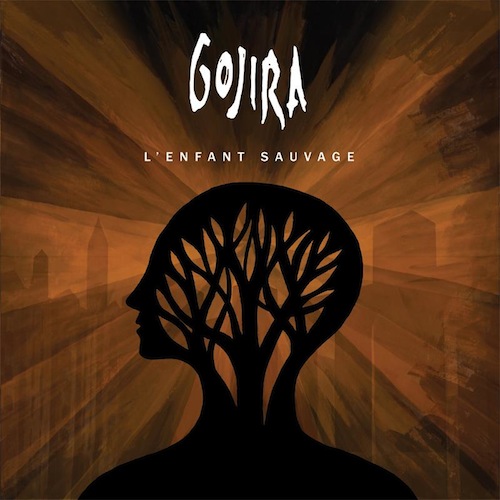
Gojira return to their earth-shaking ways with punishing album ‘L’Enfant Sauvage’

I don’t know what goes on in France that makes them a little more whacked out than the rest of the world. That’s at least as far as their metal is concerned. It seems like just about everything that country puts into play when it comes to extreme music is pretty out there, no matter what sub-genre it concerns, and you never get anything from that land’s artists that can be labeled conventional.

When it comes to black metal, how can one easily explain or digest bands such as Deathspell Omega, Blut Aus Nord and Glorior Belli, whose last album was kind of pulled back considering their past work but probably sounds pretty messed up to virgin ears. If you want to go with more mechanically minded musicians, how about the blasphemous industrial noise churned out by Blacklodge, one of the weirdest, loudest, and patience-challenging bands in any genre anywhere? There’s also Gojira.

Now, when we tackle the progressive death metal band that grabbed its name from one of the pronunciations given to the mighty Godzilla, it’s not quite the same confusion stew as those other bands. For one, they are massively more digestible on first listen, and apparently Metallica wasn’t too scared of these guys to take them out as a tour opener. Their melodies and hooks are there up front, and Gojira are far easier to understand than, say, Deathspell, but they are by no means conventional. Their work is heavy as hell, their tempos can be pretty violent, and they can be tricky, mathy and confusing, certainly rendering more than one listener with a titled head. Their music always has been wildly interesting and innovative, and on their fifth record “L’Enfant Sauvage,” they open things even more than before and come up with one of their best recordings yet.

I wasn’t entirely enthralled with “The Way of All Flesh,” their last album released way back in 2008. I can’t believe it’s been that long, actually. It’s not a bad record at all, really, but it never excited me the way “From Mars to Sirius,” their third record, did. It always seemed like this band — guitarist/vocalist Joe Duplantier, guitarist Christian Andreau, bassist Jean-Michel Labadie, drummer Mario Duplantier — was capable of a higher gear, but they never really seemed able to snap into it. That all changes on “Sauvage,” easily their most explosive album yet, a record that should catapult them from interesting mind-benders to metallic dominators.

You can hear that fire and hunger in their playing, especially when Joe Duplantier howls, “Go!” moments into opener “Explosia,” a tricky, ultra massive slab of power that builds to a strong breakdown that sounds like it could split open the Earth. The title cut is fast and aggressive, eventually becoming a little proggy and calculating, but even the scientific stuff going on here doesn’t undercut the quaking. “Liquid Fire” is more robotic, but not in a dull way at all, as the vocals are gruff but melodic, and eventually group singing is channeled through a Vocoder, transforming the song from machine-like to extraterrestrial (think Cynic). “Planned Obsolescence” goes back to being gut-busting and massive, with a fairly downtuned chorus and some cool programming to keep you guessing.

“Mouth of Kala” is one of the doomiest songs in their history, and it’s dressed with Apocalyptic horns and darkness; “The Gift of Guilt” has a sweet finger-tapped opening and eventually goes a little off the deep end with the weirdness; “Pain Is a Master” is practically its partner in sci-fi, boiling beaker madness, and it’s still taking some time to warm up to this track; “Born in Winter” pulls back a bit, with deeper vocals and a pretty interesting melodic progression that stands apart form the rest of the record; and “The Fall” spills string gloopiness, feedback, thick bass, and all-out heaviness into one pot, bringing this record to an end in the proper manner. It feels like head-bursting destruction.

A couple of just-OK songs aside, Gojira seems to have found their footing and are ready to make their statement as being one of metal’s go-to bands. They’re weird enough to satisfy those who don’t like run-of-the-mill independent metal, and they’re approachable enough that they’re bound to turn heads on the upcoming Lamb of God/Dethklok tour. “L’Enfant Sauvage” is fine work indeed, one that satisfies the hunger left over from “The Way of All Flesh.”

For more on the band, go here: http://gojira-music.com/

To buy the album, go here: http://gojira-music.com/buy

For more on the label, go here: http://www.roadrunnerrecords.com/

Black metal royalty Ihsahn continues pushing sonic boundaries on ‘Eremita’

Becoming legendarily great at something can be a hindrance. Michael Jordan was one of the greatest basketball players of all time, inspired an entire generation of kids to take up the sport, won six championships, and still has a shoe line that’s much sought after. But when he tried baseball and team management, he was the runny shits. Same goes for Wayne Gretzky, one of hockey’s finest players of all time who just couldn’t transfer his greatness to coaching. Yet people were shocked that these incredible athletes couldn’t take one aspect of their skill set and use it in other areas of their industry. Dominance created too-lofty hopes in others.

Sometimes it does transfer. To keep with the sports theme, Mario Lemieux was a magnificent hockey player and went on to become a successful owner of the team he saved a million times, the Pittsburgh Penguins. Or to music, John Lennon was a member of perhaps the most iconic band in the history of mankind The Beatles, yet he reinvented himself as a solo artist who had just as profound an impact on society, albeit in a very different manner than the Fab Four. Something about these people sparks greatness, and they simply don’t seem to know how to fail.

I’d also pin Vegard Sverre Tveitan, better known as Ihsahn, into that latter category. At one time, he fronted one of the most effective, well-known, infamous black metal bands of all time in Emperor, a band so well regarded that their U.S. tour a few years back was a thing of legend. Not something you stumble upon very often. While he’s tried his hands at other things outside his former band, never has he come as close to equaling his younger years than he has with his solo project. Part of what made his modern music so intriguing is that Ihsahn never has been comfortable to just rest on his black metal laurels and rake in cash from an already loyal fanbase. Instead he pushed and reinvented himself as an artist whose work must be considered separate from what he did in his legendary band because he’s accomplished that much with it.

Sure, some of what you came to know about Ihsahn from Emperor is on his new album “Eremita.” There remain threads of black metal that course through his music, and his creaky growl is pretty unmistakable. But he’s gone further toward the boundaries of prog and jazz with each release, and his fourth effort is his most varied and challenging yet. Even if you’re a fan of his other albums — 2006’s “The Adversary,” 2008’s “angL” and 2010’s “After” — you may be surprised by what you hear on this album. He really goes for it musically, and by aligning himself with guest musicians such as wacko free-thinker Devin Townsend, guitar wizard Jeff Loomis, and guest singers Einar Solberg (Leprous and live keys with Emperor) and Heidi Tveitan (his wife, who also played with him in Peccatum), he’s able to branch out into unexplored terrain with abandon and ambition. it’s easily his most interesting piece of music to date.

All of this growth and excitement to try new things also make the record a little tough to get close to at first. It took me a few listens to really wrap my head around these songs and, in some cases, enjoy them because everything is spread out over so much space and has so many things going on at the same time. In the case of closer “Departure,” it is the one Ihsahn song in his whole catalog that I enjoy the least (the portion that features Heidi aside). It’s feels kind of muddy and knuckle-draggy and comes off as a sloppy stab at nu-metal. As for the rest of the songs, they’ve grown on me significantly, and I keep hearing new things in these creations each time back.

Ihsahn handles the bulk of the instruments as usual, playing keyboards, bass, and, of course, guitar, at which he’s always been astonishingly unstoppable. He’s now at about half growl, half clean singing, and he’s more than capable of both (though Townsend also helps on “Introspection”). Tobias Ørnes Andersen takes drums, and Jorgen Munkeby is back on sax, as his work in particular plays a huge role on these songs. To put it lightly, he’s everywhere, yet if you’re a fan of his regular band Shining (the Nordic one, not the Swedish suicide enthusiasts), he may seem a little in control of himself. He’s fun to hear play and never makes the songs about him.

As the opening bookend to aforementioned “Departure,” “Arrival” is a song that sounds a lot like Opeth when they still embraced death vocals, and the bleakness washes over you with lines such as, “Inside this cloak of shame there’s nothing worth undoing.” Fair enough. “The Paranoid” is the fastest, most black metal-friendly cut on the record, though it too finds itself closer to prog when all’s said and done, and Ihsahn spits out his words when howling, “The shame feeds the anger feeds the shame!” “Introspection” slows down a bit and follows a calculated, chopping pace, and that leads into an interesting duo “The Eagle and the Snake” and “Catharsis,” that are filled with exploratory and jarring sax work, a less aggressive agenda, and path that might leave you reluctant to follow at first. These are two that took me some time to fully digest, but now I’m starting to really dig them. “Something Out There” turns the album on its ear, with orchestral majesty, fury, and what sound like Apocalyptic horns at the end. Penultimate “Grave” runs more than eight minutes and makes the most of its time, with a slower pace, a really dark, almost cult-like vibe (especially with the chanting), and a true doom sentiment.

Ihsahn has made four records that stand in contract from each other and his work with Emperor. It certain wasn’t a slam dunk that he could veer so far away from the sounds people grew to love from Ihsahn and make them work, but he has been wildly successful. He’s one of those rare cases where someone can lay down a time-honored catalog of work and go onto something else that, in its own way, is just as rewarding. Just as neat is that when he comes back at us with album No. 5, it’ll probably be something altogether different. That should be fun.

For more on the band, go here: http://www.ihsahn.com/

To buy the album, go here: http://www.candlelightrecordsusa.com/store/

For more on the label, go here: http://candlelightrecordsusa.com/site/

Chrome Waves, Ephel Duath keep things short, enthralling on respective new EPs

Chrome Waves

My inbox and list of records to which I need to pay some attention are getting to maximum overload. This is always the case come late spring/early summer, when the barrage of releases is at its apex, and scrambling to catch up becomes a struggle indeed. But it’s also a wonderful problem to have. Who’s going to bitch because they have too much new music to examine?

Contained in that avalanche of promos are two smaller releases that have grabbed my interest. One is the debut EP from a band made up of musicians from some pretty well-known metal bands that have combined forces to make up a brand new machine. The influences of their other bands are there, for sure, but that also makes for one really riveting ride. The other is a new EP from a band that’s been doing its thing for a few years now but never really hit on that magical formula that made them stand out. With a new voice in tow — it’s someone most extreme metal fans should know well — they may finally have found that spark.

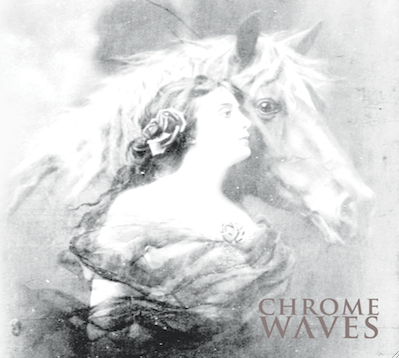
First up is the self-titled debut EP from a band called Chrome Waves, who count among their lineup members of bands such as The Atlas Moth, Gates of Slumber,Twilight, Wolvhammer, and Nachtmystium. Oh, and now they have Jef Whitehead (Leviathan, Lurker of Chalice) sitting behind the drum kit as well. If you combine all of those bands in your head and try to make a rudimentary computation of what you might hear, you’re probably going to be pretty spot on with what greets you on this six-cut effort, that grew more enjoyable each time I spent time with it.

The band is comprised of Stavros Giannopoulos (vocals), Jeff Wilson (guitar/synth), Bob Fouts (bass, drums on the record), and, of course, Whitehead, and despite only being together as a unit for a short amount of time, they’ve already got the chops of a veteran band. Giannopoulos’ hellish vocal work is reminiscent of the Moth’s earlier, more savage work, and he just goes for broke on these songs. The rest of the band backs him up with a backdrop that’s equal parts black metal, metal gaze, psychedelic rock, and doom. It really is a perfect mix of what each guy brings to the table, and it all blends together wonderfully. It also should be noted this is the first album being released by new label Gravedancer, who have put together a rock solid lineup that also includes Conan and the reactivated Byzantine. We’ll have more on those bands in the future, that I can assure you.

Chrome Waves begin their first outing with a dreamy, trance-inducing instrumental track, that flows over somber melodies, gazey guitars, and a foggy atmosphere that bleeds right into “Height of the Rifles,” where the vocals just go off, the melodic thunder bleeds over, and the chaotic emotion pulls you along. “Light Behind a Shadow” opens with a punchier riff that leads to a more aggressive song, but one that never cuts back on the psyche wonder. Giannopoulos howls like a banshee, practically spitting out his words, yet the madness is allowed to subside on “Eyelids of Dawn,” a tranquil track that is perfectly named because it would sound wonderful digested while the sun is struggling to break over the horizon. “That Cursed Armored Train” packs a wallop, but it’s also disarmingly catchy, catching you and pulling you under before your mind is aware that it’s captured. Closer “Blackbird” greets you with shimmering keys and a nice thick blanket of smoke, and there is so much going on with this song, it’s sure to take repeated listens just to peel back each layer of sound.

I am really excited about this new band and what their future holds. Of course, I’m also really big into all of their respective other projects too, so I’m not rooting for this to take precedence. But Chrome Waves are a wonderful summation of all their parts, and their music gets better with each listen. This may end up being my new go-to, drive-in music each morning for my commute. It’ll make me less hostile, that’s for sure.

For more on the band, go here: http://www.facebook.com/chromewavesofficial

To buy the album, go here: http://gravedancerrecords.bigcartel.com/

For more on the label, go here: http://gravedancerrecords.com/

Ephel Duath

I always found Ephel Duath’s music neat and fun to listen to, but that’s all. What a great way to intro their new music, huh? It’s OK. I’m going somewhere. The band always has had a million interchangeable parts (save for founder Davide Tiso), and I never really felt like I got to know what the band really is about. So I listened to their music when review time came up but always kept them at a bit of a distance. I think that’s about to change with their very personal, very dark new effort.

The band last checked in with 2009’s odd “Through My Dog’s Eyes,” about the life and adventures of a stray dog. It’s a pretty decent record, and I still have my Earache-issued promo somewhere on my shelf in my game room, but I haven’t spent much time with it recently. But things have totally changed as far as my interest in the band since then, as now on vocals is the immortally awesome Karyn Crisis, ex-leader of way-before-their-time Crisis, as well as Tiso’s wife. She brings a character and charisma to the band that they’ve always lacked, and her authoritative, confident voice changes Ephel Duath from bizarre oddity to must-hear machine.

We only get three songs with “On Death and Cosmos,” but I’ll trade quality for quantity any day. On this effort, Crisis and Tiso are joined by drummer Marco Minnemann (Illogicist, FFW, Tony MacAlpine) and bassist Steve DiGiorgio (ex of bands such as Death, Autopsy, Testament), a pretty solid lineup, and they do wonders with what they offer here. The music is progressive death-leaning, but not in a pretentious or dorky way, and Crisis always injects and sense of danger and chaos into the proceedings when she’s barking out her diatribes.

“Black Prism” is our opener, and it’s tricky and mind-bending musically, with Crisis switching back and forth between growls and clean vocals. “My center is now a black prism,” she howls, giving you an indication of just how dark things are in this song. She also commands, “Look to me as I dissolve,” leaving you feeling bleak and depressed as ever, which indicates just how great she is at transferring her feelings over to you. Enjoy that. “Raqia” has a lot of bends built into it, as this is the proggiest cut on the record, with guitar work that seems hellbent on spinning you in a circle. But it’s fun and never nausea-inducing, and as always, the vocals prevent this song from going off the rail into somewhere too weird. “Stardust Rain” is the most interesting composition of the three tracks, and Crisis’ words drip with emotion. Not to beat a dead horse, but this is how Crisis single-handedly elevates this band, because you believe every word she shouts and feel every ounce of the pain she’s conveying. I hang onto her every word because she always has something vital to say.

It’s great that a band as promising as Ephel Duath survived so much chaos and came out a better unit for it. This mini document hopefully is a sign of awe-inspiring things to come ahead, and they just may end up becoming one of this year’s great comeback stories.

For more on the band, go here: https://www.facebook.com/EphelDuathOfficial

To buy the album (out soon in Europe; released in August in the U.S.), go here: http://www.agoniarecords.com/index.php?pos=shop&lang=en

Or here: http://www.metalhit.com/store/agonia.htm

For more on the label, go here: http://www.agoniarecords.com/

Botanist expands sound and apocalyptic vision on stunning ‘III: Doom in Bloom’

One of the challenging things about writing about music is that people often ask what certain bands sound like. “What does your shirt say? Ahab? What do they sound like?” And I’m always really bad at answering. “Uh, like really slow doom but it feels like you’re listening to it at the bottom of the ocean.” Blank stares, blinking, I’ve seen it all. That’s not even a hard band to describe; yet it takes me forever. You wonder why it takes me 1,000 words to describe albums.

But anyway, there are other bands that defy most descriptions, and that generally ruins my life. I’ve tried to explain both Albebaran and Anhedonist to people with very little success because it’s really hard to convey just what you’ll experience with those bands. It’s more than just some riffs, a particular style of vocals, or whatever. It’s far deeper and involved than that. And wow, when it comes to Botanist, I’m at as loss. A really close friend of mine I talk to every day, I recently told him about a promo I got that he wanted to hear. I can say weird shit to describe it, and he’ll get it. For example, I said, “Kind of angular guitars, but not in an asshole way,” and he totally got it. But I’ve tried to tell him what Botanist sounds like, and I couldn’t even come up with weird ways to do its sole creator Otrebor’s music justice. Actually, now he knows because I played him the double album that introduced the Botanist’s (our main character in these tales) bizarre surroundings to the world, and he gets it now. That’s the trick. You kind of have to step into this leafy, forestal place to completely align yourself with what’s going on. That’s a challenge but a reward.

We’ve long told you about Botanist, and we were honored to debut a song from his new record “III: Doom in Bloom” and its companion disc “Allies.” You responded in kind by visiting those posts en mass. I like to think we had a tiny fraction of an influence in your interest over these songs, but let me not kid myself: It’s Otrebor’s twisted genius and the apocalyptic tale he’s created that drew you into those songs. His dulcimer-and-drums songs are like nothing else in the metal world, and while’s it easiest to label his music as experimental black metal, that’s also cutting it short. If you’re new to Botanist, you’ve never heard anything like this before. If you are a fan and listened to “I. The Suicide Tree/II. A Rose From the Dead” religiously like I did, that assessment still stands. Botanist’s world has changed significantly.

Otrebor still primarily employs the aforementioned instruments and pipes in with his creaky, growly vocals, but you’ll notice right away the textures have changed. “I/II” has 40 quick, typically fast-paced songs that sprawled into each other. Here, there are but seven cuts, practically all epic-length, and the tempo is much slower, sorrowful, and crushing. I’d go as far as to say the album is more accessible, though it’s not like you could play this for a mainstream rock fan and have that person get it. This record still takes a special kind of listener and demands a lot of anyone who spends time with it. But as I said, you’ll win out in the end because it’s a fascinating, riveting listen, and it shows you a totally different side of the artist behind this music.

Another element you’ll notice is the large amount of whispered vocals, but Otrebor isn’t just doing that to be mysterious. When you hear those whispers, you’re hearing what Azalea, the vengeful force of Nature, is speaking into the ear of the Botanist, which are instructions and philosophies to bring about the end of the human world so that the plants can rise up and take back what is theirs. If you’re new to this story, I suggest going to Botanist’s site, listed below, because you have a lot of catch-up work to do. But you easily could listen to the music for what it is and still enjoy it. You’ll just be lagging behind on plot.

I find a lot of the music on “Doom in Bloom” quite gorgeous, dramatic, and, at times, serene. You could make an argument that this record is only a metal album by its extreme musical nature and growled vocals, but other than that, it’s very difficult to classify what’s going on here. Hence what I said in the opening.

First cut “Quoth Azalea, the Demon (Rhododendoom II),” a song we premiered for you in the spring, is moving and somber, almost as if Azalea’s mission is both necessary and troubling morally. Eventually some moaning, droning vocals come into play, but for the most part, this is Azalea’s moment. “Deathcap” is breathy and hissing, with creaky vocals, some wild shrieks, and a baroque feel that’s both sophisticated and violent. “Ganoderma Lucidum” has a vintage sci-fi, isolationist feel to it, and the whispered and shrieked vocals run headlong into each other as a bunch of activity erupts.

“Vriesea” is built on an almost military style drum line, and the percussion actually leads this number, with the dulcimer strikes being kept to a minimum. I think I even heard an accordion in there, unless that’s just more string trickery unleashed by Botanist. “Ocimum Sanctum” is mesmerizing and trance inducing, and it keeps a sleepy tempo that’s occasionally ripped apart by shrieks. “Amanita Virosa” is the fastest song of the bunch, but it would be considered a slow cut on “I/II.” Here, the cries grow more desperate and harsh, and the song perfectly leads into the conclusion piece “Panax.” Just realized Botanist is throwing out a lot of herbal items that generally are used to soothe humans, so maybe the plants have some more devious trickery up their hands to pull us in. Anyhow, like the opener, the feeling goes back to mournful, and there are sections that are almost pastoral and spiritual in nature. It’s an interesting close, one that makes me really curious as to what lies ahead on the next record.

Disc 2, while it maintains a philosophical relationship with nature, is more of a loose section of music that explores other parts of the world Botanist created. Simply put, Otrebor had a ton of drum parts left over, so he decided to get together with other musicians he respects to do full-band songs. Each song has a different lineup, and thusly, all cuts get both band names and song titles to differentiate. It’s a really interesting disc, as you get to hear what Botanist could accomplish if he went the traditional route and what other minds bring to his creations.

Take, for example, “The Ejaculate on the Petals of the Femme Orchid I,” accredited to Matrushka. It’s a gazey, ambient, creaky transmission that sounds like it belongs floating through a far-away galaxy than imbedded in wooded lands. Or “The War of All Against All,” a song we premiered for you that’s labeled Cult of Linneaus (made up of members of the band Nero Order). The song is sweeping and pure doomy black metal, and it’s my favorite track on this companion disc. The Aborist track “Total Entarchy” really turned my head with its dirty bluegrass influence, and it reminded a bit of the Panopticon album I reviewed earlier in the week. I’m purposely not going to say much more because I don’t want to ruin the surprise of these pieces. It’s fun to hear these tracks for the first time, and they do stick with you beyond the initial shock wearing off.

Botanist remains a house favorite here at Meat Mead Metal because this project is so unique and interesting and handles apocalyptic destruction in a way no other band has imagined. On top of it all, the music is always giving and ambitious, and no two things he does sound alike. There is more to come, by the way, and part of the reason we aren’t further along is production of this album got held up a bit. That just gives us more time to fully absorb the wonders of “Doom in Bloom,” another captivating vision from metal’s most thought-provoking performer.

For more on Botanist, go here: http://www.botanist.nu/

To buy the album physically or digitally, go here: http://verdant-realm-botanist.bandcamp.com/

For more on the label, go here: http://www.totalrust-music.com/