Opeth’s ‘Pale Communion’ pulls further away from death metal while they tend to prog flames

OpethBy now, we all should have accepted that Opeth have moved past this death metal thing and are a full-throttle prog band now, right? I don’t want to devote a huge paragraph to explaining this to anyone, because it should be common knowledge to most people who visit this site. Oh, well, I kind of just did that, didn’t I?

Anyway, yes, anyone who was holding his or her breath hoping Opeth’s new record “Pale Communion” finally would be the one that put them back on the path to “Blackwater Park”-ness should just go ahead and take in some oxygen. It’s a worthless cause, you see? Opeth clearly have changed their stripes, and they’ve done so gradually throughout the years. So what greets you on this new, eight-track collection should come as no shock. Where you might be a little shaken (and not necessarily in a bad way), is the power and confidence with which Opeth deliver their music. They have fully embraced this new direction, and they take what they did on “Heritage” and push it full force into the future. There’s no turning back now, not that the band would even entertain the notion. If you’re one that only can accept this band in their death metal phase, you’re likely gone for good. “Pale Communion” is not bringing you back into the fold.

Opeth coverI admit I miss Opeth’s older days. I don’t begrudge them these changes. You can hear it in the music, in leader Mikael Akerfeldt’s interviews, in pretty much every bit of Opeth’s DNA that this is where they want to be. They sound damn good doing it too, from the organ-heavy passages, to the spidery paths the compositions take, to Akerfeldt’s very much stepped-up role as a vocalist. This record wasn’t done to gain them more fans or expand their audience. If anything, it might do the opposite, but I doubt the band is terribly worried. It sounds like these guys–also includes guitarist Fredrik Akesson, bassist Martin Mendez, keyboard player Joakim Svalberg, and drummer Martin Axenrot–are having way too much fun doing what they’re doing now.

“Eternal Rains Will Come” is one hell of a song, and it blasts you in the face with its 1970s-style prog assault, warm keyboards, trickling, and lush group vocals that sound dynamite. There is some great lead vocal work as well, which isn’t a surprise, and the guitar work is top notch, carrying you to the raucous end. “Cusp of Eternity” is the heaviest of the bunch, and it’s as close as the band comes to their burlier early work. The guitars chug pretty hard, Akerfeldt sounds at the top of his game, and the wordless chorus is a riveting one that’ll stick in your head long after it’s done. “Moon Above, Sun Below” runs 10:52, and there are some more forceful yells mixed into the vocals, which is a nice change of pace. The music is adventurous, with Akerfeldt noting, “Home is my grave,” and eventually everything runs into a bluesier section, with the vocals fitting right along with it. The final moments are dressed with whirring, spacey keys and drizzling piano. “Elysian Woes” is a much softer song, with acoustics leading the way, and even some flutes having their moment. Later, keys flutter, and Akerfeldt admits, “I don’t want to bear my scars for you.”

“Goblin” is an interesting, fun instrumental cut, with pulsating keyboards and a jazzy approach to the playing. “River” rises out of that with acoustic lead lines that mix into an oddly classic rock-style segment. In fact, the track sounds so much like mid-1970s American rock, it takes a little bit of getting used to coming from these guys. Later, the song feels a lot more like an Opeth cut, with the music getting earthier and challenging, and the final moments catching fire. “Voice of Treason” runs exactly eight minutes, and it mixes all kind of textures into the scene. There are echoey keyboards, strings that drive the song hard and really grab your ear, and later some Middle Eastern-flavored melodies. The song keeps morphing and growing, never showing its hand as to where it’s going, and it all ends up in a charged up finish complete with soulful vocals. Closer “Faith in Others” is another softer track, but one that’s propulsive and active. There are pianos and strings to provide color, and the vocals reveal a sense of vulnerability. Eventually guitars bleed in, meet up with thick strings, and build toward a lush finish that feels like the sun setting after a long, productive day.

Like I said, I much prefer Opeth in their death metal era than their foray into progressive rock. But they sound like a band that’s come alive, and that’s just too bad I feel the way I do. “Pale Communion” is a damn impressive, well played, well executed record, and I’d imagine its true home format is on vinyl, pouring like honey form your speakers. I don’t doubt Opeth’s heart and path for a second, and really, that’s all that matters. There always will be people like me left to tread backward into the band’s catalog as these guys catapult into their future.

For more on the band, go here: http://opeth.com/

To buy the album, go here: http://store.roadrunnerrecords.com/

For more on the label, go here: http://www.roadrunnerrecords.com/

PICK OF THE WEEK: Pallbearer has doom formula perfected with unreal ‘Foundations of Burden’

Photo by Diana Lee Zadlo

Photo by Diana Lee Zadlo

When I was a kid and a teenager, way, way before the Internet just handed us everything and stripped away the mystery from everything, I remember waiting with baited breath to hear follow-up records from my favorite bands. I recall stowing away any time a band such as Iron Maiden or Metallica or Testament issued a new record, studying the details, following along with the lyric sheets, and taking it all in.

That sort of mystery and excitement doesn’t really exist anymore. Maybe it really is because we’re served up preview songs, we see album covers well before they’re in stores, or if you’re a writer like I am, we hear the records sometimes months before they’re ready for purchase. It’s hard, then, to have a truly special moment with a band or a record, or to have that much-anticipated follow-up that your entire year revolves around. Luckily for me, and I know for tons of other readers and listeners out there, Arkansas-based doom metal band Pallbearer remains one of those shining beacons in the metal year that is truly worth anticipating. What they would do to follow up their universally praised (justifiably so) debut record “Sorrow and Extinction” matters a whole lot. Incredibly so. What other album carries the weight, importance, and expectations this one does? And if you say Mastodon, you can log off the goddamned site right now. Yes, so many of us have rolled out the ragged red carpet for Pallbearer’s second album “Foundations of Burden,” and is it ever worth it.

Pallbearer coverPallbearer–guitarist/vocalist Brett Campbell, guitarist Devin Holt, bassist Joseph D. Rowland, and drummer Mark Lierly–haven’t just successfully matched their monumental debut, a record that made the metal world realize there is beauty and worth in doom in its most traditional form. They have eclipsed it and pushed themselves to that proverbial next level. This is one of those rare records these days we wait with strained patience to hear, and once it reaches in and permeates our brain we realize we’re in the presence of one of the most important bands of our time. This is the modern-day answer to those aforementioned legends. Pallbearer may not sell out stadiums, block up big-box store shelves, and get massive airplay on lame-brained radio stations. Instead, they’re the a band pushing boundaries, making metal count in its purest form, and just mattering a whole motherfucking ton. This six-track record is a massive accomplishment, a touchstone in current metal history, and one that should cement them as the demigods. That’s not overstatement. That’s the truth. This is the big band that never lets you down and makes you get lost in the magic of being a metal fan.

The expanded, elevated sound is apparent from the opening strains of “Worlds Apart,” as it just bursts open with glory and sullen energy. Campbell’s vocals are a total revelation here and on this whole record, and he has really stepped up his game. He’s one of the best singers in metal now, period. The song travels well over its 10 minutes, with rich, elegant doom tapestries painted, vocal harmonies popping from the woodwork and enhancing the band’s sound even further, and a dramatic journey sprawling that pulls through this cut and never lets you lose your focus. “Foundations” has a burlier opening, and once again, the vocals are practically magical, as Campbell unfurls lines including, “We shall build here, in this cursed place,” almost acting like the band’s comment on their place in the metal world. The back end gets incredibly lush, and the singing and harmonizing are gorgeous, sweeping you up and enthralling you. It’s just an amazing song. “Watcher in the Dark” is a really interesting one, as it gets gritty following its majestic start. But then it delves into murkier territory, at times feeling like a really early Queensryche song, and the way it plays out is unlike anything else in the band’s catalog. That said, we haven’t even gotten to the most surprising cut on this fantastic album.

“The Ghost I Used to Be” is the track most people have heard by now, as it premiered a few weeks ago over at NPR to much excitement. The opening riff is cool and icy, and that leads into a synth section that feels like the trickling soundtrack of an old B sci-fi movie. After a steadily moving first part of the song, it gets a little more aggressive, with shouts sliding next to Campbell’s smooth vocals, and it provides a rougher edge to this one. There is some great soloing that emerges, and the final minutes of the song burn brightly and in a calculated manner. Now, for the track that’ll take most by surprise. “Ashes” is a three-minute gem of a song that acts as the record’s “ballad.” It’s quiet, with plinking, spacey keys and a cosmic environment, as Rowland takes over on lead vocals, quite capably might I add. It’s a daring little thing, and it expands Pallbearer’s universe even further. Finally, 11:41-long closer “Vanished” arrives, on the wings of slow driving melodies and softer vocals from Campbell. The song travels a deliberate but steady pace for the first half, but later it opens up and gets a little heavier. Things gets muddier, everything comes in heavier, and the vocals swing back to being a little more forceful, and always brimming with passion. Finally, the song hits its final stretch, as the band begins to dim their torches as the passage fades into night. If you find you’ve halted your breathing, you’re not alone. This record will do that to you.

Yes, you’re going to hear tons of praise and read millions of inches of copy of writers like me raising up “Foundations of Burden.” It’s not hyperbole. It’s not hive mentality. It’s people realizing we are in the midst of a great, special metal band that really is just at the start of their run. And already they have delivered two all-time classic records that must be a part of any metal collection worth anything. Go get this record, put on your headphones, and let each rich second of these songs take over and make you feel joy in metal again. Not many bands can do that, so why not indulge in the ones that can?

For more on the band, go here: http://pallbearerdoom.com/

To buy the album, go here: https://www.profoundlorerecords.com/pallbearer/

For more on the label, go here: https://www.profoundlorerecords.com/

Botanist turns focus toward praise, adulation of beloved green life on joyous ‘VI: Flora’

BotanistReally great music is a labor of love. You can feel that in your bones when you come across an artist or a record that is filled with genuine emotion and passion for what’s going on musically and thematically. It’s not something that needs to be explained; it’s something that grips your heart and lets you know what’s there is true.

I’ve always felt that way about Botanist, the one-man, dulcimer-and-drum-led project of one Otrebor. Over the past several years, he has given us a glimpse into his Verdant Realm, where plant life and nature is the only thing that matters, and its human central figure the Botanist surrounds himself with the greens that he loves and takes care of so dearly. But there’s always been a sinister, dark edge to the record and the songs (especially on “III: Doom in Bloom” and “IV: Mandragora”), mainly because the Botanist and his surrounding creatures hope one day to bring humankind to their knees for the atrocities they have committed against plant life. But the intentions are noble. The Earth has spiraled out of control into a place of corporate-driven agendas, political fighting, and the strangulation of the very idea of scientific theory by some very short-sighted people. The Botanist imagines a day when nature rises again and reclaims what is her very own. These tenets play right into the heart of black metal aesthetics, where Botanist’s music has its base, but in a way no one ever really imagined before.

Botanist coverBut on “VI: Flora,” the scene changes a bit. Not that every bit of music Botanist has put out has necessarily been devoted purely to the Botanist character’s crusade, but this one is the most unique out of the entire catalog. I mean that musically and emotionally. This record is more of an adulation to the surrounding plant life in the Verdant Realm. It’s a genuflection, a devotion, an embrace of all of the elements of nature that make the Botanist’s very human heart glow. You can feel that shine through in the music, as these 11 songs are some of the most upbeat, emotional, and catchy of his entire run, and it’s impossible for anyone who listens to this record not to be carried away or even shed a tear for what’s being expressed here. It’s utterly jubilant in spots, and even when the music bears its edges, it’s more of fierce devotion rather than the will to maim. It’s an amazing, breath-taking collection that fits with the whole but truly has its own place.

Opener “Stargazer” gives the record a triumphant feel from the start, with the vocals veering toward whispery and washed-out creaking. The melodies glimmer at times over this track, and eventually it fades out and sets the stage for “Callistemon.” The song has an upbeat, almost post-punk feel, as the composition stings with power, and the vocals lie low in the layers of sound. Toward the end, the drums really burst with life, as Otrebor plays like Neil Peart in a burst of spastic, jazzy fury. “Cinnamomum Parthenoxylon,” named a critically endangered type of evergreen tree, is treated with faster tempos, explosive emoting, and a blazing attitude, as if the focus here is to lash out over this creation’s fragile future. It’s the first real hint of deep-seeded darkness on this record. “Gleditsia” bursts with life from the start, with drums rumbling, the dulcimer hammered with gusto, and turning into a catchy pace that could sweep you up to sing praises back yourself. “Rhizophora” trickles slower, with some buzzing, a nice dose of drone, and noises hanging in the air that feel like a hovering insect. It’s a mesmerizing song that can make you feel a little woozy inside.

“Dianthus” is another song with a really strong melody that packs a punch. It’s a catchy, steady track, with the vocals coming out as whispers again, and the back end of the song is damn near poppy! “Leucadendron Argenteum” is the longest track on here, running more than six minutes and establishing an amazing sense of atmosphere. The piece builds out of that spaciousness, and the tempo kicks up like so many of the other tracks on this record. The song is packed with heartfelt passion, both musically and vocally, and once the main body of the music burns out, quiet dulcimer takes the remains to its exit. Really strong. “Pteridophyte” has some noisy elements, as that energy washes over the music and gives it a rougher edge. Again, the outer edges appear to glimmer and practically give off a euphoric shine. “Wisteria” is launched by stick cracks, and then it’s off into the haze, with clean singing lurking. It gives a different feel to the song and also offers another new glimpse into this project’s heart. “Erythronium” emerges from the final notes of “Wisteria,” and it takes a colorful, driving push forward. The vocals again are whispery, the presentation is sweeping, and joyously so, and the song makes for one great last burst of praise. The final cut “…Gazing…” is 54 seconds of emotional comedown, as the dulcimer quietly leads us out of the Verdant Realm and back to reality.

Botanist has been one of the most prolific projects in metal the past half-decade, and each new chapter is enthralling and a another step up from what came before it. “Flora” is a very different record for this gifted artist, and it’s one that you can feel in every ounce of your being. You don’t necessarily have to understand everything that’s being said right away. You can sense the wonder and love in each note. It’s been an amazing ride we’ve taken with each new Botanist release, and Otrebor always has something new to reveal. If anything, maybe this record can help more listeners feel the love the artist and main character possess for nature around us and make us think twice next time we take it for granted. That’s worth hailing indeed.

For more on the band, go here: http://botanist.nu/

To buy the album, go here: http://store.theflenser.com/

For more on the label, go here: http://theflenser.com/

Take Over and Destroy prove creativity, character can kill on stunning new ‘Vacant Face’

TOADIt’s kind of sad that running into a band or record that displays some actual creativity is something that has to be trumpeted. Like, OK, right before writing this, I got a press release about a damned pop-punk band releasing their new song “Six Six Six.” I mean, what? Really? Can you at least try a little? Ugh.

Anyhow, you’d never catch a band like Phoenix, AZ, maulers Take Over and Destroy trying something so blatantly obvious. For one, they’d likely laugh at such a silly sentiment, and two, they’d make things so messed up and weird that most people would have to take time to sit down and figure out exactly what’s going on. The band’s latest record “Vacant Face” (follow-up to last year’s “Endless Night”) actually could be a nice label for what’s going on over the bulk of the music industry, where band after band turn in non-descriptive, personality-free, non-creative slabs that ultimately sell bundles in your local big-box outlets. This band knows nothing about being anything but themselves, a fiercely independent group of musicians that uses every moment of this album to turn heads, confuse, emote, and crush your puny heart again and again. It’s such an enthralling, goddamned fresh listen, that it’s a wonderful changeup from the glut of records I’m commonly tangling with. You can feel that right off the bat, and if for some reason you can’t, I won’t … say anything … about your ability to tackle some demanding shit.

TOAD coverThis band also knows how to keep you guessing sonically. Take Over and Destroy mix doom, sludge, post-punk, noise, and goth rock into a giant bubbling cauldron that’s just waiting to be tipped over to scald you. The fellows–vocalist Andrew Leemont, guitarists Alex Bank Rollins and Nate Garrett, bassist Dylan Thomas (also of grinders Landmine Marathon), drummer Jason Tomaszewski, and organist Pete Porter–are dark, dangerous, prodding, poking, and snarling as a unit, and their delivery and absolute submission to their deranged cause also go a long way toward making this record so fun and altogether unforgettable. In fact, if you can’t find a way to be engaged by every word that dribbles out of Leemont’s mouth, I’m a little worried about you as a person. They don’t come that much more compelling than he is. Imagine a mix of fallen Joy Division frontman Ian Curtis and Atriarch howler Lenny Smith.

The title cut is your introduction to this 11-track menace, starting with disarming clean guitars and spacey noises, before harsh vocals pierce the calm, melodic guitar work gets you engaged, and goth-style singing emerges to splash a little more darkness on this puppy. “Summer Isle” is the first real eye opener on this one, with organ keys pumping behind the pounding, clean bellowing that sounds dashed with morose pain, deranged howls emerging later, and eventually a break-neck pace that pulls you with force to the end. “Glance Away” begins with strange, swirling organs that could make your head spin, and howled, haunting vocals and dark textures dash any sense of hope. “Split Screen” is a face-splitter, with organs romping, sludgy guitar work layering everything with muck, and the band hulking and thrashing forward with reckless abandon. The vocals sound scarred for life, and the music does its best to match that damage with chiming bells, eerie whirring, and gang shouts that shake your bones. “Terminal Burrowing” is the longest cut at 7:32, and it’s a heavy, writhing, tortured soul driven by gothy singing, a peculiar but tasty Southern rock-style guitar line that snakes through, and a spooky finish that bathes itself in cosmic soup.

“Deep End” rips open any congealed scabs with blistering drumming and furious playing, including some really fun lead work that positively sizzles. “Dominance Shifts” is just relentless, with guitars boiling, menacing and ugly vocals, and the whole thing succumbing to a suffocating blaze before acoustics blend in to hint that the worst is over. But it’s not. The fire rekindles, and it scorches to its conclusion.  “Battle Moon” has some excellent classic metal-style guitar work, throaty growling, more tar-coated clean singing, and one hell of a quaking, delirious finish. “Where Seasons Lay” is a total foray into post-punk madness with cold, trickling guitar work and passionate vocals, with Leemont wailing at his damaged best. “The Fly Is Awake” is a brief instrumental that’s awash in sci-fi sentiment and alien transmissions, and that leads to the astonishing closer “Attrition” that opens with dark guitar work, harsh vocals, and more incredible riffs, of which there is no shortage on this album. The carnage eventually subsides for a while, with dusty acoustic guitars giving off a nighttime desert feel. Then the intensity ramps back up with the drums being beaten severely, noise swirling and surrounding like a swarm, and a sense of metallic hugeness that puts a giant exclamation point on the end of this record.

Take Over and Destroy can teach a pretty weighty lesson to other bands that think just being able to plug in and play is good enough. If you’re missing charisma, character, and true creativity, then what are you really accomplishing? “Vacant Face” is an exciting, daring, threatening record from this unique band, and there’s not bound to be another album quite like this one the rest of 2014. This is a band on the cusp of making a huge difference on a wide scale, and when they do it, this group of independent-minded killers only will have themselves to thank.

For more on the band, go here: https://www.facebook.com/TakeOverAndDestroy

To buy the album, go here: http://takeoveranddestroy.bigcartel.com/

Diskord’s mind-bending brand of death resurfaces on delirious, punchy mini-album ‘Oscillations’

DiskordSo, it’s almost beach time, that one week every year where I get to not give a shit about anything for seven days other than reading sci-fi books in front of the Atlantic Ocean, drinking every damn thing on the Dogfish Head brewpub menu, and watching my dog gleefully bark at every person she sees from her balcony perch.

But, the key word there is “almost.” As in, I am dragging hard, needing something to punch me in the face repeatedly along the way before solace arrives. That gives me reason to need something like “Oscillations,” the new mini-album from tech-minded Nordic death metal maulers Diskord, where my brain can be teased, my face can be punched, and I can be tossed all over the place like I’m fighting off the world’s largest industrial fan. This new six-track collection is the first new music from the band since 2012’s “Dystopics” (itself the first full-length they delivered in five long years since their 2007 debut “Doomscapes”), so it seems kind of lavish already to be hearing back from these guys. But no complaints, mind you. This is one of those bands that can play music-for-dorks-style death metal (and I mean that in as loving a way as possible), but in a way that makes it seem like they might want to douse you in flames. Yeah, musicians will dig this for the intelligent playing, but thrashers out there will get plenty of gnaw on as well. By the way, this killer is so massive, it’s being co-released by two labels: Hellthrasher Productions and Australopithecus Records.

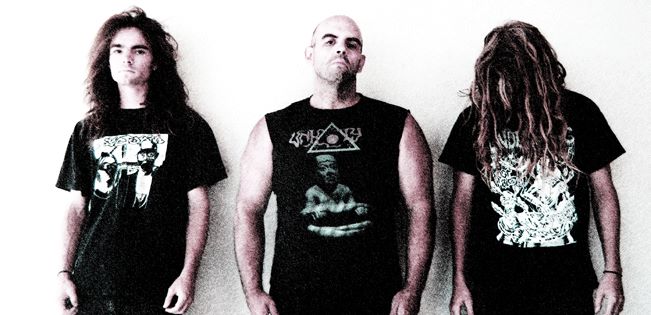
Diskord coverThe three dudes who play in this band look like mild-mannered gents on the outside, but once they open up their personal portal to hell, you know you’ve been deceived by the book’s cover. Good for you, you judgmental jerk. The dudes who comprise this band–drummer/vocalist Hans Jorgen Ersvik, guitarist Havard Ostli, and bassist/vocalist Eyvind Waersted Axelsen–keep brutality and stunning musicianship as perfect teammates, never going too far off the rails into either territory. Their playing is channeled and a lot of fun to hear, as usual, and this quick check-in before their next record should be more than enough to tide over their audience and leave them wanting more at the same time.

“A Downward Spire” is your first dose of Diskord’s insanity, unloading with aggressive playing, a path that twists and turns all over the place (with zero regard for the health of your spine), and harsh vocals that get their damage-ridden messages across. The drumming is particularly fiery, eventually the track slows down to let some sludge bubble up, and then it’s back on a mad dash toward the finish line. “Elytrous Oscillator” is calculated in its attack, as if it’s carefully following a blood-written battle plan. The growls return and are filled with menace, the song gets techy but also monstrously deadly, and the back end of the track is filled with fluid soloing and razor-sharp lead lines. “Hermit Dream” starts on a weird note, with strange noises circulating in the atmosphere and the song unfolding on a pretty bizarre path. Dark riffing emerges, as the song gets uglier and deadlier, and there’s a sense of a science fiction tale about to go horribly wrong as it moves on its way. The singing goes back and forth from harsh shriek to guttural growl, and the guitar work explores into parts unknown, not knowing what species they may unearth.

“Horrid Engine” rips open with some gnarly bass work that’s just nasty, and the fellows finally let themselves show off their chops a bit more on this track. Still, when they unleash their prowess, it isn’t self-indulgent and hard to swallow like so many other bands. Instead, it just makes their style of death a little more rubbery. “Lethargic Regression” is anything but that, as the band settles into a smothering death groove that keeps thrashing harder and harder, and now and then, they pull back the reins only to mash you full throttle again moments later. Closer “Symbiotic Whims” greets you with throat-mangling growls right off the bat, and the music is fast and meaty. The howls are wild and unhinged, the tempos change on a dime over and over again, and the finish has some bizarre, damage-riddled playing that leaves a gaping hole and melted metal leaking everywhere.

Yeah, just when I needed a good ass kicking to get into gear, Diskord provided that with this crushing mini-album “Oscillations.” The band remains as fresh, energetic, and entirely their own beast as ever before, and their next full-length certainly will be a heavily anticipated slab at this site and I’m sure many others. If you’re looking for something to get the frayed wires in your head operating again or just want to get you face smashed by something intelligent and thought provoking, this band can treat what ails you every damn time.

For more on the band, go here: http://diskord.net/

To buy the album, go here: http://hellthrasher.com/shop/

Or here: http://www.australopithecusrecords.com/categories/pre-orders

For more on the label, go here: http://www.hellthrasher.com/

And here: http://www.australopithecusrecords.com/

PICK OF THE WEEK: Empire Auriga’s atmospheric black metal arises on ‘Ascending the Solar Throne’

Empire AurigaWe ended last week suggesting you might want to take out some physical and mental aggression due to everything you faced the previous seven days. This week, we’re going in the total opposite direction and urging you to relax and take an adventurous trip into the atmosphere to clear your mind.

A perfect way to do that is by unfurling all your inner madness and floating away with “Ascending the Solar Throne,” the second record from Michigan-based atmospheric black metal unit Empire Auriga. This is their first record in eight long years (though their “Auriga Dying” debut was re-released by Moribund in 2008), and it’s a massive head trip like no other. Yeah, it’s black metal at its base, but you won’t find any brutality, wholesale violence, or evil vocal incantations anywhere on this thing. Instead, you’ll be greeted by whooshing, airy passages, tranquility that hints at seeking deeper meaning, and a trip toward celestial bodies (at least in your mind) as you engage and follow this band along their mission. Mixed into their music is thick, rich ambiance and even industrial notes that make for a greater whole. It’s such a damn interesting record, one to get lost inside of every time you visit.

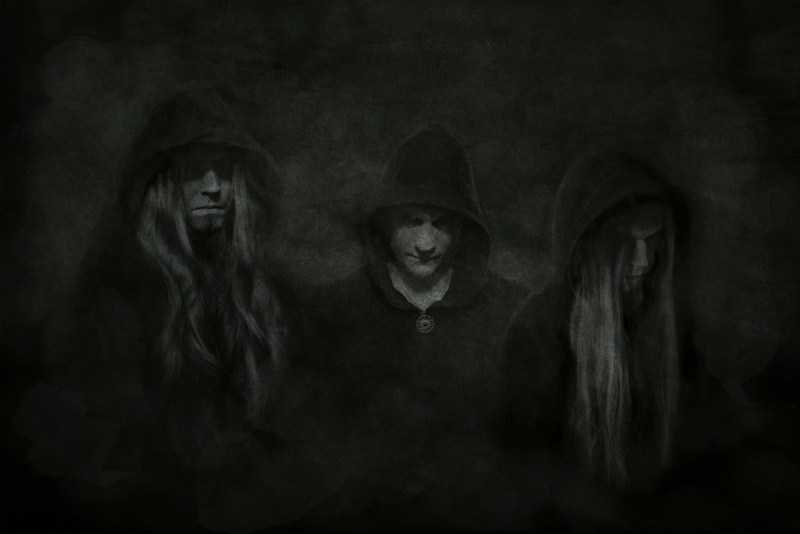
Empire Auriga coverThis band is comprised of just three shadowy figures–Boethius on vocals, 90000065b on programming, and Gestalt on static. OK, those are pretty non-descript, strange names, but they don’t seem interested in lifting the veil on their private lives or anything else of that nature, and why should they? The fact that there is a dark cloak placed over every other aspect of this band but their music helps you concentrate on the matter at hand, that being the band’s spacey, dream-inducing, mysterious transmissions that could get inside your blood and change your chemical makeup for the better. Or, in simpler terms, it’s just a damn good record that provides endless chances for you to imagine and project on a higher level.

“Prophetic Light” gets the record started with a cosmic gaze, with growls buried deep in the mix but definitely present. The track is both eerie and dreamy, with the song trickling out into distant stardust. “Jubilee Warlord” has a riff that rises out of the fog, and that leads into a charged-up atmosphere where electricity is all around you. There are more growls that are smothered with sound, and the whole thing feels like midday trance music, as you stare out into a sunny landscape and wonder what’s going on past where you are at that moment. It’s slow moving and stunning, and it leads right into “The Solarthrone,” that shimmers and is stung with sinister riffs. The track does more lurking than anything, with some speak-singing breaking the surface, the music making your head heavy with dizzying sounds, and the finish dissipating in eerie lathering. “Waste” has darker, more threatening guitars, swirling and damaged melodies, and darkly melodic trickling, as this instrumental spins its web.

“Planetary Awakening” is wind whipped and invites guitars to light some small fires, with vocals that sound like they’re being delivered on winter winds. The music hangs in the air like a ghost, then all of a sudden, it’s gone. “Are You Worthy of Gold?” has more spoken parts that sound like they’re coming from another dimension, yet those lines are situated behind the music as not to be the central focus. It’s a mystical, stimulating piece that can warm your plasma. “The Foundation of All Human Fears” has strains of Godflesh in its DNA, with noise pulsating, recitation making the track feel trance-like, and noise fizzling. Eventually, chants rise up and begin to feel threatening, but they eventually submit to the frost. Closer “The Last Passage of Azon Grul” bathes in layered keys, echoing noises, and bellowing singing that boils behind the scenes. The warbling gets louder and louder as the song becomes more boisterous, and all of the energies here begin to assert themselves like never before. The power glimmers as the song builds to its conclusion, and it eventually begins to break apart, disintegrate, and disappear into the air.

Empire Auriga won’t inspire you to burn down churches or wreck your car into the side of the building. It’s not that kind of metal, and it doesn’t strive to be. Instead, “Ascending the Solar Throne” gives you a chance to branch out and let the chaos stream from your body and soak into the ground. This band’s music can be a profound experience if you let it, and similar to like-minded bands such as Fyrnask, Lustre, Skogen, or Stilla, they give you a break from the madness but in a way that lets you embrace darkness and perhaps understand it a little better.

For more on the band, go here: http://www.empireauriga.com/

To buy the album, go here: http://www.moribundcult.com/Merchant2/merchant.mvc?

For more on the label, go here: http://www.moribundcult.com/2013main.html

Sea of Bones’ mighty doom opus ‘The Earth Wants Us Dead’ gets proper triple-vinyl treatment

Sea of BonesThis might sound crazy, but for us music writers, it’s easy for a record to fly under the radar. How is that possible when we’re serviced with just about every metal release that comes out every year? Seriously, if you saw the backlog in my inbox of things I haven’t even downloaded yet, you would be appalled. Keeping up is a separate job!

That’s why it’s no shock that even a mighty and devastating record such as Sea of Bones’ “The Earth Wants Us Dead” can slip by me unnoticed last fall. I’m not happy about it, and it makes me realize no matter how hard I work at it, and no matter how much music I absorb, this is going to happen from time to time. Luckily, some timely factors came into play that brought this hulking Connecticut-based trio to my attention. First, they played a Saturday slot at Gilead Media Fest 2014 a few weeks back, and they were absolutely astonishing. Loud, earth-quaking, and organically savage, the band blew me over and made an indelible impression on my psyche. Just like that, they became a doom band I needed to move to the front of my brain and follow their every step. The second timely detail is Gilead is releasing “The Earth…,” the band’s second full-length release, on a triple vinyl collection that lets it breathe new life and overcome the sorry bastards who missed out when it was released last year. People like me!

Sea of Bones coverWith all of that power, it might seem unlikely just three people could conjure such strength. But, indeed, it’s true, and the might of these three men is on full display throughout this six-track crusher. On guitars and vocals for this band is Tommy Mucherino; on bass and vocals is Gary Amedy; and on drums is Kevin Wigginton, who beats his drum kit into submission live. Now, you may be asking why triple vinyl for this record? Good question, and here’s the answer: Because it’s a beast. The first five songs all are crushing epics that take up the first two records, and the final song is a nearly 40-minute ambient piece that benefits from this presentation. It’s a massive set, and it is well worth your investment if trudging doom and drone is your thing.

“The Stone the Slave and the Architect” is the first assault on your senses, bringing the murky doom and dread and, with it, monstrous vocals that sound like they could shake you to your core. “Denounce the prophet!” is howled viciously, as the machine keeps moving forward, always relentlessly heavy and with a destructive display of drumming. Great opener. “Black Arm” opens with feedback that delves into crunch, with the riffs ruling hard and the rest of the song turning sludgy and mean. The song just roars with animalistic force, with the music simmering and teasing full boil, the vocals bursting with grisly intent, and the band pounding away over and over again. “Future of Light” is my favorite track on the record, and it starts inauspiciously, with quiet strains of guitar and gentle trickling that you know cannot last forever. It’s easy to feel the magnitude of this thing right away, and as it builds toward a bursting point, you feel your mind ready to open up to its energy. Slow-served doom and muddy guitars dominate, with the vocals achieving new levels of chaos. The song even picks up the pace toward the end, something Sea of Bones do not do all that often, but then it’s back to mammoth-style trudging as the 13:28-long song reaches its final resting place.

“Beneath the Earth” offers tranquility at the start, playing softly and letting some breezes move through the room. But then the bottom drops out, and clubbing takes over fully, with the words, “You’re the cancer inside of all,” blowing down walls and pillars. The music is calculated and awesome, and the final moments are scorched by noise hiss and creaky shrieks. “The Bridge” is a fascinating beast at 12:55, opening with a long passage of quieter tones and playing that seems willing to let you ease into the picture. About four minutes in, the track gets impossibly heavy, just wailing on everything in its wake, with massive howls collaborating with sick growls. The song continues on its way, leaving a gigantic path carved into the Earth’s crust behind it, with guitars rising up and burning faces, and the concluding howls of, “Always remember what brought us here,” caving in your chest. The title track is the aforementioned 39:32-long closer, a piece that is expert at setting a spooky mood that makes it feel like a dense fog is rolling in and staying all stormy day long. The pace never really changes, though some drums slip in here and there to push the tempo a bit, guitars charge up and act like heat lightning, and much of the ambiance sets up what would be a proper soundtrack for entering and searching a desolate planet in the early morning hours. You don’t know where you’re going, what you’ll see, or if you’ll survive, but the spirit of the chase is what keeps your heart burning and you on the path. Amazing track.

Sea of Bones’ power and force cannot be questioned, and if you ever witnessed the band live, you know damn well your ears and organs never will be the same from the beating they endured. I really wish I had jumped on “The Earth Wants Us Dead” when the band released it last year, but better late than never. These guys are an incredible force, one you should tune into now because it won’t be long until their name is uttered alongside some of the greats like Neurosis, Buried at Sea, and Sunn 0))) if their sonic momentum continues to catapult the band forward. Seriously, just an awesome band.

For more on the band, go here: https://www.facebook.com/pages/Sea-of-Bones/35253450819

To buy the album on vinyl, go here: http://www.gileadmedia.net/store/

To get the album digitally, go here: https://seaofbones.bandcamp.com/album/the-earth-wants-us-dead

For more on the label, go here: http://www.gileadmedia.net/

Can Nachtmystium’s new album ‘The World We Left Behind’ get a fair shake because of Blake?

NachtmystiumThere are some artists that, unfairly or not, always will have their personal actions associated with their music. It’s what happens when you live at least a portion of your life in the public eye and let certain aspects of your existence or personality get away from you and become a bigger story than your music.

Seriously, how can one review or comment on any new music by Burzum without unearthing the tons and tons of shit lying on top of Varg Vikernes’ reputation? We’ve written about his music before, but I won’t again. Because he just keeps proving what a cretin he is, and I won’t give him any more publicity. Necrophobic’s last record, any merit it had, couldn’t overcome the negativity surrounding the actions of then-vocalist, whose name I won’t even type here because of the acts he committed. The band kicked him to the curb, wisely, but how can a writer honestly talk about the band’s new work when it contains said filth of a human? And that takes us to Blake Judd, longtime leader of Nachtmystium who has kind of been in the headlines the past few years. He made news because of his drug habit, his alleged propensity to screw over fans and band members, and his reputation for taking the money and running when it comes to fulfilling merch/record orders from fans. Hey, he never screwed me over (because I never bought from him), but he did do that to two close friends of mine. And again, allegedly allegedly allegedly, because there are two sides and blah blah. But all of these things bring sort of a black cloud to Nachtmystium’s final-no-wait-it-isn’t album “The World We Left Behind,” justifiably or not.

Nachtmystium coverI also linked Judd with the Burzum/Necrophobic examples because, in comparison to those, his shortcomings are small and mainly self-inflicted. So perhaps some gravity can be achieved. He made news for abusing his body and killing trust with others, but it’s not nearly as bad as being a publicly racist asshole murdered or someone who physically abused a family he is supposed to love. Hate him if you must, and I don’t know the guy, so I remain neutral, but you won’t be looked on as a shit person for listening to Nachtmystium’s music, nor should you be. And when it comes to “The World We Left Behind,” it’s not a terrible record. It’s not the best record in the band’s canon by any means, and much of the lyrical content sounds like an over-the-top pity party (and some just falls flat in light of the band now continuing on rather than this being an epitaph), but I expected a disjointed mess. And it’s really not that at all. But it’s not very daring, it tries to assimilate the “Black Meddle” sound back in for better or worse, and it’s really hard to listen to the vocals. Thematically, it just hits you over the head so repeatedly that it gets impossible to take.

Judd, of course, is not alone on this record. Joining him is a largely unknown cast that includes guitarist Scare Crow (uh), bassist John Porada, drummer Sam Shroyer, and keyboardist Dustin Drenk. No offense intended toward those guys, but that lineup is a far cry from ones in the past that included Chris Black (at least as a creative force), Andrew Markuszewski, Will Lindsay, producing/electronics wiz Sanford Parker, Charlie Fell, and Jeff Wilson. It sort of shows you how far Blake has fallen among his peers, and it might explain why the record often feels like it’s just kind of there.

The album opens on a strong note with the instrumental “Intrusion” that chug and charges with a fury, fires burning heavily and angrily. Then it’s into “Fireheart,” which starts with a thin-sounding guitar line that eventually meets up with beefier playing. Judd spouts off tons of lines meant to convey his inner turmoil, first demanding, “Tear down this world of scorn,” finally ending by vowing, “Nothing in this world can stop me.” Sounds affirming after such long personal battles, and for his sake, hopefully it holds true. “Voyager” is the strongest of all the cuts on here, running more than seven minutes and letting things space out a bit. “Is any of this real, is this all just a lie?” Judd wonders out loud, as the band backs him with a plodding pace and some inspired playing. Like most of the songs on here, the lyrics lay it on a little thick, and that can cause some eye rolls. “Into the Endless Abyss” blasts open, with keys zapping, the song heading toward space, and the guitar work adds some texture to the whole thing.

“In the Absence of Existence” is overly dark and perhaps recounts times when Judd felt at his bleakest, as he growls, “I pray for a quick death every day.” Like the tracks that precede this one, it also is treated to a nice helping of keys and spacey atmospherics, feeling similar to the sense achieved on “Assassins.” The title track is one of the ones that feels awash in finality. I mean, the title alone hammers that home, and as you travel further into this one, it seems to be the last nail. We know better now, and maybe the band’s demise isn’t even the driving force behind the track, but it sounds a little hollow now. “Tear You Down” is the first track from this record to premiere on the internet, and it’s a trip into Judd’s turbulent drug problems and his slavery to heroin. “Come eat from the tree,” he calls, as the band sets a mind-altering dream state. Things hit a bit of a thud after the repeated teased cries of, “Set you free,” when evil cackling erupts that sound an awful lot like the ones from Metallica’s classic “Master of Puppets.” Maybe it’s by chance. “On the Other Side” is the toughest track to take on this one. Look, I hope Judd is better and really had his substance issues behind him, but his declarations of, “Alive again, alive as me,” and, “Never going back again, I’m free,” are hard to take at face value an sound like the singer trying to convince himself. “Epitaph for a Dying Star” ends the record on a strange note, sounding like a creative suicide note and a farewell to a life left behind. Soulful female backing vocals (courtesy of Karla Murphy) erupt during this, feeling kind of awkward or like another leap toward Pink Floyd territory, and while it’s an interesting experiment, it doesn’t completely work. It’s a strange ending to an uneven record that sounds philosophically obsolete for the most part. And it just came out.

Fair or not, this Nachtmystium album is likely to be judged by many not on its music, but by the behavior of its primary member. Judd brought this on himself, mind you, so there’s no reason to feel too bad. But ultimately, if this music was presented by a faceless band with no known history, it likely would not set the world on fire. It would be a decent foray into moderately experimental black metal with messages that blast you over the head, and later it would be forgotten in a heap of thousands of other 2014 releases. That’s how this record hits me, and while it’s not bad music by any means, it doesn’t feel like a record that’ll resonate in the future, especially since its declared finality was another broken promise.

For more on the band, go here: https://www.facebook.com/OfficialNachtmystium

To buy the album, go here: http://www.cmdistro.com/

For more on the label, go here: http://centurymedia.com/

Ommadon’s doom-filled drone requires patience, willingness to suffer on gargantuan ‘V’

OmmadonRecently I was asked to explain drone and why the music has an effect on me. It’s a good question, and considering it’s a niche style of music, it’s completely understandable why someone standing on the other side of the fence would wonder these things and struggle to understand how the form of music is enjoyable.

Pure drone metal generally wallows in heavy doom, worships the riff, has no obvious melody lines that are hook-filled in nature, and often has no vocals. It’s an immersive experience, one to which the listener must subscribe and participate fully, otherwise it probably just sounds like noise hitting the floor. I say all of this because today’s record is a challenging one, that being Ommadon’s third full-length “V” (their first two demos got “I” and “II” titles, in case the new name seems odd). The Scottish instrumental duo is heavy as hell, incredibly dense, and utterly demanding of your time. This record doesn’t go down easily, even for someone like me who loves this style of music, and for those who aren’t inclined, this might be territory that forever goes undiscovered. That’s what happens with two-track records where one song is 47 minutes long, and the other one is only slightly shorter at 39 minutes. That’s a lot to ask, but for those of us who do feast on drone, it’s a collection we must conquer. And trust me, you will feel fuller for it once your reach the other side.

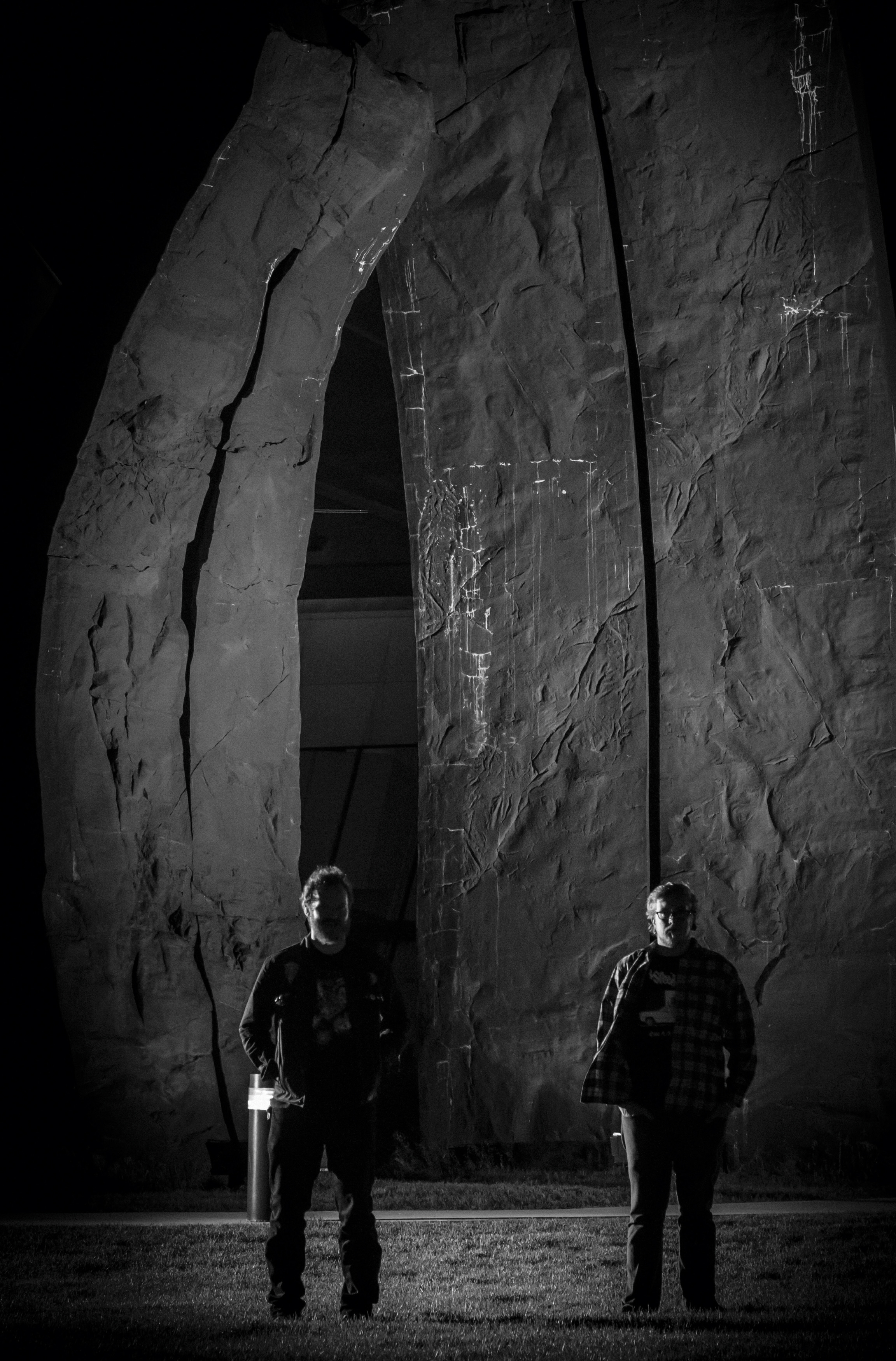
Ommadon coverAs noted, this band has but two members, both formerly of the group Snowblood. David Tobin handles guitar work and some of the noise elements, while Ewan Mackenzie is on drums, keys, and other noise contributions. They clearly are comfortable playing together, and it sounds like, as these two pieces progress, they’re in symbiosis with each other. This record, which was recorded live was mastered by Billy Anderson, also demands your patience in more ways than just its running time, though. There are very long portions of repetition, a hallmark of this style of music, and it’s there to create an atmosphere and get your head into the dream. Newcomers to this type of music, or even this band, might need to adjust on the fly, and that might not be easy. If you’re already tuned in, no explanation is needed, and you can slip under the dark waves and go for this mammoth journey.

First track “VI” runs 47:15, so basically it’s as long as many full metal records. Hell, it’s longer than most. The song open with some noise interference and slow pounding that begins to set the slithering, calculated pace. Sounds ramp up and fall, almost like a siren building and dissipating in the distance. That element returns often, as do the guitar riffs that dominate the bulk of the song. The exercise in extreme repetition really gets going, with the band sinking into it hard and making you commit. A wave of white noise begins to surface, and during the second half of the song, that becomes an even greater presence. The first hints of compositional changes strike at about the 30-minute mark, and they begin to bend melodies and add new twists into things. The temperature starts to rise, and along with it the humidity, and chillier guitars blend in and meet up with an added force of drone. Remember that white noise? It kicks back up and starts to take over, and the track eventually fades out into a sea of cosmos.

“V2” is just a bit shorter at 39:28, and it opens in feedback and crushing volume. Then everything gets celestial, feeling as if it’s floating off and into orbit, and the music becomes sleep inducing in the best possible way. That doesn’t mean it dulls you. Rather, it intoxicates, sort of like how your mind feels after a few strong beers. The band eventually hits a sludgy tone, letting things get uglier and burlier, and some of the elements and melodies from the first track revisit, helping tie this whole record together. The band keeps hammering with a fervor, punishing and unloading the lumber on you, and each haymaker they deliver does more damage and further aggravates the bruising. With about 10 minutes left, the white noise comes crashing again, but the riffs more than hold their own. The final minutes stomp like a mammoth, with more sludge rising up and everything in front of it being torn asunder. The calm then arrives as the track reaches its conclusion, with cold winds pouring out, the stars again becoming a destination point, and the song disappearing into darkness.

This record isn’t bound to be everyone’s thing. And that’s OK. People who can appreciate this level and style of drone metal are a special lot, and having records like this come along is like delving into a giant feast, or tapping into that stash of choice session ales you have been saving for a long day of exploration. It’s a thick, massive, crushing display, and it’s about as heavy a record as you’re going to find in this category. Ommadon are here to crush your will to live, and they’ll do that to you whether you understand their ways or not.

For more on the band, go here: https://www.facebook.com/pages/Ommadon/122816124443493

To buy the album, go here: http://www.domesticgenociderecords.com/#%21product/prd15/2457483781/ommadon-%2522v%2522-2xlp

For more on the label, go here: http://www.domesticgenociderecords.com/

PICK OF THE WEEK: Name changes, but Bastard Feast devastating as ever on new ‘Osculum Infame’

Bastard FeastLet’s end the week on a fairly aggressive note, why don’t we? Hey, we’ve worked all week, some of us slaved through classes (yes, they go on during the summer), and some of us have had grueling commutes that make us want to throw shit off a bridge. Maybe your week involved all of those things, and if they did, please have a beer and settle down. I’m worried about your blood pressure.

If you’d rather associate with some metal that perfectly suits your mood and anger, might I suggest Portland, OR., smashers Bastard Feast, whose new record “Osculum Infame” might be right up your alley. This isn’t a new band, as you might know them better under their old moniker Elitist (their 2012 debut was “Fear in a Handful of Dust”). The new name fits them a lot better and at least stands out more. As for the music, it is corrosive, heavy, angry, and devastating as well, mixing elements of sludge, black metal, crust, and hardcore into the mix. Yep, lots of bands do that, right? True. But what counts is how the band immerses themselves into it and makes you feel every bit of it like you’re being attacked by an MMA fighter on bath salts. Bastard Feast certainly do with flying colors. This record is heavy and rowdy as hell, and that’s why we enjoyed it so much.

Bastard Feast coverThe dudes who comprise this wrecking machine are as follows: Josh Greene (who also plies his trade in Ephemeros) is on vocals; Taylor Robinson and Justin Yaquinto handle guitars; Jesse Apsy (who also goes by “Thunderfuck” in some circles) is on bass; and Nick Parks is on drums. In case you haven’t figured this out yet, these guys absolutely kill on this record. It has just the right amount of anger, spite, heaviness, vitriol, piss, vinegar, you name it. They get in, salt your wounds, piss you off, and have you ready to burn down a horse stable along with them. The horses, of course, would be evacuated in advance. We’re not savages.

“Bloated City” gets thing started with a bang, as Green’s black screams greet you, and then the rest of the band begins to steamroll hard. The playing is gritty, the music ugly, and it sets the stage about as well as one could expect. “The Serpent Spoke” is sludgy and mean, with damage-riddled playing that could warp your senses, and later a calculated, slow-driving pace does the rest of the mauling. “Fields of Black Cancer” isn’t just an inviting, miracle place of happiness and joy in theory, it’s a song that matches that glimmering sentiment! The track has hardcore edges, noises that make your ear drums throb, a whole lot of crushing, and even some dissonant notes to make sure you’re paying attention. Then we play polar opposites, as “A Tribute to What We Stole” blasts by in under two minutes, just blinding with rage, and it’s followed by “Synthetic Messiah,” a murky, nasty, buzzing 10-minute track that shows just how sinister these guys can be. It slowly, methodically eats away at your mind, with psychedelic wash and some gazey guitars, and the track eventually drowns out in a cosmic storm.

“Noose of Smoke” gets things back to guttural again, with a thick bassline as your warning shot, nasty growls that show no mercy, and even some doom-infested playing that shrouds everything in darkness. “Old Father” goes for broke with speed and riffs that sound like they’d make Converge envious, and the bulk of this thing is intense and molten hot. “Watchful Defiler” piles on even more damage, as it’s weird and monstrous at the same time, with wild growls and noise ringing out. “Claustrophobic of This World” unleashes the best riff on this whole album, and possibly their entire catalog, and that goes into a classic metal assault, guitars that create fog, and a devastating, punishing finish you might not see coming. Closer “The Rat Through Our Veins” injects more hardcore violence, basslines that are thick as steel coils, and scary vocals that make Greene sound unhinged. The track then goes into sludgy doom pits, deranged and menacing swirling, and finally a last gasp where the guitars bleed out all over the place.

Bastard Feast aren’t re-creating the wheel. But they are making a better one that gets added mileage and is more dependable than a lot of the other models out there. They probably could have made just as raucous a record had they changed their name to Cereal Feast, but whatever. The name fits, “Osculum Infame” absolutely crushes, and this band is getting off to as great a fresh start as one could expect. This band is ready for blood and is a hellish force, and hopefully this is just the beginning of their campaign of terror.

For more on the band, go here: http://www.facebook.com/bastardfeastofficial

To buy the album, go here: http://e-shop.season-of-mist.com/

For more on the label, go here: http://www.season-of-mist.com/