Black metal royalty Ihsahn continues pushing sonic boundaries on ‘Eremita’

Becoming legendarily great at something can be a hindrance. Michael Jordan was one of the greatest basketball players of all time, inspired an entire generation of kids to take up the sport, won six championships, and still has a shoe line that’s much sought after. But when he tried baseball and team management, he was the runny shits. Same goes for Wayne Gretzky, one of hockey’s finest players of all time who just couldn’t transfer his greatness to coaching. Yet people were shocked that these incredible athletes couldn’t take one aspect of their skill set and use it in other areas of their industry. Dominance created too-lofty hopes in others.

Sometimes it does transfer. To keep with the sports theme, Mario Lemieux was a magnificent hockey player and went on to become a successful owner of the team he saved a million times, the Pittsburgh Penguins. Or to music, John Lennon was a member of perhaps the most iconic band in the history of mankind The Beatles, yet he reinvented himself as a solo artist who had just as profound an impact on society, albeit in a very different manner than the Fab Four. Something about these people sparks greatness, and they simply don’t seem to know how to fail.

I’d also pin Vegard Sverre Tveitan, better known as Ihsahn, into that latter category. At one time, he fronted one of the most effective, well-known, infamous black metal bands of all time in Emperor, a band so well regarded that their U.S. tour a few years back was a thing of legend. Not something you stumble upon very often. While he’s tried his hands at other things outside his former band, never has he come as close to equaling his younger years than he has with his solo project. Part of what made his modern music so intriguing is that Ihsahn never has been comfortable to just rest on his black metal laurels and rake in cash from an already loyal fanbase. Instead he pushed and reinvented himself as an artist whose work must be considered separate from what he did in his legendary band because he’s accomplished that much with it.

Sure, some of what you came to know about Ihsahn from Emperor is on his new album “Eremita.” There remain threads of black metal that course through his music, and his creaky growl is pretty unmistakable. But he’s gone further toward the boundaries of prog and jazz with each release, and his fourth effort is his most varied and challenging yet. Even if you’re a fan of his other albums — 2006’s “The Adversary,” 2008’s “angL” and 2010’s “After” — you may be surprised by what you hear on this album. He really goes for it musically, and by aligning himself with guest musicians such as wacko free-thinker Devin Townsend, guitar wizard Jeff Loomis, and guest singers Einar Solberg (Leprous and live keys with Emperor) and Heidi Tveitan (his wife, who also played with him in Peccatum), he’s able to branch out into unexplored terrain with abandon and ambition. it’s easily his most interesting piece of music to date.

All of this growth and excitement to try new things also make the record a little tough to get close to at first. It took me a few listens to really wrap my head around these songs and, in some cases, enjoy them because everything is spread out over so much space and has so many things going on at the same time. In the case of closer “Departure,” it is the one Ihsahn song in his whole catalog that I enjoy the least (the portion that features Heidi aside). It’s feels kind of muddy and knuckle-draggy and comes off as a sloppy stab at nu-metal. As for the rest of the songs, they’ve grown on me significantly, and I keep hearing new things in these creations each time back.

Ihsahn handles the bulk of the instruments as usual, playing keyboards, bass, and, of course, guitar, at which he’s always been astonishingly unstoppable. He’s now at about half growl, half clean singing, and he’s more than capable of both (though Townsend also helps on “Introspection”). Tobias Ørnes Andersen takes drums, and Jorgen Munkeby is back on sax, as his work in particular plays a huge role on these songs. To put it lightly, he’s everywhere, yet if you’re a fan of his regular band Shining (the Nordic one, not the Swedish suicide enthusiasts), he may seem a little in control of himself. He’s fun to hear play and never makes the songs about him.

As the opening bookend to aforementioned “Departure,” “Arrival” is a song that sounds a lot like Opeth when they still embraced death vocals, and the bleakness washes over you with lines such as, “Inside this cloak of shame there’s nothing worth undoing.” Fair enough. “The Paranoid” is the fastest, most black metal-friendly cut on the record, though it too finds itself closer to prog when all’s said and done, and Ihsahn spits out his words when howling, “The shame feeds the anger feeds the shame!” “Introspection” slows down a bit and follows a calculated, chopping pace, and that leads into an interesting duo “The Eagle and the Snake” and “Catharsis,” that are filled with exploratory and jarring sax work, a less aggressive agenda, and path that might leave you reluctant to follow at first. These are two that took me some time to fully digest, but now I’m starting to really dig them. “Something Out There” turns the album on its ear, with orchestral majesty, fury, and what sound like Apocalyptic horns at the end. Penultimate “Grave” runs more than eight minutes and makes the most of its time, with a slower pace, a really dark, almost cult-like vibe (especially with the chanting), and a true doom sentiment.

Ihsahn has made four records that stand in contract from each other and his work with Emperor. It certain wasn’t a slam dunk that he could veer so far away from the sounds people grew to love from Ihsahn and make them work, but he has been wildly successful. He’s one of those rare cases where someone can lay down a time-honored catalog of work and go onto something else that, in its own way, is just as rewarding. Just as neat is that when he comes back at us with album No. 5, it’ll probably be something altogether different. That should be fun.

For more on the band, go here: http://www.ihsahn.com/

To buy the album, go here: http://www.candlelightrecordsusa.com/store/

For more on the label, go here: http://candlelightrecordsusa.com/site/
Chrome Waves, Ephel Duath keep things short, enthralling on respective new EPs

Chrome Waves

My inbox and list of records to which I need to pay some attention are getting to maximum overload. This is always the case come late spring/early summer, when the barrage of releases is at its apex, and scrambling to catch up becomes a struggle indeed. But it’s also a wonderful problem to have. Who’s going to bitch because they have too much new music to examine?

Contained in that avalanche of promos are two smaller releases that have grabbed my interest. One is the debut EP from a band made up of musicians from some pretty well-known metal bands that have combined forces to make up a brand new machine. The influences of their other bands are there, for sure, but that also makes for one really riveting ride. The other is a new EP from a band that’s been doing its thing for a few years now but never really hit on that magical formula that made them stand out. With a new voice in tow — it’s someone most extreme metal fans should know well — they may finally have found that spark.

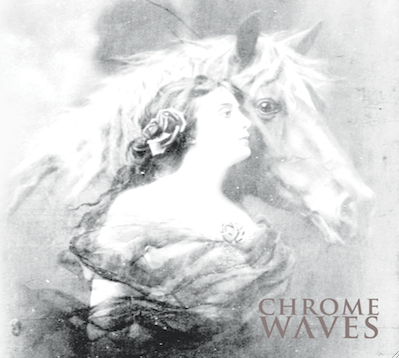
First up is the self-titled debut EP from a band called Chrome Waves, who count among their lineup members of bands such as The Atlas Moth, Gates of Slumber,Twilight, Wolvhammer, and Nachtmystium. Oh, and now they have Jef Whitehead (Leviathan, Lurker of Chalice) sitting behind the drum kit as well. If you combine all of those bands in your head and try to make a rudimentary computation of what you might hear, you’re probably going to be pretty spot on with what greets you on this six-cut effort, that grew more enjoyable each time I spent time with it.

The band is comprised of Stavros Giannopoulos (vocals), Jeff Wilson (guitar/synth), Bob Fouts (bass, drums on the record), and, of course, Whitehead, and despite only being together as a unit for a short amount of time, they’ve already got the chops of a veteran band. Giannopoulos’ hellish vocal work is reminiscent of the Moth’s earlier, more savage work, and he just goes for broke on these songs. The rest of the band backs him up with a backdrop that’s equal parts black metal, metal gaze, psychedelic rock, and doom. It really is a perfect mix of what each guy brings to the table, and it all blends together wonderfully. It also should be noted this is the first album being released by new label Gravedancer, who have put together a rock solid lineup that also includes Conan and the reactivated Byzantine. We’ll have more on those bands in the future, that I can assure you.

Chrome Waves begin their first outing with a dreamy, trance-inducing instrumental track, that flows over somber melodies, gazey guitars, and a foggy atmosphere that bleeds right into “Height of the Rifles,” where the vocals just go off, the melodic thunder bleeds over, and the chaotic emotion pulls you along. “Light Behind a Shadow” opens with a punchier riff that leads to a more aggressive song, but one that never cuts back on the psyche wonder. Giannopoulos howls like a banshee, practically spitting out his words, yet the madness is allowed to subside on “Eyelids of Dawn,” a tranquil track that is perfectly named because it would sound wonderful digested while the sun is struggling to break over the horizon. “That Cursed Armored Train” packs a wallop, but it’s also disarmingly catchy, catching you and pulling you under before your mind is aware that it’s captured. Closer “Blackbird” greets you with shimmering keys and a nice thick blanket of smoke, and there is so much going on with this song, it’s sure to take repeated listens just to peel back each layer of sound.

I am really excited about this new band and what their future holds. Of course, I’m also really big into all of their respective other projects too, so I’m not rooting for this to take precedence. But Chrome Waves are a wonderful summation of all their parts, and their music gets better with each listen. This may end up being my new go-to, drive-in music each morning for my commute. It’ll make me less hostile, that’s for sure.

For more on the band, go here: http://www.facebook.com/chromewavesofficial

To buy the album, go here: http://gravedancerrecords.bigcartel.com/

For more on the label, go here: http://gravedancerrecords.com/

Ephel Duath

I always found Ephel Duath’s music neat and fun to listen to, but that’s all. What a great way to intro their new music, huh? It’s OK. I’m going somewhere. The band always has had a million interchangeable parts (save for founder Davide Tiso), and I never really felt like I got to know what the band really is about. So I listened to their music when review time came up but always kept them at a bit of a distance. I think that’s about to change with their very personal, very dark new effort.

The band last checked in with 2009’s odd “Through My Dog’s Eyes,” about the life and adventures of a stray dog. It’s a pretty decent record, and I still have my Earache-issued promo somewhere on my shelf in my game room, but I haven’t spent much time with it recently. But things have totally changed as far as my interest in the band since then, as now on vocals is the immortally awesome Karyn Crisis, ex-leader of way-before-their-time Crisis, as well as Tiso’s wife. She brings a character and charisma to the band that they’ve always lacked, and her authoritative, confident voice changes Ephel Duath from bizarre oddity to must-hear machine.

We only get three songs with “On Death and Cosmos,” but I’ll trade quality for quantity any day. On this effort, Crisis and Tiso are joined by drummer Marco Minnemann (Illogicist, FFW, Tony MacAlpine) and bassist Steve DiGiorgio (ex of bands such as Death, Autopsy, Testament), a pretty solid lineup, and they do wonders with what they offer here. The music is progressive death-leaning, but not in a pretentious or dorky way, and Crisis always injects and sense of danger and chaos into the proceedings when she’s barking out her diatribes.

“Black Prism” is our opener, and it’s tricky and mind-bending musically, with Crisis switching back and forth between growls and clean vocals. “My center is now a black prism,” she howls, giving you an indication of just how dark things are in this song. She also commands, “Look to me as I dissolve,” leaving you feeling bleak and depressed as ever, which indicates just how great she is at transferring her feelings over to you. Enjoy that. “Raqia” has a lot of bends built into it, as this is the proggiest cut on the record, with guitar work that seems hellbent on spinning you in a circle. But it’s fun and never nausea-inducing, and as always, the vocals prevent this song from going off the rail into somewhere too weird. “Stardust Rain” is the most interesting composition of the three tracks, and Crisis’ words drip with emotion. Not to beat a dead horse, but this is how Crisis single-handedly elevates this band, because you believe every word she shouts and feel every ounce of the pain she’s conveying. I hang onto her every word because she always has something vital to say.

It’s great that a band as promising as Ephel Duath survived so much chaos and came out a better unit for it. This mini document hopefully is a sign of awe-inspiring things to come ahead, and they just may end up becoming one of this year’s great comeback stories.

For more on the band, go here: https://www.facebook.com/EphelDuathOfficial

To buy the album (out soon in Europe; released in August in the U.S.), go here: http://www.agoniarecords.com/index.php?pos=shop&lang=en

Or here: http://www.metalhit.com/store/agonia.htm

For more on the label, go here: http://www.agoniarecords.com/

Botanist expands sound and apocalyptic vision on stunning ‘III: Doom in Bloom’

One of the challenging things about writing about music is that people often ask what certain bands sound like. “What does your shirt say? Ahab? What do they sound like?” And I’m always really bad at answering. “Uh, like really slow doom but it feels like you’re listening to it at the bottom of the ocean.” Blank stares, blinking, I’ve seen it all. That’s not even a hard band to describe; yet it takes me forever. You wonder why it takes me 1,000 words to describe albums.

But anyway, there are other bands that defy most descriptions, and that generally ruins my life. I’ve tried to explain both Albebaran and Anhedonist to people with very little success because it’s really hard to convey just what you’ll experience with those bands. It’s more than just some riffs, a particular style of vocals, or whatever. It’s far deeper and involved than that. And wow, when it comes to Botanist, I’m at as loss. A really close friend of mine I talk to every day, I recently told him about a promo I got that he wanted to hear. I can say weird shit to describe it, and he’ll get it. For example, I said, “Kind of angular guitars, but not in an asshole way,” and he totally got it. But I’ve tried to tell him what Botanist sounds like, and I couldn’t even come up with weird ways to do its sole creator Otrebor’s music justice. Actually, now he knows because I played him the double album that introduced the Botanist’s (our main character in these tales) bizarre surroundings to the world, and he gets it now. That’s the trick. You kind of have to step into this leafy, forestal place to completely align yourself with what’s going on. That’s a challenge but a reward.

We’ve long told you about Botanist, and we were honored to debut a song from his new record “III: Doom in Bloom” and its companion disc “Allies.” You responded in kind by visiting those posts en mass. I like to think we had a tiny fraction of an influence in your interest over these songs, but let me not kid myself: It’s Otrebor’s twisted genius and the apocalyptic tale he’s created that drew you into those songs. His dulcimer-and-drums songs are like nothing else in the metal world, and while’s it easiest to label his music as experimental black metal, that’s also cutting it short. If you’re new to Botanist, you’ve never heard anything like this before. If you are a fan and listened to “I. The Suicide Tree/II. A Rose From the Dead” religiously like I did, that assessment still stands. Botanist’s world has changed significantly.

Otrebor still primarily employs the aforementioned instruments and pipes in with his creaky, growly vocals, but you’ll notice right away the textures have changed. “I/II” has 40 quick, typically fast-paced songs that sprawled into each other. Here, there are but seven cuts, practically all epic-length, and the tempo is much slower, sorrowful, and crushing. I’d go as far as to say the album is more accessible, though it’s not like you could play this for a mainstream rock fan and have that person get it. This record still takes a special kind of listener and demands a lot of anyone who spends time with it. But as I said, you’ll win out in the end because it’s a fascinating, riveting listen, and it shows you a totally different side of the artist behind this music.

Another element you’ll notice is the large amount of whispered vocals, but Otrebor isn’t just doing that to be mysterious. When you hear those whispers, you’re hearing what Azalea, the vengeful force of Nature, is speaking into the ear of the Botanist, which are instructions and philosophies to bring about the end of the human world so that the plants can rise up and take back what is theirs. If you’re new to this story, I suggest going to Botanist’s site, listed below, because you have a lot of catch-up work to do. But you easily could listen to the music for what it is and still enjoy it. You’ll just be lagging behind on plot.

I find a lot of the music on “Doom in Bloom” quite gorgeous, dramatic, and, at times, serene. You could make an argument that this record is only a metal album by its extreme musical nature and growled vocals, but other than that, it’s very difficult to classify what’s going on here. Hence what I said in the opening.

First cut “Quoth Azalea, the Demon (Rhododendoom II),” a song we premiered for you in the spring, is moving and somber, almost as if Azalea’s mission is both necessary and troubling morally. Eventually some moaning, droning vocals come into play, but for the most part, this is Azalea’s moment. “Deathcap” is breathy and hissing, with creaky vocals, some wild shrieks, and a baroque feel that’s both sophisticated and violent. “Ganoderma Lucidum” has a vintage sci-fi, isolationist feel to it, and the whispered and shrieked vocals run headlong into each other as a bunch of activity erupts.

“Vriesea” is built on an almost military style drum line, and the percussion actually leads this number, with the dulcimer strikes being kept to a minimum. I think I even heard an accordion in there, unless that’s just more string trickery unleashed by Botanist. “Ocimum Sanctum” is mesmerizing and trance inducing, and it keeps a sleepy tempo that’s occasionally ripped apart by shrieks. “Amanita Virosa” is the fastest song of the bunch, but it would be considered a slow cut on “I/II.” Here, the cries grow more desperate and harsh, and the song perfectly leads into the conclusion piece “Panax.” Just realized Botanist is throwing out a lot of herbal items that generally are used to soothe humans, so maybe the plants have some more devious trickery up their hands to pull us in. Anyhow, like the opener, the feeling goes back to mournful, and there are sections that are almost pastoral and spiritual in nature. It’s an interesting close, one that makes me really curious as to what lies ahead on the next record.

Disc 2, while it maintains a philosophical relationship with nature, is more of a loose section of music that explores other parts of the world Botanist created. Simply put, Otrebor had a ton of drum parts left over, so he decided to get together with other musicians he respects to do full-band songs. Each song has a different lineup, and thusly, all cuts get both band names and song titles to differentiate. It’s a really interesting disc, as you get to hear what Botanist could accomplish if he went the traditional route and what other minds bring to his creations.

Take, for example, “The Ejaculate on the Petals of the Femme Orchid I,” accredited to Matrushka. It’s a gazey, ambient, creaky transmission that sounds like it belongs floating through a far-away galaxy than imbedded in wooded lands. Or “The War of All Against All,” a song we premiered for you that’s labeled Cult of Linneaus (made up of members of the band Nero Order). The song is sweeping and pure doomy black metal, and it’s my favorite track on this companion disc. The Aborist track “Total Entarchy” really turned my head with its dirty bluegrass influence, and it reminded a bit of the Panopticon album I reviewed earlier in the week. I’m purposely not going to say much more because I don’t want to ruin the surprise of these pieces. It’s fun to hear these tracks for the first time, and they do stick with you beyond the initial shock wearing off.

Botanist remains a house favorite here at Meat Mead Metal because this project is so unique and interesting and handles apocalyptic destruction in a way no other band has imagined. On top of it all, the music is always giving and ambitious, and no two things he does sound alike. There is more to come, by the way, and part of the reason we aren’t further along is production of this album got held up a bit. That just gives us more time to fully absorb the wonders of “Doom in Bloom,” another captivating vision from metal’s most thought-provoking performer.

For more on Botanist, go here: http://www.botanist.nu/

To buy the album physically or digitally, go here: http://verdant-realm-botanist.bandcamp.com/

For more on the label, go here: http://www.totalrust-music.com/

Rush’s ‘Clockwork Angels’ is a glorious adventure of evil, intrigue, and mystery

I wouldn’t want to be a veteran band in today’s world. I’ve been to far too many shows by bands that have deep, well-loved catalogs who try to introduce new material to their live sets only to be met with tepid applause and general disinterest from the throng in front of them that just wants them to play the hits. For as artistic an endeavor as music can be, its fans can be awfully closed minded to new things.

There’s also the argument as to whether an older band’s new work measures up to the songs people have loved for years, and yeah, a lot of times the glory days cannot be equaled or even somewhat mirrored. A peak is called a peak for a reason, and sometimes seeing a group with many albums under their collective belts make relevant new sounds is like watching an old-time ballplayer trying and failing to swing for the fences one more time. It can be a little bit sad to witness, and that’s what leads so many of us to spark those “remember when” conversations so we all can go back and relive those good times.

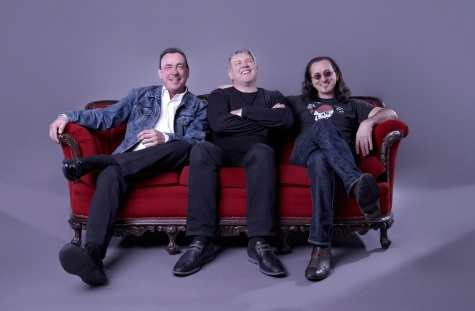
But there are some exceptions. Iron Maiden have put out some really good material since Bruce Dickinson returned to the fold for 2000’s excellent “Brave New World,” and their live show is a thing to behold. I’d still put it up against any young band’s performances any day of the week, and my guess is Maiden always will come out on top. Another band like this is Rush, who remain a vital, blood-pumping band more than 30 years after their formation, and they remain steady and hungry on the stage and in the studio. I saw them two years ago in Pittsburgh on their “Time Machine” tour, and it was probably my 10th time or so seeing the prog rock power trio. They blew the doors off the place, and in the process, they converted my wife to be a fan of their music. On that night, they played two new songs they promised would be a part of their next full-length album “Clockwork Angels,” and now, we finally have that new platter in our hands. It was hard to process what I was hearing that night because you need to filter everything through the noise of the crowd, the distance from the speakers, and the unfamiliar nature of the songs at the time, but they sounded promising. I had no idea just how positive they would wind of being.

“Clockwork Angels,” the band’s 20th studio album, is a force to behold. It’s their best work since the 1980s, and it easily blows away anything they’ve released since “Roll the Bones.” And there were some good things the band put out in that time, but none match the intensity, passion, and magic of this record, which I’ve been playing regularly since I got my hands on the thing. I admit Rush is one of my favorite bands of all time, and that’s always made me equally protective and critical of them, but this fantastic new album is like a promised great gift that winds up totally exceeding expectations.

Drummer Neil Peart, never one to sit on his laurels when it comes to concepts and lyrics (not to mention his god-like, influential drumming), really goes for broke on “Angels” with a concept piece about a young man who goes on a life journey, encountering elements of a steampunk world, alchemy, cities of gold, carnival folk, and just about every bizarre element you can imagine, while all is overseen by the deity-like Watchmaker, the one who makes everything tick. The story, to be adapted into a book by Kevin J. Anderson, is not very abstract, so you’ll be able to understand what’s going on, and the plotline does not take away from the musical presentation, which so often happens when bands try this type of thing.

Peart does and doesn’t string all these songs together. It’s clear you’re on a single journey, but each song is more like a snapshot of what’s going on, and while the album works better when taken as a whole, you can pull out individual pieces and enjoy them on their own. Also, in a move that is classic Peart, the themes and lessons learned on the album are easily applicable to one’s own life, so there’s a piece of yourself in these songs. Who can’t identify with a line like, “I believe that sometimes you have to be wary of a miracle too good to be true,” on excellent “The Wreckers,” a song so ready for radio, it had better be there by now? There’s plenty more where that came from.

Bassist/vocalist Geddy Lee and guitarist Alex Lifeson also are on top of their game. Lee’s bass pops and grooves in spots and remains a steady hand along with Peart’s drumming, while Lifeson dabbles with textures, atmosphere, psychedelic rock, and straight-up gut-punch riffing that’s as meaty as anything in the band’s catalog. It’s so much fun to hear these guys playing both precisely and loosely, and I thoroughly enjoy both of their performances on “Angels.”

The albums opens with the two cuts concert-goers heard on their last tour, the riveting “Caravan” and “BU2B,” a track that’s rocks pretty damn hard and has Lee bellowing our of antagonist, “The Watchmaker loves us all to death.” The title track follows, bearing some strains of classic Rush, and while it takes some time to develop, the payoff is totally worth it. “The Anarchist” is one of the best tracks on the album, and it, too, swims in atmosphere and murk a bit but shines through with a killer hook that also should make this radio fodder for the foreseeable future. “Carnies” and “Halo Effect” are polar opposites, the former an edgy cut that visits the world of trickery and illusion, while the latter is a ballad that feels a little syrupy but ultimately works. “Seven Cities of Gold” is fun and full of exploratory imagination, even if the goal is a mirage, and “Headlong Flight” kicks back into fun, full-on rock that should ignite audiences live. “Wish Them Well” is a decent cut, one that hasn’t really resonated with me yet, though I plan to keep trying, and closer “The Garden” is a slower, life-lesson infused song that wraps up the tale with the proper emotion and weight. It, too, is a slower song, and Lee turns in some of his most unique, impassioned vocals on the entire record.

“Clockwork Angels” isn’t just an incredible late-career album for Rush. It’s one of their best front-to-back records that deserves the adulation saved for brainy opuses such as “2112” and breakthrough powerhouses like “Moving Pictures.” It’s the best of every Rush world mixed into one, and it’s an album I see myself sticking beside well into the future. I also can’t wait until the band touches down in my hometown on Sept. 11 to play live again, and I imagine these songs will take on new lives when interpreted on stage. I also imagine there won’t be any catcalls for the band to dig into their treasure chest, because what’s contained on this wonderful 66-minute journey is way too good to not want to experience in full.

For more on the band, go here: http://www.rush.com

To buy the album, go here: http://www.rushbackstage.com/rushbackstage/cd-rush-clockwork-angels/index.html

For more on the label, go here: http://www.roadrunnerrecords.com/

Panopticon’s ‘Kentucky’ is a moving, impressive fix of bluegrass black metal

I grew up in a family and community of steelworkers, in a town close enough to the smokestacks that I always knew the identity of our area’s primary commodity, and among people who all had been born and raised with some connection to the industry. Even with steel having been derailed as a identifying symbol some two decades ago, it’s nearly impossible to drive through Pittsburgh and its surrounding regions without seeing the skeleton of an old mill or the red, yellow, and blue hypocycloids that ended up being adopted by the Pittsburgh Steelers as part of their emblem.

Even with steel basically dead in the area save for a few plants, and the medical industry supplanting it as the dominant industry in the region, we still find our heritage in the mills. We’re steel people, seen by outsiders as rugged, tireless blue-collar workers who haul their lunch pails to work every day, even though that time has passed. But figuratively, it’s who we are, and we’re proud and protective of it.

That’s just where I live. Other places, obviously, have different industries they call their own, and black metal musician Austin Lunn of Panopticon is tackling the one of his adopted state to uncover for those who perhaps aren’t aware of the history. “Kentucky” focuses on the coal industry, a means of labor that provided jobs and means of living for years for generations in that region and many others (including here and in neighboring West Virginia), and it’s obvious from some of the tragedies we’ve seen with mine collapses over the years that it’s a dangerous profession. That’s not to mention the long hours, strenuous labor, and even illnesses that are connected to being a coal miner, as well as the strife miners had for decades battling for fair wages and safe working conditions. All of these things Lunn tackles on “Kentucky,” and it’s quite a historical and sociological examination of coal mining and the people who worked in and are affected the industry.

In the past, Lunn has incorporated elements of folk and traditional American music into his swirling black metal, but never more than he does here. Sort of like Horseback, Earth, and U.S. Christmas, Lunn embraces and pays homage to our nation’s musical threads, but arguably he does it more effectively than anyone before him on “Kentucky.” That doesn’t mean it’s all banjos and strings — though there is a lot of that in this bluegrass/folk/black metal hybrid — as Lunn still has a knack for emotional, thunderstorming metal that’s executed with a passion and intensity matched by very few modern musicians. This collection also is very interesting to me because I happen to be a fan of all the forms of music Lunn approaches on “Kentucky,” and I love to hear how all of these divergent sounds come together to form something unlike anything you’ve heard before. It’s moving and fascinating.

Lunn puts together some of his own compositions on this record, as well as his own readings of traditional songs sung by miners and other laborers through the years as anthems of solidarity and struggle. Mixed in are clips of various testimonials and bits from documentaries about the coal industry that gives you a heart-breaking look at how some of miners feel disregarded by the industry they served and had to go to battle for things in which they believed. It also touches on how the lands often are compromised by the industry and how distrust builds for the companies, politicians, and even the clergy the workers thought had their backs.

The record opens with the bluegrass instrumental “Bernheim in the Spring,” a lush, string-dressed song that acts sort of as opening credits before launching into the monstrous, howling “Bodies Under the Falls,” a massive barrage of power and anguish that’s Panopticon at its black metal finest. But halfway through the song, the fury fades and the folk and bluegrass kick back in and take over for a spell, letting in a sense of back porch relief after a strenuous day “at the office,” before the lightning rips through again and shakes the whole thing to its foundation. “Come All Ye Coal Miners” is a traditional cut that’s given fairly true treatment, with a heart-on-sleeves approach, soulful harmonizing, and voice samples about miner treatment. It’s just a damn good piece of bluegrass.

“Black Soil and Red Blood,” a track that reveals its sentiment right there in its title, is a melodic slab of black metal that also is filled out by naked acoustic passages and an extended story from an old miner who talks of his disillusionment and struggle from trying to see that he and his fellow workers got fair treatment. The pain and betrayal in the man’s voice is utterly gripping and is a well-chosen piece for this song. It concludes with a cascading, heart-rushing section of guitar work that sounds like a tidal wave of sweat and tears. “Which Side Are You On?’ the classic Florence Reece-penned pro-union song that has been covered over the years by artists such as Pete Seeger and most recently Ani DiFranco, sounds incredible and is as much a tribute as anything else on here (it also would be a beautiful way to battle the Scott Walkers of the world). It’s a rousing, exciting song that drips with power. “Killing the Giants” gushes with intensity both musically and lyrically, as we hear crushing tales about how the mountainsides and nature are affected and defaced by the mining industry, as Lunn’s guitar work exudes sorrow and anguish. When the calm finally sets in, Lunn bows out with two quiet songs – “Black Waters,” an echoey, ambient-style instrumental, and the title track, a beautiful outro of mountain music that ends “Kentucky” on the right note.

Lunn doesn’t just make records, he tells people’s stories. He gets involved, understands his subject matter, and gets inside their psyches to translate their inner struggles and feelings.  He did that with incredible precision on last year’s revealing “Social Disservices” and outdoes himself on “Kentucky.” This isn’t just a record, but a story of a community and its struggles with a major industry. They’re at its mercy but also have had their lives built around it. This is an incredible document, one of the most impressive, deep metal records you’ll ever hear, and a statement from an artist who’s proud of his musical heritage and isn’t afraid to push black metal as far as it’ll go.

For more on the band, go here: http://www.facebook.com/PANOPTICONBAND

To buy the album, go here: http://www.handmadebirds.com/store/index.php

And here: http://www.paganflames.com/

For more on the label, go here: http://www.handmadebirds.com/

Witch Mountain deliver more bluesy, vintage doom on ‘Cauldron of the Wild’

I’ve complained to more than one person about Sam Dunn’s “Metal Evolution” series that aired on VH-1 in the States, where the anthropologist/film director dissected heavy metal, presented a study on each of its genres, and explained the origins of the music. When taking on the influence jazz and, especially, blues had on the genre, he seems dumbfounded by just how much those styles affected heavy music.

How could he NOT know that? You’re hosting this series. If you don’t know, who does? Maybe I’m being overly critical of one statement. Some people have told they think he’s pretending to learn along with the audience. But if I, some asshole on a couch in Pittsburgh already know this, how does he not? Whatever. He got to interview Ronnie James Dio and I didn’t.

Anyway, obviously had it not been for blues, there would be no metal, and there certainly there would not be doom. Blues are the roots of the genre, and early artists such as Led Zeppelin (huge American blues enthusiasts) and standard-bearers Black Sabbath washed themselves in the stuff and transformed what they loved into an ugly, hulking monster. Four decades later, things have only gotten more sinister, and many of today’s doom bands are terrifying to hear because they’ve taken the genre straight to hell. In the best possible way. Yet there are those that still cling to some of doom and metal’s earliest incarnations and remain fervently obedient to that style of music. Oregon’s Witch Mountain are one of those bands, and they’re wonderfully traditional through and through.

Witch Mountain have had a pretty bizarre, uncharacteristic existence. They delivered an EP “Homegrown Doom” in 2000, then their debut album “Come the Mountain” in 2001, and then they disappeared. The band went on to tend to family matters and other projects, and they seemed destined to fade away fairly unnoticed by much of the metal world. But in 2009 things started to get going again. They played shows opening for Pentagram, another classic doom band that seemed like it never would reach the glory its members deserved, but instead of guitarist Rob Wrong handling vocals, they recruited Uta Plotkin. To say Plotkin’s voice is powerful would be a massive understatement. Her pipes are sirens, and she has an intensity and command not heard by many vocalists. Yes, there are plenty of strong singers, but they are not Plotkin. Her presence reignited the band’s fire, and in 2011, they returned with their stunning new album “South of Salem,” one of the most unexpected surprises of that year.

The band eventually signed on with Profound Lore, who reissued a CD version of “Salem,” and suddenly news surfaced that the band was ready to follow up their sophomore release already with another bluesy slab of retro doom. Witch Mountain, who have been dormant for most of their existence, transformed themselves into prolific creators practically overnight, and their third album “Cauldron of the Wild” already is here for the taking. Truth be told, I’m not even done fully digesting “Salem,” but I enjoy that album so much that taking on new songs wasn’t much of a problem for me.

Yet visiting “Cauldron,” I’m not as moved as I was with their sophomore record. One of the major issues for me, weirdly, is Plotkin, who was the reason I loved “Salem” so much. As noted, she’s an incredibly powerful singer, but that’s sort of her undoing on this album. There are times that, for some reason, her reaching-for-the-stratosphere singing sounds wrong to me. It sounds like she’s lunging for something that’s out of her grasp, and many of her high notes end up stinging the ears rather than soothing with smoky goodness. This isn’t a problem for the entire run of the record, but it rears its head now and again and makes things not feel right to me. And trust me, I’ve read enough reviews of this record to know I am pretty much in a corner all by myself on this opinion, but personally, I can’t get with some of her singing on “Cauldron.” At other times, I’m right along with her, enjoying her work as much as I did what she conjured on “Salem.”

The record opens with “The Ballad of Lanky Rae,” the tale of a 7-foot giant woman who roams and dominates the underworld with a male companion. It makes me think of a gangly Brienne of Tarth, if I may be a huge dork for a moment. Anyway, the rest of the band — it also includes bassist Neal Munson and drummer Nathan Carson — hits on a nice bluesy groove, but this is one of tracks where I feel Plotkin’s singing goes off the rails a bit. As far as her storytelling goes, it’s sharp and effective. “Beekeeper,” a burly, slow-driving number, also has some vocals that don’t do a lot for me, but the discomfort comes and goes as Plotkin evens out her delivery. From that point, the album gains momentum. “Shelter” is a Sabbath-friendly number that does smoke, and Plotkin really turns it on here, delivering a mostly steady performance. That leads into “Veil of the Forgotten,” where the singing stands out as a major plus, and killer ballad “Aurelia,” which is organic, emotional, and a little scary, especially with Plotkin’s warnings of, “Just run, run run.” “Never Know” closes things off on a high note (kind of literally as it has some nice stoner vibes), but eventually the songs explodes, and as much as I’ve criticized Plotkin, she exudes power and sexiness here, especially when she howls, “Don’t know if you’re dead, but I like it that way.”

Obviously I prefer “South of Salem” to “Cauldron of the Wild,” but opinions among most critics seem to swing the other way. It took a while to process these songs, but the ones that are working for me, I really like. The ones that don’t particularly turn me on haven’t gained much ground. I still revel in this band’s uniqueness, and Plotkin remains their most interesting weapon. I’d like to hear her a bit more grounded next time around, because she did that so well on “Salem,” and hopefully this band keeps making music at a fairly regular clip.

For more on the band, go here: http://www.facebook.com/witchmountain

To buy the album, go here: http://www.profoundlorerecords.com/products-page/plr-items/witch-mountain-cauldron-of-the-wild/

For more on the label, go here: http://www.profoundlorerecords.com/

German thrash veterans Kreator remain hungry as ever on ‘Phantom Antichrist’

This current run of young thrash bands trying to visit sounds that preceded their members’ actual presence on Earth? I don’t like it. Not that the effort is what bothers me; it’s more the execution. It doesn’t feel valid at all, and while I don’t doubt all their little hearts are in the right place, it doesn’t often feel very authentic. So I don’t indulge in it very much because I typically wind up not caring.

I blame two things for this: First, I grew up in the era in which thrash came into its prominence, and any part of my damaged hearing has to be blamed largely on me blasting various bands’ cassettes through headphones on my way to and from school each day. So there’s an obvious bias there of “the bands I grew up with are better than the ones coming out now” sort of thing that, admittedly, could be annoying. Second, I’m old and set in my ways, and I pass judgment on the new kids because they cannot possibly capture the essence of this genre since they were not there to understand how it came to be. Now and again, you get a Municipal Waste or a lesser known band like Obsessor that gets it right, but usually it’s one-and-done listening to most of the new thrash promos I get. This is why I’m always excited to get something new from an old favorite.

That’s not to say all of the veteran bands hit the nail on the head every time either. Do we even need to discuss what’s become of Metallica? Their Big 4 mates have done slightly better quality wise (though certainly their sales pale in comparison), as Megadeth have done an OK job rehabbing themselves, Anthrax put out a pretty decent comeback album last year, and Slayer aren’t as ferocious and instantaneous as they once were, but they still make good albums. Two of the most impressive older bands have been Testament and Overkill, whose recent albums have been damn good. And then there’s Kreator.

My first exposure to these German thrash stalwarts came via their video for “Betrayer” from their classic 1989 release “Extreme Aggression,” and that occasionally played video on Headbangers Ball always would pique my interest because they were so much faster and more aggressive than the other thrash bands. The vocals always were harsher and screamier, the guitar work a little more violent, and their songs seemed as serious as anyone else in the genre. Plus, their album covers always captivated me, even one as sort of plain as the “Aggression” artwork. From this point, I followed the band’s releases and goings on, with the exception of when I dropped out of metal in the late ’90s/early’00s (I blame the rise if nu-metal), and my interest really picked up again with their 2005 record “Enemy of God,” released by SPV/Steamhammer.

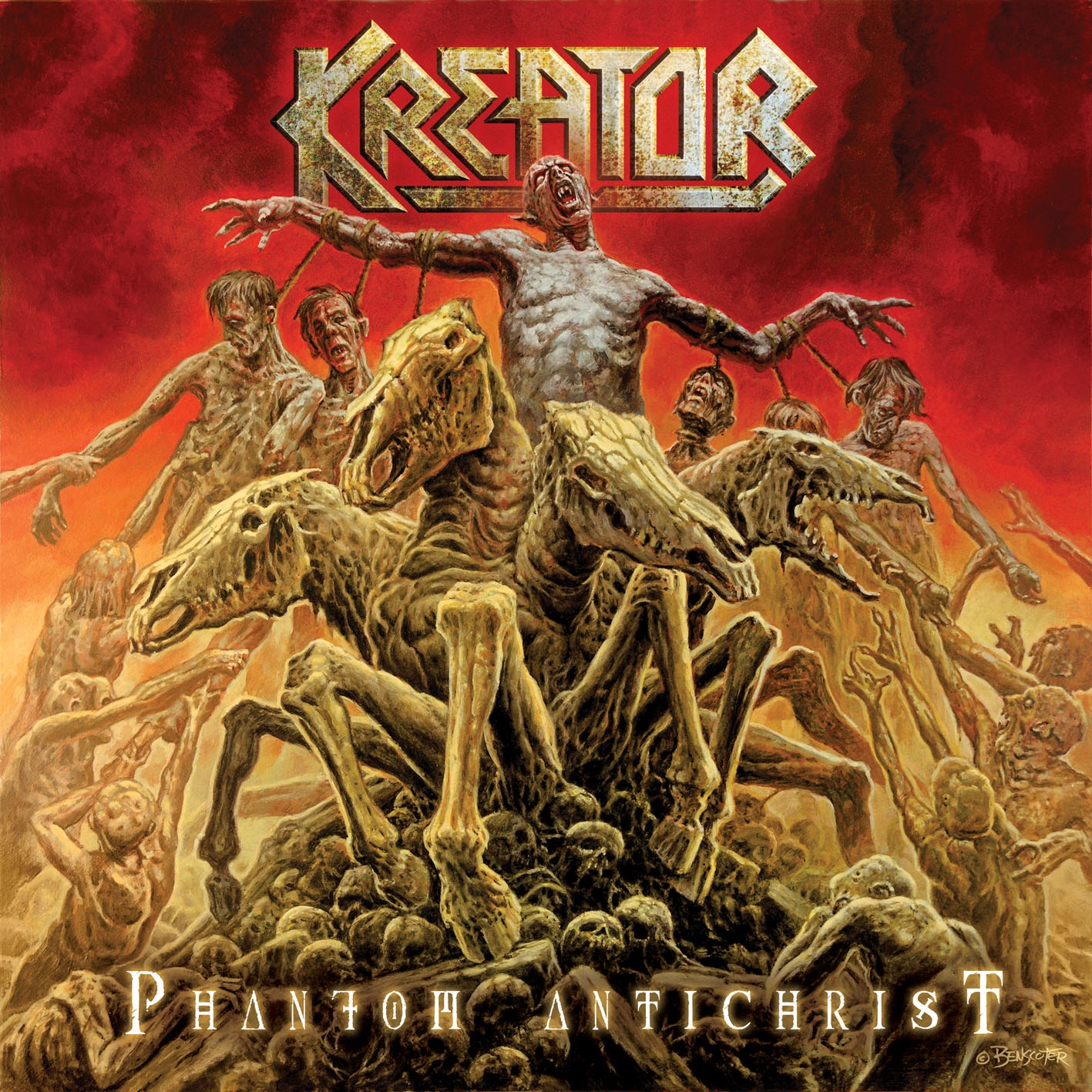
Here we are seven years later, and Kreator still are going strong, laying waste to the new crop of thrash bands and even re-capturing the fire of their younger years. They recently signed a new deal with metal powerhouse Nuclear Blast, and the first entry of that agreement is here in the form of “Phantom Antichrist.” Now, album title and their aversion to religion aside, this isn’t a God-basher per se. The themes seemed based more on what organized religion has done to humanity, how it has twisted and warped people’s morals, and how it has become a controlling aspect of politics and societal happenings. Just watching the news here in the States the last couple weeks, you easily can find ways that people have taken religion and used it to scorn, hurt, and segregate people. Isn’t that sort of the opposite of its intended effect?

Kreator’s voice from the start has been has been Miland “Mille” Petrozza, who also plays guitar, and with him is co-founding member and drummer Jürgen Reil (he’s been in the band all but two years in the mid-1990s), guitarist Sami Yli-Sirniö (aboard since 2001) and bassist Christian Giesler (a member since 1994). On their 13th studio album, they sound as fiery as ever, and while the blistering speed isn’t their primary goal anymore, they remain a really heavy unit. What they trade in savagery, they make up for in melody, as there are many moments on “Phantom” that sound inspired by Iron Maiden/Helloween-style power metal, mostly in the guitar work, and that lends a sense of epicness to these tracks. Perhaps some of that openness and spaciousness is the work of producer Jens Bogren (Opeth, Katatonia, Amon Amarth), but whoever is responsible, it infuses a sense of life and reinvigoration into Kreator, a band that wasn’t exactly in dire need of a recharge. But they got it anyway.

The album opens with “Mars Mantra,” a string-heavy, somewhat lush introduction that runs into the title track, one of the speedier pieces on the album that has Petrozza practically spitting out his words, at one point howling, “Terror will prevail,” while the band marches with him in fury and purpose. “Death to the World” has an environmental message and laments the abuse the planet has taken, and when Petrozza growls, “The whole human race shall die,” it’s because he’s envisioning earth eventually snuffing out its assailants. You know, us. “From Flood Into Fire” is the first taste of their power chops, and the chorus is uplifting and melodic. “Civilization Collapse” also imagines humankind bringing on its own destruction, this time from within, though they encourage those who fear a societal fall to help prevent one. “Your Heaven, My Hell” is one that weighs the destructive power of religion and what it makes people do to each other, and when Petrozza shouts, “Kill all the gods,” he actually has a productive, sensible reason for doing so. Victory Will Come” has a Slayer flavor to it musically, and it, too, is melodic and defiant, while closer “Until Our Paths Cross Again” acts as an anthem of empowerment, and while it might not be the heaviest song in Kreator’s canon, it’s one of the most passionate.

“Phantom Antichrist” is a solid entry from thrash veterans who haven’t forgotten what makes this genre so much fun. They’re explosive, direct, confrontational, and even inspirational when the time is right. A lot of the newer bands can learn something from Kreator, both from their past work and what they do here, not only about how to make meaningful, impactful music, but how to do it over a long period of time. The bulk of Kreator’s lifespan may be in their rearview, but it doesn’t sound like they planning on hitting the brakes any time in the near future.

For more on the band, go here: http://kreator-terrorzone.de/

To buy the album, go here: http://store.nuclearblastusa.com/Search/kreator

For more on the label, go here: http://www.nuclearblastusa.com/en/

Early Mantas recordings reveal rough, bruising future for Schuldiner, Death

The movie industry loves a prequel. Take an already successful franchise, imagine how it may have really started, put it on a movie screen, print cups for Taco Bell or something, and it’s money. That’s all that matters, right? People are suckers for this stuff, so let’s print the tickets.

Well, if the prequel is good enough for movies and even television, then why can’t that transfer over to metal? OK, yeah, I know we get early band demos from groups who go onto achieve great heights in order to fill out a reissue, but that doesn’t really count, does it? Those are more like clips that ended up on a studio floor. But how many times do we get to hear how a legendary band came to be before they even thought about carving out the path that brought them to stardom. Thanks to Relapse and their incredible job fleshing out the back catalog of death metal pioneers Death, we’re now getting to learn how Chuck Schuldiner’s legacy came to be by way of the band that preceded his life’s most noteworthy work.

Before Death ever became an entity, there was Mantas. That group wad comprised of Schuldiner on guitar and vocals, Kam Lee on drums, and Rick Rozz on guitars, and the latter two also would play in Death at one point. The group’s short run under this moniker consisted of a few demo recordings that basically helped pave the way for Death, and kind of like your neighbor’s band that puts together rough versions of their songs, understandably not a whole lot of attention was put into production. But unlike your neighbor’s band, you can hear the makings of genius in these songs, and easily can understand how they went from this to a fully realized thing once Death’s debut “Scream Bloody Gore” was released a few years later. Granted, only Schuldiner would play on that record, but what these three guys accomplished in Mantas’ short time together certainly helped shape that.

You’re basically getting a collection that features the same songs over and over again, but this was a young group with not a lot of material, so what can you really expect? What’s here is quite interesting, and it’s neat to hear  how a track such as “Legion of Doom” twists and turns subtly over its three takes found here (one being a rehearsal version). Same goes for each version of “Evil Dead” and “Death By Metal,” that happens to be our title track. Yeah, you have to be listening closely to really detect these nuances, but chances are if you’re putting down cash for this, you’re one whose likely to dissect. It’s also interesting that these guys were kicking out aggressive thrash more than actual death metal, a move that would come a little later. The rehearsal stuff’s cool, and the band sounds really raw and hungry, and if you grab the deluxe version, you even get a nice set of live cuts from a September 1984 performance in Orlando. It’s quite interesting to hear, and as noted, while there certainly was room for growth with Mantas, you can hear that they were on the right track. History obviously proved that true.

This Mantas collection probably is for Death hardcores only, and someone unfamiliar with Schuldiner’s work — if those people exist — probably won’t get a lot out of this. It might not even be an album you listen to a whole lot if you are a Death follower, but that’s OK. It’s more of a collector’s item, a must for those whose Death collection isn’t complete without every ounce of music related to the band, and those folks should eat this up.

For more on the band, go here: http://www.facebook.com/MantasOfficial

To get the album, go here: http://www.relapse.com/search_result.php?search_by=all&q=mantas&x=0&y=0

For more on the label, go here: http://www.relapse.com/

Marduk’s ‘Serpent Sermon’ is another dose of dizzying, devious black metal

A few years ago I was at a show at this horrible local club (I hate it for its clientele and awful beer selection) when this girl wandered onto the stage to look out the window to assess the traffic situation below. Now, bear in mind a band was just a few minutes from starting, and here is this drunk idiot trying to maneuver through their gear with no regard for its well-being. One of the band members screamed at her to get away from their shit, she deserved it, and even though she slurred back some nonsense, she was effectively put in her place.

Unless you’re in the band, work for them, or do security, you probably should stay away from the stage. You don’t belong there, and while it’s fine if the band is encouraging you to get up there and leap back into a crowd that may or may not catch you, it’s in your best interest to stay away. After all, recall what happened to “Dimebag” Darrell Abbott, and his assailant wasn’t even on the stage. The people in the band don’t know if an approaching person is an assailant, wants to lift equipment, or is just an over-excited fan, so when someone like Marduk’s Mortuus takes offense at your approach and bodyslams the shit out of you for stepping onto his territory, it’s your own damn fault. Hopefully the moron who got pulverized into oblivion at Marduk’s December 2009 show in San Francisco learned that valuable lesson, for Mortuus is not to be messed with. You Tube, everyone.

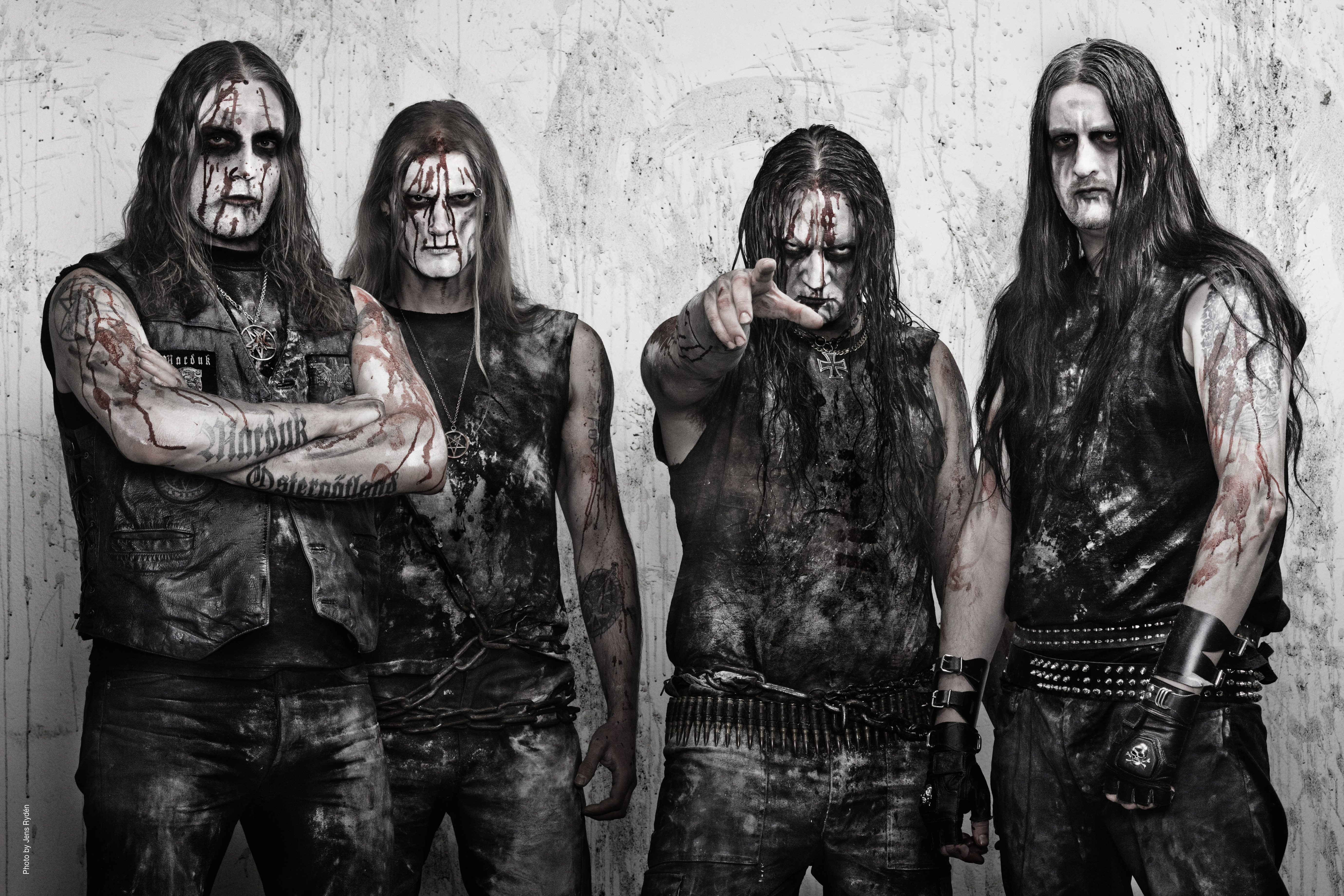
Admittedly, that much-talked-about confrontation has little to do with the band’s new, 12th album “Serpent Sermon,” other than it too is a scary, muscle-bound slab of black metal hell that should remind you not to step where you aren’t safe. I just like to talk about and laugh at the guy whose night got ruined. “Serpent” is the band’s first for Century Media after delivering their killer 2009 opus “Wormwood” on Regain, and it should find a warm home amongst the band’s fans. It’s heavy, creepy, damaged, and blasphemous, as one would expect from these fellows, and it’ll warp whatever good is left in your heart.

Since we opened talking about Mortuus, let us continue. Not to take away from the goodness his band delivers on this record — they’re at the very top of their game — the frontman (he replaced Legion in 2003) is worth the price of admission. He’s gurgly and snarly, shouting and howling with authority, and you certainly pay heed to everything he snarls at you. He’s a great dark mouthpiece, one of the few black metal frontmen who have broken all molds and are completely recognizable upon opening their mouths. What he sings sounds dangerous and serious, like he’s not just putting on some show, and the diatribes that spew from him can infect and, if you’re on the other side of his philosophical spectrum, completely infuriate. That’s kind of the magic in hearing Mortuus perform. As for me, I’m just here for the music.

The band – it also includes guitarists Evil and Devo and drummer Lars Broddesson — wastes no time getting started, blasting right into the damaged title track and leading into “Messianic Pestilence,” a fast, bloodthirsty song that gurgles on its own fury. “Souls for Belial” slows things down a bit, but the track is no less heavy. It’s doomy and distorted, and there’s more of as traditional rock melody line holding the piece together. “Into Second Death” brings back the madness and fury, and woven into the cut are group chants that sound like they’re designed to resurrect some ancient god or mummy. Or both. Reminds me just a bit of Melechesh, as does “Damnation’s Gold,” the song that appears two tracks later. “MAMMON” is awash in chaos and damnation, and the fast, punk-style guitar work bruises you in a hurry; “Gospel of the Worm” might make you feel like you’ve been spun into the ground with its vortex of guitar lines, off-kilter melodies, and vicious howls from Mortuus of, “No hope, only death!”; and 7:09 closer “World of Blades” flows nicely over its stretched running time, getting mean and confrontational when the need arises, but also letting you breathe in atmosphere.

Marduk certainly have a formula that works for them, and they remain one of the most instantly recognizable black metal bands from a sonic standpoint. They’ve never sacrificed their visions or their passion, and while they may rub some people wrong, I hardly think they give a shit. They’re here to be profane and offensive, and anyone who gets in their way may find themselves in a crumbled heap at Mortuus’ boots.

For more on the band, go here: http://www.marduk.nu/

To buy the album, go here: http://www.cmdistro.com/Search/marduk

For more on the label, go here: http://www.centurymedia.com/

Doom duo Hour of 13 weave classic dark tales, threads of damnation on new ‘333’

Evil and heavy metal have walked hand in hand since the start of the genre. Basically, this stuff is based in darkness, devils, and dread, and that’s part of what makes it so much fun. If we wanted happiness and good times, we’d listen to whatever shit was on the radio. People still listen to those, right?

Anyhow, doom especially has been drenched in darkness and murk, starting with Black Sabbath and running right through other areas of extreme music such as Hellhammer/Celtic Frost and Bathory of black metal’s first wave, through other doom artists such as Candlemass and St. Vitus, through the second wave of black metal, into death metal, and so on. It’s always there, and I’ve always seen it as a healthy, human thing to examine the scarier parts of our existence. It’s there, and it must be addressed, otherwise we don’t know how to confront it when it’s in front of us. Or it can remind us that no matter how bad things are for us, they always could be worse.

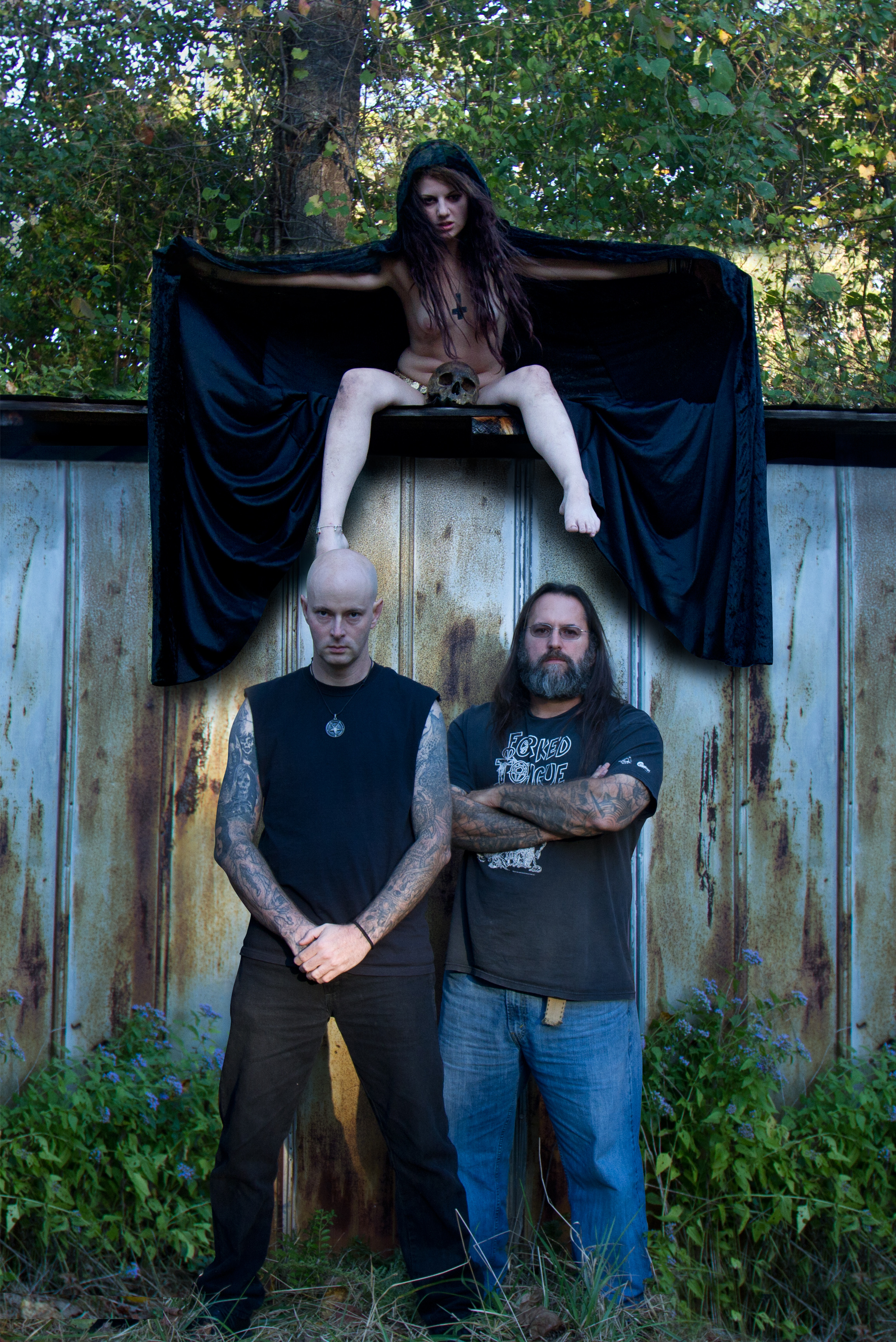
North Carolina’s Hour of 13 have been making some of doom metal’s most interesting sounds the past six years, and while the union between multi-instrumentalist Chad Davis and vocalist Phil Swanson has been a little shaky (Swanson has bowed out a couple times only to return, thankfully), they’ve always managed to pull it together when it comes to making records. They opened a lot of eyes on their debut self-titled disc in 2007, and they managed to go one better on 2010’s “The Ritualist,” a killer record initially released by Eyes Like Snow before Earache snapped up the group and put their second album back on the market with wider distribution.

Hour of 13 are back with their excellent third album “333,” the first delivered exclusively for Earache and one that should put them on the doom metal map. Davis once again puts together dark, classic-style compositions that compel and drag you into the murk, while Swanson, with his charismatic, unmistakable delivery, serves as your time-tested, heathen storyteller. His voice may be a bit of an acquired taste for some people – he’s got some classic Ozzy Osbourne in him – but it’s impossible not to hang on his every word and follow him into whatever dark tunnel he leads you. He’s that commanding and interesting a frontman, and Hour of 13 would not be the same without him.

As usual, the band espouses about black magic, hell, the devil, and all things unholy, but their tales also have a strange sense of warning about them. It might just be tongue-in-cheek, but some of the lyrics almost sound as if they’re saying beware of what you do or your soul’s going to burn in a lake of fire. Or perhaps that’s what they want you to think. I can see how you could take these messages either way, but surely in the end, they’re glorifying the thorny, seedy elements of existence. So watch your steps.

Opener “Deny the Cross” not only has a classic-sounding title, but the song itself could have been a staple of Headbangers Ball in the 80s and not been out of place. I mean that in a good way. The track runs a little longer than seven minutes and has its share of tempo shifts and psychological damage. Swanson wails, “I thought I found my way, but still I’m lost,” before inevitably denying the cross, though later he admits, “Now I must pay the price/No paradise.” Interesting dichotomy there. “The Burning” follows and also sounds like a member of the damned preemptively walking you through hell, letting you see the gates and feel the flames. It’s also an infectious song with a rock-solid construction that’s pure heavy metal through and through.

“Rite of Samhain” has Swanson finding his soul reborn in a late-night ritual, with Davis following him up with sinewy dual guitar lines and confident soloing; “Spiral Vacuum” opens on a dizzying note but then breaks into a classic rock journey not terribly unlike Blue Oyster Cult at their apex; “Who’s to Blame” has some moments that reek of early Iron Maiden, and Swanson even manages to pump out a few growls here and there; “Sea of Trees” is full of fantasy imagery and Sabbath-like guitar work, and it’s a nice stage-setter for closer “Lucky Bones,” a song that’s found its way around the Internet already, that’s built on trucking riffs, some Judas Priest-style grit, and a mystical close that leaves you in the mist.

Hopefully Hour of 13 remain intact for some time to come, because they really seem to be gaining speed and have a label behind them that has some experience handling bands like theirs. “333” is the band’s best album by far, one that could be labeled a modern doom classic, and that deserves to be heard by anyone who dabbles in darkness now and again. Or all the time.

For more on the band, go here: http://www.facebook.com/HourOf13

To buy the album, go here: http://earache.com/uswebstore/index.php/cPath/667_670_738

For more on the label, go here: http://earache.com/