Glorious ‘Dopesmoker’ reissue reveals spiritual essence of Sleep’s masterpiece

What am I really supposed to say about a classic? A timeless gem that’s only grown brighter through the years? A genre-shaping piece of work that’s only grown more cosmic through time?

I’m just some guy in Pittsburgh, and here in front of me is “Dopesmoker,” the legendary ode to weed created by Sleep, a band that etched its name in history and broke off into several other titans of metal such as High on Fire, Om, and Shrinebuilder. How do I do this thing homage? Who needs a review of such an untouchable piece of work, such an influential recording that’s gone on to shape people’s lives, tastes, and musical careers? What can I really add to that conversation? No matter, I’ll give it a shot, and it would be silly of me not to acknowledge the reissue of this document, in stores today thanks to Southern Lord.

No matter how much bassist/vocalist Al Cisneros, guitarist Matt Pike, and drummer Chris Hakius (he was replaced in 2010 by Jason Roeder) accomplished in their bands since Sleep temporarily closed its eyes as a unit in 1999, everything went back to their stoner doom roots in the 1990s. Yeah, this band appealed to those who liked to go up in smoke and let their minds and spirits wander along with Sleep’s music. I never was in that camp. Unlike the name of this great effort, I never was a dope smoker, still am not one, and yet I still could get what these guys were reaching acting as a spectator. At least I think I can. I do indulge in strong beers and spirits, and I’ve found taking on this record, this 63-minute-long song works pretty damn well under those circumstances as well. Maybe it’s not what the guys intended, but it’s about the best I can do.

For those who don’t know about the band or this album, or for those who have, you know, forgotten … for some reason … here’s a little history. After Earache put out the band’s killer 1993 opus “Sleep’s Holy Mountain,” Sleep’s profile started to rise. That album, by the way, was intended as a demo recording, but Earache thought so much of it, the label released it as is. Can’t say I blame them, as it, too, is a classic. From there, London Records signed the band but were not ready for what was delivered to them: a 63-minute epic that served as an ode to weed. They didn’t know how to handle such a bulky package and didn’t know how to present it to a public that was used to smaller, more radio-friendly chunks. Therefore, the band edited down their masterpiece into a 52-minute song, and it still got the thumbs down. Not long afterward, the band dissolved.

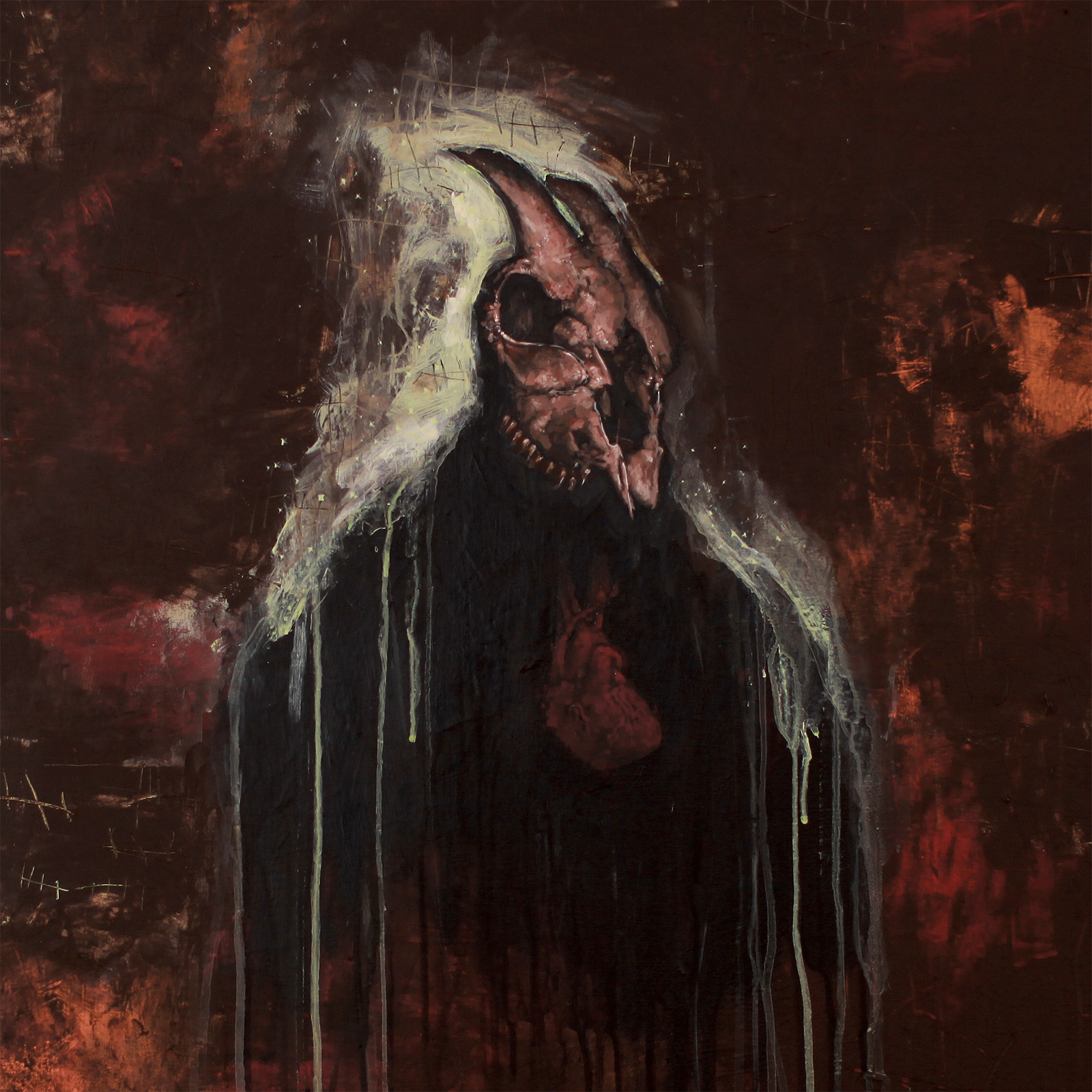
The album, renamed “Jerusalem” and broken into six identically named tracks, eventually was released in a few different forms, none of which were authorized by the band. In 2003, Tee Pee finally put out the entire 63-minute piece called “Dopesmoker,” its proper title and finally with the band’s approval. But that wasn’t the end of the story. In 2011, Cisneros contacted Southern Lord about doing a deluxe version of the album with an enhanced production (remastered by Brad Boatright) and new artwork by Arik Roper, and quite obviously the label was thrilled. Now we have in our hands “Dopesmoker,” a pristine new version authorized by the band that both gives longtime fans an excellent copy of their finest work and also introduces new fans to this adventure in a proper, fitting manner.

As mentioned, it’s tough for me to summarize or do justice to “Dopesmoker.” On the simplest level for those perhaps new to doom and drone, this is an essential recording. It’s the be-all, end-all of the genres. From the suffocating drone that opens the record, reminiscent of Sunn 0)))’s mighty drapery, to the astonishing bluesy licks and psychedelic soloing conjured by Pike, to Cisneros’ calculating chanting and growling, — his recitation of, “Proceeds the weedian, Nazareth,” is one of the most memorable passages of this pilgrimage –everything works like magic. The story and the craft work created by the trio sound and feel spiritual, and it’s easy, even with a clear head, to understand their devotion and adoration for what’s guiding their vessel. It goes without saying that it isn’t a record you can listen to in pieces in order to comprehend and digest. You need to set aside some time, and sure, if you want to enhance your mood to do so, you might get even more out of “Dopesmoker.” As noted, I’ve gotten on with it while drunk, and that helps me transcend as well. But do spend time with it and let the record spread its message. You owe it to yourself as a metal fan.

Oh, a special goodie tacked onto the album is a 1994 live version of “Holy Mountain,” recorded in San Francisco. It’s super raw (at one point you can hear one of the guys ask for more guitar in the monitors), but it also envelops you like you’re standing on the floor in front of them, experiencing them in person. It’s a really cool treat.

Maybe I didn’t add anything terribly substantial to the “Dopesmoker” conversation, but I look at this as more of a tribute to one of the great doom/drone albums of all time. I’ve enjoyed it and immersed myself in it from the time it was called “Jerusalem” all the way up to this stunning new version. It’s a must-have, must-know record, and no one is saying you have to dirty your piss in order to realize its magnificence.

For more on the band, go here: http://www.weedian.com/index.html

To buy “Dopesmoker,” go here: http://www.southernlord.com/sleep.php

For more on the label, go here: http://www.southernlord.com/

NOTE: If you DO enjoy Sleep’s music while your mind’s altered, make sure you stop back tomorrow. We’ve got something else that’ll get you there too from a band you might not know too well yet.

#musicdiary2012 — Monday

So Nick Southall of sickmouthy.com is doing this neat Internet experiment where he’s asking people to keep an online diary of everything they listen to from May 7-13, and document it somewhere online. I did so yesterday on my Facebook page, but I figured a mini entry here each day would suffice, too. I’ll link up Nick’s site below. He asks that if you participate, to paste your link into the comments section of his entry.

Make sure you come back at 1 p.m. EST for today’s normal discussion. Don’t sleep on it. Horrible hint, right?

Here’s what I listened to May 7, 2012.

Sleep — Dopesmoker (twice)

Aldebaran — Buried Beneath Aeons

Aldebaran — Embracing the Lightless Depths

Bong — Mana Yood Sushai

Struck By Lightning — True Predatio

I’ll post today’s stuff tonight. If you want to check out Nick’s site, go here: http://sickmouthy.com/music-diary-2012/

Pinkish Black pour out doom, deathrock to express human darkness on debut

Long have we kept open minds here at Meat Mead Metal, and there have been numerous instances where we brought you something that didn’t exactly scream “metal!” on the surface but certainly could connect with members of our readership who also have wide-open intellectual borders. Today, we have another.

I got an e-mail about Pinkish Black from Handmade Birds’ R. Loren several weeks back, and to say the sentiment behind the message was unbridled enthusiasm would be a bit of an understatement. So, knowing what I know about the type of music the label releases, I dug in right away and was blown off my ass by what I heard. I have developed an affinity for early New Wave music courtesy of my wife, and I’ve always had a soft spot for deathrock and dreary doom rock that go perfectly with an overcast rainy day. Pinkish Black have all of that, but they contain something else: a sinister underbelly. There is a mopeyness to what they do — and I mean that as a big compliment — but also a threat that dark feelings may turn bloody. They’re a ticking time bomb filled with nails.

Now, having the full record at my disposal, I was able to go even deeper into this murk, and what I found was a synthy, noisy, potentially violent document that could trouble the emotionally turbulent among us. I don’t get the sense these songs came from a particularly sunny frame of mind. Quite the opposite, actually. And what I discovered on this self-titled album is that this Denton, Texas, duo may have created this music to achieve some kind of catharsis or mental breakthrough, because it sure seems to be a lot of personal laundry on the clothesline.

Actually, their history is pretty gnarly and savage to say the least. The band started as a trio called The Great Tyrant, made up of Daron Beck (Pointy Shoe Factory), Jon Teague (Yeti), and Tommy Atkins. That all came to a screaming halt when Beck and Teague found Atkins dead by suicide in a bathroom, with the walls taking on a pinkish black appearance. That tragedy not only gave name to their musical evolution away from the Great Tyrant but pushed them down a more convulsive, destructive path. How could anyone blame them?

As noted, synth plays a large role in these songs, and that gives the compositions a cosmic darkness that sticks around as a recurring theme. Nods can be made to decidedly non-metal artists such as Suicide, the Cure, Scott Walker, Joy Division, and — this could just be me hearing something weird — the Smiths, but you also can find some of your more metallic leanings with comparisons to Khanate (the album was mastered by James Plotkin), Fantomas, and YOB. Even tossing those names out there doesn’t completely capture what these guys do, and those should be considered very loose associations. But we need some starting points, right? So there they are.

The record opens with “Bodies in Tow,” a song that’s already got some play on the Internets to some acclaim, and rightfully so as the reigning space keys and buzzing melody give off a feeling of nighttime cool and medicine head panic combined. “Everything Went Dark” opens with a do-wop sample and spills into a swirling song that’s one of the shortest on here and one of the most effective. “Passerby” has the New Wave tones and some ghostly vocals, and the bulk of the piece is dark and haunting. Then the whole record changes.

“Fall Down” is the start of the proceedings getting more sinister. There’s a threatening doom fog, pounding, and menacing intent, even as Beck’s vocals take on a soulfulness that should be soothing but is instead scary. “Tell Her I’m Dead” has its bottom drop out from the start, as harsh noise, key zaps, and wild shrieks make the song the most harrowing and metallic of the whole album. “Tastes Like Blood” may have you letting down your guard with its quiet, trickling pace, but it runs headlong into the volcanic closer “Against the Door,” where their audio sickness and UFO-like keys penetrate and spread their way to your insides, making you go cold. If you feel the urge to immediately go back and experience the whole thing again, you’re not alone. I, for one, couldn’t step away.

Pinkish Black certainly are not the heaviest band in the world from a decibel standpoint, but psychologically and emotionally, they may be untouchable. These Denton veterans obviously have seen some crazy shit and aren’t comfortable with expressing themselves in a conventional manner. Good. That makes for an exciting, compelling record that might make you run for a safe place, but will haunt you even there. Don’t say you weren’t warned.

For more on the band, go here: http://www.facebook.com/pages/Pinkish-Black/138248106193659

To buy the album, go here: http://www.handmadebirds.com/store/

For more on the label, go here: http://www.handmadebirds.com/

Horseback’s new journey ‘Half Blood’ combines Americana and doom fire

You’ve heard the saying “jack of all trades, master on none”? Well, that saying doesn’t apply to Jenks Miller, who has proved again and again no matter what he touches, it seems to turn to gold.

Have you heard his country-and-folk-fed Mount Moriah, a band in which he plays guitar and teams with the awesome Heather McEntire to deliver heart-crushing, sobering tales? The band is flat out incredible. Then there’s Horseback, the metallic hybrid project he’s headed for several years now, where he always seems to come up with something genuine and inventive. Over the course of several releases, Miller, as the primary visionary, always found ways to tread new paths and keep his perspective fresh.  That carries over to “Half Blood,” Horseback’s new full-length effort and the first initial-ruin release Miller has offered up for Relapse, who have put out versions of “The Invisible Mountain” and combo effort “The Gorgon Tongue: Impale Golden Horn + Forbidden Planet.”

Under the Horseback moniker, Miller has gone through many metamorphoses. There have been trips to black metal, doom, ambient drone, and many other sounds that have made the project’s sounds richer as it has matured. “Half Blood” has many of those elements as well, but they sound more refined and channeled through a Southern and Midwestern filter. The bio materials for the record describe a meeting of the minds between Neurosis and Neil Young, and that’s a damn fine assessment. People who dig Across Tundras and other Neurot acts also will find much value in this seven-track record, and I find it to be the most satisfying piece in the entire Horseback canon. I’ve spent a ton of time with this record while proofreading, and it keeps my mind open and aware, stimulated and charged.

The album basically works as two halves. The first segment is made up of four tracks that certainly stand on their own but work great in tandem. The second portion is a three-part section called “Hallucigenia” that pushes your mind to the limit and makes you imagine shapes and colors much in the same way long passages from bands such as Sleep and Electric Wizard can do. I found myself getting lost in this section, and when the music expired and my iPod light came back on, I was typically stunned that I was so engrossed I didn’t realize the journey was over. That worked especially well yesterday, for example, when I sat 32 floors above town and soaked in the record amid fog and a driving rain storm.

We open with “Mithras,” a psyche-washed, somewhat bluesy opener that trickles along in a calculating manner, as Miller growls over top. “Ahriman,” a name that appears drawn out of Zoroastrianism, buzzes and simmers, with an Americana glaze and some of the more direct singing on the entire effort. “Inheritance (The Changeling)” is the most surprising track here, as it opens with weird laser shots (like early M.I.A., before she made an ass of herself), crashes, watery percussion, and rising organs. Guitars eventually squeak and hiss, noise floods threateningly, but then the whole thing dissolves into calm keys and acoustics. “Arjuna,” seemingly named after a warrior in a Hindu epic who was a great archer, also has a Southern feel, dusty, creaky vocals, and eventually some raw singing that seems totally foreign to what’s going on, which, of course, means it works perfectly.

That moves us onto the “Hallucigenia” triptych, which begins with the dream-state sequence “Hermetic Gifts,” a song so tranquil and serene that when Miller’s growls kick in, it’s like having Gollum threaten you during a trance. “Spiritual Junk” is built on organs and drums, keeping to a mid-tempo pace that sets the stage for the 12-minute closing segment “The Emerald Tablet.” This track reveals the whole album’s true primordial substance, and it brings all of its parts together for an amazing crescendo. The psychedelic ooze bubbles, the tumultuous sections bring the vision into focus, and the life forces captured in this song seem like they break through an imaginary barrier and out into the world. I know that sounds a little ridiculous, but listen to it and see if you understand what I mean.

Miller is one of the most gifted and imaginative musicians in any genre, and Horseback never fails to keep me invested. “Half Blood” is a ridiculously rewarding experience and already a candidate for best-of-the-year honors.  I’m excited to have it in my music arsenal, and I don’t imagine it’s going to take a back seat to anything else anytime soon.

For more on the band, go here: http://www.facebook.com/Horseback

To buy “Half Blood,” go here: http://www.relapse.com/half-blood-cd.html

For more on the label, go here: http://www.relapse.com/

Broken Limbs Recordings drop diverse ugliness with Fhoi Myore, Wholy Failure

I probably sound like an annoying asshole by now since I’ve said this so many times, but for all the saturation in the metal world, it’s hard to find places, bands, and labels that consistently keep me excited. It’s a lot to ask, I admit, because I listen to a ton of stuff every week in order to make this site go, and having that much music in my ears is bound to result in fewer things sticking in my cranium. Therefore, I complain.

But as noted previously, there still remain a few labels that, when I get their promos and e-mails, I’m still excited to dig right in immediately. Profound Lore, Gilead Media, and the Flenser come to mind immediately, and anything that lands in my inbox or my physical mailbox from any of those outlets get moved to the front of the pipeline, the rest of what I have be damned. Newcomer imprint Broken Limbs Recordings quickly is moving its way up my list as an outlet for thought-provoking, exciting metal and extreme music that keeps me hungry for more.

My first experience with Broken Limbs came via the captivating new Vattnet Viskar EP, a stunning, self-titled collection of atmospheric, woodsy black metal that remains in heavy rotation weeks after hearing it for the first time. Recently, a bunch of new things from the label landed in my lap (uh, in a digital sense), and I’ve already taken time to peruse and dissect most of it. That said, I don’t want to recap all of them here because that would be a lot to do in not that much space, so we’ll tackle two of the releases. The rest will get its time in the weeks to come, believe me. I also thought it would be fun to look at two records that are very much different from each other, giving you an idea of the open-mindedness of the folks at Broken Limbs. That’s always a great sign that we’re in for some unexpected adventures in the years to come.

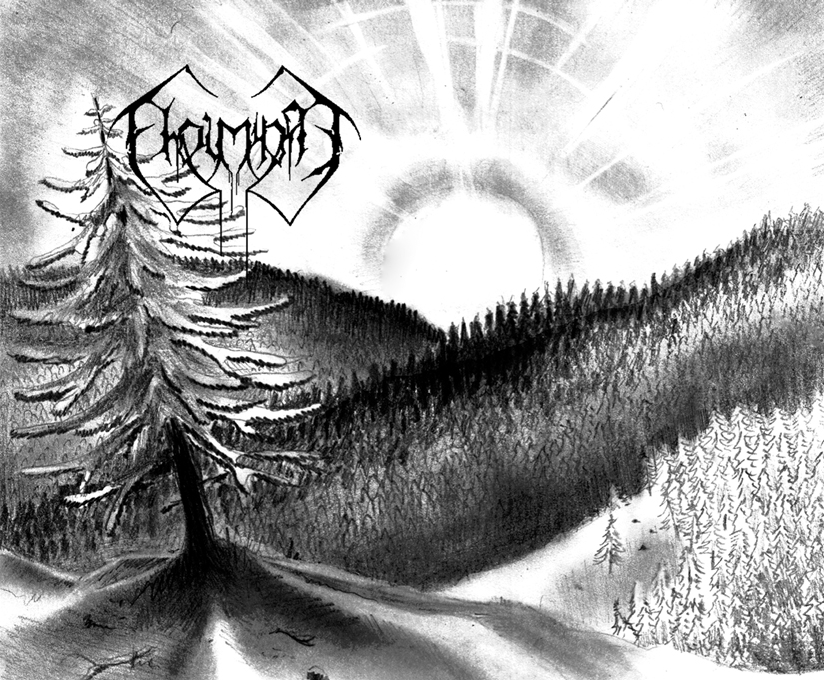
First up are French black metal titans Fhoi Myore, a band that’s doing a lot of good, especially when it comes to enhancing their homeland’s notoriety for producing some of the most bizarre, artistically limitless extreme metal going. The band only has been in existence for four years but in that time, they’ve managed to punch out a few demos, a full-length effort in March, and now their eight-track EP “The Northern Cold,” that Broken Limbs has brought your way. Basically, if you’re still into the second wave of Nordic black metal bands and also like music that makes you want to encounter the occasional ferocity of nature (rain pours in the background of this thing a nice chunk of the time), you’ll probably really like what you hear here.

Fhoi Myore, who appear to have plucked their name from the seven misshapen giants from “The Chronicles of Corum,” look pretty beastly themselves, from the few photos I’ve seen of the band. That matches nicely the primitive, animalistic nature of some of their songs, especially the desperate, shriek-filled vocals. There seems to be a real connection to nature and one’s essence, or at least that how it feels from listening to their music. I don’t have a lyric sheet, so I can only go on what I perceive. There also is a delicious amount of melody underneath these savage servings, from “Orage,” a gorgeously violent epic that twists and turns quite a bit but never loses its way; “Souvenirs,” a song that is fast and intricate for the most part and eventually lets a flush of air into the room at the end; “Miist,” a song that, if you remove the drape of black ugliness, has a catchy, almost approachable spine; and “Forest of Doom,” a track that seems awash in pain. There also is a cover of Ancalagon’s “The Walkyries” and an acoustic version of “Songes Funestes,” the closing cut on their self-titled long-player.

“The Northern Cold” is passionate, well-played, and nicely put together, as it is raw enough but it lets each dash of color come through without being muted by basement filth. Those still dining on the bones of black metal’s early days will find a veritable feast here.

For more on the band, go here: http://www.facebook.com/fhoimyorehttp://www.facebook.com/fhoimyore

To get the EP in digital, go here: http://brokenlimbsrecordings.bandcamp.com/album/the-northern-cold-ep

To get a limited-edition cassette version of the EP, go here: http://brokenlimbsrecordings.bigcartel.com/product/fhoi-myore-the-northern-cold-ep

All the way on the other side of the room lurks Wholy Failure, a project from Patrick A. Hasson of bands such as Black Chalice, Field of Spears, Avulse, and Auspicium. But unlike the man’s other work, what he does on “Avalon and Everything After” leans more toward ambiance, deathrock, and mopey doom. It’s noisy, often disruptive, and it might make your face jerk now and again, but stick with it. This music will reveal itself to you slowly as you revisit, and while you might not wish to look directly at the scarring, you’ll be intrigued by how such damage came to be.

There are many bands to which Wholy Failure compare. The closest would be the psychologically damaged Wreck and Reference, but there also are hints of bands as diverse as Alaric, Katatonia, Paradise Lost and Christian Death. The effort also nicely is separated into two halves that work well as a whole but also make a lot of sense digested as a Side A and Side B. The first half is a bit dreamier and even poppy in spots. No, not shit bubblegum mainstream, but more like how old New Wave could make you nod along and feel like garbage all at the same time. “Signal Loss” has Hasson sounding a bit like Nick Cave in his delivery; opener “Pissing Match” is confrontational with some guitar weirdness; and “Cold Slow Rain” is a minimalist instrumental that is fittingly named. The second half opens with an emotional, raw, guitar-and-vocals-only “Under Avalon and Embracing Judas” that is incredibly effective; “What Slow Death Awaits By the Sea?” consists of wooshing ambiance and humming drone, and it leads to our killer conclusion, a title cut that sounds like it’s on the brink of death, with Hasson kicking out the catchiest, dankest suicide mission I’ve heard in a long time. It’s also sticky as fuck. Try to stop listening to it on repeat. I couldn’t help myself.

Wholy Failure is a mesmerizing, chilling project that both is and isn’t easy to digest. Musically, it’s unstoppable and powerful, but lyrically and emotionally, it’s open and exposed to the elements, letting the aroma of death choke your nostrils and fill your chest.

For more on the band, go here: http://www.facebook.com/pages/Wholy-Failure/203597062995864

To get the album, go here: http://brokenlimbsrecordings.bandcamp.com/album/avalon-and-everything-after

For more on the label, go here: http://brokenlimbsrecordings.com/

For their Big Cartel site, go here: http://brokenlimbsrecordings.bigcartel.com/

Torche’s colorful ‘Harmonicraft’ is more fun than any human can possibly handle

It’s always nice seeing a person you haven’t seen in a while. Unless you hate that person. Then it kind of sucks, especially if that person doesn’t know of your distaste and tries to engage you in conversation. Uncomfortable. But back to people you don’t hate, it’s nice crossing paths isn’t it? Unless they hate you, and you have no idea. Maybe to be safe, don’t talk to anyone you haven’t seen in a long time just in case you hate the person or the person secretly hates you. We’ll all be much safer under that plan.

OK, for argument’s sake, let’s pretend the person you encounter for the first time in a while is someone you do not hate and/or who does not despise you. After spending some time with the person and playing catch-up, isn’t it odd that changes we find in the lady or fellow? Time does that. We shape and shift, develop or regress, become different forms of what we once were. Our experiences, mutating likes and dislikes, and simple life events change us, and it would be silly to run into the same person every few years and expect the exact same experience. Unless that person is Angus Young.

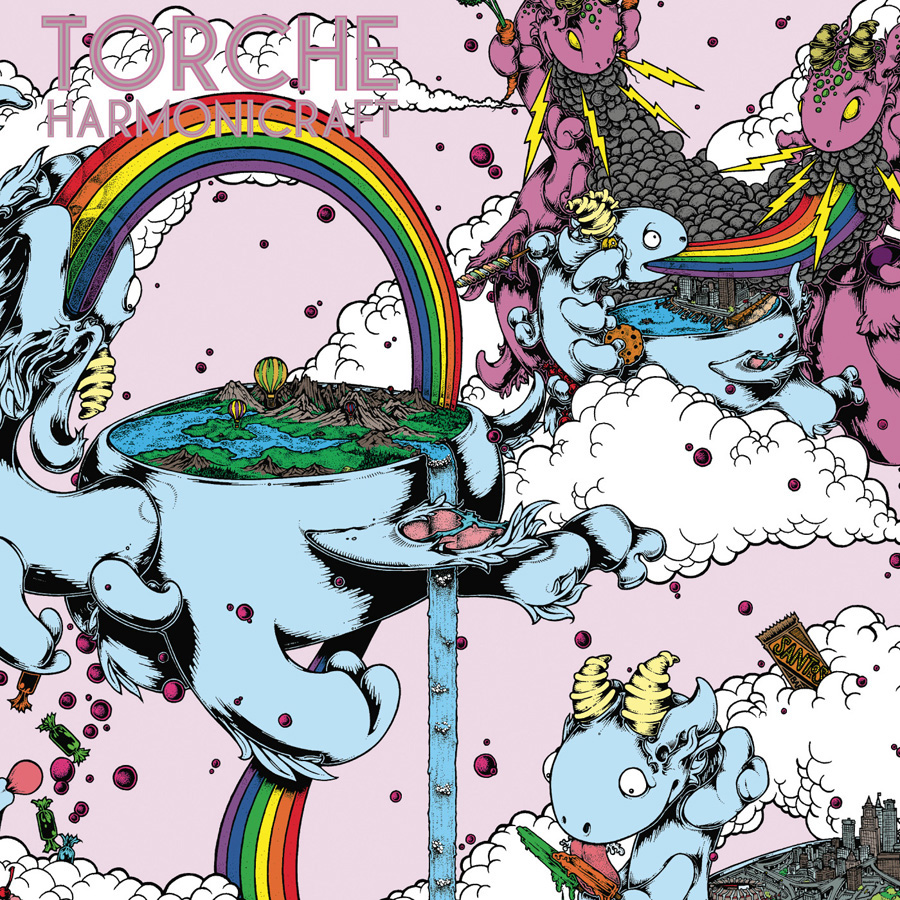
What I’m on about is Torche and their new album “Harmonicraft.” On the surface, it’s Torche. It’s pretty hard not to recognize them when you first hear their peppy metal, as they have sort of carved out a sound that’s all their own. And partially the Foo Fighters’. But mostly theirs. Plus, the Foo Fighters have bored the shit out of me for years, while Torche never do that. I’m getting a call from the Grammy Awards, who are very upset I just said that about an annually nominated band. Sorry, old white guys. But Torche. I like that they’re familiar, and their third record is that very much. It instantly made me happy because I like Torche — vocalist/guitarist Steve Brooks, guitarist Andrew Elstner, bassist Jonathan Nunez, drummer Rick Smith — and their sound, and unlike most bands I write about, they make me smile in a fun way. They’re a good time. I saw them live, and I was so glad I was drunk when I did because it made them even more amazing. I’m loose-spending when I’m drinking, and when they were done, I traded a bunch of money for T-shirts. I soberly stand by that decision.

But something I noticed on “Harmonicraft” are the changes that have taken place between their 2008 full-length “Meanderthal,” one of my favorite albums of the last decade, and this new one. I’d even say there are some differences from their 2010 stop-gap EP “Songs for Singles.” Dude, so much has been altered since their 2005 self-titled review that, if you haven’t kept up with the band, you’ll need something of a history lesson. So go and listen to everything you missed and come back. We won’t wait, but we won’t delete the rest of the text. That’s how the Internet works sometimes.

Many point to the departure of guitarist Juan Montoya as a major reason behind Torche’s current persona, but I wonder about that assertion. First, Montoya went on to form MonstrO, a band with a really generic singer. Montoya didn’t exactly become a guitar god there, nor did he whip out anything resembling “look what those Torche bastards will miss” type of riffs and melodies. I don’t even remember anything from the MonstrO record, so impression totally not registered. Second, Torche have been moving toward poppier, more accessible rock and metal for some time now, so these gradual changes in their musical personalities should not be all that surprising. Like I’ve already heard that next Baroness album is pretty much devoid of metal. Totally not surprised. They’ve been headed that way for a while. Can’t wait to hear it, by the way.

So yeah, if you’re expecting doomy, sludgy Torche on “Harmonicraft,” you won’t find what you anticipate. If you demand that sound from the band, you’ll be disappointed. But if you like what the band did in their lighter moments on “Meanderthal” and “Songs,” there’s no reason to think you won’t like this record. Lack of true, decibolic metal aside, these songs are pretty catchy. It still sounds like Torche, albeit a more refined, more polished version. This should surprise and offend no one. Career path, kids. Learn how to follow one.

One thing Torche has not abandoned is their ability to stuff a bunch of songs in the front and back end of their albums that all seem to gel together and topple into each other. That may be a negative for some, as some of the stuff does tend to blur together, but I like how seamlessly these songs are interconnected and that I can just get caught up in the energy of it all. “Letting Go,” “Kicking,” and punk-flavored “Walk It Off” have basically the same attitude and semblance or order, and before you know it, you’re knee deep into the record. On the other side, heavy “Skin Moth,” the killer instrumental title track and … drum roll for the greatest song title of the year so far … “Kiss Me Dudely” also work in tandem and bring you almost to the album’s conclusion. Worked into the closing package are a couple of pace-changers, notably the dreamy gaze of “Solitary Traveler,” one of the more unique songs in their canon, and the doom-encrusted, noise-simmering closer “Looking On,” where you finally get that metal fix you’ve been whining about.

Sprinkled throughout the record are a few songs that let you check out some of the cool stuff they picked up since you last saw Torche. “Reverse Inverted” has a tasty little Southern rock groove that slithers beneath everything; “Snakes Are Charmed” lets the guys kick out some sugary guitar goodness and licks that would sound cool over the opening screen of a colorful, seizure-inducing videogame; “Roaming” is the band as their pop-metal best, busting out a song that could go out to your rock radio stations and slip into the playlist without anyone having a stroke over it. Torche deserve that slot.

So yeah, Torche aren’t the same band you knew a few years ago. They changed some stuff, they got a little slicker, the buffed up some edges, and they got tighter as a unit. If you wanted to cuff them and make them stay the same people, then you’re a horrible person who belongs in an internment camp. I’m not even joking. “Harmonicraft” is a blast, and it’s great to hear the guys in such high spirits. Now, if we can just have less of a wait between albums, or am I being an asshole?

For more on the band, go here: http://www.torchemusic.com/

To buy “Harmonicraft,” go here: https://store.volcoment.com/

For more on the label, go here: http://www.volcoment.com/

Mares of Thrace 2: ‘Perpetrator’ switch doesn’t irk Lanz; your vocabulary might

Yesterday we visited with Théresè Lanz, vocalist/guitarist for Canadian noise doom warriors Mares of Thrace. We talked about the band’s excellent new album “The Pilgrimage” and their new home at Sonic Unyon, who have put out other notable metal releases as of late from bands such as Augury, Untimely Demise, and some little-known cosmic thrash band called … Voivod.

Today, we dig a little deeper into the record as well as what it was like working with Sanford Parker at Engine Studios in Chicago, Théresè’s longtime musical partnership and friendship with drummer Stefani MacKichan (this is their third band together), and the representation of female artists in the metal world. As you hopefully learned yesterday, Théresè doesn’t pull punches or opt for the politically safe way to say things, which made our conversation that much more fun.

At the end are links to the Mares web site, as well as links to buy their devastating new record. If you don’t buy it, I have it on good authority you might wind up buried beneath a whiptail scorpion (threw up a bit in my mouth just typing that) someday soon. You don’t want that –they don’t want that, right? Thanks again to Théresè for taking time do the interview and for not screaming at me when I coughed every five seconds.

Meat Mead Metal: OK, after you sent me the album a few months back, you noted that the song “Nazi Ballerina” (now called “The Perpetrator”) would have to get a name change. What went down with that?

Théresè Lanz: It definitely wasn’t a controversy, and I don’t want to single out Sonic Unyon as some evil manipulators who were trying to cramp me creatively. Because nothing could be further from the truth. They just felt that if the song was a single, it should not have an inflammatory title in it. But you know, that’s not what my mom would call “a hill to die on.” It wasn’t an issue for me to dig my heels in and make a stink about. So I changed the title, the video is ready, and theoretically everyone’s happy. But the title is about a Nazi ballerina who was a spy for the Nazis in World War II, and I enjoyed that the main riff in that tune, and especially with Stef’s playing, is graceful but hideous and evil. I imagine that’s how a Nazi ballerina would be.

MMM: Oh, those poor Nazi ballerinas.

TL: (laughs) Yeah, and after they told me it was a little inflammatory, Palmerston immediately sent me an e-mail apologizing and said that don’t worry, no one thinks that a band with a Filipino woman in it is going to be espousing Nazi ideals. But hey, they’re giving me money to make songs, so they get to weigh in once in a while.

MMM: Now, you worked with Sanford Parker on this record. What was that like?

TL: That guy, I just want to hug that guy. (laughs) He’s just a huggable guy. It was awesome. We could not have wished for a better producer. He had a really good instinct for reading my mind. Like I’d say, “Can you make the guitar sound chocolatier, or can you make an electronic sound that goes (makes wooshing sound)?” and he’d just do it. That whole experience was pretty magical. Walking through Wicker Park in the November sunshine to the studio and drinking craft beer and eating real tacos, because you can’t get those where I live, and going to see Zoroaster in the evening. It’s a great city. I’m really excited about moving there.

MMM: Going back to the label interest, were you surprised the band generated such interest?

TL: I was a little surprised. I was flattered. When some of the more commercial metal labels came sniffing around, I was baffled. Without shit-talking anyone in specific, I thought we would have been a really strange fit on some of the more commercially inclined record labels. And I wasn’t particularly into their rosters.

MMM: You and Stefani have been friends for a long time and have played music together forever. Talk about your creative relationship. It would seem by this point you must finish each other’s sentences.

TL: Yeah, I mean, we have such a long-established dynamic that it’s pretty automatic. But Mares of Thrace is the first band where she ever wrote. She doesn’t write guitar riffs, but she writes … I think of them as drum riffs. (laughs) And I’ll write stuff to that. That’s sort of a new part of our dynamic, and that’s nice. It’s hard to be a sole writer. Writing on a deadline blows, and I’m not the most prolific writer anyway, so when someone else pitches in, it’s great. Also, other bands I was in, someone could come up with a riff and no one else would be into it. We don’t have that luxury, so it’s great. (laughs) I never have to throw out a riff because I’m really excited about it and some fucking Debbie Downer isn’t into it in my band. So yeah, we don’t have to think too hard about things, and they just happen. It’s like old married people who have been together for 40 years having sex. I’m sure that’ll be used someday.

MMM: (laughs) That’s going to be used in this story. Are you kidding? Now, what would she say if she heard you say that?

TL: (laughs) She’d probably agree!

MMM: Do you pay attention to reviews of your work and whatnot, or is that something that you don’t pay a lot of attention to?

TL: See, this all goes back to my tendency to befriend metal writers and our interviews turn into hang-out sessions. (laughs) Um, the ones I pay attention to are (the writers) who I know have good taste. Then I want to know if they like my record or not. Those are the only ones I care about. Like, if someone’s favorite band is Trivium and they give our record a 2 out of 10, that’s cool. (laughs)

MMM: Yeah, you’d have to consider the source.

TL: Really the only thing that bums me out is when (writers) use a different language to review us or a different vocabulary to review us than they would a band with dudes in it.

MMM: OK, I’m glad you said that. I feel like it’s 2012, should we be past the gender issue by now?

TL: Well, it’s the vocabulary thing. In one review, we were referred to as “fuck-a-licious hotties.” (laughs)

MMM: There goes my headline.

TL: (laughs) Look, I like when people say nice things or people think we’re cute or whatever, but for God’s sake, you would never say that about dudes in a band?

MMM: OK, now, you did the Revolver “Hottest Chicks in Metal” monthly feature, but yours was totally different than everyone else’s. 

TL: I was fully clothed from my collar bones to my wrists and to my ankles, and I talked about video games the whole time.

MMM: Now, whenever they asked you to do it, did you want to do it right away, did you go back and forth?

TL: I was incredibly conflicted about it. The reason I did it is Josh Eldridge (publicist, now with The Musebox) said it was good exposure. I don’t think it was good exposure. For starters, it said KEN mode. That’s the name that was big and huge in the article, and that’s not even my band. And I’m sure that having one of the “hottest chicks in metal” is not what KEN mode wants to be known for either. My filling in for that band definitely got referred to as a gimmick. But, you know, what should I be to be perceived as authentic? What would they prefer I be?

MMM: You’re probably supposed to have a penis.

TL: Like a fat, hairy dude? I don’t want to be a fat, hairy dude. No, but chiefly what it did was a bunch of dudes with beards and bad taste in music and no friends then friend-requested me on Facebook.

MMM: Do you regret doing it?

TL: Some women I hugely respect and admire did it, and some women I hugely respect and admire declined it. If I had to do it over, would I … oh, I don’t know. I don’t know.

MMM: What if they asked you to do it again?

TL: It depends. When people like Laura (Pleasants) from Kylesa declines it, it’s because she doesn’t need free press. My band still needs free press. Ultimately, it comes down to pragmatism, and one day I’d like to not be pragmatic about ideals. That said, if they said they were going to pick my wardrobe, I’d say, “Get fucked.”

For more on the band, go here: http://www.maresofthrace.com/

To buy “The Pilgrimage,” go here: http://www.sonicunyon.com/metal/artists/mares%20of%20thrace

For more on the label, go here: http://www.sonicunyon.com/metal

Mares of Thrace Pt. 1: Lanz dicusess new label, ‘The Pilgrimage,’ and goat thieves

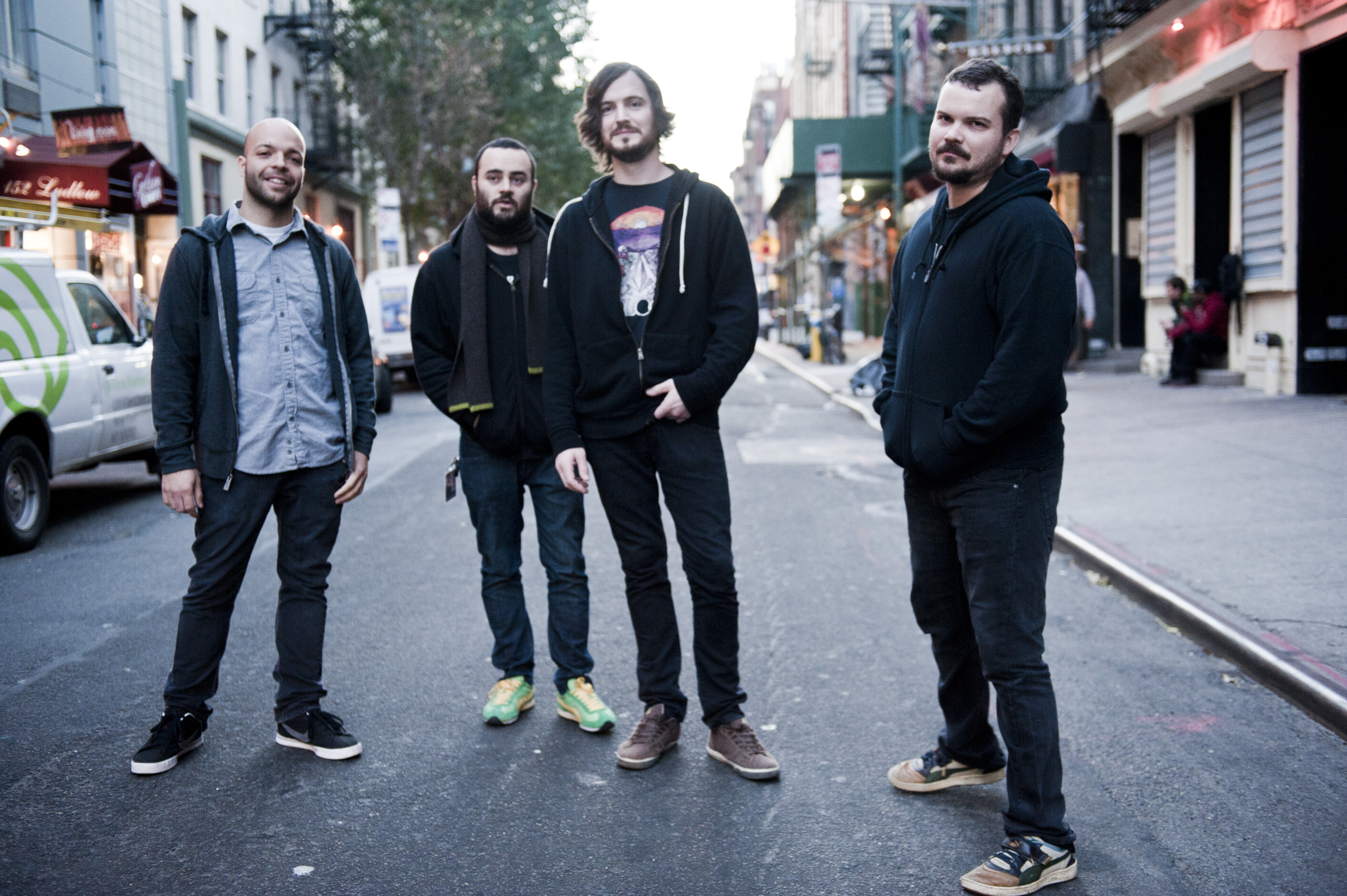
Canadian noise-doom duo Mares of Thrace blew shit up a couple years ago with their volcanic debut “The Moulting,” a cataclysmic, punishing display that sounded like nothing else in the metal world. It also was astonishing that just two people – vocalist/guitarist Théresè Lanz and drummer Stefani MacKichan – were responsible for all the raucous, and their album immediately became a favorite at Meat Mead Metal.

Now, the Mares are back with their impressive follow-up “The Pilgrimage,” a record where they keep intact the things that made “The Moulting” so damaging – baritone guitar magic, jazzy, spazzy drum work, from-the-guts growls – and manage to make them even more effective. Recorded with one of metal’s go-to producers Sanford Parker, Lanz and MacKichan made Engine Studios their personal battle ground, hammering out the 10 cuts that comprise this deadly new record.

Théresè, who soon will be moving to Chicago to begin a program focused on video game development at Tribeca Flashpoint Academy of Digital Arts and Media, took some time before she started the next step in her education, as well as Mares’ current U.S. tour, to talk to my sick ass (I literally was ill… I even had a temperature) about their sophomore album, their new label home at Sonic Unyon, and their band’s suddenly expanded profile, something to which she’s still adjusting.

“In my head, I’m still a DIY punk rocker playing on the floor of community halls for 25 kids and being really happy about it.”

Meat Mead Metal: So, the new album is called “The Pilgrimage.” Is there special meaning behind that title?

Théresè Lanz: I don’t know if you ever took English in high school or colleges, but (Geoffrey) Chaucer’s “Canterbury Tales” has a piece in it that was a long piece of poetry describing a pilgrimage with a bunch of individual characters. I don’t want to call this a concept record, but that piece kind of inspired it and each of the songs, and that’s why they’re named after these little fucked-up characters that live in my mind. Also, I just did an interview for the Deciblog about how I’m going back to school for video game development, and they wanted to know if any of the songs are inspired by my love of video games. And in fact, the album title also is somewhat inspired by the “Mass Effect” franchise. This one alien race in “Mass Effect,” their planet got destroyed so they live in this mobile space flotilla, and when members of their race come of age, they’re required to leave the flotilla and not come back and until they go find something of value to bring back. That trip is called the pilgrimage. I would be a total, giant liar if I said the title wasn’t somewhat inspired by that.

MMM: Well, yeah, I was going to ask if video games played any part in the album.

TL: Not overly. For the most part, I find metal to be somewhat of a corny thing as a whole, but I like to try to keep the super-cheesy shit out of it. (laughs) I like to keep those two parts of my life reasonably separate.

MMM: Metal wouldn’t be what it is if it wasn’t corny.

TL: Hell no!

MMM: You’re on Sonic Unyon in Canada, and while they’re starting to make an impact in the States a bit, I don’t think we have the same understanding of what an important label it is. What was it about Sonic Unyon that made you want to go there?

TL: They were not the only offer we got, but they were probably the best offer. I like to kind of keep things in the family. I know Sean Palmerston, their PR dude, and I have a hard time dealing with people from whom I don’t get a good family vibe, and I get a good family vibe from them. The terms they offered us were awesome. There were some bigger labels that made offers, but personally, I’d rather be a smaller label’s top priority than a bigger label’s bottom priority. I’ve had friends in that position, and it didn’t look like fun.

MMM: What do they mean to Canada?

TL: Anyone who’s a musician in Canada is aware of or has had dealings with them in some way, because they’re one of the largest distributors. Over the years, they’ve put out some pretty seminal Canadian records and did a lot of stuff with worldwide artists. They’ve put out stuff for Jesus Lizard and Frank Black, and I do very much like supporting Canadian companies.

MMM: Canada’s also known for the government offering assistance for artists through grants. Did you get any help in that area?

TL: Yeah, you guys don’t really have that in America, do you?

MMM: Not really. And if Rick Santorum somehow got elected (NOTE: Thank fuck, he dropped out), I fear we’d be back to the 1940s and musicians would be forced to just play trumpets in some back room.

TL: Yeah, we have a lot of federal and provincial arts funding, but it’s not free money. I mean, we have our own delicious flavors of right wingers who have certainly made comments that it’s a waste of money and if art isn’t commercially viable, no one should give a shit about it. So there’s been controversy about that. But I mean, Cursed “III” was recorded partially with government money. But the grant writing is up to (the label), and I’m sure they’ve using it to recoup, but I’m not really involved in that end of it. We’ve incidentally benefitted from it. We’ve played a few cultural events. Like, we just played one in Northern Saskatchewan at an art gallery, and I’m pretty sure federal funding flew us there and rented gear for us. It was awesome. It was a great event. And when I was playing bass for KEN mode, oh! (laughs) The Canadian government put gas in our van and iHop in my face. But trust me, it’s not free money. You have to apply for those grants the way any business would apply for a loan. And they don’t just give those to anybody.

MMM: OK, well getting back to the record, you said it’s not really a concept record.

TL: (laughs) No, I’m not that arty.

MMM: OK, well then how would you describe what the record is supposed to be?

TL: It’s not a concept album in the sense that it’s not as cohesive as I imagine a proper concept record would be. I’m too ADHD to stick to an entire concept for one record. How’s that? (laughs)

MMM: (laughs) OK, I understand. I guess let’s look at it this way: The songs seem somewhat interconnected, there’s the David/Bathsheba thing. Is that literally based on the Biblical story?

TL: No. It was a jumping-off point. It’s about a similar situation in my life. That’s what inspired that trilogy. It’s metaphorical.

MMM: Well as far as the songs sort of being character-driven, is the bulk of the album also metaphorical?

TL: The titles are specific metaphors for specific scenarios or interactions and people that I witnessed or my own little fucked-up idiosyncrasies. I’ll tell you an amusing story, though. The song “The Goat Thief,” which also inspired the cover art, that title came from six months or so ago I heard about this news item. There was this guy driving around a rural area in British Columbia and stealing goats, because apparently if you steal a goat and you can find a goat dealer, you can sell those things for $500-$750 each. Around the same time, I read a story about this Nigerian village in which they arrested a goat because they claimed that he was a sorcerer who committed armed robbery, and he used sorcery to turn himself into a goat. So in the same span of time, I read stories about a goat thief and a thief goat. Everything kind of lined up there. It’s a hard time to be a goat.

Tune in tomorrow for the exciting conclusion! Find out what Théresè has to say about Nazis! Sanford Parker! And what one hilarious term was used to describe Mares in a recent review!

For more on the band, go here: http://www.maresofthrace.com/

To buy “The Pilgrimage,” go here: http://www.sonicunyon.com/metal/artists/mares%20of%20thrace

For more on the label, go here: http://www.sonicunyon.com/metal

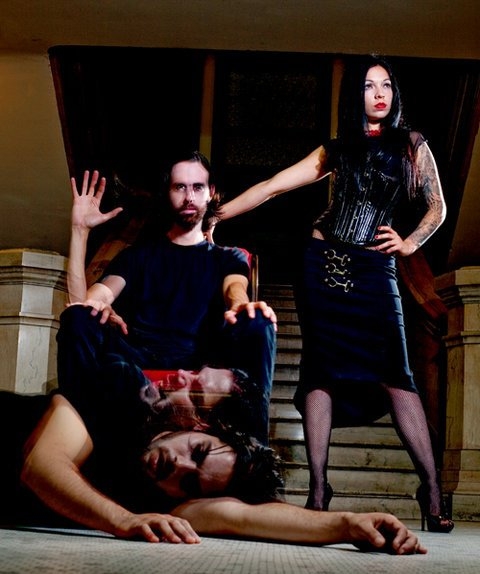
Dreaming Dead’s Schall, Caffel talk progression that led to ‘Midnightmares’

Not every band grows in leaps and bounds, and not every group should be expected to do that. Some run in place and just do fine, while others have more ambition than that. Dreaming Dead fall into the category of artists who probably never will stop growing and progressing.

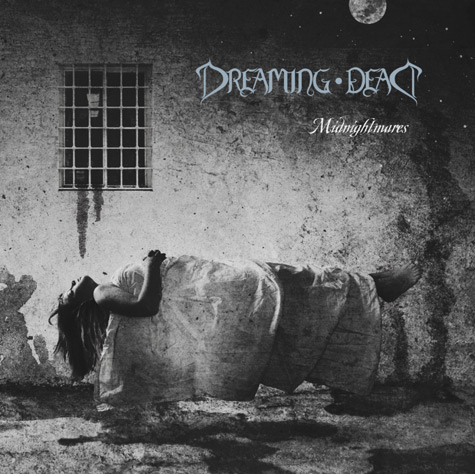
From their start as Manslaughter to their transformation into Dreaming Dead, the shape-shifting already was evident.  Their debut album “Within One” was released in 2009 on Ibex Moon, and from the moment it dropped heads were turned their way, ears tuned to their unique carnage. Now, three years later, the band – vocalist/guitarist Elizabeth Schall, drummer Mike Caffel, bassist Juan Ramirez – are back with a self-released follow-up “Midnightmares.”

The changes from first to second record are astonishing and impressive. No longer can this band simply be labeled as mere death metal, as they do so much more along with that. The songwriting and musicianship are razor sharp, and it’s easy to hear how they’ve grown as players and as a unit. As for Schall, her vocal work has expanded along with her always-consistent guitar-playing skills, which are gaining her accolades among the metal community. Caffel and Schall were kind enough to answer some questions we had about the new album and the band. Check out below what they had to say, and when you’re done, but their album “Midnightmares” at the link at the end. You won’t be sorry, and you also won’t be able to tear yourself away from the multi-headed beast.

Meat Mead Metal: You’re getting ready to release “Midnightmares.” Originally, this was to be a Halloween release. What happened?

Mike Caffel: We recorded the album independently, and were therefore under no obligation to get it to a label at a specified time.  So we got pretty picky about how it sounded.  We took a lot of time to mix and master the album, and I think the final product reflects our efforts.  We also took a lot of time to get the tracklisting of the album just right, along with the placement of some mood-setting samples.

MMM: You’ve chosen to release this record independently. Did any labels talk to the band about putting out the album?

MC: Not really.  We talked to labels a bit and labels talked to us, but nothing came of it.  It’s surprising to me, really.  We’re not the best band ever, but I think we have a lot going for us.  I mean, Juan and I are totally hot!

MMM: What are the advantages and disadvantages to going to DIY route with releasing “Midnightmares”?

MC: Advantages include having the final say about the final product — whether it be the mix, the artwork, or the tracklisting — and being able to pursue our own artistic vision fully without outside pressures.  The album is all us, unfiltered.  The disadvantages are that we won’t get a label pushing the album and providing us with distribution, and that we won’t be as likely to get on tours since labels typically do package tours with their own bands.  Another disadvantage is that we paid for the entire recording out of our own pockets.

MMM: Musically, the sound definitely has expanded. You can hear more musical influences on the record, and I’d say that while it’s death metal, there are shades of gray. Do you agree? What led to the expanded sound?

MC: The progression towards our current sound has been very natural and unforced.  Juan, Liz, and I wrote a lot more together on this album, and we even put a lot of parts together just jamming in the studio.  I’m really pleased with the track “Into the Depths,” and that was a song that we wrote on the fly. I kind of like the term gray metal, but I’ve hesitated to use it because it just isn’t dark enough.  I like the term Bethlehem uses to describe their music: dark metal.  I also think part of the evolution of our sound has been due to us getting more comfortable in our own shoes.

MMM: Vocally, Elizabeth, you show even more range on the album. The growls are there, but it sounds like you’re more confident. Your voice sounds stronger — not that it wasn’t strong before. Is that a product of time and touring? Something else?

Elizabeth Schall: It’s actually something I’ve been working on for quite some time. Adding more range and actually pitching my screams to a specific note helps with variety and overall color. I pushed for it more on this album than “Within One” and expect to go even further on the next album.

MMM: Lyrically, what did you draw upon for the album? Are the songs personal? Observational? Philosophical? Combination?

MC: I feel like our primary focus with the lyrics was to achieve a particular tone: the sometimes absurd and fleeting imagery of dreams, and the juxtaposition between terrifying nightmares and the serenity of sleep.  There is an ebb and flow to the album musically as well, between super brutal and very mellow.  I wouldn’t go so far as to call “Midnightmares” a concept album, but there are definitely strands that exist throughout the entire work.

MMM: Two cuts I wanted to ask about — “In Memoriam” and “Departure.” Both are very interesting tracks. The songs are a little cleaner, a little more delicate. Very emotional. What inspired those songs?

MC: “Departure” is a song that I wrote as a reprise of the first track on the album.  If you pay attention, the final guitar melody in “Departure” is the same as the melody in “Wake.”  “Departure” ended up being a really mellow track, and pretty different from our typical tunes, but I think it worked out really nicely as a way to finish up the album. I’m really proud of how the first and last track stand as bookends to the album.

Liz brought “In Memoriam” to the table, and we really ended up making a cool instrumental out of it.  It has a cool bridge that builds slowly to a big climax.  I think a few of the riffs sound like Tool, so I hope our more brutal fans will be patient.

MMM: Elizabeth, you’ve been recognized for your prowess as a guitar player, you have your own model of guitar. You’re sort of a guitar hero. Did you ever think you’d attain that status? Is it cool that not only does the band get attention, but you do as well for your playing?

ES: Wow, thanks! I actually never looked at myself as being a guitar hero or thought I was at any status. There’s so much talent out there, that I’m not quite sure I actually stand out much, but I’m super stoked with my own guitar model, for sure! It’s something I’ve been talking about with Fernandes Guitars for some time as well. Regular-sized guitars are just too big for me so they totally hooked me up and made one of their Revolver models to size. It’s a beauty and plays wonderfully! On the other hand, attention is always a nice thing for anyone. What I mainly think is most important is to feel pride in your work and person, and that’s exactly how I feel right now.

MMM: On a side note: Elizabeth, you played with the Iron Maidens. Is that still going? Are you a big Maiden fan?

ES: I was an official member back in 2006, then left to form Manslaughter with Mike, which is now Dreaming Dead. I’ve filled in for a few South American and So Cal dates in the past year, but that isn’t really going on right now, but that’s just about it. Maiden is a big influence to a lot of folks, for sure. It was never one of my favorites, but after learning 40+ songs I definitely became somewhat of a fan of their music and song structure.

MMM: Will Dreaming Dead be doing full touring for the new record, or will you keep it regional for now? What do you hope the band accomplishes with this album?

ES: We have a small West Coast tour set for July in the works right now, but I think for the most part we’re gonna keep things local, although I wouldn’t mind getting on a sweet ass tour or fest in the U.S. or anywhere else. We’ll see what lies in store for the future for us. For the time being we’ll continue writing and rockin’ out as hard as we can!

For more on the band, go here: http://dreamingdead.com/

To buy “Midnightmares,” go here: http://dreamingdead.com/dd/index.php?option=com_wrapper&view=wrapper&Itemid=4

Paradise Lost remain as vital, passionate as ever before on 13th disc ‘Tragic Idol’

It’s not uncommon or unexpected when, two decades into a band’s run, things start to slow down. The music isn’t as urgent, the band’s voice isn’t what it once was, and the expression isn’t as vital or immediate. That’s often when bands start relying on the hits, going into the studio just to make new music so there’s an excuse to tour and make a quick buck from the diehards.

Luckily for us, long-tenured doom metal band Paradise Lost does not fall into that category. While there have been highs and lows over their extensive recording career that began with 1990’s “Lost Paradise,” the band has remained mostly consistent. In fact, their last two offerings — 2007’s “In Requiem” and 2009’s “Faith Divides Us — Death Unites Us” — were pretty solid and demonstrated a band that didn’t seem anywhere near running on fumes. Now comes their 13th studio offering “Tragic Idol,” one of the year’s more highly anticipated records, and results are nothing short of powerful. This band has no quit in them, and even though they’ve been down every road and tackled every corner of the globe, they still have something relevant and exciting to say.

Another impressive anecdote about England’s Paradise Lost is they have maintained basically the same lineup since their formation in 1988. They’ve shuffled drummers a few times, with Adrian Erlandsson sitting behind the kit now, but the core of vocalist Nick Holmes, lead guitarist Gregor Mackintosh (we spoke with him a while back about his Vallenfyre project), rhythm guitarist Aaron Aedy, and bassist Steve Edmonson has stood the test of time and only grown stronger over the years. Listen to “Tragic Idol” and try to deny the fire that still rages in their bellies or that they’re not still incredibly important and influential to the metal scene. This is a fantastic, killer record that’s one of the best they’ve put together in a long time, their recent run of quality music aside.

Mackintosh, who got his vintage death metal hunger satisfied on the Vallenfyre release, said the new album would be guitar-oriented and feature more melody than before, and he was right about that. The songs do bristle and crush in spots, and some of the tracks are among of the band’s heaviest ever, but there is a gothic loveliness underneath a lot of the compositions, hooks that strike and floor you, and memorable moment after memorable moment that should make for some really exciting live shows. I imagine these songs will be fodder for much crowd participation.

Even when Holmes howls and growls, “Love fails today!” at the start of “Solitary One,” you’re not headed on a trip that’s quite as brutal as that salvo indicates. Yeah, it has its thorny moments to be sure, but it dissolves into a watery, gothy chorus that contains some of the most soulful singing on the entire album. It’s a song I can’t get out of my head. “Crucify” kicks in and lets things get a little rowdier for a bit, with a charging guitar line from Mackintosh that envelops the somber melody. “Fear of Impending Hell” is one of the catchiest songs on the record, and it could be a stand-out track for them, especially with a chorus this sticky. Try to ignore Holmes calling, “Never see the light, I don’t know where to escape.” You’ll fail, trust me. “Honesty in Death” is another that has hit written on it, with a nice chorus and a structure that keeps your blood flowing; the title cut has some deeper, less forceful vocal work from Holmes, as does “Worth Fighting For”; and closer “The Glorious End” is a true, slow-moving doom epic that’s utterly moody and dark.

I did note some of the material is heavier than usual, and you’ll find that evidence on “Theories From Another World,” a driving, fast, riff-rich song that simmers and shakes in its aggression, as well as “To the Darkness,” a song that catches onto a power metal-style gallop and keeps the tempo rambling forward.

“Tragic Idol” is not only a fantastic later-career entry for Paradise Lost, it’s one of the better albums of their collection. They keep finding new ways to be effective and keep their perspective fresh. They don’t sound like they’re slowing down one bit, and I’m guessing the live shows surrounding the new record will be some of their most passionate, ferocious yet. That’s not something you can manufacture, proving they have just as much heart as talent.

For more on the band, go here: http://www.paradiselost.co.uk/

To buy “Tragic Idol,” go here: http://www.cmdistro.com/Item/Paradise_Lost_-_Tragic_Idol_-PRE-ORDER-/41193

For more on the label, go here: http://www.centurymedia.com/