As Opeth invade U.S. shores, The End serves up reissues of band’s classic titles

I love reissues. Actually, let me back up a bit. I love sensible reissues. I’m not terribly down with putting out some expanded version of a record that just came out a year ago just to do a cash grab. Victory Records is notorious for this, and considering the average age of their audience is like 12, there’s no sense in it. The idea’s just really mean.

But a true reissue project, such as Metal Blade’s efforts to reintroduce and repackage works from Amon Amarth (the tacked-on live goodies were worth the price of admission) and Primordial, as well as Relapse’s Death stuff and Earache’s recent Carcass project, are fun, help new fans catch up, and give older listeners a better version of what they already own. Along with some new stuff to make parting with your money a worthy cause. Those types of things I generally eat up, and I am pining for reissued versions of the old Testament and Overkill albums so that I can update those aging discs that don’t exactly come to life if I put them into my car stereo. I have to turn it up to about 40 to get any firepower.

So this all leads us into an effort from The End Record to get some of Opeth’s works back into circulation again. Through their acquisition of the Music for Nations catalog (a purchase that got us fresh versions of stuff from Witchery, Lost Horizon and Firebird, among others), we get a renewed look at some of the band’s work from early in this century, when they really hit a creative stride and put out some mesmerizing, challenging work. In that collection is an expanded version of one of the progressive death metal band’s finest albums ever, and one of the best pieces of work in the history of the genre.

Now, depending on what’s included in your personal Opeth collection, you might not require every piece of this new wave of product. But if you weren’t tuned into the band yet in this era or just never got your hands on some of these albums, this is a great time to do it. And not to sound all salesman and all, but The End has an awesome package (seen above) where you can get all of these pieces together, along with a vinyl bag. We’ll include that link at the end because you might want to get on that.

The highlight of this project is a gorgeous new version of “Blackwater Park,” often cited as the band’s best record (I would agree, though I also love “Orchid” a great deal). It was Opeth’s first-ever North American release (came out in February 2001) and marked the band’s first collaboration with Steve Wilson of Porcupine Tree. It’s a gorgeous, sprawling masterpiece that marks the apex of the band’s fusion of death metal, prog rock and ’70s-style folk rock. The band has put out some excellent music since then, but they’ve never quite captured the magic of this incredible album. Along with the music is a case-bound digipak, a 28-page, full-color booklet, and a bonus DVD. Even if you have this album, getting this “legacy edition” is worth spending the money all over again. I’m thrilled to have this new version on my shelf. As weird as this may sound, I’ll treasure it.

“Lamentations” also gets a great new repackaging, as the DVD and double-disc version of their live performance at Shepherd’s Bush Empire in September of 2003 is combined as one for the first time. It mostly covers the terrain they traveled on the dual “Damnation” (played in its entirety) and “Deliverance” albums, along with some nuggets from “Blackwater.” Both the DVD and CDs sound incredible, though some of the camera work on the DVD is a little wacky. But that’s no big deal, really. Plus, if you’ve never experienced the band live, you get the treat of Mikael Akerfeldt’s weird stage ramblings that sound half-gentleman, half-smart ass. He’s so low key and unassuming, it’s comical. There also is a documentary of the making of the “Damnation” and “Deliverance” records that also is pretty interesting to watch and gives you a better understanding of how these records came to be. Speaking of which …

The reissues of “Deliverance” and “Damnation” don’t differ at all from the versions that were released in 2002 and 2003 respectively. “Deliverance” is one of Opeth’s heaviest records ever, and there are points of savagery the band has come nowhere near matching since then. That’s not a criticism, mind you, just an observation that this record was the band’s decibel tipping point. But as usual, the band colors the chaos with some cleaner passages, some acoustics, and a ton of atmosphere. This album also holds a special place in my heart because it was the first Opeth album I really fell in love with, and I worked backward from there almost instantly.

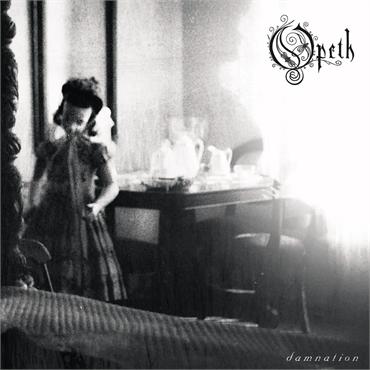
“Damnation,” at least in 2003, was the oddest record the band ever released. A companion piece to “Deliverance,” this was an album full of moody ballads and mid-tempo pieces, with zero strains of death metal. It was a new look at the band, one that actually hinted to what was ahead (put this alongside “Heritage,” and you can see the path clearly). It also features some of Akerfeldt’s most soulful vocal work and some truly haunting music that would prove just how talented and flexible these guys are as musicians. And let’s face it, this is an album Opeth naturally had been progressing toward for years, and to hear it come out in its glory had to be cathartic both for the band and its listeners, who have embraced Opeth’s many colors and nuances throughout the years.
All of this also comes out at a very strategic time, when Opeth are launching a North American tour alongside Mastodon and Ghost, one of the year’s most anticipated adventures. If you don’t own any of these pieces, definitely put some money aside and grab these next week because they’re well worth your time. Opeth is one of death metal’s greatest treasures, and all four of these documents are all the proof you need to back up that assertion.

For more on the band, go here: http://www.opeth.com/home/

To buy the entire bundle, go here: http://www.theomegaorder.com/OPETH-4CD-Reissue-FREE-Bag?sc=16&category=398342

For more on the label, go here: http://theendrecords.com/

High on Fire light up with divine time travel storyline on ‘De Vermis Mysteriis’

Metal has its share of bizarre concept albums. Queensrÿche’s “Operation: Mindcrime” is a classic example, as is Iron Maiden’s mythological tale “Seventh Son of a Seventh Son.” You have Mastodon’s classic “Leviathan” and not-as-classic “Crack the Skye.” You have King Diamond’s “Abigail” and … just about every one of his other albums. Basically, there are a lot of tales that have been told in metal history, and most of them are pretty wacky.

But no matter how hard a concept may be to wrap your brain around, perhaps you haven’t seen and heard anything yet until you tackle the new album from High on Fire called “De Vermis Mysteriis.” This one’s hard to grasp conceptually. Musically, no problem at all. The Kurt Ballou-produced demolition created by HoF crushers vocalist/guitarist Matt Pike, bassist Jeff Katz, and drum god Des Kensel is massive and thoroughly satisfying, one of their most crushing effort since 2005’s “Blessed Black Wings.” The story? I hate to do this because it feels lazy to me, but here’s what Pike had to say about the record’s storyline. Pay attention now because he refuses to reiterate beyond this initial telling.

The album’s title (translation: The Mysteries of the Worm) is a nod to a fictional grimoire conceived by the late, great Psycho author Robert Blochin and later incorporated into horror master H.P. Lovecraft’s renowned Cthulu Mythos. “It’s a concept record, a little bit,” Pike offers. “I got this idea about Jesus Christ and the Immaculate Conception: What if Jesus had a twin who died at birth to give Jesus his life? And then what if the twin became a time traveler right then? He lives his life only going forward until he finds this scroll from an ancient Chinese alchemist who derived a serum out of the black lotus—which is actually in Robert E. Howard’s Conan stories—and then he starts traveling back in time. He can see the past through his ancestors’ eyes, but his enemies can kill him if they kill the ancestor that he’s seeing through at the time. Basically, he keeps waking up in other people’s bodies at bad times. It’s kinda like that old TV show Quantum Leap. Kurt actually pointed that out to me after I told him the idea. But whatever—time travel is a killer concept.”

You got all that? It’s pretty out there, and considering the band’s notoriety at participating in and inspiring bong-related activities, an idea like this surely had to have been a product of a cloud of smoke. So follow along the best you can on this journey, and as strange, mystifying, scary, and trippy as it all may seem, as noted, the music will get you there. Lots of people complained about the production value of 2010’s “Snakes for the Divine,” namely how Kensel’s drums were treated, but it only takes the first few seconds of this seventh High on Fire album to let you know the skins are going to get the shit pounded out of them, and you’ll hear every strike. This is the heaviest, beastliest album from the band yet, and they sound downright ferocious telling this story.

So yeah, opener “Serums of Liao” just explodes, with a trudging assault that sounds like Motorhead poking a wasp nest. That leads to the earth-quaking “Bloody Knuckle” and its Slayer-like thrash approach that gets just a little bit of swagger to go along with it. “Fertile Green” also gets a blistering lead-in by Kensel, so if the point hadn’t been made yet that this is a record for drum fetishists, then this will make that loud and bloody clear. “Madness of an Architect” changes up the tempo a little bit, with some drone and more of a stoner gallop like Pike’s earlier days with Sleep (oh, “Dopesmoker” reissue, coming soon). The song also gets Southern-style treatment and even more doom piled on top for good measure. “Spiritual Rites” is as aggressive and speedy as High on Fire ever have played, and the title track is burly and a bit more basic. “King of Days” is absolutely pulverizing but also feels a lot different from what we come to expect from this band. There’s more of a mid-tempo, and at times vintage Metallica aura to it, and it has some of Pike’s gutsiest vocals. Oh, and a bones-to-dust outro from Kensel, your album MVP. The one song that may cause your head to tilt a bit is raw, stripped-back closer “Warhorn,” where Pike’s gurgling, mucous-smeared vocals take center stage and are as naked as ever. It sounds weird at first, but that’s because you’re used to hearing him howl over teeth-shattering decibels. So let yourself adjust, and you won’t be sorry.

High on Fire is one of metal’s loudest, sweatiest, meanest, nastiest bands, and their output has been nothing short of consistent. Now they can add “intellectually challenging” to their resume with this new album. It’s an astonishing listen, one that sounds best on the highest volume you can achieve. This a platter that only should solidify, if not swell, the band’s following.

For more on the band, go here: http://highonfire.net/

To buy the album, go here: http://www.amazon.com/De-Vermis-Mysteriis-High-Fire/dp/B007ADKQFE/ref=sr_1_1?ie=UTF8&qid=1333421062&sr=8-1

For more on the label, go here: http://www.eonemetal.com/

Iron Maiden laugh in the face of age, science, kick Chilean ass on ‘En Vivo!’

Do you hate bands that take forever to put out new material, leave you hanging for years, rarely hit your hometown for a show? If so, there’s no way possible you could have an issue with legendary British heavy metal warriors Iron Maiden, who put out a new package for their fans every 10 minutes or so.

That’s only a slight exaggeration. One of the most frequently read entries on our site is the look at the band’s “From Fear to Eternity: The Best of 1990-2010,” a double-disc compilation of the last 20 years of Maiden tracks. That was only a half year ago. The release was a tad on the excessive and unnecessary side, but if you’re a dork like me, you bought it anyway. That’s how completists and unabashed fans do things. Even if we don’t really need it, we grab it anyway. Now, less than a year later, we have yet another Iron Maiden collection that’ll be separating the band’s disciples from their money.

In stores is a new two-CD and two-DVD package “En Vivo!” a live package showcasing the band’s stop in Santiago, Chile, April 10, 2011, on their tour to support their last studio album “The Final Frontier.” That’s right, another live package. Put this one alongside all-time classic “Live After Death,” “Donnington Live 2002,” “Another Live One,” “Another Dead One,” “Rock in Rio,” “Flight 666,” and I’m sure I’m forgetting some. These guys love putting out live documents, and in their defense, they’re an absolute must-see band in concert, a group that every heavy metal fan should make a point to see at least once. I have taken people to see Maiden before who had no interest in the band or in heavy metal, and they walked away converted. They’re a force to behold. But do we need so many live albums?

That question aside, we have to judge these releases on their importance relevancy, and quality, and in the case of “En Vivo!” it’s a stunner. The fact that these guys in their 50s and 60s – frontman Bruce Dicksinson, bassist Steve Harris, guitarists Adrian Smith, Dave Murray, and Janick Gers, drummer Nicko McBrain, and live synth player Michael Kenney — can withstand such demanding tour schedules, still put out quality albums, and absolutely dominate live is practically a thumb to the eye of science. It should be impossible, but Maiden consistently prove it’s not. The 17 tracks spread over these two CDs sound tremendous, and unlike some of their past concert collections, they left in some of the warts. To boot, dynamic singer Dickinson cites “Two Minutes to Midnight” as being from 1982, when it was actually on 1984’s “Powerslave.” Also at one point on “The Evil That Men Do,” he flubs a line, but he recovers nicely and forges on. Those easily could have been edited, but they left them in, and the whole thing is better for it. I like that their human side comes through.

The set is heavily concentrated on newer material, especially the “Frontier” album. That should be expected as Maiden long have insisted they won’t be a nostalgia act and want to tour to support new music. If you have a problem with that, they obviously have enough other live albums to satisfy you. If you want to hear how their modern-era songs work live, check out openers “Satellite 15” and “The Final Frontier,” songs that seem they’d be more fitting in the middle of a set, but whatever; “El Dorado,” where Dickinson’s charisma spills over; “The Talisman,” that is glorious on the stage; and “Coming Home,” a song that’s a little mushy on record but punchier here. They also dip back into “The Wicker Man” and “Blood Brothers” from 2000’s kick-ass “Brave New World,” as well as the title cut from “Dance of Death.” We get nothing from “A Matter of Life and Death,” which I find odd. Maybe next time.

If you want some classics, they’re here too. They’re pace-changers more than pillars of the set, but at least non-daring fans got a nice dose of aforementioned “Midnight” and “Evil”; anthemic “The Trooper” and “Number of the Beast”; early era throwbacks “Iron Maiden” and “Running Free,” their long-time set closer; and a haunting version of “Hallowed Be Thy Name.” Anyone bitching they didn’t do enough classics should have caught them on the “Somewhere Back in Time” tour, or see them this summer when they dig back into their past again.

If you buy the DVD version, you also get an 88-minute documentary “Behind the Beast” that gives you an in-depth look at the band, as well as the “Satellite 15 … The Final Frontier” promotional video and a making-of segment.

So while it may seem like another way for Maiden to make money off their faithful, it’s way more than that. It’s an excellent concert album that finds a band in its late stages but sounding as fresh and spry as ever. We all should wish to be this active and energetic when we’re their age, and this is a true victory for one of metal’s greatest bands of all time. Yes, this live set is worth your money, and played back to back with “Live After Death,” you can take a thorough trip through the Iron Maiden’s amazing history.

For more on the band, go here: http://www.ironmaiden.com/

To buy the album, go here: http://www.ironmaiden.com/envivo/

Pelican return with fire in their bellies on excellent four-track EP ‘Ataraxia/Taraxis’

Did you ever have some weird realization that just kind of pops into your head, uninvited, that makes you wonder what other bizarre things are rolling around in your head? I just had one of those the other day. Here goes: I never have seen a pelican in real life. That kind of made me sad because I’ve been to beaches plenty of times, and you’d think I would have run into one at some point. But no. We’ve yet to cross paths.

I guess that thought wasn’t entirely random because it came to me when I was pulling my thoughts together on “Ataraxia/Taraxis,” the new EP from Chicago-based post-metal institution Pelican. I also have yet to see the band live, and it would be really strange that if I saw both these fellows and that damn bird on the same day. Not sure where I’d go from there. But enough about the bird and more about this new four-track outing from a band that’s been silent since releasing 2009’s “What We All Come to Need.” That album was noteworthy not only because it marked another milestone of progression for the band, but also because it was the first release for their new label home Southern Lord (they had spent years with Hydra Head). But then they seemed to fade into the distance.

Luckily for us listeners, that break in the action is over with this new offering, a really neat, appetizer-like effort that sort of gives you a glimpse into all the things this band does really well. All four tracks have their own identities and stand apart from the other songs, but as a whole, they make quite the cohesive unit. Each cut is like a new chapter, with its own story tell and arc to stretch into the next piece. It also is one of the most pleasing, exhilarating Pelican releases in their entire catalog, and I find myself listening to this thing over and over again. It helps when I’m battling my way to work, watching assholes clog the passing lane as I choke back my rage. It evens me out nicely. I’ve also indulged quite a bit when tearing through piles of proofreading work. It keeps my brain working hard.

Another new element for the band is that, while Chicago is their recognized center point, the dudes live in separate cites, which has to change the songwriting dynamic. Yet the Pelican members — guitarists Trevor de Brauw and Laurent Schroeder-Lebec, bassist Bryan Herweg, drummer Larry Herweg — manage to make this arrangement work wonderfully. The music sounds re-invigorated (not that they ever grew stale or anything), and it seems like the band has a new sense of purpose and a fire re-kindled in their bellies (um, or their throats).

The EP kicks off with “Ataraxia,” as guitars swoop in unassumingly, almost sounding like a plane you can hear approaching in the distance. But as that craft gets closer to you, the intensity and power becomes more obvious and prevalent. That takes us into “Lathe Biosas,” one of the band’s burlier, thornier songs in some time, with rugged guitar lines and a nice rhythm section crashing and bashing to set a pulverizing foundation. “Parasite Colony” is a bit more stoner-doom in its complexion, as the guitar work sounds sleepy (though not lazy) and chilled out, bringing you back down emotionally for the closer “Taraxis.” That song plays more with acoustics, shakers and serenity, though it does have its moments where it threatens to spill over and mangle you. It’s a perfect way to cap off your emotions and remind you why you fell in love with this band in the first place. It’s also a nice re-entry point if you’ve been away from Pelican for a while.

Pelican already are one of post-metal’s and instrumental rock’s best, most noteworthy bands, and each time out, they give us something entirely different to ponder. As a longtime fan of the band, I’m thrilled just to have the band back with new music, and it’s a plus that their new sounds are so rich and rewarding. Now if only I can get into a room with these guys and experience their power live. Well, that and toss fish to a same-named bird on a pier, a winged friend that’s alluded me my entire life.

For more on the band, go here: http://www.facebook.com/pelicansong

To buy the album, go here: http://www.southernlord.com/store.php?dept=MCH

For more on the label, go here: http://www.southernlord.com/

ISIS, Circle members bash skulls on punk-infused Split Cranium debut

I’m sure you know folks whose whole life is work. They basically do nothing else. They’re always slaving away at their craft, trying to do something new and different, pushing themselves to achieve newer, crazier levels of productivity. Those people are just wired differently.

Aaron Turner seems like one of those people. When he and his ISIS bandmates shut down their long-running, heavily influential band, surely no one would have complained had he gone into hiding, perhaps ensconced himself entirely at the goings-on at Hydra Head Records, and took a well-deserved break. But yeah, he isn’t wired that way. There was a handful of ISIS live recordings to get out, then there was a new Mamiffer full-length and then the band’s joint effort with Locrian (we already gushed like a baby over that thing), a tour with Old Man Gloom, and I’m pretty sure there’s something I’m leaving out of that picture. So, it only makes sense that Turner would come at us with a new band.

Split Cranium might surprise you, if you don’t know any better. While Turner is known for headspace-expanding, atmospheric, brilliant compositions, that’s certainly not all he’s got. The band’s debut offering sounds like Turner letting loose and blowing off some steam. It sounds like he and his bandmates are having a blast playing these punk-flavored, crusty death-tinged, D-beat assaulted tracks. He and his crew — Jussi Lehtisalo (Circle, Phantom Overlord), Jukka Kroger, Samae Koskinen (Steel Mammoth) — crafted something that was the product of loose creative sessions gone monstrous, and the band sounds like one that, in a live setting, could set fire to the place and leave everyone a heaping mass of flesh. Eh, sorry Great White. Actually, these jams probably are equally as cathartic for Lehtisalo, whose Circle can be as perplexing as any band out there.

This 8-track, 25-minute album wastes no time grabbing you by the back of the head and forcing you into their pit of madness. “Little Brother” opens things just right, with a speed-punk assault, Turner’s menacing growls, and a pace that’ll make you dizzy. That leads the way into “Tiny Me,” a song that has some pretty sweet guitar riffs and that boasts classic punk attitude; “The Crevice Within,” a heavy hardcore-influenced cut that blasts past you before you know what even happened; “Sceptres to Rust,” a song that acts like it’s going to be some weird ambient interlude before it blows up halfway through; and “Black Binding Plague” and “Yellow Mountain,” that both sound like a head nod and lit-cigarette-thrown-into-the-audience tribute to Motorhead.

As great as the band’s fury is, the two most interesting cuts come when they space things out and let the smoke really fester. “Blossoms From Boils” lasts nearly five minutes and is highlighted by some tasty Southern rock guitar licks that get swampy and nasty. All the while, Turner howls away like he’s trying to exorcise demons from his throat. It’s a bad-ass song that you could unleash in front of your cheap-beer-swilling, redneck neighbors without instigating fist-i-cuffs (unless the song got them that fired up). Closer “Retrace the Circle” clocks in at more than eight minutes, and there are pockets of cleaner vocals, some riff repetition that induces trances, the whole thing threatening to succumb to static, and then the glory kicking back in full force to whip your ass on its way out.

Maybe one day Turner will take a damn break already and soak in what he’s accomplished. Or perhaps he’s just not that type of guy and always will be in creative mode. Whatever he does, we’ll check it out. Hopefully his future will contain more from Split Cranium, his most riotous project yet.

For more on the band, go here: http://www.facebook.com/SplitCranium

To buy the album, go here: http://www.bluecollardistro.com/hydrahead/categories.php?cPath=4

For more on the label, go here: http://www.hydrahead.com/

Beak ignite post-metal genre with passion and intensity on debut ‘Eyrie’

In heavy music, extreme metal, whatever you want to call the thing, it’s getting increasingly more difficult to be entirely original. Everything’s been done, often to death, and it’s really tough to surprise someone with something that’s never been heard before. That’s because everything’s been heard before. So for a new band trying to make a mark in a section flooded with sub-genres and participants, what’s the solution? How about just being good at what you do?

Chicago’s Beak, a new quartet made up of some members of post-rock outfit The Timeout Drawer, won’t dazzle you with new bells and whistles. Their sound is similar to what bands such as ISIS, Neurosis, Pelican (musically, of course), and the early era of screamo bands (before that genre turned to Hot Topic shit) have done for years. They have some post-metal dreaming, muddy doom, some prog, some death, and what have you. Plenty of other bands have tried this same formula, so much so that enduring new groups with these same ideas is growing tiresome. But Beak are different because they sound great and have a very real passion you practically can reach out and touch. They’re emotionally rewarding to hear, and you can tell they mean it. I’ve listened to their debut “Eyrie” plenty of times already and have yet to grow tired of it at all. That’s saying something considering how much stuff I sift through in order to find suitable music for this site.

Also, from the band’s bio, it sounds like this gathering also was built on philosophical togetherness. They claim their creation process involved, “No meat. No cars. No television. Group cooking and eating. Days without electricity.” And so on and so on. It sounds like setting up a communal setting and making sure everyone was in tune with the message was just as important as creating something heavy as hell. Perhaps that is a primary reason why these songs sound so tight, interlaced, and spiritual (not in a religious sense). It wasn’t just four guys in a room trying to make noise and out-heavy everyone else.

Beak is comprised of vocalist/guitarist John Slusher, guitarist Andy Bosnak, bassist/vocalist Jason Goldberg, and drummer Chris Eichenseer, and their first recording is conceptual in nature, focusing on decaying societies and empires, ruin, and time moving forward as the past crumbles. You certainly can hear all of that in their volcanic compositions, and producer Neil Strauch (who has worked with decidedly non-metal, yet still quite challenging acts such as Sage Francis and Bonnie Prince Billy) really captured the tension and tumult perfectly. The sound often comes off like it’s holding so much force, it’s ready to snap, and that gives the album a dangerous, quaking feel like the earth’s crust is going to burst. That’s a nice touch.

“Angry Mother of Bones” opens the door and completely detonates upon impact, with very throaty vocals from Slusher, some spacey keys, and a melody line that, at times, sounds like Metallica’s “To Live Is to Die.” “Hands Collide” spits static and has more of a hardcore approach, with punchiness and eventually some sci-fi atmospherics. “Men at Arms” takes a tumble through some Western terrain, eventually melting into lava and triggering some massive explosiveness. “Billions of Eyes” sets into a muddy groove, and Slusher and Goldberg go back and forth trading diatribes. Both forces push each other into corners, and it makes the thing that much more combative when the other guy fights his way out. Closer “The Weight and Time” is chugging and mangled, furious and fighting, leaving you a gasping mess. It also leaves you wanting more, but we must wait for that. And who knows what kind of duress these guys will make themselves endure before they get there?

I’m curious to hear how Beak evolve over the years and if they can maintain the intensity of “Eyrie.” They show a lot of promise, and as noted, they don’t get bogged down by sub-genre trappings. They rise above them and make these familiar strains work in their favor. This first salvo certainly rips a hole in your defenses, and if they keep this up, they could be a post-metal go-to band in no time.

For more on the band, go here: http://www.beakmusic.com/

To buy the album, go here: http://www.amazon.com/Eyrie/dp/B007N2SXZ2/ref=sr_1_12?s=music&ie=UTF8&qid=1332861586&sr=1-12

For more on the label, go here:http://www.someoddpilotrecords.com/

Meshuggah show progression by taking steps backward on powerful ‘Koloss’

When someone comes up with a unique idea, it is expected that people will catch on and copy that idea to death. That results in each copy being less and less special and typically waters down the concept. Then you end up resenting those who were responsible for said movement for spawning the garbage that followed. Sorry, Pearl Jam. You didn’t mean to give way to Creed. Same to you Anthrax/Public Enemy. It was a cool idea, and then we got nu-metal, the worst era in metal history.

So now that we’re neck deep in this Djent thing, and wow, does it suck. See, the style is one of those things that if you practice the palm mute deal enough, you can make the noises happen at home. But that doesn’t mean you’re making interesting or good music. So really, don’t blame Meshuggah for all of this shit, because surely they didn’t intend for this thing to devolve into the hundreds of bands that are marring the sound they had a giant hand in crafting. Truth is, for all the imitators out there, no one does it better than Meshuggah. I’d say that, while that’s an opinion, it’s pretty close to a fact.

The Swedes have been making mind-bending, head-titling metal for more than two decades now, debuting with 1991’s “Contradictions Collapse” and making standard-bearer albums such as heavily influential “Destroy Erase Improve,” “Chaosphere” and “Catch 33,” an album so complicated the fellows were hard-pressed to recreate the songs live. Yeah. They definitely have a signature sound, and you always know it’s Meshuggah when you hear them. That includes lead barker Jens Kidman, the lover of wacky faces whose stream-of-consciousness delivery always seems loose yet forceful. No matter what Meshuggah do from record to record, they always maintain that identity even if some of the backgrounds are slightly different.

Same goes for the band’s new, seventh record “Koloss,” the follow-up to 2008’s “obZen” and another new step for the group. See, they keep wrinkling your brain like you’d expect, but for the first time ever, they pull back on the madness and make things a little more streamlined. Don’t get me wrong, they didn’t exactly do a “Black Album” thing like Metallica did. They haven’t lost their balls, their intensity or their focus, and trust me, this isn’t a pop album or something. A listener new to the machine still will be perplexed and have to take some time to figure out what’s going on. For those who have been along for their journey, you’ll find the easiest Meshuggah record to digest and figure out ever. That’s certainly not a bad thing, and if anything, it proves how adaptable they are.

The record opens with “I Am Colossus,” a hammering first salvo that rips right into you, with Kidman howling, “I decide your fate!” as guitarists Fredrik Thordendal and Marten Hagstrom pull together riffs that are equally muddy and spacey. “The Demon’s Name” has a tech death aura, with pulsating drumming from Tomas Haake, and some of the out-there guitar soloing gives the song a bit of a sci-fi bend. “Behind the Sun” lets in some jazz influences, and I swear I hear horns in the background. Maybe that’s just an audio illusion. “Swarm” opens like one, with a frantic pace, a punishing assault, and some cartoon-like string histrionics that remind you the guys can still boil your senses when the need arises. “Demiurge” has some weird things going on beneath, with oddball noises and some gothic melodies, but it also fully levels you when you least expect it. Closer “The Last Vigil” is a floating, heady instrumental that’s eerie and calming at points. It’s a nice breather as the record draws to its conclusion. The only song that doesn’t really do it for me is “Marrow,” a groove-heavy cut that goes a little too close to nu-metal territory. But that’s one minor chink in otherwise sturdy armor.

Meshuggah easily could have floated on Djent’s choppy waves and simply capitalized on the movement they set into motion. But they don’t do things that way. They pushed themselves by dialing things back. They got back to basics, though their basics are light years ahead of everyone else’s. “Koloss” is a super-solid collection that’s as fun to hear as anything they’ve put out since the close of last century. But that doesn’t mean you should get comfortable with this sound. They’ll likely blow the whole thing up next time and do something completely different. But you’ll still know it’s Meshuggah.

For more on the band, go here: http://www.meshuggah.net/

To buy the album, go here: http://store.nuclearblastusa.com/Search/meshuggah

For more on the label, go here: http://www.nuclearblastusa.com/en/

Cynic (sort of) show a softer, gentler side on long-awaited ‘Portal Tapes’ collection

Portal ... Cynic ... whatever

We all waited long enough for prog-death pioneers Cynic to follow up their epic, highly influential 1993 debut “Focus.” The band disintegrated before they had a chance to do a proper sequel, and it seemed that they would be lost to the sands of time.

And then they came back. About 12 years after the band disintegrated in 1994, they announced some reunion shows and even played new bits live during their 2006-07 road jaunt, pieces that eventually would become important building blocks of their stunning 2008 comeback album “Traced in Air.” That album found the band drifting further away from their death metal roots and adopting more spacey, prog-rock tendencies. From that point, the band just kept giving, and giving, and giving. A 2010 EP “Re-Traced,” comprised of reconfigured, musically transformed versions of some “Traced” cuts, landed in our laps, and a year later, another EP of new music called “Carbon Based Anatomy” dropped. Both efforts offered a glimpse into where Cynic would evolve next and are worthy additions to your collections.

Now comes a pretty big one. See, once Cynic fell by the wayside, some of its members, namely singer/guitarist Paul Masvidal, drummer Sean Reinert and guitarist Jason Gobel, teamed up with bassist Chris Kringel and vocalist Aruna Abrams to form a new band called Portal. Uh, not to be confused with the death metal terrorists from Down Under. They recorded some material together, but the project never really got off the ground. Yet the work they did set in motion where Portal would go musically once they reformed. And it got Cynic fans all worked up because they wanted to get their hands on the music, which wasn’t exactly widely distributed.

So here it is, “The Portal Tapes,” an album misleadingly released under the Cynic moniker even though it technically isn’t a Cynic album. Understand? Season of Mist has a limited release of the collection ready to go, with 5,000 committed to CD and just 1,000 to vinyl. Those who haven’t heard this collection to this point might be surprised just how different the music sounds from what the Cynic members had done before this, and it might even shock some that what they’ll get here is so … soft. In fact, the band members made associations with Dead Can Dance and My Bloody Valentine, though I don’t hear a hell of a lot in the latter. It’s more like modern Cynic with all the barbs removed. You can hear Dream Theater, Steely Dan and Porcupine Tree at moments as well.

I don’t mind softer music, and although this is a site dedicated to metal, I listen to a lot of other stuff, including as lot of folk and old country. So I’m not afraid if something doesn’t rock out. But I can’t really get into a lot of what’s on here, and I love Dead Can Dance and everything Cynic has ever done. The music is really dated, which isn’t surprising or a criticism, and hearing it now, it’s just a little hard for me to get into with enthusiasm. Abrams has a lovely, breathy voice, and had this band made it into circulation at the time it was recorded, she might have become a household name. The music is prog-dork country in a lot of spots, damn near adult contemporary in others. Again, not criticizing, but it’s not a sound that does a whole lot for me. Maybe you’ll feel differently.

There’s a lot of soupy, spacey stuff on here and, as noted, it’s pretty gentle. That’s fine, really, because things that should be cosmic – “Endless Endeavors”; “Cosmos,” especially with the line, “I want to be closer to higher beings”; “Circle” – are the best songs on this collection. “Karma’s Plight” is interesting and has some New Wave flourishes, and Masvidal actually takes lead vocals on that one; and “Costumed in Grace” is proggy and docile, which works pretty well. The rest I can’t embrace. “Crawl Alone” sounds like a late-era Sting song as it seems to try to be a pop hit breakout; “Mirror Child” is R&B-flavored, but not really in an engaging way; “Road to You” would be passable if it weren’t for the clunky lyrics; and closer “Not the Same” is adult-contempo land and never really goes anywhere exciting.

Again, this is just how I feel about this thing. I’m sure other people will be more open to what these artists do on this album. Clearly everyone here is a commendable player, but I don’t think these songs quite measure up to the potential. I’ll probably end up parting with cash for this simply because I’m a Cynic completest, but I don’t see it being played very often at all. When it comes to anything called Portal, I’ll take the band fronted by the guy wearing the cuckoo clock.

For more on Cynic, go here: http://www.cyniconline.com/

For more on their Portal years, go here: http://www.cynicalsphere.com/portal.html

To buy the album, go here: http://e-shop.season-of-mist.com/en/items/cynic/the-portal-tapes/cd-digipack/30341

For more on the label, go here: http://www.season-of-mist.com/

NWOBHM legends Angel Witch soar back with steady new ‘As Above, So Below’

No matter how old you are, no matter what comprises your metal record collection, chances are you’re familiar with the term New Wave of British Heavy Metal. By the way, I don’t care if it’s proper or not, but I hate when people pronounce the NWOBHM acronym.  Ne-wob-em. Punch me in the face.

There are so many noteworthy bands form that movement that originated in the ’70s, rose to greater heights in the ’80s, and influenced a ton of bands going forward from Metallica all the way to Christian Mistress. Some of the heavy hitters from that era include Iron Maiden, Def Leppard, Judas Priest, Saxon, Diamond Head, Raven, Tygers of Pan Tang, and Sweet Savage. Now, not all of these bands are household names, but chances are if you have dozens, hundreds, or thousands of metal albums taking up space in your home, you have something influenced by at least one of these groups. The guitar work was scintillating, often driven home by twin-guitar assaults, the vocals often strong and majestic, drawing comparisons to the power metal genre, and the songwriting was rock solid. It was, arguably, the greatest and most influential movements in heavy metal history.

Another major player at that time was Angel Witch, a London-based band that originally formed under the name Lucifer before settling on something a little more unique. Their self-titled 1980 album (released on Bronze Records) opened a lot of eyes and seemed to indicate they would be a major force for years to come, and that platter has achieved classic status and was inducted in Decibel’s Hall of Fame. In fact, just a couple years ago, a deluxe edition of that seminal record was released and is an absolute must-have for any NWOBHM enthusiasts. It’s like a textbook. It should be required listening.

But instead of becoming a household name, Angel Witch fell apart. The band’s lineup dissolved soon after their debut was released, and Kevin Heybourne was the only member who would have any steady role in the group going forward. The band put out a few records that didn’t really go anywhere and certainly couldn’t match the intensity and specialness of their first album, and eventually, Angel Witch appeared to fade into history. But interest kicked back up when the song “Angel Witch” was featured on the “Brutal Legend” videogame, their debut was reissued, and eventually Heybourne assembled a new version of the band for another go-round in the studio. But would it be worth the effort, or would Angel Witch sully their legend with an ill-conceived, late-career bomb?

Turns out Heybourne and his new troops – Will Palmer on bass, Andrew Prestidge on drums, and some guitarist named Bill Steer who played in a little-known group called Carcass – had some fire in their bellies. The music on “As Above, So Below” is churning and galloping, giving listeners a taste at how the true soldiers of the NWOBHM sound do things. The tracks totally rip and have a magic that sounds pulled right from their original era. In fact, the eight cuts on this album are heavier and more aggressive than what they did in their heyday, and this is by no means a washed-up concept trying to squeeze the last drops of life from their bodies. These guys are revived and ready to roll.

Actually, if there’s a drawback to “As Above, So Below,” it’s Heybourne’s voice. It’s only OK. It doesn’t have a lot of emotional variety, and often he sounds flat. He doesn’t embarrass himself by any means, and sometimes, such as on killer doom ballad “The Horla,” he’s in command. But the singing does take a little bit of effectiveness from these songs, but it’s not like someone else singing was – nor should have been – an option. We open with “Dead Sea Scrolls,” a true example of NWOBHM glory that is punchy and fiery. “Into the Dark” decries destruction that goes on around us (a little clumsily, though), and it has more of a traditional rock groove. “Witching Hour” kicks up dust and battles “The Horla” valiantly for distinction as the album’s best cut. The song has hooks galore and sharp lead guitar lines, revealing the power this band possesses. “Guillotine” has a Thin Lizzy thunder but a chorus that sucks some of the air out of things; and closer “Brainwashed” makes like an Iron Maiden storm across the plains with swords raised and horses screaming. The chorus is really predictable, so that’s a letdown, but it recovers OK.

It’s certainly not an album that contends with their debut (unless you’re judging by sheer heaviness and massiveness), but it’s a hell of a lot better than I expected. I’m pleasantly surprised by “As Above, So Below,” and it’s cool to finally have some new music from this legendary name (or, you know, Heybourne). I don’t know that I want the band to make any more albums beyond this one, but that’s not up to me (and if they served up more, I’d definitely check it out). For now, I’ll enjoy this late-career blast from Angel Witch and be satisfied they finally came up with a proper follow-up to their immortal first document.

For more on the band, go here: http://www.facebook.com/angelwitchofficial?sk=info

To buy the album, go here: http://www.indiemerchstore.com/item/13684/

For more on the label, go here: http://www.riseaboverecords.com/

And here: http://www.metalblade.com/english/content.php

Worm Ouroboros weave disarmingly dark tales on haunting ‘Come the Thaw’

At the start of each year, there always are bands that I’m fairly certain will have new music during the upcoming year, and I sort of start getting excited about it. Along with that also comes some nervousness that when I finally get said album that it won’t live up to my expectations.

I have a few this year that are sitting on my list. I’m really excited about the new Ash Borer, Anhedonist, Aldebaran, Nachtmystium, and Angel Witch, and album we’ll visit really soon. I’m also anticipating new stuff from Royal Thunder, Paradise Lost, St. Vitus, Horseback, and the Mutilation Rites full-length. But one record that was really high on my list at the start of the year – we’re talking top 5 – is a new opus from Worm Ouroboros, whose self-titled 2010 debut remains an indescribable gem of magic and mirth that still haunts me to this day. As soon as I heard their sophomore effort “Come the Thaw”  was nearing completion and then was given a release date, my enthusiasm started to bubble over.

So with that much build up in my head, would this album meet my expectations? Holy shit, yes. It blew away everything I expected from this trio – guitarist/vocalist Jessica Way (Barren Harvest, World Eater), bassist/vocalist Lorraine Rath (Amber Asylum, the Gault), and new drummer and dark horse presidential candidate Aesop Dekker (Agalloch, Ludicra) – and made me realize I can’t really anticipate what this band will do. Both of their records are totally different from each other, even though you know by ear it’s Worm Ouroboros on each album, but the moods and the approaches are so separate. And that’s a great thing because as much as I love their debut, I was hoping “Come the Thaw” would be its own animal, and it is.

There may not be a sadder, moodier, more heart-provoking album  in any genre this year, and while it’s a stretch to call what Worm Ouroboros does as true metal (think more neo-folk, doom rock), sentimentally and emotionally, it’s as heavy as the most molten and heathen of black metal blasts. I always take notes on an album the final time I listen before writing my thoughts on it, and I recorded copious observations about “Come the Thaw” on a cool, foggy, rainy morning, when I was able to look out on the city and imagine it being a town encapsulated by doom and sorrow. In many ways it is, but the music just pounded home how real our despair and hopelessness can be sometimes, and it’s often a struggle to reach out for solace, an answer, or an understanding hand. I’m not even sure those thoughts should be sparked by this album, but it’s what went on with me as a result.

These songs easily could be misconstrued by someone not really paying attention. I could imagine someone thinking these pieces are so pretty and woodsy, and they are, but not in the way most people would comprehend. There is darkness and tragedy lurking beneath these poetic threads, and while they may not be the loudest songs you’ll hear this year, and no one will think them brutal, there is blood, and it’s all over the place. “How will you ever find me now?” is a desperate question that stands out on opener “Ruined Ground,” as the spacious, chilly song crawls its way into a dark forest, finding a grave beneath the snow. That description may sound over the top; I think it may not be expressive enough. “Further Out” is gusty and breathy, with positively gorgeous vocals and intricate, fluttering melodies that’ll melt the ice away. “Release Your Days” is noteworthy for how the guitar and bass speak to each other, almost as if Way and Rath are taking turns telling their story with their instruments. The vocals are there to affirm it all. “When We Are Gold” is the most interesting song on the album, with a psychedelic, trippy backdrop that helps stretch your mind before they allow themselves to push the volume and tease at doom metal. “Withered” is a spiritual guide, with some of Rath’s finest bass work and guitar lines that are a bit harsher; and closer “Penumbra” sneaks up on you, crawling in like a gentle lamb but eventually grabbing you and claiming you with its lion teeth.

It’s really difficult to explain Worm Ouroboros to someone accurately. Yeah, you can cite bands such as Dead Can Dance, Cocteau Twins, Kate Bush, Subrosa, Chelsea Wolfe, and Earth as like-minded contemporaries, but like Worm Ouroboros, those are artists that have to be felt and experienced to be understood. “Come the Thaw” is a record that can give you a totally different experience each time you hear it based simply on what kind of mood you’re in. But no matter what’s on your mind, this band will take you down a dark path, make you encounter ugliness, and do it in such disarming ways. Worm Ouroboros infect me every time, and I hope their pathogens never subside.

For more on the band, go here: http://www.facebook.com/pages/Worm-Ouroboros/250016544916?sk=info

To buy the album, go here: http://www.profoundlorerecords.com//index.php?option=com_ezcatalog&task=detail&id=871&Itemid=99999999

For more on the label, go here: http://www.profoundlorerecords.com/