Absu’s mystical journey both classically thunderous and riotously fun


As seriously as I take the entire heavy metal genre, I’ve always willingly admitted that some of it is really funny. For example, a couple years ago my wife (non-metal fan) and I went to see Sunn 0))), and when Attila Csihar came out dressed as a tree, my better half lost her mind laughing. I completely understood her reaction, even though I thought the performance was mesmerizing and kind of scary. But yeah, I can see how it’s also humorous. All depends on who is processing the scene.

I even have found myself chuckling at some of the histrionics and dramatics unleashed by some of my favorite bands, such as Iron Maiden, Helloween, and Slayer, because sometimes what they do is delivered so seriously and earnestly, you can’t help but laugh a little bit. Any time I chuckle at bands I like, it’s always with affection. It’s OK to find something you like also tickles you from time to time. It’s something that’s always made Absu appeal to me, be it their image, their over-the-top sound, or drummer/vocalist Prescriptor McGovern’s between-song banter live, where he never dials down the high-pitched shriek he employs in his vocals when he’s merely talking. I love it. I laugh, yes, but not because I’m making fun. It makes me happy that it’s so ridiculous.

Actually, King Diamond is an artist I can closely associate with Absu. I love his records, his ambition, his imagination, but never is the line, “Grandma, welcome home! You have been gone for so long,” not funny to hear or to sing back myself. Much of Absu’s catalog hits me the same way. I love their music, and their new disc “Abzu” is another that I’ve thoroughly enjoyed from front to back. But I know if I play it for my wife, she’ll chuckle at a lot of this, especially the banshee shrieks that greet you on opener “Earth Ripper.” I think I may have experienced that song vicariously through her the first time I heard it, because even I smirked when hearing McGovern just go off. It’s pure heavy metal bliss, something you can hear as loud as possible emanating from your stereo and, when your guts are strong, you can wail back in your living room. Absu’s formulas is one of those that reminds me of why I fell in love with metal music in the first place.
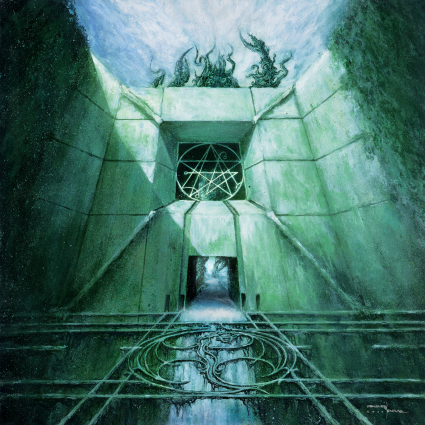
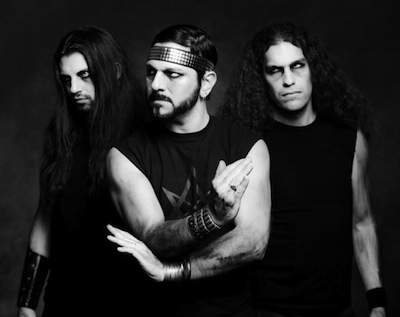
The band’s new record is the second in a trilogy that kicked on with their last album, a self-titled opus that was released in 2009. It’s nice we’re getting a new record from this Texas-based band so soon because when they returned in 2009, it was their first fresh album since 2001’s “Tara.” But apparently they have stories they must tell urgently, and this album delves even deeper into Thelemic realms and Crowley-based occultism and magick that they dug open on their last opus. Of course, unless you have a lyric sheet in front of you, and I do not as of this writing because I don’t yet have the physical product, it’s hard to process what McGovern and his mates – guitarist Vis Crom and bassist/vocalist Ezezu – are trying to say on these songs. Instead, you have to get caught up in the spirit of the music, which it’s fairly easy to accomplish when listening to “Abzu.”

Absu’s dramatic, pulverizing black metal also has some thrash and prog elements to it, which gives their material some variety. Of course, you also have McGovern (who handles main vocals) growling and shrieking over the stuff, adding his unique character and charisma to their music, all the while handling a mind-blowing pace on drums. Having witnessed him live, I can’t believe he performs both so effectively, but he does! As noted, “Earth Ripper” is way over the top but also a pretty awesome display; “Circles of the Oath” begins to subtly spill some mystical elements into the album, with synth lines lying underneath the chaos; “Skrying in the Spirit Vision” reaches back into more traditional death metal, with growling that sounds more gurgly; and the six-part, 14-minute movement “A Song for Ea,” shifts to its individual building blocks methodically, each sounding different from each other, so you can tell when you’ve gone from piece to piece, and the acoustic, eerie whirring that sets up the song’s thunderous conclusion will make your skin crawl. There’s something about their music that’s blended into the sound that makes you feel that magick, that strange mysticism. It’s why I feel bad just calling this a black metal album, because there’s so much more lurking beneath, and it really raises up your mind when you hear it. You almost can envision the band’s transformation as they play these songs.

All in all, this is a great, spacious, experimental, thought-provoking piece of black metal that pays homage to a world that many don’t understand or even realize exists. It may take some studying even once you do have the lyric sheet to grasp what’s happening, and I had to do a lot of reading before even writing a rudimentary review of “Abzu.” So get ready to learn something if you’re not already well-schooled in Crowley’s ideas and teachings. If you don’t care about any of this, just get lost in the record, because it’s a fascinating listen that, yes, may make you grin from time to time because it all sounds so damn serious. Or maybe McGovern even has a bit of his tongue in his cheek as well. Who’s to say? Bottom line, however, is this is a kick ass album that should go over great live. I’m excited about seeing the band again, partially to hear the new songs in that setting, but also to hear McGovern shriek like a vulture from his stool.

For more on the band, go here: http://absu.bandzoogle.com/home.cfm

To buy “Abzu,” go here: http://www.candlelightrecordsusa.com/store/product_info.php?products_id=1135

For more on the label, go here: http://candlelightrecordsusa.com/site/

For more on Thelemic mysticism, go here: http://en.wikipedia.org/wiki/Thelemic_mysticism

The Atlas Moth tear open souls on ‘An Ache for the Distance’


I quite often hear albums that, from listen one, I enjoy. That doesn’t mean the record is etched into my heart forever, that it changes my life or that months later it’ll still be with me, but I at least can identify that I like what I hear in the music. It’s a little less common for me that I like a record right away and, when I go back and visit further, it begins to have an enormous, powerful effect on me. Those are the special ones you’re certain will stay with you as long as you live.

I had that kind of experience with the new album from Chicago’s The Atlas Moth called “An Ache for the Distance,” released by Profound Lore, a label that never steers us wrong. The effect it had on me was unexpected. I always liked the Atlas Moth’s psychedelic-smeared sludge metal and spent a lot of time digesting their full-length debut “A Glorified Piece of Blue Sky,” but as much as I enjoyed it, I wouldn’t call it a collection of songs that is special to me. It’s good, and it was kind of weird that it was released by Candlelight just because this type of band isn’t something they typically offer. Their wacky covers EP “The One Amongst the Weed Fields” was more funny than good, and that seemed to be the point of it anyway. When the band’s new album was announced months ago (done, at first, by weird graffiti-style etchings of a moth and the 9-20-11 release date), I was more intrigued that Profound Lore was putting it out than I was by the music itself.

Like many, many other bands I like but don’t follow religiously, I looked forward the hearing the Atlas Moth’s new material like I would any other record from a band that I recognize as making good music. It was just kind of another intriguing metal release for me. The first few visits cemented those feelings as I liked the music, was interested in the even-deeper psychedelia on the songs, and figured I’d come back a few more times before it was time to write about in full. Then something happened. It infected me. Not like a scratchy cough, but like a full-bore flu. Hot head, sweats, sore muscles, weird physical reactions. Then I sat there stunned. I couldn’t believe what was happening and slowly grew more and more excited about what was pouring into my ears. I decided I had to hear it in all different ways: my ear buds, traditional headphones, on my stereo, in my car. Every time I switched to a new means, I heard the record and its parts differently. I can’t remember another album this year with which I had the same relationship. I’m not saying it’s the album of the year, though it’s really awesomely great, but it’s the one that totally changed my mind about this band. It also did something else, in that it replaced ISIS as my go-to band when I want to reflect and let my mind wander. Turns out you no longer were needed, ISIS, and you haven’t really delivered something like this in the past half-decade or so. Sorry.

The nine-cut record has a more fully realized sound than their debut and it’s much richer. It’s actually quite enveloping, and it’s something with which you need to participate intellectually to totally appreciate. At least I think so. A friend of mine, who I won’t name, told me “An Ache for the Distance” is a great album to hear when you’re high. I’m not surprised by this because there is a druggy overtone to a lot of the music, and I can at least attest to listening to thing while drunk. And it sounded pretty amazing then, too. “Coffin Varnish” kicks off the record with a heavier, nastier edge, and that leads into “Perpetual Generations,” which turns down the intensity decibel-wise but not emotionally. The vocals are cleaner and headier (they remind me of Folk Implosion’s “Natural One,” quite weirdly), and the melodies just soar. It’s one of the more approachable songs in their catalog. “Holes in the Desert” is both savage and nighttime cool, especially when the keys bleed in, and Stavros Giannopolous and Dave Kush take turns hammering out the message. The title cut settles into a satisfying slow-tempo groove, before shoegaze lightning dashes across and lights up the sky, with a final salvo of, “The sun burns out,” delivering a sober reminder of what’s at this planet’s end. “Courage” has more slinky, frosty keyboard work and would be the real oddball of the record if closer “Horse Thieves” didn’t exist. That song sounds like Mike Patton at his most bizarre trying his hand at avant-garde doom metal, with horrifying shrieks, free-jazz horn skronks and squeaks, and a moody mud storm that ends this thing on a really ugly note. Ugly in the best way possible.

I’m not sure if everyone will have the same experience I did with this record and if it’ll alter the way you think about the Atlas Moth. Maybe your mind frame doesn’t need altered, but mine did. The Atlas Moth went from just another band whose music I happen to like to one that’s going to get significantly more play in the future. I’ve even gone back to “A Glorified Piece of Blue Sky” and am getting far more enjoyment out of it because I feel my ears are better educated or they just opened up a little to help me better appreciate this band. Hearing “An Ache for the Distance” makes me feel like I’m wrapping myself in a cold blanket of stars for a night of life-altering rest, where my dreams’ context, messages, hidden meanings and intentions are clear. I wake up a different person. It’s not every day a record makes you feel these things, so I embrace the gifts this album delivered and will try to do my best to spread them around to other people.

For more on the band, go here: http://www.facebook.com/pages/The-Atlas-Moth/51536261736

To buy “An Ache for the Distance,” go here: http://www.profoundlorerecords.com//index.php?option=com_ezcatalog&task=detail&id=782&Itemid=99999999

For more on the label, go here: http://www.profoundlorerecords.com/

Mastodon further deviate from metallic fury on ‘The Hunter’


I’ve mentioned many times, both on this site and in my writing elsewhere, that I don’t hold it against a band for changing their sound. As a band gets older, the members do as well, and perhaps what lit their fires when they were younger isn’t as exciting now that they’ve aged. It happens, and I understand it.

Not all bands do this. AC/DC, of course, have been making the same album since Brian Johnson joined the fold, and people lap it up every time. Same goes for Slayer who, with the exception of their mid-90s output, have been doing the straight-on death thrash since their formation. People know what to expect from these bands, and for the most part, they deliver what’s anticipated. Obviously this idea doesn’t work for Mastodon, a band that used to make some fiercely savage sludge metal that bordered on death before making a stunning move to Warner Bros./Reprise after their landmark “Leviathan” album.

Things started to change with Mastodon on their first Warner Bros. release “Blood Mountain,” a record that has some of the band’s trademark savagery but also hinted at them going into a different, more palatable direction. There was more singing, more melody, more intelligible screaming and yowling. It certainly was more approachable than, say, 2002’s “Remission,” but it still was heavy enough to avoid a lot of second-guessing. Then 2009 concept album “Crack the Skye” dropped, and it marked the most significant artistic evolution for the band yet, with way more clean singing, far less growling, and music that bordered closer to psyche hard rock and stoner rock than metal. It also marked the first Mastodon record I didn’t love through and through. As hard as I tried, I couldn’t get with it, and even two years later, when I try to approach the thing, I can’t make it through to the end.

This brings us to their new opus “The Hunter,” a structural departure from “Crack the Skye,” in that this is a collection of songs unrelated to one another other than they’re all on the same platter. The album is a tribute to bassist/vocalist Troy Sanders’ brother, who passed away, and the title track is one of the most emotional songs in the band’s catalog. It’s surprisingly tender, not that it’s a ballad (it isn’t), but emotion drips from the thing, proving this band of wackos can be sensitive. We get 13 cuts, the most ever on a Mastodon record, and my guess is if some of these songs get radio airplay, this record could make the band superstars. It’s shockingly catchy, filled with rock hooks, and for listeners who are growing tired of their Foo Fighters or Muse records, they might find bliss on “The Hunter.” And they’ll also probably think this is their version of Burzum or something because the material is more dangerous and harder than what you hear on typical rock radio. “The Hunter” is not bland, I’ll say that.

Now, if you were hoping for the band to go back to their old, punishing, Relapse-era ways, then prepare to be disappointed. There are only fleeting moments of those days on this record, namely the aggressive chorus to “Blasteroid” and the obligatory Scott Kelly (Neurosis) guest spot “Spectrelight,” which is a short explosion of sludge goodness that acts more as a pace changer toward the end of the album. The rest really tests what you can call metal, because I’d label most of it stoner hard rock, and there’s nothing wrong with that. I’m not criticizing them for it, just calling it what it is. And truth be told, there are some really good songs here, from opener “Black Tongue,” that has a song structure that reminds me of “Blood Mountain”; swampy, ZZ Top-esque “Curl of the Burl,” that has a really weird, sort of uncomfortable video and snarky, nasal vox from Brent Hinds; spacey, dreamy “Stargasm,” that has a nice, catchy chorus; “Creature Lives,” that has an opening that sounds suspiciously like Pink Floyd before launching into a cosmic piece sung by drummer Brann Dailor; and closer “The Sparrow,” the furthest the band ever has delved from traditional metal, with a gentle tempo and Beach Boys-like vocal harmonizing. That track might not make a metal fan very happy, but it’s really well done and, most importantly, it sounds good.

There are some clunkers here, such as “Octopus Has No Friends,” “Dry Bone Valley,” and “Thickening” that didn’t interest me a whole lot no matter how many times I heard them. I think trimming these from the list and making them B sides would have made “The Hunter” a trimmer, more effective album, but that’s not the decision they made. So be it. I’m sure other people will like those songs, but I didn’t.

So this all probably sounds pretty positive coming from me, and like I said, “The Hunter” is a good, catchy record that has some strong songwriting. There are hits on this thing, and all those weird predictions that Mastodon would become the new Metallica when they jumped to Warner Bros., this album could justify those claims. This band should blow up into the mainstream right now. But it really isn’t for me. I can identify an album as being pleasurable to hear and having serious potential to put a band over the top and still not really want to spend a lot of time with said music. I don’t fault Mastodon for growing, and if they felt they were stymied by their old style, by all means, they should have gone where they have. They did the right thing for them as musicians. It’s no different than what Opeth just did with “Heritage,” a record I happen to really enjoy. And no, I don’t think Mastodon sold out to Warner Bros. wishes. So let’s not dwell on that silliness. It’s just that I love early Mastodon so much and treasure their first three records (“Remission,” “Leviathan” “Blood Mountain”) to such a significant degree that I can’t get on board where they went with their music.

Mastodon haven’t bastardized themselves like Metallica have, and you still hear some strains of what they were doing in their early days. It’s an evolution, really. Metallica didn’t evolve. They woke up one day and decided to be something different. I give Mastodon a heap of credit for growing as a band and refusing to adhere to boundaries they had matured beyond. I just don’t feel the new Mastodon does anything for me emotionally or spiritually like their old music did. I guess I prefer Mastodon heavier and more explosive, like you think a mountain is about to fall on you or you’re going to be gutted by a rhino. “The Hunter” just isn’t for me, but it wasn’t made for me, was it? Mastodon did this for them, as well they should have. “The Hunter” is bound to be a dust collector on my shelf alongside “Crack the Skye.” Yet, I’ll remain interested in where Mastodon go next, so they haven’t totally lost me.

For more on the band, go here: http://www.mastodonrocks.com/

To buy “The Hunter,” go here: http://store.warnerbrosrecordsstore.com/prodList.aspx?sid=CC91BEC1195D47C2BCC956E7824A3912&nocookie=true

For more on the label, go here: http://www.warnerbrosrecords.com/

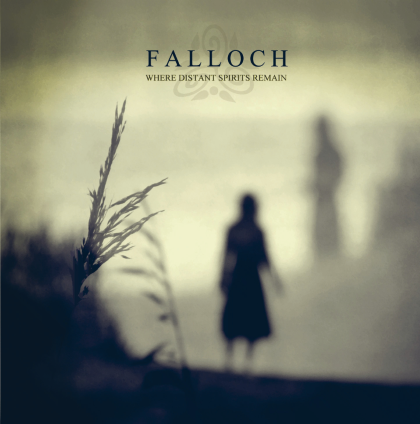
Falloch unfurl majestic wonder on ‘Where Distant Spirits Remain’


Leaves are about to get crispy here on the East Coast of the United States. The evenings already are refreshingly chilly, zip-up sweatshirts have returned, and pumpkin beers are on the market. It’s the time when, as far as I’m concerned, nature is at its apex. It doesn’t get better than this, and I tend to dig into woodsy metal when autumn comes calling.

This is a time when bands such as Agalloch, Alcest, Primordial, Ulver and Woods of Ypres creep back into my collection, and while all of those bands don’t pay tribute to nature (in fact, only Agalloch explicitly do that), their styles make for smooth consumption these days. But a new band Falloch emerged from Scotland that shares the same philosophies and styles as the aforementioned groups, and their debut album “Where Distant Spirits Remain” not only will be one that remains in heavy rotation for me the next few months, but in subsequent years, this will be on the list of go-to records once the trees start changing colors. Needless to say, I’m excited.

Falloch’s style is described as post-black metal and folk metal, as those labels certainly fit, and their music is decidedly gorgeous. Yeah, I know it probably isn’t cool to tag a new metal band with that description, but can you not say the same about Agalloch, Alcest, Primordial? It’s OK to be more sensitive, and Falloch certainly address that side and let you fawn over the majesty unfurling when you simply look at a pocket of woods, a rushing stream or a lawn full of orange, red and brown leaves. This music fully engulfs you and fills you with wonder, and I found my blood surging many, many times when listening to this record. Funny, I did see some reviews elsewhere that derided this band for being labeled as metal because the music doesn’t fit into their rigid little window of what the genre entails. Don’t be so pigheaded, kids. You’ll miss out on an amazing record if you snub your nose at delicacy and melody, all of which are present in full.

What also stuns me about Falloch is this band is but a duo, which is amazing when hearing how full-bodied and dynamic this sounds. Andy Marshall and Scott McLean create something that sounds like six or seven people would be needed to achieve, and the vocals are clean, soulful and emotional, never reaching into growls or shrieks (other than over the chorus of “Where We Believe”) that most other bands of this ilk employ in abundance. That also gives “Where Distant Spirits Remain” a unique voice, because it seems so few bands are confident enough to just sing and use the ability with which they were gifted. Yeah, maybe it comes off as less brutal, but this music doesn’t sound intended to be savage in the first place.

Here’s where I’m contradicted, by the way. While Falloch’s music, to me, sounds best in the autumn, this duo has frost and snow on their minds. So we’re not in agreement on seasons, but it’s their music, so I guess I’m the one who’s wrong. Oh well. The band said that “Beyond Embers and the Earth,” a heart-stopping epic that begins aggressively before melting into gothy/poppy passages and folk whistles, was inspired by the Isle of Skye in the Scottish Highlands during winter, and you can hear in this track how inspired and moved they were by the landscape. Opener “We Are Gathering Dust” has nice acoustic flourishes dancing behind the harder-edged stuff here, and the song eventually trickles out into babbling water and ambiance. “The Carrying Light” gets into some progressive rock and metal while also allowing in some shoegazey guitar squall to put the edge on this bloodletting, throbbing track that could be labeled a ballad; and “To Walk Amongst the Dead” has plenty of traditional folk in its mix and its lush for the most part, but the tempo and volume rise and caterwaul near its conclusion, making it a sweeping, surging song that’s nothing short of awesome.

Falloch officially, from just this album, are one of my favorite new bands. I could gush on and on, but why bore you with all of that? I love this style of metal, and I’m already setting some time aside Saturday afternoon to take this in again while I have some lovely brews. If you let yourself get caught up in “Where Distant Spirits Remain,” my guess is you’ll be hooked as well. It’ll give you a head rush, cause your heart to swell and connect you more spiritually with what’s going on outside. And OK, I’ll concede, maybe the winter is just as good a setting for these songs as autumn. Whenever you listen, prepare to be infected by one hell of a new band that should set the standard for post-black metal and atmospheric folk metal in the future.

For more on the band, go here: http://www.falloch.com/

To buy “Where Distant Spirits Remain,” go here: http://www.candlelightrecordsusa.com/store/product_info.php?cPath=21&products_id=1045

For more on the label, go here: http://candlelightrecordsusa.com/

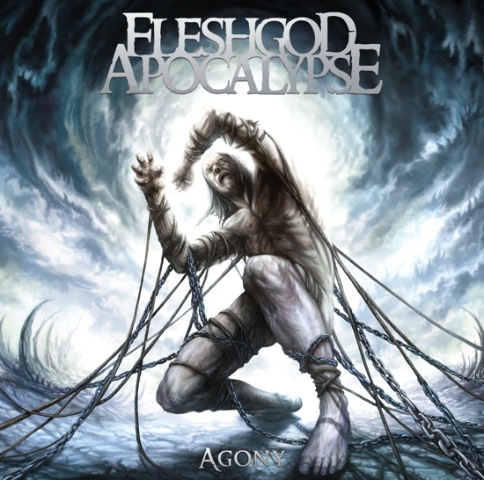
Fleshgod Apocalypse push orchestral interests over the top on ‘Agony’


If you were into the first full-length and follow-up EP by Italian tech-death band Fleshgod Apocalypse, get ready to have your expectations shattered. In a good way or a bad way? That kind of depends on what you like in your death metal.

While always a band that relished in adding classical flourishes to their music, they really go full bore into orchestration on “Agony,” a record that certainly stands apart from “Oracles” and “Mafia,” both of which were released by Willowtip. The band moved to Nuclear Blast for this effort, and it sounds like they really put their money where their mouths are, beefing up the sound, adding a ton more dramatics, and overloading the thing with synth-lead symphonics. It’s an incredible-sounding album, one that just explodes from your speakers or headphones. But is it for you?

Most of the reaction I’ve seen to the record has been favorable, and I happen to really like the album and the changes that they made. It makes Fleshgod Apocalypse kind of stand out in the tech-death community and also cements them as one of the sub-genre’s most exciting bands. But there have been naysayers as well because, you know people. A band just can’t change without hand-wringing. And I understand that, too, even if I tend to have little patience with people who can’t handle when a group changes things up a bit, and as long as they don’t go too far from their core sound (um, Metallica), what’s the big deal? Let it sink in and maybe you’ll like it.


Anyhow, my review of the new Fleshgod Apocalypse is live over at Lambgoat. Check it out, read how I feel about the changes they made (I’m guessing you probably figured that one out), and look at some of the other stuff going on at Lambgoat. Also, if there’s a band you like who you’re fairly certain has a new record due soon, but you’re just not sure when, their release calendar is pretty comprehensive. Find the link to my review below:

To read the Fleshgod Apocalypse review, go here: http://www.lambgoat.com/albums/view.aspx?id=2941&band=Fleshgod%20Apocalypse&review=Agony

For more on the band, go here: http://www.fleshgodapocalypse.com

To buy “Agony,” go here: http://store.nuclearblastusa.com/Search/flesh_god_apocalypse

For more on the label, go here: http://www.nuclearblastusa.com

Landmine Marathon demolish senses on ‘Gallows’


I like an album that sounds like a 50-trucks-full-of-gasoline demolition derby. As much as I like spacious, atmospheric stuff, and as I get older, that tends to be my preference, I still dig a collection of songs that feels like war is being made and there’s true, bloody attrition.

That leads me to Landmine Marathon, who have been making crust-and-grind-stained death metal only since 2004, are one of those bands that seem to have won unanimous approval with those who have seen them live. They already have four full-length albums to their credit, as well as splits with Scarecrow and Funeral Pyre, and haven’t made their name by just sitting around. They’ve been road warriors in a time when, because of insane gas prices, it cannot be an easy thing to do. But they’ve done it, and show by show, person by person, they’ve developed a reputation as one of metal’s most vicious, exciting young bands.

My issue with Landmine Marathon has been their studio output. Not all of it, mind you. I love their 2006 debut “Wounded” and am pretty sure I was listening to that bastard from the moment it came out (granted, I was lucky to have a promo from Level Plane), and the follow-up “Rusted Eyes Awake” was a decent outing, though not quite up to par with the first one. Level Plane originally released that disc, too, but it was reissued by Prosthetic once the band signed a deal with the indie metal powerhouse. Last year, the band offered up “Sovereign Descent,” their actual Prosthetic debut and one of the most anticipated records of last year, from an underground metal standpoint. I know I was excited to finally hear it, and once I did, my hopes were deflated. It just didn’t get my juices flowing at all, and I blame most of that on the compositions. They sounded mailed in (though I’m sure they weren’t) and kind of uninteresting, something I never dreamed I’d say about this band. Over time and subsequent listens, my opinion hasn’t changed, and when I go back now, I still don’t find a lot about it that holds my attention.

But that was 2010, and this is now. Their new record “Gallows” is an absolute ripper, the heaviest and most explosive of their run. It’s a burly assassin. It’s that demolition derby I mentioned in the opening. Almost like how their last record drained my excitement from the first listen, this one ignited a fire in me from the first time I pressed play, revealing a band that has no interest in playing it safe or regurgitating the same thing over and again. Yes, they still have an unabashed affinity for the early Earache years in their music, and you’ll still probably get kicked in the face by singer Grace Perry if you get too close, but they’ve freshened up the guitar lines, added some doom and power metal flourishes, and the drum work is just nasty. Oh, and Perry is a fire-breathing she-demon, growling and shrieking in a way no human should be able to do without permanent throat damage. Here’s hoping her pipes are in good shape.

We get rolling with opener “Three Snake Leaves,” a classic death metal-laced anthem, where Perry howls, “Bury me alive,” as the rest of her bandmates sound like they’re ready for a battle. “Cutting Flesh and Bone” has a punk flavor to it, and a spastic one at that,  and “Cloaked in Red” is built in the same fashion. “Knife From My Sleeve” boils in a cauldron of doom, with Perry going more guttural with her vocals, and there are some guitar flourishes toward the end that remind me of Nile. Closer “Morbidity” also reeks of the same stench, with some wicked guitar lines over top. “Liver and Lungs” is a gorefest that would make Pig Destroyer jealous; “Dead Horse” is ravaging and thrashy; and “Beaten and Left Blind” has a bit of a hardcore groove that, at times, gushes into speed metal fury. It’s an astonishingly good record where every player showed up with her or his best, and I can’t state enough how much I like the guitars. They sounds great, they shred and slice, they gnaw on crust and filth, and they help elevate these songs to greatness.

Landmine Marathon always seemed like a band whose live fury would surpass their studio work, and there’s no sin in that. In fact, it’s great when you go see a band you already like on the strength of their records and are just flattened when you experience them on stage. But with “Gallows,” the band is proving they’re just as capable of boiling flesh making a record as they are reinterpreting their songs live. It’s the best thing they’ve done since “Wounded,” and I keep going back and forth on whether this new disc is the superior album. It just may be, and perhaps once I get to see the band live in support of “Gallows,” my mind will be made up for good. Until then, I’ll enjoy the carnage spilling from my speakers.

For more on the band, go here: http://landminemarathon.blogspot.com/

To buy “Gallows,” go here: http://prostheticrecords.bigcartel.com/products?search=landmine+marathon&search-submit=

For more on the label, go here: http://prostheticrecords.com/

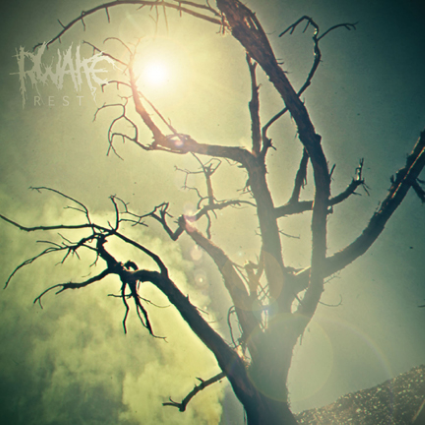
Rwake’s psyche doom reaches into cosmos for meaning


It’s no secret at Meat Mead Metal that there’s a great appreciation for psychedelic-laced metal that lets you go on a journey without the aid of mind-altering substances. There’s something to be said for creating something that puts the listener on a path to exploration and discovery simply by making music that lifts and soars.

And not that we have anything against, you know, sitting down with some adult beverages and enjoying a piece of music. That’s pretty great, too, and that often happens in this house when the weekend is here. But it’s cool when you can sit on the couch, say, on a Wednesday afternoon, put in the earbuds and fly away with a record. The brand new one from Rwake (pronounced “wake,” if you’re unaware) is one of those albums, and as long as I’ve had the record, I’ve never listened to it with anything but a clear mind. Each time it’s enthralling and emotionally draining. “Rest,” the title given this fifth full-length, won’t let you get any of that, funny enough, because you’ll stay up trying to figure what it all means.

We haven’t heard from the Arkansas-based band since their 2007 album “Voices of Omens,” though Relapse did give us a reissue of their 2002 record “Hell Is a Door to the Sun” earlier this year. But this is the first time we got a full, new platter of monster sludge, and the wait was hellaciously worth all that impatience. “Rest” is an amazing, enthralling record and, in my opinion, is the best one of their career. It is unforgiving, and even when it quiets or lets in nice, delicate acoustic passages, you know it’s only because they’re getting ready to move onto something even more tumultuous.

“Rest” makes you think a lot. There’s a lot of philosophical ramblings and apocalyptic warnings intertwined in their music and delivered in full-throttle growl and shriek by C.T. and Moog/sample artist B. One thing I always thought was cool about Rwake is, if you were unaware as to their lineup, you’d never know you were listening to one of the most vicious guy/girl vocal assaults of all time. That carries over here, and I often can’t tell who does what. And who cares, really? It all works so well together, and all parts operate in unison. After a quick intro “Souls of the Sky,” that sets the stage for the rest of the record, the band launches into “It Was Beautiful But Now It’s Sour,” a woozy, swirling masher that is delivered mid-tempo but always with fists hammering down full force. “An Invisible Thread,” the record’s shortest song that’s not an interlude (and it’s still 8:45 long) has a bit of that Southern rock sludge that Mastodon made so famous and eventually settles into a guitar pocket that sounds like Black Sabbath playing Slayer. It’s the doomiest thing on a record that had end times at its heart. “The Culling” is moody and spacey, one of the most atmospheric songs on “Rest,” and the split vocals are utterly terrifying, sounding like a pack of wild animals shredding meat.

As awesome as the record is before the final two cuts hit, the album’s dual finale really pushes this over the top. Interlude “Ti Progetto” pulls the words from Arthur C. Clarke from the opening to “2001: A Space Odyssey” and gets you ready for what’s to come on the album’s blowout “Was Only a Dream,” a song awash in creation’s origin, how we’re interconnected, how we survive, and how we’ll one day fade away. Or at least that’s what I got out of it, and while I allow that my interpretation may not be what Rwake intended, it made me think a lot about these things and how we’ve come to accept some of the theories or beliefs by which we live. The song is astonishingly sorrowful at times, and the raw, primal vocals sound both cathartic and foreboding, with the band setting up a psyche-washed soundscape that’s unsettling violent. At about the midway point, the first part of the song fades away, and a new, trippier passage sets in that repeats the first half’s mantras. The song eventually fades out to a reading of Rudyard Kipling’s “If…,” another piece that a reader could derive many meanings. It’s also one of Kilping’s most moving pieces, which makes sense that it would be connected to Rwake’s most emotionally stimulating record. Really good choice.

Rwake’s music may be nasty, bloody and crust-caked, but it’s delivered with an open mind and with intelligence. You probably will have to sit down with the lyric sheet in order to properly absorb all the meaning (something I’ll have to do once I have a physical copy), but chances are you won’t mind. It’s nice to have something that provokes thought and inhibits your bestial side at the same time. Rwake always have done that, but never as much as they do on “Rest.”

For more on the band, go here: http://www.facebook.com/RwakeBand

To buy “Rest,” go here: http://www.relapse.com/search_result.php?search_by=all&q=rwake&x=0&y=0

For more on the label, go here: http://www.relapse.com/

Metal roundup: Wolves in the Throne Room, Tiger Flowers, Pyrrhon

Wolves in the Throne Room

This has been a super-busy month for metal, and it’s not even over yet. The next two Tuesdays bring a ton of new stuff, and I’m still trying to get into my ears all the things that have come out the first two weeks of September.

There are a few albums to which I’ve devoted time that I haven’t gotten to write about yet, so this is as good a time as any to do a quick roundup on said albums. Two of them can be had right now by hitting up your local record joint (or you can get in your car and go to a far-away record shop … what do I care?), and one of them comes out this week. All three sound completely different from each other and are likely to draw different audiences, unless your tastes are like mine and you end up into all three of them. Let’s get started by taking a deep walk into the woods.

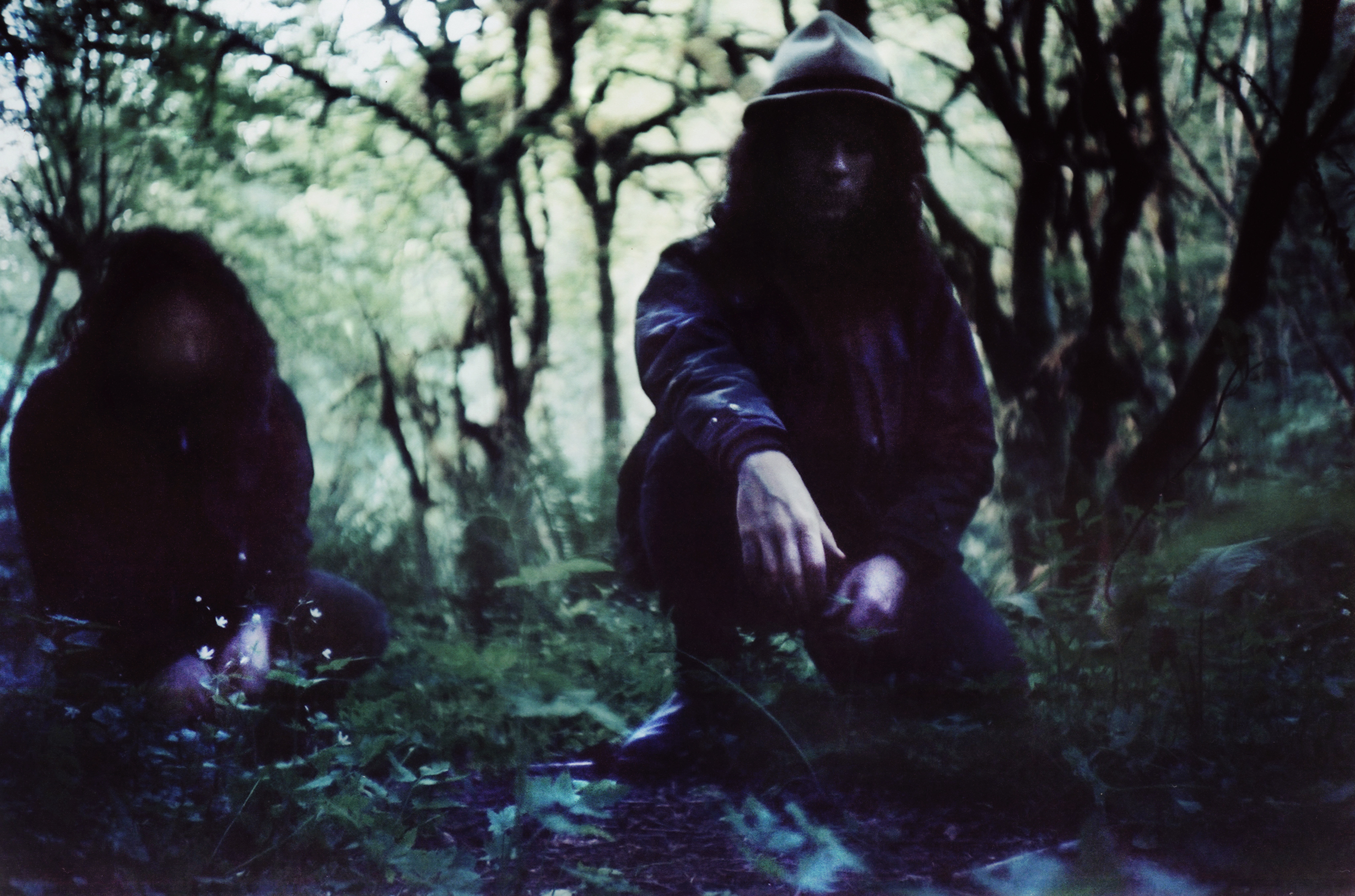
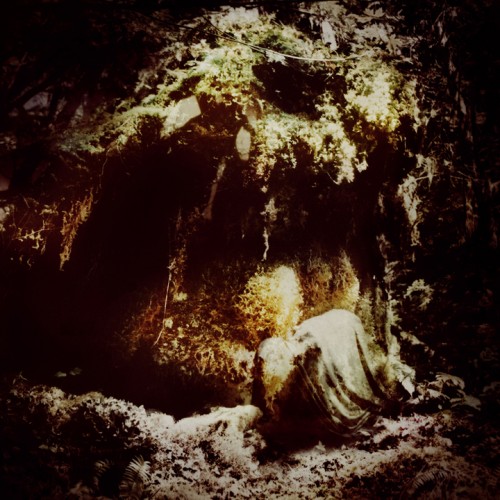
Pacific Northwest atmospheric black metal band Wolves in the Throne Room are down to just two permanent members, the brothers Weaver, vocalist/guitarist Nathan and drummer/synth player Aaron. On their new album “Celestial Lineage,” they complete a trilogy they started with their masterful 2007 album “Two Hunters,” my favorite album of that year, and continued on 2009’s “Black Cascade,” a more stripped-down album that wasn’t bad but also wasn’t up to par with the band’s capabilities. Their new opus is far more in the vein of “Two Hunters” and even their debut album “Diadem of 12 Stars” in that the epic songs are more dramatic, built with soundscapes, and are absolutely riveting in nature. In fact, after my first listen, I knew this is exactly the type of album I’d hoped the band would deliver. Subsequent visits confirmed that.

Frequent collaborator Jessika Kinney is back, and she makes her presence known right away by delivering the gorgeous vocal introduction to opener “Thuja Magus Imperium,” bellowing out, “Redness in the east beyond the mountain, the wheel begins to turn anew.” She just grabs you and pulls you in, and by the time you’re enraptured, the rest of the band blasts in with a tidal wave of woodsy black metal, Nathan’s shrieking storytelling and gargantuan guitar work by guest Milky Burgess (Master Musicians of Bukkake, Asva, Earth). “Subterranean Intuition” rips open with a furious melody, a rush of keys and almost demonic vocals, and it’s one of most effective songs on here. It’s almost like prog black metal. Almost. “Woodland Cathedral,” also featuring Kinney, simmers in a dream state, and you might find yourself reaching out for the fog if you day-gaze away. It’s that mesmerizing. The track also features Aaron Turner (ex-ISIS) and Faith Coloccia (Mamiffer) on chants and other mind-altering sounds. Both “Astral Blood” and “Prayer of Transformation” are your typical Wolves epics, and I mean that in the best way possible. Really effective use of the time, as both tracks are blood-surging and even magical in the way they unfurl, with “Prayer” the slower, more contemplative of the two.

I still have to give the edge to “Two Hunters” as my favorite Wolves album, but “Celestial Lineage” is a damn-close second. This album lived up to and surpassed all of my expectations, and it made good for what I thought was a bit of a mundane, though not bad, album in “Black Cascade.” This band, by the way, is incredible and powerful live, and if you get a chance to catch them, definitely do so.

For more on the band, go here: http://www.wittr.com/

To buy “Celestial Lineage,” go here: http://southernlord.com/

For more on the label, go here: http://www.southernlord.com/store.php

Tiger Flowers

As ashamed as I am to admit this, I really didn’t get into a lot of hardcore until early last decade. I’m not sure why, but that’s just the way it happened. When I did, it wasn’t really pure hardcore that got me going (I admit that bands such as, say, Judge and Terror just aren’t my thing), but more post-hardcore and stuff that used that style as a base and went elsewhere with it were the ones that swayed me. We’re talking Cave In, Thursday, Boysetsfire, Knut, and Botch. And while NYC newcomers Tiger Flowers don’t exactly sound like those bands, and in many ways they are much heavier and much more metal, there’s something about their self-titled debut EP that takes me back to those days. Maybe it’s the in-your-face thrashing, maybe it’s the shout-out-loud airing of grievances, maybe it’s the passion of their music, but it reminds me of what made me love this stuff in the first place.

Their debut is but four songs long, but it’s damn good, and it’s really, really heavy. I listened to it last week when I was running on the treadmill, and I noticed immediately that my adrenaline kicked into high gear just minutes into nine-minute opener “Drag,” a song that owes a nice debt of gratitude to sludge. It’s a calculated pounder that squeezes the living daylights out of you, and once it goes for pretty about halfway through the song, you’re too bruised to feel comforted. “Last Horse” has more of the hardcore feel, and it even mixes in some Dillinger Escape Plan-style trickery to its assault. When the dudes shout, “These scars that we wear are scars that we’ve earned,” you believe the sentiment blindly because they’re that convincing. “The Weight” is super-charged and will get your fists pumping by way of its unbridled energy, and moody, yet pulverizing closer “Cuts” also goes for shifty guitar work and zig-zagging, and when it’s over, you’ll probably be sorry there’s no more left.

Tiger Flowers are a band on which I’ll keep close tabs in the future. I am enthralled by this four-track effort so much that I actually can’t wait to hear what they can do with a full-length record.

For more on the band, go here: http://www.facebook.com/pages/TIGER-FLOWERS/149290739547

To buy their self-titled EP, go here:  http://tpltr.bigcartel.com/

For more on the label, go here: http://www.thepathlesstraveledrecords.com/

Pyrrhon

Speaking of trickery, New York tech-death metal band Pyrrhon do some wacky, brain-bashing stuff on their debut full-length “An Excellent Servant But a Terrible Master” (love the title, by the way), but luckily they remembered to write songs and not just crazy licks. I’m in the group that can’t quite get our heads around tech-death because so much of it feels like show-off time, and there’s not enough thought put into writing compelling pieces of music. Maybe it’s because I don’t play an instrument, and if I did, perhaps I’d be all into it as well. I certainly admit that’s possible. But as much as I like to hear dudes and ladies play the craziest stuff they can dream of, I want to walk away remembering something more than how wowed I am by technique. Pyrrhon made me think of their songs instead.

Another thing I like about “An Excellent Servant” (Selfmadegod is re-releasing this after the band out it out on their own) is the portion size. There are eight songs, and the whole thing runs 45 minutes. Yes, their songs are a little longer than most, but they’re not overbearing. They get in and get out in the right amount of time, not allowing themselves to bloat this thing. I hear a little bit of Meshuggah, Gorguts and Death in what they do, three other bands that have/had a lineup of excellent players who almost always remember/remembered to make strong songs. “This too shall pass!” the band shouts along in unison on opener “New Parasite,” a song that hooked me right into the band. “Glossolalian” has some off-kilter mashing, with frontman Doug Moore going for a deeper approach to his growling; “Correcting a Mistake” opens with a cool bass run that eventually runs headlong into a cacophony of violence; “Gamma Knife” manages to sneak a little sludge into the room, keeping things fresh and you guessing; and “Fresh Isolation Chamber” (with a nice quiet mid-section to bring you down and then back up) and “A Terrible Master” (with fierce, confrontational, reflective vocals from Moore), both more than eight minutes long, end the record on a note of total demolition.

I really like what I hear from Pyrrhon, and this album made me go back and seek out their debut EP “Fever Kingdoms,” itself an impressive piece of work. Like Tiger Flowers, I’m excited to hear what this band does next, and hopefully they keep intact the formula that makes their debut so special and damn exciting to visit.

For more on the band, go here: http://www.facebook.com/pyrrhonband

To buy “An Excellent Servant But a Terrible Master” go here: http://selfmadegod.com/pl/shop

For more on the label, go here: http://selfmadegod.com/

Outer edges: Chelsea Wolfe and Jesse Sykes


One does not actually have to play metal for a living to be metal. Sure, maybe the music doesn’t sound like metal coming from some artists, but the uncompromising ethos, the passion, and the brutality, even if not by decibels, can be felt from these people, making them more genuine, more meaningful, more, well, metal than some of the people who claim to make contributions to the genre.

That’s the idea behind our Outer Edges feature, which we bring you from time to time, to give you a look at artists you won’t find in the metal bin at your local record store (here’s hoping you still have one) but that may still grab a hold of you and move you the way a thrash, death or black metal band could. Crossover appeal, they call it, and the two albums we will discuss today feature artists that have had some dabblings in metal, but their music is far from that sound.

First up is Chelsea Wolfe, one of the most arresting artists I’ve come across in a few years. When I first read about her, she was described as playing doom folk, and there’s something to that, and that her attitude and philosophy was closer to black metal as some of the young upstarts playing it today. It also helped that she tackled and totally mastered and reimagined the Burzum song “Black Spell of Destruction,” video of which you can find below. She also has a dark, dark image for such a pretty California girl. I’m sure she’d roll her eyes at that, but you get what I mean. Her darkness is key to her, and while many other musicians who tend to explore dark roads seem to want their photos in magazines as much as they want their songs heard, you can tell the music is priority No. 1 to Wolfe.

Her second full-length effort “Ἀποκάλυψις” (pronounced apokalypsis and Greek for both apocalypse and revelation) is the finest non-metal album I’ve heard this year. It is absolutely enrapturing, and every time I listen to the record, I find myself in something of a daydream. That makes sense since her music, while folk at heart, does have a lot of trance-like qualities to it, and she achieves noise-scapes that sound like they were culled from lucid dreams. But she’s not just here to freak you out, but also to move you, as her haunting, unforgettable melodies will do easily. Her gorgeous voice can sounds somber, frightened, frightening, and otherworldly, depending on her mood. She’s someone you can’t help but give all your attention. She gives you no other choice.  I can’t say enough about Wolfe, and if she’s not mentioned in the same breath with other super-hyped indie artists such as The National, St. Vincent, My Brightest Diamond and Dirty Projectors, it means your bloggers aren’t really paying attention and just have an agenda to serve. Well, ha, of course they do.

If you had the pleasure of hearing or owning Wolfe’s 2010 release “The Grime and the Glow,” then you’ll recognize a couple of cuts on here. “Moses” is reworked, this time with a gloomier melody as its spine and with extra damaged guitar, and “Demons” is a grainier, scarier version of “Bounce House Demons,” which is a song that may make you want to dance and lash out equally. Plus, good luck removing the chorus from your brain. Wolfe had benefit of an actual studio on this record, as opposed to doing her debut on her own, so she was able to breathe new life into these tracks. “Mer” is an awesome, abrasive folk song, packed with weird noises and echoey voices; “Tracks (Tall Bodies)” has a seductive, late-night-friendly melody that reminds me of Stevie Nick’s early work; “The Wasteland” is a pushy, electronic-style song that also spits warmth; “Pale on Pale” is bluesy, spooky and trippy, and it’s my favorite track on here; while ghoulish closer “Movie Screen” is a slow, noisy howl of a song, with Wolfe unleashing primal shrieks as it fades to black.

All of Wolfe’s music comes highly recommended, and trust me, you won’t hear anything else like her anywhere else. Also, put on the bloodiest, goriest black metal album you got this year and match it up with “Ἀποκάλυψις” and see who scares you more. My guess is Wolfe.

For more on Chelsea Wolfe, go here: http://chelseawolfe.net/

To buy “Ἀποκάλυψις,” go here: http://pendusound.com/releases/psr-0045/

For more on the label, go here: http://pendusound.com/


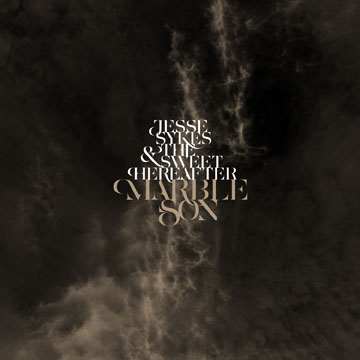
If you question whether Jesse Sykes and the Sweet Hereafter’s psychedelic-laced, moody, sometimes country-fed music can be seen as metal philosophically, ask yourself this: Would Southern Lord sell the vinyl version of her last record is they weren’t? Answer is no. And with the arrival of the band’s fourth full-length effort, first under the Station Grey Records/Thirty Tigers banner (her last was on rock-solid Polyvinyl), we hear a more muscle-bound, aggressive band than we’ve gotten before. And it’s pretty damn awesome to experience.

For those unaware, Sykes lent her mournful, sometimes gravely, always distinctive voice to the Sunn 0)))/Boris collaborative album “Altar” on the song “The Sinking Belle (Blue Sheep),” the standout track on that effort (see below).

Furthermore, she’s played live with the bands, and her own music, while beautiful and delicate in spots, also has an unapologetic, scarred-heart-on-sleeve approach that make her one of the most willing, blood-shedding artists in the singer-songwriter genre. Her powerful band gives her even more strength, and do they ever make their presence known on “Marble Son,” a record that thematically has Sykes looking back at things she perhaps didn’t appreciate when she was younger but now embraces with a greater understanding. And vice versa.

The record rips open with the eight-minute “Hushed By Devotion,” a loud, swelling, guitar-rich psychedelic rocker that’s got both a hippie vibe and a sinister smirk. “Come to Mary” is quite a different song for the band, as Sykes lets her voice blend in with her bandmates’, as she only takes full control on the chorus; “Servant of Your Vision” is a tasty slice of Midwestern rock that reminds me a lot of Magnolia Electric Co. (one of my favorite bands, by the way); “Pleasuring the Divine” is an out-and-out smoky smasher, the pushiest song on the entire record; and “Your Own Kind” has a ’60s lovelorn-advice approach, but it’s dressed with buzzing guitar work and a total electric dust storm that makes you want to assault a potted plant. Yet the band has its contemplative moments, found on the lovely, gently plucked title cut, where Sykes admits, “I wish I’d found you beautiful before”; the dark reflection of “Be It Me or Be It None”; and the blended harmonies of “Birds of Passerine.”

Sykes’ voice, like Wolfe’s, is one that commands you to take heed. Her words are not to be missed, and her delivery, while sometimes laid back and seemingly sleepy, always bites hard.  Each of the band’s albums stands on its own, and “The Marble Son” arguably is their best one yet. It’s certainly the one that’ll challenge your speakers the most, and on nights when you just want to reflect and ice your troubles, Sykes and the Sweet hereafter will get you there every time.

For more on the band, go here: http://www.jessesykes.com/

To buy “Marble Son,” go here: http://www.theconnextion.com/jessesykesandthesweethereafter/jessesykes_cat.cfm?CatID=48

Opeth snub their noses at death on ‘Heritage’


Sometimes something so obvious practically stares you right in the face, pokes you in the chest and screams at you, yet you don’t realize it. I’m guilty of that quite often. I try to find some deeper meaning or reason why a path broke off and headed in another direction that occasionally I can’t see the warning signs. I’d be a horrible first responder.

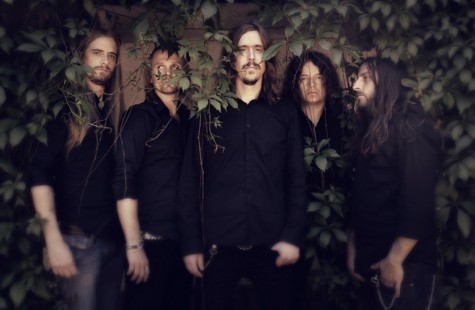
When I first heard the rumblings about Opeth’s 10th record “Heritage” and the fact that it doesn’t include even a second of growling or death metal intensity, I was concerned. I’m pretty sure I’m not the only person who felt that way. Yes, they did the “Damnation” record in 2003, but it was more of a compliment to “Deliverance,” which was recorded at the same time but released five months earlier. So you got the dose of Opeth’s prog-death first and then got the curveball. But after three years with no new music from the Swedish stalwarts – their last was 2008’s “Watershed” – it seemed daring for them to run away from the sound for which they were known in order to go for a warmer, more progressive rock sound. Would their fanbase accept a new record devoid of all signs of death metal?

Then I heard the record, went back and listened again, took a break, and revisited it multiple times this past week. Something then hit me: This was where Opeth were headed all along. I remember the first few times listening to “Watershed” that it surprised me how melodic it was, how much more singing frontman/guitarist Mikael Åkerfeldt was doing, how much bluesy groove was being injected into their music, and how it seemed to be pulling away from the death metal pattern. Åkerfeldt growled, sure, and the music did have some heavy, aggressive parts, but it seemed like the beginning of an evolution. “Heritage” seems to prove that. If only I had my eyes and ears truly open all along. I just hope they haven’t closed the door on death altogether.

Before I jump totally into the songs on the record, let me comment on the production. It’s crazy warm, very ’70s feeling, and it’s going to sound great on vinyl. In fact, I’m going to seek that out, because I really want to hear this emanating from my turntable. Åkerfeldt, who produced the album, has a huge affinity for vinyl and the ’70s folk and prog movement, and it’s clear from this record that his and the band’s approach was designed to capture that same sonic quality.

Now for the music. If you’re only into Opeth because they’re a death metal band or for that aspect of their music, you might not like this. In fact, you might consider this record an atrocity similar to what Metallica regurgitated in the mid-1990s. That would be a silly point to make, however, because there’s no comparison of quality (Opeth’s new one is better by miles), but maybe you’ll be offended in the same way. If you prefer Opeth’s deathier stuff but have an open mind about them, by all means sit down with this. If you are an Opeth disciple through and through, my guess is it’ll be dork-out time, and what the hell is wrong with that? These 10 tracks sound great, and their decision to scrap the death template and indulge their (or Åkerfeldt’s) prog-rock fetish isn’t a disaster at all. Simply put, Opeth are a really good band made up of excellent players, and to think anything else would be possible would be ignorant. I admit that I shared in some of that because I was more than a little worried.

After a quiet, piano-led, title cut intro, we jump right into “The Devil’s Orchard,” one of the album’s punchier songs, with a nice jazz-fusion sound pumped in and their trademark lush keys playing a role. The only songs that match the sonic style of “The Devil’s Orchard” are “Slither,” another blues-laden song with an outpouring or organ and strong, tasty soloing, and “The Lines in My Hand,” that has an outer space vibe and is probably the most aggressive thing on here. Yet, calling it a metal track would be pushing it. Doesn’t matter. It’s a damn good song. The rest of the material is heavy in folk passages, eerie ambiance, and razor-sharp musicianship, with Åkerfeldt clearly demonstrating he’s never been more comfortable as a singer. “Nepenthe” and “Famine” have similar skeletal structures, as both open quietly, yet emotionally, and both have a spastic prog jam section that bursts out in the middle, before they go back to their original tones. “Haxprocess” is the slowest track on here, rising barely above a hush at times, and standing as the moodiest track. “Folklore,” the second-to-last cut (only instrumental “Marrow of the Earth” follows), is my personal favorite track. It’s also the longest, at 8:19, which would be a normal running length for a typical Opeth song on any of their other records, but here it’s the epic. Here is where you can hear the acoustic squeaks the most, the changing of frets on a dime, the hissing. Also, there’s a flush of goth keyboard courtesy of Per Wiberg (who has since left the band) that rises up out of nowhere, and from there the guitar interplay of Åkerfeldt and Fredrik Åkesson come alive, and Martin Mendez’s bass gallops through the opening.

I still think the album art is a little silly, but having read more about the meaning of the piece, I get it. The roots going to hell signal their death metal past, Wiberg’s head falling from the tree indicates his departure, the skulls beneath the tree symbolize the band’s past members,  the people picking fruit means Opeth’s flesh tastes good. Uh, I made up that one. I can give credit where it’s due in that it’s different and eye-catching, so there you go. Job done. As for the music, it took me a while to get into it, but now I like it. It’s not my favorite Opeth record, and I do hope their death metal days aren’t entirely behind them. But it’s a well-intentioned project, and from what Åkerfeldt said in interviews, had they just gone and done another typical Opeth record it may not have come out sounding very good, and it could have killed his interest in the band. I kind of wonder if that’s entirely true or just how he felt at the time, but Åkerfeldt and Opeth made the record they feel that had to, and it works on a lot of levels. Now it’s up to listeners to decide how they feel. I expect the response will be mixed.

For more on the band, go here: http://www.opeth.com/home/

To buy “Heritage,” go here: http://store.roadrunnerrecords.com/artists/Opeth_2

For more on the label, go here: http://www.roadrunnerrecords.com/