Chasma are naturally destructive on ‘Declaration of the Grand Artificer’


A few weeks ago, it snowed here. Generally that doesn’t happen until late November in these parts, and it led all of those wackos out there to declare global warming a myth, a lie, and a product of liberals. Yet here we are, a week before Thanksgiving, and I’m wearing shorts, the widows are open, and it’s been this way most of the month. Where are those people now?

You’re probably wondering about my point. Understandable. When I hear certain types of music, I like when what I see outside my window matches the spirit of the sound. And that’s only applicable to my little world, so if you don’t require snow and wintry majesty to be fully engulfed by “Declaration of the Grand Artificer,” the debut album from Portland, Ore., black metal band Chasma, then by all means take the leap. It didn’t hinder my enjoyment of the music, just so I’m clear, but it would have been a fully enhanced experience if the weather outside my window was more in line with what we typically feel here in November. I guess I’ll have to wait for that. It’s not a major issue.

Chasma, made up of members of bands such as Nanda Devi and Altar of Earth, have that Cascadian sound. They’re from the same path as Agalloch and Wolves in the Throne Room, yet they have more of a wintry feel, almost like they grabbed some of that Nordic influence as well. Their first album is only three cuts at 33 minutes, making it more like an EP, but it’s emotional, melodic, raw and wrenching, with the band making like they’re dripping every ounce of their life force onto the forest floor. You’ll likely find yourself daydreaming of difficult journeys on foot up hills, across a babbling body of water, into the mountains and through the brush, gazing into the sky for celestial guidance. As clichéd as I’m sure that sounds, it’s true. Just this morning as I was sitting in the car dealership listening again to Chasma while some damage was being repaired, I was able to ignore everything going on around me in the bustling waiting room and think more of what would be waiting for me when I went back outside. Too bad it wouldn’t be snow, but it was threatening storm, so that seemed fitting enough.
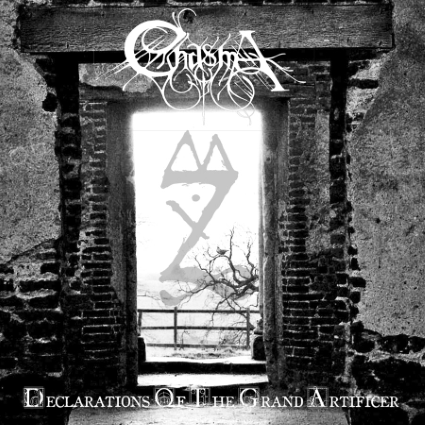
“Daystar Angelwar” opens the collection with a hammering, melodic pace, wild howls and shrieks that sound downright animalistic, and a vicious hiss. Eventually some calm sets in, the music goes a little cleaner, and some shoegazey fog rises up and envelops the land. That leads into “Shadowbend,” a song that begins with serenity and beauty, though eventually a progressive, rollicking bassline sets up shop, cymbals gets positively crushed, gorgeous post-metal style strumming arrives, and the whole thing bleeds out with tortured, panicked gargles and growls. “Blue Jewel Destruction” begins with an eerie, chilling playback of someone speaking indecipherably (the dialog might be played backward, but I can’t tell), and perhaps it’s the tail end of someone’s torture. Musically, it ranges from hulking and violent to alarmingly thought-provoking, with maniacal shrieks, throaty growls and quaking madness. The album ends way too quickly. That’s my only complaint. When the third song expired I really wanted there to be more, so there’s something to be said for that desire.

Chasma don’t veer too far from the Pacific Northwestern idea of black metal, which is something that’s gotten a black eye on the Internet lately, mainly from jerks. But fans of other bands such as Deafheaven, Weakling, FALSE, Woods of Ypres and Drudkh probably will be interested in this record as well. Chasma is a different type of signing for Moribund as well, who typically go for the ultra-evil, raw and pure black metal hellishness. Having this band on their roster is a demonstration of the label’s open-mindedness, and they’ve found themselves a future-star player here with Chasma. I’d like to hear more material from the band next time around, but it’s tough to complain with a piece as effective as “Declaration of the Grand Artificer,” one of the more promising black metal albums of the year.

For more on the band, go here: http://chasmablack.tumblr.com/

To buy “Declaration of the Grand Artificer,” go here: http://www.moribundcult.com/Merchant2/merchant.mvc?Screen=PROD&Store_Code=M&Product_Code=DEAD177&Category_Code=M

To buy the vinyl, go here: http://www.mylenesheath.com/catalog.html?Tp=6&Vl=chasma&sbT=Go

For more on the label, go here: http://www.moribundcult.com/

The Body and Braveyoung spark apocalyptic visions on ‘Nothing Passes’

The Body and Braveyoung destroy (photo pinched from tanktopdiaries.blogspot.com)

It is altogether possible that Metallica and Lou Reed killed the idea of the collaborative album. I mean, who really wants to venture down that road anymore? Do things wrong, and you’ll always be compared to that lump of tarry coal that is “Lulu.” People will say the bands that try and fail to work together on an album really Loutallica’d that thing.

The Body

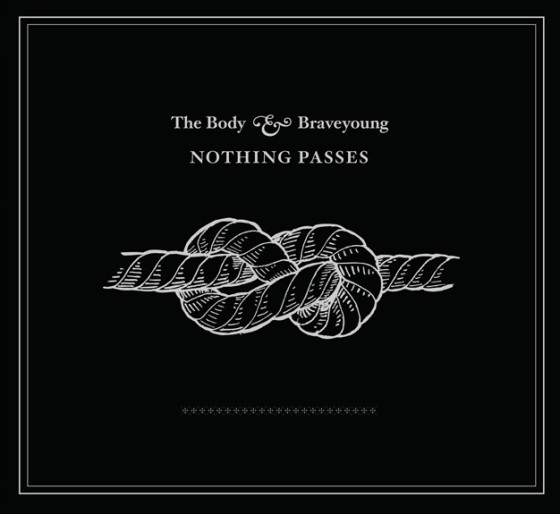
And that’s a shame. One of my favorite records of the last few years or so is “Altar,” the combined effort of drone gods Sunn 0))) and amplifier worshippers Boris. It’s a fantastic album that finds both bands comfortable in their creative flow, and put together, it’s as tasty as a peanut butter and jelly sandwich. I wonder if anyone’s ever compared “Altar” to a sandwich before. So my mind hasn’t yet been changed by Loutallica about letting two bands meld together, and what’s helped me stay positive is collaborations such as the one from drone/doom duo The Body and dramatic, orchestral post-rock band Braveyoung, who used to record as Giant (their split with Tides is a killer). The bands, who have been working as one in live settings, came together to make the excellent new four-track effort “Nothing Passes,” an album that lets both bands play to their strengths but never in a way that overshadows the other group. It sounds like if Sunn 0))) and MONO blended as one. Imagine that one.

Braveyoung

Actually, you may notice there’s a huge helping of thunderous drone, and that may make you decide that the Body dominates this effort. But I don’t think that’s the case. While, yes, their smoking noise is ever-present on this thing, if you peek underneath all of that, you can hear Braveyoung forming the spine of this piece. They sprinkle the magic and the wonder that serves to both counteract and enhance the end-of-the-world ugliness. Their contribution to this effort is really gorgeous, and you might have to listen to this thing a few times to really sense that point. I had to do that, because the first time I heard “Nothing Passes,” I was first overtaken by the burliness of the Body. But as time went by and I visited again and again, Braveyoung’s personality made itself present. It’s a really fantastic, affecting partnership, and I hope it’s only the first of many efforts from these two bands.

The Assembly of Light Choir

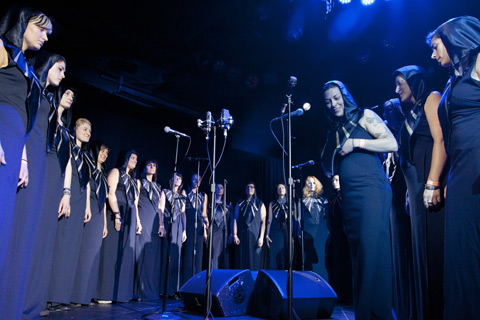
Let’s also not downplay the presence of Rhode Island-based female chorus The Assembly of Light Choir, who have worked with both bands in the past and made their presence felt on The Body’s last record, the incredible “All the Waters of the Earth Turn to Blood.” In fact, the ladies popped up in Pittsburgh recently when the Body blew through here, making what already was going to be a hulking night into a wholly entrancing event. Their work here, especially on closer “The Vision,” a faithful cover of Exuma’s 1970 track that basks in both Armageddon and rebirth, brings a sense of beauty and wonder to the proceedings, making the world’s dissolution into ashes almost palatable.

The record opens with simply titled “Song One,” something of an introductory piece that runs a little over three minutes and lets both bands have a chance to warm their engines. A primitive sounding melody runs behind the fog, only hinting to what’s ahead. “Song 2” opens with drone fire, haunting chimes and the first choral notes of the collection, and over its more than 15 minutes, it slips into cosmic noise, glistening melody, howled shrieks and impenetrable darkness. This song is where Braveyoung stand out the most, as they color in the open pockets with their imaginative compositions and adherence to atmosphere. Remove them from this piece, and it might grow a little tired halfway through, but they help it breathe with extra life. The title track allows all the collaborators to get a little psychedelic and heady, with the Body’s suffocating doom bringing in and carrying out the song, but in between, you’re whisked across the galaxy to see worlds born and buried. And of course, it all ends with aforementioned “The Vision,” a song that initially seems like it doesn’t belong with the rest of the collection, but as it runs its course, makes you realize “Nothing Passes” wouldn’t be nearly the same without its inclusion.

These two bands sound like they were made to work together. I guess I should say three, because I don’t want to downplay the presence of the Assembly. But these groups – one a burly drone duo from Providence, a post-rock tandem from North Carolina, and a swelling chorus – make their worlds meet and live amicably in a haven of chaos. “Nothing Passes” is a mind-altering, soul-moving, skin-bruising effort that will stick with you for days. It’s a gift that keeps on giving, and it should do a ton to save the idea of the harmonious collaboration that Loutallica so spectacularly sullied.

For more on the Body, go here: http://www.facebook.com/pages/the-body/334047229514?sk=info

For more on Braveyoung, go here: http://www.facebook.com/pages/Braveyoung/130891160221

For more on the Assembly of Light Choir, go here: http://www.facebook.com/Assembly.of.Light.Choir

To buy “Nothing Passes,” go here: http://www.bluecollardistro.com/atalossrecordings/categories.php?cPath=719

For more on the label, go here: http://www.atalossrecordings.com/

Esoteric unload mammoth serving of doom on ‘Paragon of Dissonance’


I’ve never traveled to the U.K., and from the sound of some of their doom metal, I’m not I sure want to go. I feel like spending time there may make me too aware of my inner strife, and I get a healthy enough dose of that living where I do now, in the relatively benign Northeastern U.S.

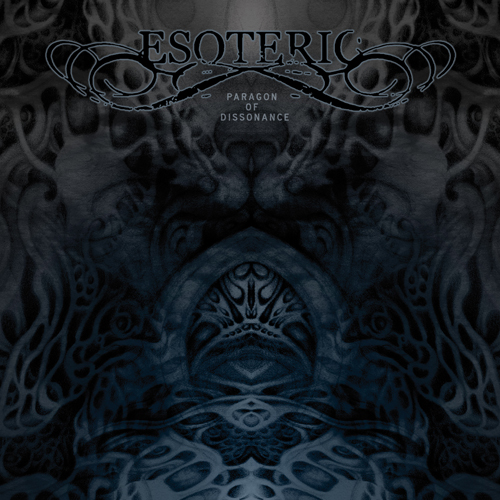
Take some bands such as Paradise Lost, My Dying Bride, and Anathema, among others, and you’d probably be left wondering if the entire land’s population should be on some kind of anti-depressant. Yet, the music is riveting, memorable and relatable, especially for those of us who find ourselves under a black cloud now and again. Another act that should be on that last is long-standing doom/death band Esoteric, who have been making pulverizing, anguished funeral-style metal for years. Their latest album “Paragon of Dissonance” is yet another that won’t raise your spirits or leave you giddy with joy, but if you enjoy their calculated, deliberate assault, you’ll love every moment of this mammoth.

And it is a whale of a collection, spread over two discs and lasting more than an hour and a half combined. Then again, their last full-length, 2008’s “The Maniacal Vale,” also was two discs long at about 100 minutes, so folks already into this band know what’s in store. Prepare to be fully stuffed with extreme doom when it’s all over, and don’t worry about saving room for dessert. Also, if you were intrigued by our piece on Mournful Congregation and decided to buy those records, you might want to consider “Paragon of Dissonance” as well because it goes hand in hand quite nicely with the Australian band’s emissions.

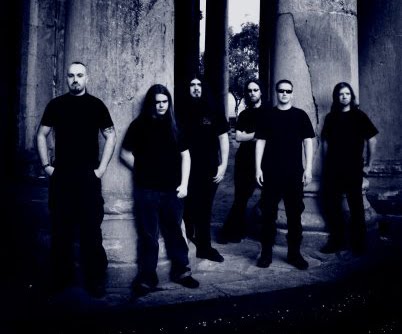
Only vocalist/guitarist Greg Chandler remains from the band’s 1992 formation, and he’s joined by bassist Mark Bodossian (around since 2003), guitarist Jim Nolan (who debuts on this album), guitarist Gordon Bicknell, and drummer Joe Fletcher (on board since 2007) on “Paragon of Dissonance.” While it might seem like a lot of material to absorb, and it is, they aren’t outdone by their ambition. Truth be told, if you played this whole thing at a few speeds faster than Esoteric delivers it, you might be able to get through it in an hour or so. That’s just how drubbingly slowly these guys deliver these songs. It’s exactly how it should be, too.

Disc one opens up with “Abandonment,” a crushing, melodic and hulking piece that has its fair share of melody and eventually drowns out in a storm cloud of noise. “Loss of Will,” a somber, moving entry, is the shortest of the entire collection at 7:16, and the song drips with pain and suffering that you can feel through your skin. “Cipher” has a watery opening that takes some time to bleed over, and eventually Chandler’s monstrous growls take control as noise and ambiance hang in the air like a fog. The disc is capped off with “Non-Being,” a cut that has a psychedelic edge at times, not unlike some of Pink Floyd’s edgier moments, and it slowly sizzles and shakes, at moments taking on power metal-flavored riffs and at others trickling into calm waters and the unfurling canopies of dusk. This first disc alone would be enough to make “Paragon of Dissonance” worth your investment, but alas, there is more.

“Aberration” is the airiest, least direct song on the whole album, which is not a criticism. It lets your mind wander and your body absorb the darkness that’s ahead on the rest of the disc. “Disconsolate” is the angriest, most aggressive song here, as it begins with the band’s trademark trudging-through-mud pace but eventually blows up into some monstrous thrashing, fiery guitar work, and metallic fireworks that helps counter the otherwise somber atmosphere. “The Torrent of Ills” slithers as slowly as any song on here, or in the rest of their catalog, but it’s nothing less than suffocating and punishing, eventually tapping out to a tidal wave of ambient hiss and barbaric noise. It just bleeds and bleeds until there’s nothing left to give.

Esoteric strangely don’t have that high a profile in the United States, and their style of doom/death does seem to be more of a niche style. But that’s too bad, because there’s so much emotion and anguish here that, while it might not fill you with sunshine and flowers, it should help you address and conquer your dark side. Isn’t that what metal’s supposed to be about anyway? Hopefully more people take advantage of this band’s incredible output and their spectacular new record “Paragon of Dissonance.” It’s funeral-style doom metal the way it’s supposed to be done, and they remain one of the sub-genre’s go-to acts.

For more on the band, go here: http://www.esotericuk.net/

To buy “Paragon of Dissonance,” go here: http://e-shop.season-of-mist.com/en/items/esoteric/paragon-of-dissonance/dcd/28607

For more on the label, go here: http://www.season-of-mist.com/

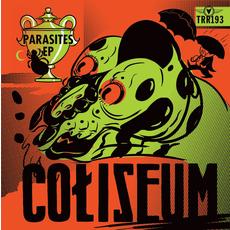
Coliseum companion piece ‘Parasites’ is a full-blown rock, hardcore infection


Any time I see the term “companion piece” when receiving a new collection of music, I grow wary. Often I find that term means “stuff that wasn’t all that great first time around, but maybe you’ll go ahead and buy it anyway until we come up with a new album.” I immediately become the skeptical consumer.

Louisville’s Coliseum have one of those efforts called “Parasites” getting ready to hit the streets, and before I even encountered the music, I had mixed emotions. I loved last year’s “House With a Curse” after being hot and cold with their previous material – I liked their other work just fine, but their first two albums didn’t really make Coliseum one of my favorite bands – and I was wondering just how much they had left in the same creative tank that led the way to their third record. Turns out, they must have been overflowing before committing “House” to record, because the eight tracks on this EP are just as good and even manage to be heavier and nastier in spots.

Actually, “Parasites” isn’t just stuff left over from their sessions at The Funeral Home with J Robbins that resulted in “House With a Curse.” There are some of those included here, but there also are newer pieces they cut with Robbins at Inner Ear Studios in Washington, D.C., a legendary recording space used by bands such as Bad Brains, Fugazi, Lungfish, and Rites of Spring. Perhaps being in such a hallowed space is what led to some of these songs being more bruising and hardcore-laden than what was on “House,” an album that saw the band head more on a traditional, albeit earth-quaking, path.

Just as they discovered on their last album, Coliseum are gifted with the ability to create meaty hooks and catchy melodies that make you want to scream along and punch a wall at the same time. These songs can be rowdy, yet introspective, boisterous, yet vulnerable. The trio kicks off the eight-track collection with “One Last Night,” a song that reminds me of Fucked Up’s more recent anthems, and guitarist/vocalist Ryan Patterson tries to reach out to the disillusioned in his audience by observing, “We spread to where we don’t belong.” That leads us into “Waiting (Too Late),” that has a stoner rock groove, some talky vocals, and Patterson telling his nameless muse, “I’m sick, sick, sick of losing you.” He’s both angry and desperate while delivering his plea. “The Fiery Eye” reminds me a bit of “Blind in One Eye” from “House,” as the song takes on an atmospheric, punchy rock personality. The guitar work is really cool and airy, and it’s like The Edge was ripped from the early ’80s to Coliseum’s creative sessions to add his input. ’80s The Edge is going to be surprised and perhaps appalled to see where his band has gone.

“Ghost of God” lets the band delve into some mechanical weirdness, but its headiness is a red herring for what follows. From there, the band throws all the hammers and wrenches out the window with some furious, temperature-raising songs that remind me a bit of their hardcore past. “The Big Baby” is abrasive and screamy, and it’ll be the song that leads to fist flurries live; “Gone With the Pope” is absolutely simmering, with some grungy, punk-flavored guitar work; and “Blood of the Beast” is gruff and violent, lasting very little time but still doing much damage. “Give Up and Drive” ends the record on a melodic, hopeful note, reminding the listener once again just how well-rounded this band – rounded out by bassist Mike Pascal and drummer Carter Wilson – really are. It’s moving and inspiring, capped off by Patterson declaring, “This road drives me down to my destiny.” He sounds like a man of purpose delivering that line, and his bandmates are just as determined hammering their way through.

So yeah, don’t shy away from this “companion piece.” I understand why it’s considered that, but “Parasites” is a separate animal and can stand on its own. It’s more proof Coliseum are hitting their stride creatively and are one of those bands you need to follow into the future, because things are just starting to get good.

For more on the band, go here: http://www.coliseumsoundsystem.com/

To buy “Parasites” or to learn more about the label, go here: http://temporaryresidence.com/

To read my review of “House With a Curse,” go here: http://www.metal-army.com/?p=8018

Cynic’s comeback takes enthralling turn on ‘Carbon-Based Anatomy’


As a fan of most major sports, I’m pretty used to the comeback. Some of them go pretty well. Mario Lemieux every time he laced up the skates again. Brett Favre in his first year in Minnesota. Michael Jordan after his ill-advised run as a baseball player. Some of them don’t go so well. Favre in his first year with the Jets and second year with Minnesota. Each time Eric Lindros tried to best his concussion problems. Jordan with the Wizards. Tiki Barber hilariously trying to get back into the NFL.

Music has had its fair share of returns, and just like sports, some are worthwhile and others aren’t. One of the comebacks that has gone the best is the rejuvenation of Cynic. The band helped pioneer the prog-tech-death sub-genre and was one of the most important and influential groups of the early 1990s (Between the Buried and Me basically owe them a ton of gratitude, and I’m sure they’d agree) until they disbanded in 1994 after releasing their groundbreaking record “Focus.” In 2007, the band was revived, and Peter Masvidal on guitar and vocals, Sean Reinert on drums, Sean Malone on bass and stick, and Tymon Kruidenier on guitar and aggressive vocals recorded the group’s second full-length “Traced in Air.” It was noteworthy how less death metal and how more prog rock the collection was, but it worked for the band and certainly was a breath of fresh air. Who am I kidding? It was excellent! Their EP “Re-Traced” was a reimagination of some of the “Traced” songs, and it was a cool stop-gap effort but certainly not an essential find.

Since then, the band has been reduced to Masvidal and Reinert as full-time members (bassist Brandon Giffin, and guitarist/vocalist Max Phelps join them in live settings), but that hasn’t gotten in the way of their productivity. The band is back with a new EP “Carbon-Based Anatomy” that takes what they started on “Traced” and goes even further away from death metal and way more into spacey prog rock. Masvidal doesn’t rely on a Vocoder at all on this album, so his singing takes on a more natural, human, Earth-based personality, and the rest of the music is more lush, organic and welcoming to a larger audience. In a way, it reminds me of the drastic step Opeth took on their new album, where they left death metal behind but still maintained a sound you knew was them. Same goes for Cynic on this mini-effort, and those who were upset they took the thorns out of their work probably jumped ship a couple of years ago anyway and won’t be lured back by this one. That’s too bad, because Cynic are an amazing band who make incredible music, and the path they’re on in the second half of their career is introspective and exciting.

The EP opens with “Amidst the Coals,” a quiet, woodsy song that is more folk-like than anything they’ve done before. Country singer Amy Correia (who worked with the band on “Traced in Air”) takes on all of the vocals, coming off like a haunting ghost here to lure you in with her gorgeous chants. That leads into the title cut, a juicy, fluid slab of prog-rock goodness (a reinterpretation of Æon Spoke track “Homosapien”) that finds the band quite aware of their fragile existence as people, especially when Masvidal croons, “The longing never ends/Not while you’re human.” “Bija!” is almost like an interlude, with thick percussion and spiritual ambiance; “Box Up My Bones” is a thrilling song that sounds like it’s soaring free in the atmosphere, allowing the listener to feel a freedom to explore both here and in their personal lives; and closer “Hieroglyph” is awash in shoegazey fog and noise, going into heady, cosmic territory, with Masvidal noting of his protagonist, “He’s been blown to all corners of the universe.” That statement also could be applied to the band’s current sound.

Cynic remain one of the most free-thinking bands in all of heavy rock, and they refuse to be bound by genres. This may not be metal by definition, because it really isn’t very heavy at all and won’t make you want to start a circle pit. But for those with an open mind, who can be enraptured by melody and great songwriting, “Carbon-Based Anatomy” will prove a refreshing, colorful, imaginative collection that will open up the doors for your personal daydreaming. I’m quite thankful to have Cynic back and in the throes of a creative explosion.

For more on the band, go here: http://www.cyniconline.com/

To buy “Carbon-Based Anatomy,” go here: http://e-shop.season-of-mist.com/en/items/cynic/carbon-based-anatomy/mcd/28603

For more on the label, go here: http://www.season-of-mist.com/

Warbringer, Evile keep thrash revival alive on respective third albums

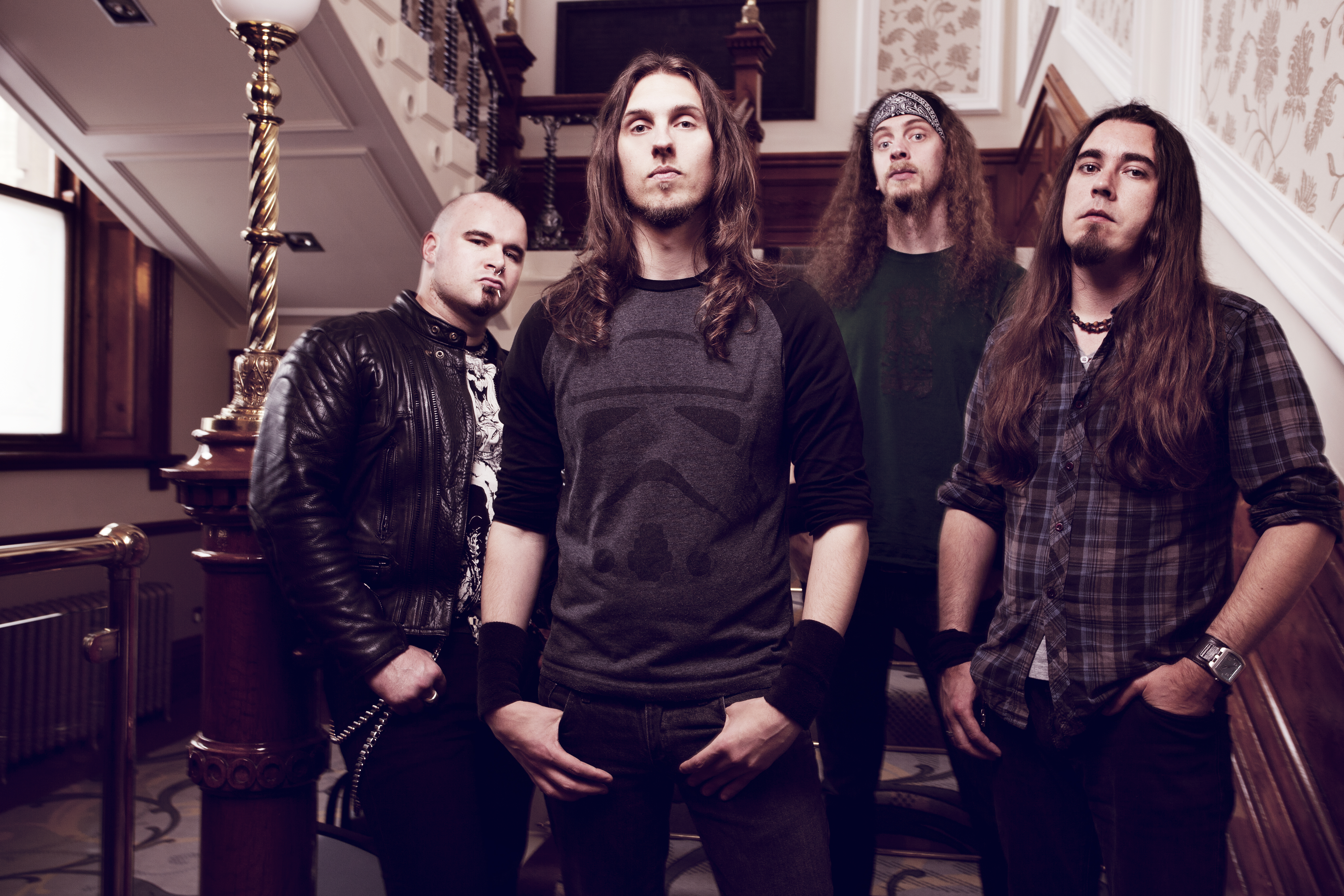
Warbringer

Growing up and coming of age musically in the late ’80s and early ’90s, my ears took quite a beating from thrash metal. That’s basically all I listened to on the way to school, on the way back, while studying, while playing video games. It consumed me, and I turned to magazines such as Metal Maniacs and Hit Parader and spent time sifting through tapes of Headbangers Ball trying to find all the newest thrash news and videos. It’s also what led me to death and black metal and so forth, so it also worked as sort of a foundation of growth for discovering what else was out there.

My tape decks were full of what one might expect – Metallica, Megadeth, Anthrax, Testament, Nuclear Assault, Overkill, Vio-Lence, Prong, Voivod, Sepultura, etc. – and I wore out those cassettes. Funny enough, but last night I tried to listen to my tape copy of Testament’s “New Order,” and it’s so beaten that any attempt to add any volume resulted in loud rattles and hisses, totally drowning out the music. If Atlantic would stop being jerks and allow Testament to reissue their back catalog remastered, that would be so nice. That way I wouldn’t mind parting with my cash to buy them because I know they’d sound good, unlike the versions available to the public now.

The recent new wave of thrash metal bands has gotten a cold shoulder by a lot of people. Metal fans can be just as elitist as the Brooklyn hipsters they likely mock, and they can be as rigid as anyone. I’m not totally innocent myself, but I try to keep an open mind about things when it comes to metal. It’s a large field with so many sub-genres, and while they don’t all work for me, I give everything a chance. But I never turned a cold shoulder to the newer thrash bands, basically because it’s a sound I grew up enjoying and am happy to hear younger musicians revive the scene. I’m cool with bands such as Toxic Holocaust, Municipal Waste, Violator, and SSS, and the two groups we’ll discuss today I’ve followed fairly closely and, despite some snide remarks from people questioning the bands’ intentions, I’ve never felt a reason to pre-judge them. So let’s put all that crap aside and talk about music, OK?

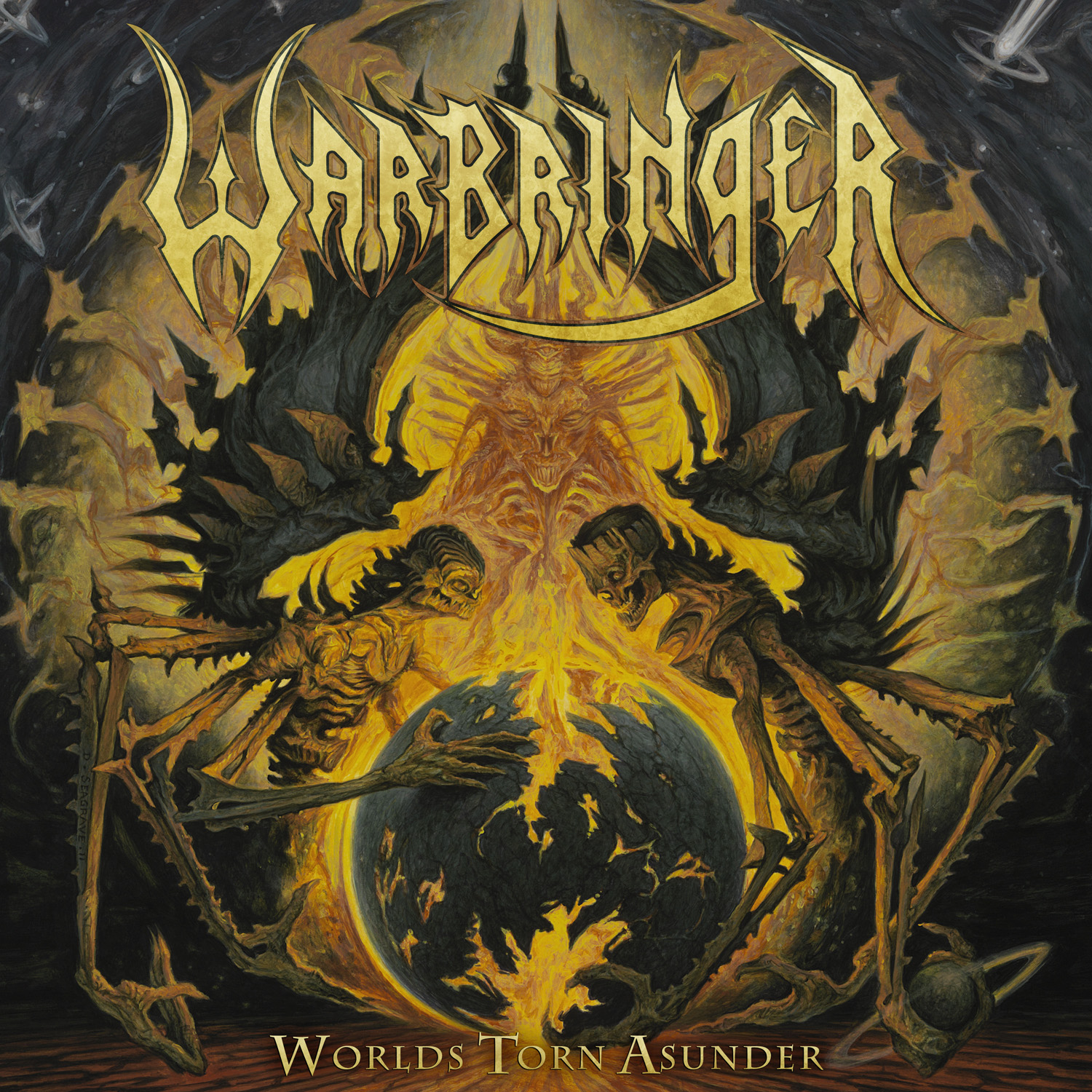
First up are Warbringer and their hellacious new record “Worlds Torn Asunder,” their third. The band is technically capable, and their sound is growing more mature with every release, proving they’re interested in being a quality unit and not just cashing in on a trend. They lean toward your tried-and-true thrash subjects of war, pestilence, evil and the crushing weight of being governed, and while their approach sometimes sounds a little cheeky, if you really pay attention to what’s going on, you’ll also realize they have their ears to the ground and are aware of what’s going on around them.

The quintet are doing their finest Spinal Tap by breaking in yet another new drummer, though from how they described it in a recent issue of Decibel, the band never has felt more secure. You can hear that in their music, too, and their assault is channeled and bloodthirsty, ripping into “Living Weapon,” a strong, stirring opener, where vocalist John Kevill sounds like he’s opening a war salvo by screaming, “Open fire!” “Shattered Like Glass” has solid bass work and a nice double-kick drum quake, as the song’s protagonist faces his own mortality at the throes of disease; “Wake Up … Destroy!” is a kick-ass blast that could be an excellent show opener, the thematically it sounds like an anthem for the Occupy movement; “Savagery” imagines black seas and dark skies as the world is torn apart; “Enemies of the State” has ties in today’s politics but would have worked just as well in thrash’s heyday, especially when Kevill warns, “The iron curtain closes, there’s no chance for escape”; and “Behind the Veils of Night” is a lucid instrumental that sounds like it belongs on an Opeth record.

Warbringer remains one of thrash’s best young bands, and their improvement since their formation in 2004 is quite evident. They sound dedicated to their craft and their sound, and they should keep getting better. They still need to make a landmark, special album that etches their name in history, but they sound capable of accomplishing that goal.

For more on the band, go here: http://www.facebook.com/Warbringermusic

To buy “Worlds Torn Asunder,” go here: http://www.cmdistro.com/Search/warbringer

For more on the label, go here: http://www.centurymedia.com/

Evile

UK thrashers Evile have done a pretty good job getting their name and music out there, claiming tour support slots along titans such as Megadeth, Kreator, Overkill and Vader, getting their music onto Rock Band, something that surely exposed them to new fans, and becoming one of Earache’s most important bands. They seemed on their way. But tragedy struck the band in October 2009 when bassist Mike Alexander died while being rushed to the hospital with a pulmonary embolism, and the rest of Evile were left to pick up the pieces. But they did just that. They paid homage to their fallen mate, worked to help Alexander’s family, and then they moved on to continue their art, culminating in the new album “Five Serpents Teeth.”

If you’ve followed the band since their inception and their debut record “Enter the Grave” and follow-up “Infected Nations,” you may be wondering if the group still sounds like they’re trying to be the new Metallica. Yes, they sort of are still doing that, but not nearly as blatantly as they were on “Infected.” A lot of that is due to the vocal approach and phrasing of vocalist/guitarist Matt Drake, who has way too much James Hetfield inside of him, but even he tries to change that up a bit on their third album. I don’t think Evile ever will get away from the Metallica worship, but now it’s used more as a base, and they branch out some musically. In fact, there are moments on “Five Serpents Teeth” that sound closer to modern-day Machine Head. “Five Serpents” is a good listen and a strong Evile album, which is right up there along with their debut. They open with the title track that begins sounding like the opening to “Blackened” and is the most blatant attempt on here to sound more like their idols than themselves. But things change up on “In Dreams of Terror” and “Xaraya,” which show the band is capable of standing on their own merits, and ballad “In Memoriam” is a sad, earnest tribute to their fallen mate Alexander. It’s one of the best songs in their catalog, bottom line. “Origin of Oblivion” and “Descent Into Madness” are both speedy rippers that prove Evil can be gnarlier and grittier than those who paved the way for them, and I’d like to hear them go this route more often.

This band is capable of doing their own thing, and while totally shedding the Metallica feathers may be tough, it’s something they should pursue more aggressively. This is a decent step toward that direction, and they should be commended for being able to recover from a horrible tragedy to reign again. Evile’s also one of the better thrash bands out there, but like Warbringer, they still need to make that special statement that gets them mentioned alongside thrash’s greats. Maybe they’ll get there on album four.

For more on the band, go here: http://www.evile.co.uk/

To buy “Five Serpents Teeth,” go here: http://earache.com/uswebstore/index.php/cPath/667_669_41?osCsid=t2iqohlt51m7eefhi2r1bbrgb5

For more on the label, go here: http://www.earache.com/

Panopticon offer a voice for the voiceless on emotional ‘Social Disservices’


I think I got pretty lucky growing up. I come from a good, loving family, and while we were raised Catholic, that never was shoved down our throats. We were allowed and encouraged to be individuals, to challenge ways of thinking, to not feel bad about standing out. Not that we didn’t butt heads now and again, and looking back, when there was conflict, it was me being a jerk, know-it-all-teen more than it was my parents not understanding my love for heavy metal and desire to grow out my hair. To this day my father, who could not be more different from me personally, still compliments me for taking my own road, even if it’s been a bumpy one. It means the world to hear that.

But, as noted, I was a lucky one. Not everyone I knew benefitted from the same family setting. One friend in particular took his own life on a bus ride to school one morning, an event that changed my life and my way of thinking forever. I remember the days that followed, the police trying to link his death to Satanism because he had weird symbols in his notebook he’d copied from Iron Maiden album covers, lyrics from other heavy metal albums he etched elsewhere, and strange notes about the band he claimed he was in that all looked goofily evil. He was a good, normal kid with a huge imagination, and he and I got on about heavy metal non-stop. While we weren’t best pals, he was a part of my group and I missed him. I was 15 at the time, and I never once thought about what led him to make this horrible decision because it scared me. I know it wasn’t heavy metal. I don’t care what the police and school authorities believed. That was naïve, pin-it-on-something-we-don’t-understand conclusion-drawing. What if they had seen my notebook? Would they have committed me? My guess is no. I was still alive.

This all leads to the new album from Panopticon, a stunning, four-track opus called “Social Disservices.” It gets its name from Austin Lundr (Seidr, Agnosis) and his examination of the mental and social services in this country, or as he puts it, disservices. He feels for kids who are misunderstood by their families, their educators, their clergy, what have you, who don’t recognize their individuality. Not all kids are bound to be the football star, the prom king or queen, the great debater. Not all kids will go on to become regular church-goers or great scholars. Sometimes kids will prefer those weird metal bands over the safe, sanitized stuff that all the others like. Maybe they’ll want to open a tattoo shop rather than work in corporate America. That doesn’t make them outlaws or vermin. In my opinion, it means they think outside the box and don’t settle for the status quo. They’re different because they challenge what they see around them, and that’s a damn good thing to do. But sometimes these kids are wrongly accused of being delinquents, put into metal or social systems that ultimately fail them, and then what becomes of them? Sometimes they eventually end up with multiple children with different mothers and no means to support everyone. That’s another story of a friend with whom I grew up, and it makes me sad. Lundr is trying to give these kids a voice. Just listen to him wail, “Never give in, never give up!” on “Subject.” You can’t mistake his compassion, his relation to these people.

So this third full-length from Panopticon is not your hate-filled, misanthropic slab of atmospheric black metal that comes down the pike from every other band. It’s a bleeding-heart call to power. It’s an emotional, heart-wrenching document, and maybe this isn’t the type of thing a metal writer should admit, but it brought tears to my eyes on a few occasions. It’s that affecting a piece of work, and while not everyone will have the same reaction I did, it’s sure to strike your heart somewhere. For even if you did grow up more fortunate than others, surely you’ve seen some people close to you suffer. Or maybe you just see the news now and again and wonder why some people get swallowed up by a system they perhaps had no business being absorbed by in the first place. If so, that makes you human.

There’s a large portion of the black metal audience that needs things to be all hate and evil all the time, and there’s no two ways about it. I never agreed with that sentiment personally because I always felt black metal should be a place with no boundaries or rules, and Lundr always has felt the same. None of his work has been outbursts of hate with no basis behind it. He’s always tried to reach out and tell stories of the downtrodden and those who perhaps don’t have a voice. He’s the voice of the voiceless. He even seemed ahead of the curve on his last record “Collapse,” where he envisioned the total collapse of government. Hmm. Seems we’re there. A car without an engine runs better.

Now, if you’re not here for the message and only care about the music, you’ll be served as well. Lundr’s all-encompassing atmospheric black metal, mixed with shoegaze, post-metal, doom and straight up rock, never has sounded more impactful. Every moment on this record drips with purpose, and each song is packed with drama and emotion. It’s fitting that the first two songs “Resident” and “Client” both open with the sound of distressed, crying babies and chattering kids, because these are the people who are the most vulnerable to fall into this pattern. “Resident” is creaky and suffocating at times, dizzying and explosive at others, with Lundr’s shrieks and growls telling the tale. “Client” is grittier, but it also folds in melodic sections that can be translated as both glorious and tortured. “Subject” begins with dissonant noise and has pain crawling in its underbelly, and there are lovely, dreamy sections of the song that seem to act as a sort of escape from reality. That doesn’t mean forgetting what’s true, but rather drifting somewhere else so one doesn’t become insane from the darkness. It ends with footsteps and a jail door sliding open, so you know exactly where the situation has led the protagonist. Closer “Patient,” the epic of the album at 20 minutes, is a beautiful piece of work, with spacious soloing, lush strings, devastated wails, and a mournful soul. You end up with a wide variety of conclusions to which you can draw. Should you feel uplifted that there’s a way out? Should you revel in pain and hopelessness that the cycle never ends? It seems like that’s up to the listener.

Panopticon always has been a project that lends itself to much soul searching. All of Lundr’s records under this banner push you to creep outside your comfort zone, or if you’re a part of the group he addresses directly, it makes you examine your path. It’s clear Lundr is pulling for the underdog here and will do whatever’s necessary to tell their story. He’s part of the 99 percent, so to speak, and he won’t rest until changes are made and people stuck in this trap have a way to realize a better life. We all deserve a chance to succeed and to make a life for ourselves, whatever that may be. Not everyone’s dream is the same, and we all should be thankful for that. But just because yours doesn’t match your neighbor’s, it doesn’t mean either of you is wrong or that one of you is “crazy.” Everyone doing and thinking the same thing is insane, and those of us who realize that are the lucky ones.

For more on the band, go here:  https://www.facebook.com/PANOPTICONBAND

To buy “Social Disservices,” go here: http://store.theflenser.com/

For more on the label, go here: http://theflenser.com/

Mournful Congregation perfect sorrowful reflection on stunning ‘The Book of Kings’


Depression can be the most destructive force on earth. Yes, we live in a world of bombs, ridiculously relaxed gun laws (at least here in the States), monstrous dictators, and pathogenic disease, but those even can pale in comparison to the darkness and sorrow that can inhibit a person’s heart and soul. It’s a prison. Even the brightest, most beautiful day can seem like hell is ravaging the planet. It can be inescapable and eroding. It is the worst.

That may not be the most alluring way to introduce a new album from one of the world’s most underrated bands, but it fits. In fact, that opening probably isn’t enough. For we’re here today to discuss Australia’s Mournful Congregation, a band that, even if you’re a happy-go-lucky soul, can leave you in the doldrums for hours. They’re that effective and that impactful delivering their brand of funeral doom, a genre that should alert you from name alone that you’re not in for party music. Unless it’s a wake you’re soundtracking, then it’s perfect. This band has been one of the finest entrants in that sub-genre ever since their formation, and now that they’ve had time to develop and find a strong label home in the States, their best days should be in front of them. Not that that’ll bring sunshine and birds to their music any time soon.

Mournful Congregation’s music may be new to some of our audience, but the band has been around since 1993, delivering a few mini-releases before offering up their first full-length, 1999’s “Tears From a Grieving Heart.” I mean, just look at that album title, and you know you’re not going to feel uplifted when it’s all over. And that’s OK. Sorrow, despair and depression are very human states. Everyone is susceptible, but we live in a culture where those things get buried under synthetic, sugary fun. It’s OK to brood and feel downright miserable at times, and Mournful Congregation always have been purveyors of such gloom. We didn’t get another full-length from the band until 2005’s eye-opening “The Monad of Creation,” though they did put out more mini-releases between complete records, and they really seemed to hit their apex on 2009’s “The June Frost.” That was until their fourth and unquestionably best record “The Book of Kings” was created, putting this band on a pedestal with some of metal’s finest acts, no matter the sub-genre. This is an arresting, blood-letting, anguished masterpiece that has a fast track toward best-of honors for 2011. It really is that amazing a piece of art.

The band – vocalist/bassist/guitarist Damon Good (Ben Newsome recently joined to take over bass duties), guitarist Justin Hartwig, drummer Adrian Bickle – sounds like they’ve discovered their sound. That’s not to suggest their previous work is incomplete or not thoroughly fleshed out, because it all works wonderfully, but they hit on something on “The Book of Kings” that takes the band from great to damn-near immortal. That’s a weird description for a band so consumed with the extinguishment of life’s flames. But it’s true, and they have created the solemn wonder we hear on this album. Now, know from the start that like most bands in this sub-genre, their songs are very, very long. They are personal exorcisms and mental torture sessions, and those types of things can’t be accomplished properly in a couple minutes. You get the idea the band poured everything they had inside of them into these songs and left no personal scars unexamined. There also are times when the band sounds unlike they ever have before, revealing a new sonic personality that completes Mournful Congregation’s make-up.

The album opens with the stunning “The Catechism of Depression,” a 20-minute lurker that’s eerie, slow-moving and death-like in its destruction. It’s an amazing composition that sounds like it can’t possibly be topped by what follows. Yet it’s only just the beginning of this cathartic ride. “The Waterless Streams” actually is, funny enough, quite watery in its approach, as the song floats along with sad guitar work, and Good’s clean, monotone warbling that sounds inspired by Tom G. Warrior. His singing is quite affecting and works wonders for the song and the rest of the material on the album. Now, it’s not that Good’s never used this approach before, but never as much and as well as he does here. “The Bitter Veils of Solemnity” is a truly interesting experiment, as it relies mostly on dark, harrowing acoustic guitar work, whispery vocals and lush synth work, qualifying itself for being dubbed beautiful. The 33-minute closing title track brings it all together, using all of the elements unveiled on the previous three songs, and taking the listener on a ride to the catacombs, with some crunchy, punishing thrashing, classic doom expression, and savagely delivered vocals that match the atmosphere. It’s an incredible record, one that blew my mind from first listen, and I was expecting to be moved before I ever encountered the record. I’ve long loved and followed this band, but I had no idea they were capable of something this mountainous and cataclysmic. It’s their high-water mark. So far.

Now, if you are new to this band, or if you’re just trying to get your hands on some of the rarities, the band has another new release (it came out in September) to satisfy your urges. “The Unspoken Hymns” is a collection of some of the band’s split efforts cuts and two new songs, one being the opening “Left Unspoken,” a new version of the song that originally appeared on the “Four Burials” release with Orthodox, Loss and Otesanak. Also included are “The Epitome of Gods and Men Alike” from the Worship split, “A Slow March to the Burial” from the Stabat Mater pairing, and “Descent of the Flames” from the Stone Wings release. It’s all capped off by a new cover of Thergothon’s “Elemental,” which they do a world of justice. This collection is a nice appetizer to let you know what you’re getting into with Mournful Congregation’s music, but remember that their new work does offer a wider range of influences and sounds. If you’re a completest, like I am, you’ll need to have this thing. But not just for the sake of buying all the band’s stuff. There are some great songs here worth their weight and your hard-earned money.

It’s high time Mournful Congregation are recognized as one of metal’s finest bands, and if “The Book of Kings” doesn’t get them that designation, then something’s wrong with the system. It’s a special, once-in-a-band’s-lifetime effort that should transcend sound boundaries and affect fans of all kinds of heavy music. It’s real, it’s raw, and it’s unapologetically sorrowful in a way that’s sometimes skin-crawling. But it’s good when music can make you feel this way, and even if you don’t exactly want to take a walk in the park when it’s done, you’ll realize you’ve gotten in touch with some darkness that needed to leak out of your veins.

For more on the band, go here: http://www.facebook.com/mournfulcongregation?sk=info

To buy “The Book of Kings” go here: http://www.20buckspin.com/store/product_info.php?cPath=1&products_id=1016

To buy “The Unspoken Hymns,” go here: http://www.20buckspin.com/store/product_info.php?cPath=1&products_id=967

To buy both in a special package deal, go here: http://www.20buckspin.com/store/product_info.php?cPath=1&products_id=1017

For more on the label, go here: http://20buckspin.com/site/

Elder launch into classic doom fire and brimstone on ‘Dead Roots Stirring’


I could use a trip into outer space about now. I hear I won’t be able to breathe there without some sort of apparatus. Sad. Floating uninhibited, without heavy machinery holding me down, sounds like the way to go. Science, you have failed us this time.

Luckily there’s an alternative right now, and no, I don’t mean those weird gravity machines or simulations. What fun is that, really? You’re in a box. Wheee! Instead, I mean I can have something to carry me there mentally. That’s why I often talk about music that has the ability to carry me away for a period of time, and certainly we all can agree that removing ourselves from our daily lives now and again can be a good thing.

This time, I’m rocketing into the stars with “Dead Roots Stirring,” the sophomore effort from classic doom trio Elder. But wait a second. It’s not just classic doom that Elder offer up on this great-sounding, five-track effort. There’s a healthy serving of stoner rock, blues, and classic heavy metal as well, making them a fine choice for anyone who’s way into labels such as Rise Above and Elder’s home MeteorCity, as well as bands such as Black Sabbath, Electric Wizard, Danava, Sleep and Kyuss. This is a crazy awesome guitar record, by the way, with riffs upon riffs, scorching lead lines, and exploratory noodling that never feels lazy or bloated despite the songs having lengthy running times. This is imaginative, exciting stuff, and it’s a crime if Elder doesn’t realize a higher profile once this record’s cycle is completed.

The Boston/New Bedford-based band – guitarist/vocalist Nick DiSalvo, bassist Jack Donovan, drummer Matt Couto – get right into things without hesitation on opener “Gemini,” a fuzzy, bluesy, punchy piece, with DiSalvo declaring, “I’m coming home/It’s been so long,” as the rest of the band peels off into dissonance. At one point, DiSalvo even breaks into a black metal-style guitar section that, instead of bubbling into hell, slides into a groove. The title track is a stirring, spiraling cut that never feels nearly as long as it is and is the epitome of stoner fire. There is some fiery guitar soloing that blows the doors off the thing, and eventually DiSalvo demands, “Let the waves consume my bones.” By the way, his vocals are far cleaner and spacious this time around, with very little grit and growl. It’s a refreshing change.

“III” is a nice, dusty, trippy instrumental number that doesn’t need words to make its point. It breathes easily and walks assuredly, and it leads into “The End,” the most aggressive song on the collection, but not one that’ll scare off those who think death metal is too extreme. It’s a heavy track for Elder, and it bubbles and bursts with color, eventually drowning out in a pocket of ambient noise. Closer “The Knot” is the one that’ll likely take listeners most directly back to the ’70s, as Tony Iommi and his Sabbath mates would be proud of this one. But beneath the murk and smoke is a cool, dexterous melody line that keeps popping up and pulling you willingly back into the fray. It’s one of those closing tracks that compel you to start the album all over again. Don’t resist as the temptation really is too much.

Funny thing is, while I took this record as a chance to imagine floating past stars, there’s just as much fire and brimstone that sounds inspired by the Earth’s formation and tumultuous history as well. The cosmic route is just how I absorbed this music, but one easily also could take this piece as a chance to imagine when volcanic fury built the mountains and landscapes and when long-extinct creatures roamed the planet. That’s part of the fun of a collection of this nature. It’s open-ended enough to let you have your own experience, and trust me, you will have one when taking on “Dead Roots Stirring.” This is a really powerful record from an up-and-coming band whose name deserves to be in the lexicon of doom and stoner metal fans everywhere.

For more on the band, go here: http://www.myspace.com/beholdtheelder

To buy “Dead Roots Stirring,” go here: http://www.allthatisheavy.com/info.asp?item_num=ATH-8699

For more on the label, go here: http://www.meteorcity.com/