Jute Gyte, Spectral Voice find inspiration in ‘Helian,’ leading to moving, reflective split release

Just a couple months ago, we watched the life drained from leaves, trees, and all green life here in the Northeastern United States, and in many other regions as well. What once was a period brimming with warmth, life, and promise was left to fade to drab nothingness before winter could apply its chokehold. Themes of death, societal collapse, and spirituality are in the mix, and it’s a piece that should push anyone at any stage of life to reflect.

This is one of the concepts of “Helian,” the 1913 poem written by Austrian expressionist Georg Trakl, and that 93-line poem stood as one of the most painful pieces its creator ever brought into the world. It’s a piece of work that resonates still today, and it moved two equally creative black metal forces to combine and consider what it all means now. Using the text as inspiration, U.S.-based band Jute Gyte and Greek artist Spectral Lore combined for one of the more interesting split efforts you’re going to find. Each band composed a song called “Helian,” bringing to the release their own work driven by Trakl’s words, and what results are two songs that could not be more different or fascinating. Each artist found a different road, and that fuels this 41-minute, two-track package that’s a must-hear for those with a challenging metallic palette.

Jute Gyte is the vision of sole creator Adam Kalmbach, and under this banner he has been, let’s say, widely prolific. That’s probably not doing his workload any justice. To his credit, he has 27 full-length efforts in just a little over 15 years, and countless other smaller releases such as this one. The crazy thing is with that amount of work, you’d expect his music would have gotten monotonous and less challenging over time, but he never falls into that trap. His contribution to this split is no exception, as it is warped, psychedelic, punishing, and thought provoking over its 20 minutes, and it should give you a slight glimpse into his creative space if you’re new to Jute Gyte.

This song starts off with quivering playing, weird guitars, and stirring melodies, immediately cluing you into the changed environment in which you’ve entered. Harsh growls pile on top of the hypnotic melodies, while the warped pace blends into blurry weirdness, leaving your awareness damaged. Things feel out of control psychologically, as fucked-up playing and deranged, scary expressions send terror down your spine. A heave of quiet is met by strangled strings, eerie clouds, and an eruption that leads toward playing that’ll have the room spinning around you. The final minutes sink into mournful melodies, strange inhibitions, and a slurring, staggering path that leaves your head buzzing.

Spectral Lore also is a solo venture, with Ayloss handling all creative aspects from the project’s birth in 2005 until now. We’ve had a bit of a drought from this camp when it comes to full-lengths, as Ayloss delivered his last in 2014, the powerful and invigorating “III” that we still have rolling in our heads to this day. Spectral Lore counts three other full-lengths under its roof, as well as numerous smaller releases the past with few years including a trio of EPs and a split with Nachtreich. Ayloss, like Kalmbach, also finds a way to not repeat himself, and his atmospheric black metal never fails to move mountains, even if just in our minds, when we take on his music. He does that again on his 21:28-long offering here.

Serenity and blue hues greet you at the gates, and from there, a doomy pace unloads, as creaking singing spills, and lurching growls scrape the ground. The pain in the song is evident, as the song goes on a psychedelic trip, and bizarre playing sends you for a loop. Things get a little strange, letting the song seemingly fade away, but on the other side, we’re met with riffs cutting through the calm, and classic death metal-style playing igniting feelings of nostalgia. The song heads into a dangerous stampede from there, defacing everything in front of it before classical guitar playing evens the pace, and noise carves a path swallowed by the menace waiting for it in the distance. The track goes off again, as chaos and growls swarm and blind, and trippy noises spread overhead. The final minutes feel freeform, like Ayloss was letting his muse guide him, and it all ends hovering around in outer space.

Splits always are worthy pieces for multiple reasons, whether it’s to get a quick taste of a band you didn’t know or to get something a little unexpected from a group with which you’re familiar. “Helian” is all of that and more, as it gives you two like-minded bands taking an inspiration point and coming to the table with very different readings. Add to that both songs are stunners, black metal like you won’t hear in very many places other than here.

For more on Jute Gyte, go here: https://jutegyte.bandcamp.com/

For more on Spectral Lore, go here: https://www.facebook.com/spectral.lorebm/

To buy the album, go here: http://i-voidhanger.com/shop/

For more on the label, go here: http://i-voidhanger.com/

PICK OF THE WEEK: Watain’s black madness rushes back to surface on violent ‘Trident Wolf Eclipse’

If a band is around long enough and is fortunate to release more than a couple albums, eventually that one thing is going to come that divides its listeners and sows doubt among those who worshipped blindly at the altar before. For Watain, that album was “The Wild Hunt.”

The band’s fourth album was released in 2013, and it wasn’t exactly a collection that those who loved “Casus Luciferi” and “Sworn to the Dark” could have imagined this band creating. But let’s not dwell on that record and instead tackle the band’s new fifth album “Trident Wolf Eclipse,” a collection that should put a smile on anyone’s face who wanted more of what Watain last accomplished on a record such as 2010’s “Lawless Darkness” or the aforementioned efforts. This is a savage, massive album, one that grabs you by the throat from moment one and refuses to let go. This is a total return to form for the band—the core members are vocalist/bassist Erik Danielsson, guitarist Pelle Forsberg, and drummer Hakan Jonsson, though their Facebook attributes additional guitars to S and bass work to A—as it’s a thunderous, bloodthirsty record that fans the flames of black metal heathenism all over again. On this record, the sinister riffs are tearing at your flesh anew, the vocals are destructive and deadly, and the slowest thing you’ll hear is a mid-tempo track that still smashes your knuckles.

Opener and first single “Nuclear Alchemy” is the ideal three-minute start, a thunderous track that crushes the earth beneath it and reintroduces the world to the band’s madness. It’s a perfect way to start the record and should excite the fuck out of anyone who hears it. “Sacred Damnation” has riffs rolling through hell, as fierce growls and rhythmic pounding upend your senses, and guitars spit black melodies. The track ramps up harder toward its back end, while the pace splatters, and the band catches you in the gears of its thrashy assault. “Teufelsreich” dumps pure terror into the air with atmospheric riffs, and then we’re into dogged savagery that keeps upping the ante and landing major punches. Danielsson’s raspy growls open wounds, as he leads a strong chorus that will stick in your head, and humid guitars follow him and ring out to the end. “Furor Diabolicus” has raw, yet fluid guitars, as the band unleashes a stampeding pace, with a chorus that destroys. “Wrath of the gods!” Danielsson wails, with the band bringing things to a traumatic end. “A Throne Below” is sweltering, with sinister melodies and a melodic attack that storms down. The guitars twist as Danielsson unleashes his maniacal growls, and the song comes to a mesmerizing end.

“Ultra (Pandemoniac)” has guitars burning and burly riffs doing damage, while the band goes a thrashy path again, and Eriksson growls monstrously. There’s a nice classic metal feel to the guitar work later, bringing on the fires of black metal nostalgia. Yet later, they moan underneath the carnage, as wild cackles send the track into hell. “Towards the Sanctuary” is blinding as hell, as a damaging tempo and infectious vocals get under your skin. The drums pulverize, while the riffs rain down chaos, and this track arguably is the second best on here. “The Fire of Power” is a middle-paced puncher that has Danielsson howling of actions “to illuminate the darkness of the mind.” The band runs in place here a bit at times, as this is the only track where the true Watain power isn’t clear. But it’s not bad and does lead toward the bizarre finish “Antikrists Mirakel.” This is primarily an instrumental cut, and a mind-altering one at that, as thorny riffs and eerie calls combine to send chills. Some of the melodies are mournful, while others are stormy, and it all builds to a finale that manages to put an elegant sheen on apocalypse, grinding the track into eternal mystery.

Watain’s chest-crushing black metal sounds savage and purely evil again, and “Trident Wolf Eclipse” is a record that will reassure those misled by “The Wild Hunt” that the true fires are burning again. I don’t fault Watain for their last record at all. I’d rather a band give me a disappointing record they mean than a heavy one they don’t. Luckily, you can tell them absolutely mean every ounce of “Trident,” and it’s the best thing they’ve offered up in the past eight years.

For more on the band, go here: http://www.templeofwatain.com/

To buy the album, go here: http://www.cmdistro.com/

For more on the label, go here: http://www.centurymedia.com/

Entheogen turn inward, explore subconsciousness with dizzying smasher ‘Without Veil, Nor Self’

It’s not often that black metal challenges you from an inward perspective. Look, I love this style of music as much as the next person, but how often does it demand personal, psychological challenges where you are forced to confront your true self and break down the way you see and do things?

The band Entheogen is changing that perspective, and their debut record “Without Veil, Nor Self” is a six-track exercise in letting your mind explore your true essence. An entheogen is a psychoactive substance that induces an experience that is aimed at spiritual development (according to Wikipedia, which is accurate 100 percent of the time), and the word is derived from Greek, meaning “generating God within.” Guitarist Steven Blackburn (also of Chaos Moon) describes the music as “an emanation from the depths of my own subconscious,” and it’s clear when you dig into the record, you’ll be able to take the trip right along him and the rest of the band—vocalist/lyricist Alex Poole (Chaos Moon, Skáphe, Martröđ), bassist Bradley Tiffin (Haunter), and drummer Jack Blackburn (Chaos Moon, Accursed Aeons, Esoterica). The music is heavy but mesmerizing, leaving your senses ravaged from the initial onslaught but wholly transformed if you take the trip with them.

“I. Desolation Lyre” sits in strange noises before blasting open, with melodic savagery coming at you in waves and harsh wails dicing skin. The music crushes and dizzies, as strange dissonance spills into the scene, crazed howls pound, and the song rumbles to an end. “II. Sol Genesis” is blistering and cold at the start, as strangeness hovers overhead, and then the clouds burst. The odd pace disorients before drilling into the side of your head, and the vocals go from piercing shriek to guttural growls. The music then begins to destroy, as the drumming clobbers, and everything comes to a weird end. “III. Sol Knell” greets you with speed and fury, as grim vocals and churning guitars meet and mix signals. The playing mesmerizes before it hits a frenetic pace, and the band works to overpower you with strength before the song ends in horrifying echoes.

The fourth portion is the title cut, and it immediately drops the hammer on you, as wild howls swirl away, and cold desolation chills your bones. The drumming again powders your brain, while chaos unfurls, and the track disappears into an icy black hole. “V. Lethean Throat” unloads, paving the way for creaky growls and a smearing pace. The guitars splatter before a wintry mix arrives, and you are immersed in blistering madness and wooshing melodies. The back end is comprised of sinister vocals and stabbing playing, bleeding toward album closer “VI. Pall” and its mentally disfiguring approach. Engorging growls and twisted melodies confound but also leaves a chill, and then we’re into spacey oddness that spills into eerie synth. The track breaks open again, letting in a wave of wrenching growls, destructive drumming, and trickling guitar work as everything dissolves and flows away.

Entheogen aren’t serving up brutality for its own sake, and if your only desire for black metal is barbarism, you may have come to the wrong place. “Without Veil, Nor Self” is a mind-melting album that liquifies your inhibitions and makes you consider these dark arts in a completely different way. You’ll get your dose of heaviness, yes, but it’s cut with sounds that pull you into a vortex of mystery of which you only can make sense if you commit to the full experience.

For more on the band, go here: https://www.facebook.com/Entheogen-364247670256606/

To buy the album, go here: http://store.fallenempirerecords.com/

For more on the label, go here: http://www.fallenempirerecords.com/

Austrian duo Summoning return spreading Tolkien’s folklore on fantastical ‘With Doom We Come’

It’s unlikely that when J.R.R. Tolkien was writing his classic stories about Middle Earth that he knew his works would go on to influence a countless number of metal bands. Maybe he knew about Led Zeppelin’s allegiance before his death in 1973, but no way he realized the slew of metal artists who would adopt his stories for songs and band names.

One of the most ardent defenders of Middle Earth has been Austrian duo Summoning, who have devoted a quarter century of work to celebrating Tolkien’s creations. The band has returned after a five-year absence on “With Doom We Come,” an eight-track, 65-minute record that unfurls their dreamy, synth-driven black metal even deeper than ever before, piling glory and emotion into their strange transmissions. The band long has been the dream of Protector (vocals, guitars, synth, drum programming) and Silenius (vocals, keyboards, bass), who have been making their interesting blend of metal since 1993, releasing eight records along the way, including this new one. We haven’t heard from them since 2013’s landmark “Old Mornings Dawn,” though their long periods of silence between records isn’t exactly a new thing. Before “Dawn” they hadn’t released a full album since 2006’s “Oath Bound,” so it’s clear it takes some time for their music to marinate.

“Tar-Calion” begins the record unfurling the story of the final king of Numenor before the land was swallowed into the sea, as dramatic drumming drubs and stern dialog states, “Only his death or mine will end the cycle.” We know how that ended. Guitars cut in, synth fogs gather, and the track comes to an end that feels like the final battle in an old castle. “Silvertine” has drumming and percussion leading into guitars lighting up, maniacal growls, and horns blowing as if signaling doom. Gothy keys mix in, while the singing on the chorus is infectious, and the melodies spiral over and over again. “Carcharoth” is named after a great werewolf brought along by Morgoth, and it starts with guitars pushing and growly singing. Horns and whistles make the song feel like one inspired by an old pirate ship, while the singing pushes the narrative, ending the tale in sinewy violence. “Herumor” simmers in murky keys, as grim growls and dulcimer hammer out the melody, giving it a chambery feel. Horns sound out as angelic backing vocals rise. Keys trickles away, and a rousing chorus gets into your blood and refuses to leave.

“Barrow-downs” is one of the shorter cuts at 2:47, an instrumental containing plucked strings, marching horns, and chants, as it sounds like an infantry is marching through the low hills. “Night Fell Behind” tears open with sinister riffs and ragged singing, with the mood altered with a splash of keys. Loud knocks disrupt any calm, while sweeping vocals and grittier playing give the track a rougher finish. “Mirklands” is the second-longest song, an 11-minute epic where synth, emotion-rich melodies, and knocking beats surround the gruff declaration of, “Good-bye, proud world, I’m going home.” Psychedelic strings lather the song in strangeness, while the pace keeps punishing, the keys create a disorienting mist, and the track storms out into the darkness. The closing title cut is the lengthiest song at 11:18, and it comes in on a bed of classic strings, harsh singing, and lush flutes that amplify the sense of wonder. There is a stretch that feels like a 1970s-style folk song, and that pushes into spirited group singing envisioning the falls of The Elder King Manwe and his wife Varda, as the tempo stomps out the record’s remaining fires.

Summoning’s fantasy-driven, dream-state world gets another new chapter on “With Doom We Come,” an album that keeps the band’s traditions solid but also adds new curves. Their music never was a mass appeal thing, as their sound has more of a niche appeal, but to a loyal audience. But that hasn’t stopped them from amassing followers and releasing music that keeps your mind and heart racing to see where the drama takes you into the lore of Middle Earth.

For more on the band, go here: https://www.facebook.com/SummoningOfficial

To buy the album, go here: https://shop.napalmrecords.com/

Or here (U.S.): http://www.napalmrecordsamerica.com/store/

For more on the label, go here: https://www.facebook.com/napalmrecords/

Nortt reemerges after 10 years with darkly depressing emotion, cavernous sorrow on ‘Endeligt’

It’s a new year, and people’s attitudes mostly are at their brightest. The page has turned, and everything that built up and held us down in the previous 12 months can be washed away. We can look ahead to things being different, and positive thoughts are brimming.

So, with that in mind, we probably could have begun the coverage year with a record a bit shinier than Nortt’s “Endeligt,” the project’s first new sounds in a decade and one of the more depressing pieces of music unleashed in some time. I know that sounds a bit hyperbolic, but when you take on these nine songs, you’ll know exactly what we’re on about. Over these 39 minutes, the sole creator Nortt unravels slow, dreary, draining tracks of black funeral doom dressed in dripping piano notes and horrifying cries. This is the project’s first music since 2007’s “Galgenfrist,” and it landed in our laps just days ago before 2017 breathed its last. It’s Nortt’s fourth full-length overall, and it will shroud you in darkness that doesn’t let go until the final track fades away.

“Andægtigt Dødsfald” has a strange atmosphere as it starts, as churning doom opens and spills, and pianos begin drizzling. Deep growls make the earth shake, as the slowly devastating doom rolls on, ended with funeral bells. “Lovsang Til Mørket” opens in eeriness, with the guitars unloading blackness, and the melodies feeling mournful. The track lurches and scrapes the ground before bleeding to its finish. “Kisteglad” is a short instrumental that chews into the nerves and leaves your body writhing, leading into “Fra Hæld Til Intet,” where howls echo, and clean guitars soak the ground. The ache spreads, while pianos drizzle, and the growls creep into your chest and punish your ribcage. The song seems like it’s heading toward its end, but it reemerges with monstrous growls and a depressive last stretch.

“Eftermæle” keeps the slow, icy pace intact, with the growls bubbling under the surface, and the pianos even further darkening the mood. Slow drumming keeps drubbing as black clouds collect overhead and block out the sun. “Afdø” is immersed in clean guitars before the bottom drops out, and emotional melodies well up. The growls lather and roll through elegant sadness, while the melodies thicken your blood in the veins, leaving you a plodding mess. “Gravrøst” is another instrumental, this one built with cavernous pounding, a funereal tempo, and noise collecting and eventually fading out. “Støv For Vinden” is windy and chilly when it starts, like winter reaching through your layers and reddening your flesh. A moody haze sets up, while gripping growls and dark piano let blood drops fall. The song changes itself halfway through, as things manage to get even more depressing amid a flood of warm electrics. The closing title track is utterly frigid, unleashing echo-rich pounding and shivering guitar work. It’s easy to imagine snow collecting on the ground, burying all life and refusing to relinquish its control, with all life disappearing into a void.

Fittingly, “Endeligt” translates into “finally” in English, and that’s a word a lot of people (ourselves included) likely exclaimed when Nortt reentered the world. This is music that won’t help to establish happy and helpful New Year’s resolutions and instead will push you further into your cave. This is an emotionally, psychologically heavy package, a creation only Nortt could have given the world.

For more on the band, go here: http://nortt.dk/

To buy the album, go here: https://avantgardemusic.bandcamp.com/

For more on the label, go here: http://www.avantgardemusic.com/

1. YELLOW EYES, ‘Immersion Trench Reverie’ (Gilead Media/Sibir Records)

It’s been a long year, and tons and tons of records have been accessed, processed, and released from memory. That’s just the way, considering how much music is unleashed each year, so when we get to the end, it’s nice to sit back and immerse ourselves in the work that meant the most to us and had the most profound impact. This year, sitting atop that list is Yellow Eyes’ stunning “Immersion Trench Reverie,” a record that’s hard to describe but easy to embrace.

It’s also difficult to explain Yellow Eyes to someone who hasn’t encountered them before. Simply labeling them a black metal band is not enough because they go beyond that sub-genre descriptor. This band, long helmed by brothers Will and Sam Skarstad and joined by bassist Alex DeMaria and drummer M. Rekevics, makes hypnotic, strange, and powerful sounds that aren’t really paying homage to any era of black metal and instead exist in a plane all its own. This record, their fourth full-length document, builds on the foundation they have laid in the past and constructs a monolith to the sky brimming with gold charges and frosty white ambiance, feeling like an ideal collection for this winter we’re in. But it really can shine through at any time. The music here is surrounded by field noises the Skarstad brothers captured on a trip to Siberia, and that oddness and desolation, the sounds of active villages and bootsteps crunching the snow, help pull you into their atmosphere and experience a world many never have before. It’s a record that’s like none other not just in black metal, but in metal as a whole. These guys have been doing things that way since their start, and they continue to invent new ways to devastate and captivate at the same time.

Guitarist/vocalist Will Skarstad took time to answer our questions about this record, how their time in Siberia colored the songs, and how the cabin studio they inhabit for each recording works its way into their music. Many thanks to him for his responses and for the band for creating our favorite metal record of the year. (Oct. 20)

MEAT MEAD METAL: We are naming “Immersion Trench Reverie” one of our top 5 favorite metal albums of the year. Right off the bat, what does the title of the record signify to the band?

WILL SKARSTAD: Sam is responsible for the lyrics and song titles. Unfortunately, this is Will writing. Let’s just say it’s open to interpretation.

MMM: Much of the sounds and especially field recordings are from your time spent in Siberia. Talk a little bit about that experience and how it colored the record? Did you know when you went you were looking for inspiration for new music?

WS: I’ve spent years going back and forth to Siberia, so I’m fairly comfortable with how weird it is at this point. Having Sam there gave me new perspective though; we were able to interpret the strangeness together in real time. It’s a crazy place, and there’s rarely an explanation for why. From finding fresh bullet shells outside our apartment to having the temperature dip 70 degrees in a few hours one night, we were always off kilter. We knew a new record was on the horizon, but being there is so intense that we weren’t exactly sitting around talking about riffs. Fighting bouts of insomnia, drinking vodka with strangers who looked at us like we were zoo animals, and coping with constant darkness and cold were what occupied our time and thoughts.

MMM: The music on the record feels very frigid and icy. Is that attributed to the Siberia trip, or is that how the music formed organically?

WS: Ultimately, I don’t know that the trip impacted the songs themselves; many of the riffs were written before we left. We knew that we wanted to gather Siberian field recordings for the album; this was purposeful. As the record started coming together, we realized our experiences in Krasnoyarsk created an appropriate theme for the record, but that most obviously emerged lyrically and in the transitions between songs. I like to think that our songwriting would have become more adventurous regardless.

MMM: I often find the band’s music entrancing and hypnotic (especially during “Shrillness in the Heated Grass” and “Jubilat”). Where does that element come from, and how do you feel it balances out the harsher sides of the music?

WS: It’s hard for me to say. I think that the way our riffs weave together can create some sort of dizzying effect, but it can’t be like that all the time. We strive to write balanced songs. Each type of riff is in service to an alternate feeling one, hopefully. We spend most of our energy trying to get the songs to flow. It’s more about the story a song tells as a whole and less about rapid-fire riffs or something like that.

MMM: As usual, this record was recorded in the same Connecticut cabin you used for past releases. Yet the music sounds different and has progressed from your past work. Does that cabin provide an element of comfort? How does the band keep changing within those same confines?

WS: Every note is scrutinized before we head up to record. Once we’re up there we are free; we just have to hit the notes. Unlike a traditional studio, we have no time limitations and no distractions. The progression of our sound happens in the months and months of basically free association riff-writing, typically done in the city or wherever. We’ll pull from about 3 hours of material before we start working on song structures. I don’t ever want to feel comfortable or fall back on an “appropriate” sounding part. It’s inevitable, but we try to avoid it.

MMM: This is your second release with Gilead Media. How do you feel about that relationship, especially since the band did so much on its own for a long time?

WS: It’s great. It makes our lives a lot easier. We still release cassettes and make shirts, pins etc. I feel very involved with the physical releases, but I wouldn’t be able to handle shipping records on top of everything else. It’s also amazing to be in a record store and see our record on the shelves. I don’t know how to do that.

MMM: The band has some big things coming up this year with older material being reissued and the Migration Fest appearance. What else does the band have in store in 2018?

Back to Europe in April for Roadburn, then hopefully as far into Eastern Europe as possible for some shows to round out the trip. Working on it all now. Also, always writing new music.

For more on the band, go here: https://www.facebook.com/Yellow-Eyes-659862920738821/

To buy the album, go here (preorder up soon): https://gileadmedia.bandcamp.com/

For more on the label, go here: http://gileadmedia.net/

And here: http://www.sibirrecords.com/

2. SPIRIT ADRIFT, ‘Cursed by Conception’ (20 Buck Spin)

One of the more exciting aspects of being a fan of any type of music is finding a band that intrigues you and following their artistic growth as time goes on. Not every band does this, by the way, which is fine. The ones that do are the special ones, and each time they deliver a new chapter, it’s exciting tearing it open to see what’s contained inside.

It was a fast turnaround for Spirit Adrift from their debut “Chained to Oblivion” (released August of 2016 and our No. 3 album of last year) and their sophomore effort “Cursed by Conception,” but in those 14 months, a tremendous amount of growth took place. First, the band once helmed solely by vocalist/guitarist Nate Garrett morphed into a proper four piece that now includes guitarist Jeff Owens, bassist Chase Mason, and drummer Marcus Bryant. Also, as Garrett will tell you below, he wasn’t satisfied with treading water and wanted to push the band further. You can hear that on this eight-track, 47-minute collection that pushed their doom base to include thrash and classic metal, proving Spirit Adrift have a ton of tricks up their sleeves, and we may only be seeing the beginning. It’s a record that, while I was instantly engaged first time I heard it, I had to visit over and over to investigate all the ripples and waves contained within. After full absorption, it’s a record that bleeds heavy metal glory, a throwback to the genre’s more formative days but also one steeped in the present. This is a band you need to hear, no matter what style of metal is your favorite.

Garrett was kind enough to answer our questions about the record and the band, and he’s very generous with his takes on the artistic growth of the group, how he digs for darkness now that he’s survived great tribulations in his life, and what they have in store for what’s looking like a major 2018. Thanks again to Garrett for his time and for the band for continually upping the ante. (Oct. 6)

MEAT MEAD METAL: We are naming “Curse of Conception” as one of our top 5 favorite metal records of the year. It’s a real growth spurt from “Chained to Oblivion,” which isn’t that old of an album. Do you feel the band has progressed quickly on this album?

NATE GARRETT: I think the main reason for the change in sound was my unwillingness to be bored. There were a lot of self-imposed goals, some that even bordered on restrictions, and that affected the way I approached writing the album. But yeah, the bottom line is I felt like it would be boring to everyone, especially to me, if I put out an album that sounded like the last one.

MMM: You’re also operating as a full band now and not just on your own. How did that make a difference with writing the record and recording (I assume it was a group effort, but correct me if I’m wrong), and how has the band grown in the live setting?

NG: “Curse of Conception” was written and demoed pretty much the same way as the previous releases, but this time I did have some input and guidance from the other guys during the writing process. I tried to keep in mind that we would be playing the songs live, and I attempted to rein in some of the ambitiousness. “Tried” being the operative word. The end result was just as complex and layered as the previous stuff, so we had to tweak and rework some parts so that they would be just as compelling in a live setting. That’s exciting to me though. Now the album and the live performance are two unique experiences. The recording process was more fun this time around, I think because there were more people there with an investment in the finished product. It was a lot of work though, and there were still moments that had me questioning my sanity. Anything worth doing is going to be hard work. As far as the band in a live setting goes, we’ve definitely hit a stride that brought with it a ton of confidence and energy. The last couple of shows we played just felt right. We felt the power for sure. We’re dying to get on tour.

MMM: “Curse of Conception,” the idea of life being a burden thrust upon us, isn’t the cheeriest of topics. How did you come to this line of thinking for the record? For music that doesn’t sound down or depressing, this is a concept that kind of hides beneath all of that.

NG: The better my life gets, the more I question my ability to conjure the kind of primal, emotionally brutal lyrics that Spirit Adrift thrives and depends upon. There was a time in my life when I wanted to die every day. It’s easy to write lyrics for a doom metal band when you’re in that state of mind. Now that I’m in a much better place, I sometimes worry that the lyrics will be contrived or not quite as potent as they once were. The solution, I realized, is to make a concerted effort to dig deep into the worst parts of my past, and the most troubling thoughts and feelings in my mind. “Curse of Conception” is the most personal album I’ve ever made. It’s all veiled in metaphor, but the real stories behind each song are things that I won’t talk about at all in my personal life. That honesty and genuine pain is crucial if you’re trying to make art that resonates with people on a profound level.

MMM: Vocally, you also sound almost like a different person here. There is more variety to your tones and approaches, almost as if you’re operating somewhere between Ozzy and James Hetfield. Is this just a natural progression, or is this something you’d been working on?

NG: The human voice fascinates me. We all only have so much control over it. Then things happen as we age, all sorts of physical changes that have a direct impact on how the voice sounds. When I did the early Spirit Adrift stuff, nobody knew it was me, and I was trying to sound like someone else. That was a conscious decision. I approached it as if I was becoming a character for a movie or play or something. On “Curse of Conception.” I just wanted to be me. I wanted it to be totally pure. It makes sense that I would sound like some sort of Ozzy/Papa Het hybrid, because Black Sabbath and Metallica were the bands that made me fall in love with heavy metal. It’s quite a compliment to be mentioned alongside those guys, so thank you.

MMM: You made the jump to 20 Buck Spin for this album. How it’s been working with them?

NG: 20 Buck Spin is one of my favorite labels of all time, and it has been ever since I became aware of it, around the time of the first Samothrace album or Kylesa’s “Static Tensions. There was a moment sometime last year when I said to my wife, “it would be great if Spirit Adrift was on 20 Buck Spin,” and looking back, I think I worked toward manifesting that into reality from that point forward. I feel like Dave (Adelson) and I have a lot in common. His work ethic and obsessive drive are extraordinary. I get this sense that we’re both trying to take over the world, and it consumes us 24/7. He’s a bad ass on the business side of things, and a great friend. Plus, he’s a huge MMA fan, and I don’t have nearly enough friends that I can talk to about that stuff. Respect and love all around.

MMM: The reaction to this record has been very positive, as the album is popping up on a lot of other year-end lists in other spots. Is that something that signals verification to you? Do you not pay attention to that? Something in the middle?

NG: As much as I strive to make music that is pure and unaffected by anyone’s opinion of it, I’m still human. So yeah, it feels good for the hard work to be validated and appreciated. I find that the more successful Spirit Adrift becomes, the less I give a shit about outside opinions, specifically negative opinions. What means the most to me is when someone comes up to me at a show and says something like, “This album helped me deal with my father’s death,” or, “Your music saved my life.” Those moments embody the entire reason why I’m doing this. Music saved my life too, and if I can pay that forward and keep the flow going, that’s the greatest feeling there is. So, if this album resonates with you and makes you feel something, thank you. I’m doing this because of you.

MMML Looks like 2018 is going to be a big year. You have the Decibel beer fest and Migration Fest, which will be huge. Are you pumped about those shows? What else do you have planned?

NG: I’m definitely ready as hell to play live next year. I’m chomping at the bit to get in some people’s faces and show them that we’re a force to be reckoned with. That sounds brash or whatever, but it’s true. I can’t wait. We have a lot of major plans for next year. It’s all being finalized, and I can’t get into specifics, but suffice to say we’ll be playing quite a few shows in 2018. Oh, we just announced a headlining show at Saint Vitus Bar in Brooklyn on January 26, so there’s that. Let me also just say Spirit Adrift isn’t some solo project with random side musicians. It’s a real-deal fucking BAND comprised of four unique, intense individuals. That makes for some magic in the live setting. Come see for yourself.

For more on the band, go here: https://www.facebook.com/SpiritAdrift

To buy the album, go here: https://www.20buckspin.com/collections/20bs-vinyl

For more on the label, go here: https://www.20buckspin.com/
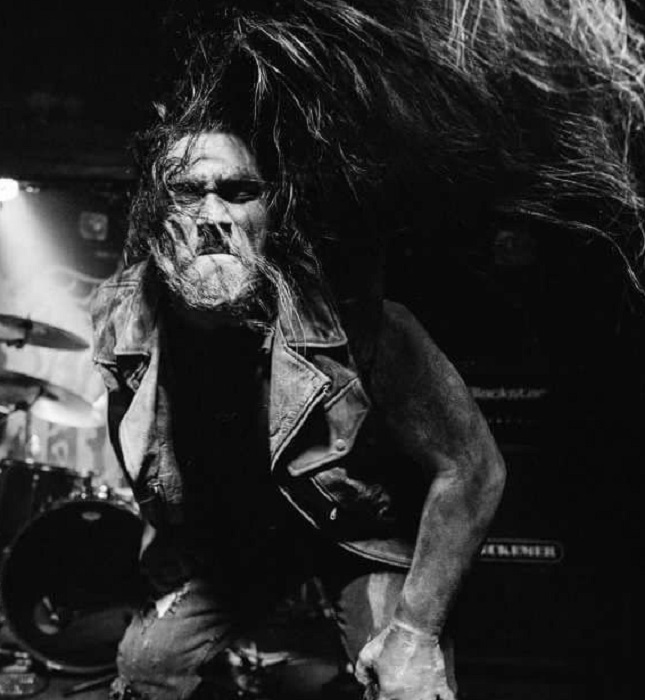
3. Chaos Moon, ‘Eschaton Memoire’ (Blood Music/Fallen Empire)

I have no running tally on what metal sub-genres get written about the most on this site, but black metal definitely is up there. There’s so damn much of it now, which isn’t always a good thing due to oversaturation, but the great stuff still manages to stand out and make its own mark. That’s what Chaos Moon did with their stunning fourth record “Eschaton Memoire.”

Turning toward bleak, apocalyptic themes and paying homage to black metal’s old guard, the band—Eric Baker (vocals), Alex Poole (guitars and atmosphere), Steven Blackburn (guitars and atmosphere), and Jack Blackburn (drums)—elevates what they accomplished on the excellent 2014 record “Resurrection Extract” and everything that preceded it and rips out one of the most fascinating black metal records this year. Woven into all of that is a cosmic, mind-altering atmosphere that takes the listeners somewhere else, some place cold and isolated. The five-track, 41-minute record (though the album is three tracks on their Bandcamp, as the two multi-part songs are combined) is violent psychologically, but there are other elements mixed into their style that make them spookier and spacier. It makes for a journey that arrests the mind, one that’s been rolling over and over in our heads ever since the music arrived in the inbox. It’s destruction and fury that will chill your cells and pull you into oblivion.

Guitarist Alex Poole took some time to answer our questions about “Eschaton Memoire,” explaining the record’s long road to fruition, what lurks behind the darkness of these songs, and how they balanced their desire to keep black metal’s roots strong without compromising their own vision. Our thanks to him and to all of Chaos Moon for a bloody, enthralling experience. (Nov. 17)

MEAT MEAD METAL: We’re naming “Eschaton Memoire” as one of our top 5 favorite metal records of 2017. It’s the band’s second release since the group was reborn in 2013. Do you feel like this album is moving you closer to the band’s true vision?

ALEX POOLE: I think the vision of the band has been firmly established to a degree over the 13 years Chaos Moon has existed. With “Eschaton Memoire,” we tried to take those elements and refine them. We wanted to harvest the feelings that were captured during our early days of discovering black metal while staying true to the sound of the band. Musically, it was a careful rebirth. This was also the first Chaos Moon album to have multiple contributors, and that definitely helped with the refinement process. Everything was analyzed. We wanted to take advantage of every moment without overcooking it.

MMM: There’s no denying the intense and enveloping atmosphere woven into the record. How important is that element to Chaos Moon’s sound, and what does that element represent?

AP: It’s the most important element. Dark and ethereal atmosphere is what drove me to black metal, the juxtaposition of that sound with the aggression of the rhythm section. That’s essentially what Chaos Moon is most of the time. We tried to develop on that more consciously on “Eschaton Memoire.”

MMM: The bio materials with the record state the record went through “various forms of transformation in order to summon the old spirit of black metal.” Talk a little bit about that process, what you were trying to achieve, and how listeners can hear that on the record?

AP: “Eschaton Memoire” went through three stages, or versions, of development. Version one was reworked into version two, version two was completely scrapped, and then we have version three, which is the current incarnation of “Eschaton Memoire.” The first two versions of the album were very … all over the place. A few stylistic changes, some weird math-y parts, a straight up death/doom song; it didn’t work. The second version of the album actually was 100% completed and submitted, but I started writing with Steve (Blackburn) for a split, and what we were coming up with was exactly what we wanted the album to sound like. Thus, version two was discarded. “Eschaton Memoire” is as close to a concept album as we’ve come, so the sound really needed to be consistent. Steve and I were on the exact same page, and we wanted to write something that captured what we perceived as the “old spirit,” but without becoming a second wave tribute band. We are acknowledging our roots while keeping completely honest with ourselves. Not playing on scenes or fleeting gimmicks.

MMM: “The Pillar, the Fall, and the Key” is a two-part cut that begins the record. What’s the significance behind the title, and explain a little more about the chaos we hear on these cuts.

AP: This is the realization of the “end.” The urgency and associated emotions that come with that and ultimately the beginning of the acceptance of death, which is pushed into the more somber track that follows. I won’t delve too deep into lyrical or title explanation, because I think it’s important for the listener to attach their own ideas, their own perceptions.

MMM: The record also is called “a violent eulogy for humanity.” Do you see this record as a soundtrack to the end times? Is that something you see drawing near or something you hope to witness and bring about with your music?

AP: End times on a universal level? No. It’s a metaphor for something much deeper, and I think it means something completely different to each member of the band. For us, it is a soundtrack of the end. What that end may be is subjective. Personally, I’m not too much concerned with the “human game.” We destroy ourselves over our ideals and habits, and will probably face some sort of extinction, but I’m not concerned with uncertain future.

MMM: What does the band have planned in 2018?

AP: Chaos Moon will slow down to let the album breathe but might have a few vinyl re-releases of older material, along with other merch available. However, we’re all involved in numerous other projects that all have material being released in 2018 via Mystískaos and Fallen Empire. Should be a busy year. Onward.

For more on the band, go here: https://www.facebook.com/pages/Chaos-Moon/111626415515769

To buy the album, go here (U.S./Canada): https://www.blood-music.com/store-us/

Or here (rest of the world): https://www.blood-music.com/store-eu/

Or here: http://store.fallenempirerecords.com/

For more on the label, go here: http://www.blood-music.com/

And here: http://www.fallenempirerecords.com/

4. BELL WITCH, “Mirror Reaper” (Profound Lore)

Long, punishing devastation is something baked into the doom genre. The music is supposed to drag you underground on a slow, punishing excursion into the unknown, where you confront the darkest forces imaginable and come out the other side a little more blackened. Then there are bands such as Bell Witch that want to transform you altogether.

“Mirror Reaper” probably wasn’t the easiest, most convenient listen for a lot of people. A single track that lasts a crushing 83 minutes is anything but leisurely listening. It demands a commitment of time and energy from the listener and, in return, the band —bassist/vocalist Dylan Desmond and drummer/vocalist Jesse Schreibman—expounds on the philosophy “as above, so below,” stretching out on the seven Hermetic principles (mentalism, correspondence, vibration, polarity, rhythm, cause and effect, and gender) that speaks to the duality of life and the alignment of experiences on all planes of existence. You get a journey into philosophical realms, where you confront life and death, dual realities, and everything contained within. Along the way, the band unleashes mournful, drubbing, and dramatic sections sewn together by the ominous pall that hangs over this. Once again, they’re joined on vocals by Erik Moggridge (Ariel Ruin), and they also pay homage to their fallen brother and former drummer Adrian Guerra, who has a haunting and very real presence on the record.

Desmond took time to answer some of our questions about this amazing record including how the music transformed itself into its final form, some of the meaning behind the content, and what it means to reach out to a plane beyond and embrace Guerra one last time. Our thanks to Desmond and this band for continually creating music that takes us somewhere else for a little while. (Oct. 20)

MEAT MEAD METAL: We are naming “Mirror Reaper” as one of our top 5 metal releases of 2017. It’s a very ambitious record at a single track, 83 minutes. But it didn’t start out this way, right? How did the record end up taking this form?

DYLAN DESMOND: Thank you! That’s very cool to hear! The original idea was to write two movements titled “As Above So Below.” There were going to be 7 sub-movements within the 2 main movements. As time progressed this idea seemed to have taken a backseat, and the song itself had taken a life of its own.

MMM: How is the song being interpreted in a live setting? Is the entire album being performed? Is it being presented in segments?

DD: The set has been the first 48 minutes of the song on the tours we’ve done thus far following the album’s release. We generally slow things down in a live setting however, so I believe it’s been clocking in around 54 minutes, give or take a few. Without Erik Moggridge present, we cannot do the second half of the record. This made the dividing of the song easy, as the riff Erik comes in on is following the 48-minute mark.

MMM: What is it about the “as above, so below” philosophy that speaks to you and inspired you to write this record? How does that principle of duality affect your life outside of the band?

DD: The original idea behind the band was to write songs about subjects pertaining to “ghosts.” The general idea is that every song is from the perspective of a ghost trapped/held in some sort of place between life and death. It wants one or the other side but cannot escape the middle. In this spot, it describes various sorts of elements of each of the two sides. In a sense, it could be described as a hell or a purgatory. While the lyrical content has an evolving collection of metaphorical foundations, they all align with this concept. On the subject of duality, life and death are, of course, one of the most obvious sets of opposites to discuss. “As Above, So Below” is a version of this same concept; two sides make a whole. The concept is easy to grasp in its most simplistic form though can easily become more complex with a bit of imagination. Regardless of its complexity, it’s foundation remains the same. We felt like this fit right in line with the band’s lyrical concept.

MMM: The passing of Adrian Guerra hangs heavily over this album, and you were able to use some of his vocals that had been saved. What does his presence mean to this record, and how do his words impact the essence of the music?

DD: The section that Adrian’s vocals are featured in (41:47-44:11) was positioned to be the conceptual point of reflection of the song. At this point, it was written to turn on itself and mirror back what had already been presented. As with any mirror, the angle is important. We added Adrian’s vocals to this section for a few reasons. To start, we felt that it was the pinnacle of the song. This would obviously be the best place to pay tribute to him and all of his influence on the band over the years. Further, the riff had originally been discarded because it was too similar to a riff from “Four Phantoms.” With a little time and finesse, it developed its own identity and is quite different than the riff in “Four Phantoms.” The original similarities made it seem more appropriate for Adrian’s vocal placement as it had qualities of a song he had been a part of. If there was a place to invoke some sort of spirit of our dear old friend, this was the perfect avenue.

This section also seemed the perfect place for Adrian’s vocals because it was designed to reflect what was going into it back at us. Regarding the conceptual bit previously mentioned, this was the perfect placement for our friend to be in the song. I believe he would feel very honored in this, were there some way I could tell him.

MMM: As noted, Erik Moggridge returns to lend his voice to the album. Is he essentially a silent member of the band now? Any plans to make him a permanent member? What is his importance to this piece?

DD: Erik’s involvement will most likely always be one song (generally the most powerful song) per album. This one was a bit difficult in that there was only one track, so we initially discussed the mellow section which begins around 48:00 in the song. From there, Erik pointed out other spots he thought would be good, and most all of those we agreed were good. This was the most Erik has sung on a Bell Witch album thus far, and I think he did a marvelous job of it.

MMM: What are Bell Witch’s plans for 2018? Touring, or do you have any new music slowly boiling?

DD: We’re doing a European tour from March-May of 2018, and there is a potential U.S. tour in June and July. We’ll see what comes of that, but the prospect is very exciting. We’ve got about 30 minutes of material we trimmed from “Mirror Reaper” due to it not being the right fit for the song. We’re most likely going to start working on fashioning some of that into new songs in the next few weeks.

For more on the band, go here: https://www.facebook.com/BellWitchDoom/

To buy the album, go here: https://profoundlorerecords.merchtable.com

For more on the label, go here: http://www.profoundlorerecords.com/

5. King Woman, ‘Created in the Image of Suffering’ (Relapse)

We live in a climate where religious oppression is climbing to a new apex. It’s unsettling to see the  … OK, let’s call it a government … jettison back in time to force Christian ideals on a country that is being divided over that (and many other things), and it seems like the people in charge would love to return to the time when rich white men, bastardizing faith, were all that mattered.

It’s bullshit to live under that thumb, but imagine the same thing following your every move since birth. King Woman vocalist Kristina Esfandiari lived under that oppression just growing up, trying to figure out what being a normal person is like, and that bleeds over onto the band’s amazing debut record “Created in the Image of Suffering.” The record is a result of years of religious and mental suffering endured by Esfandiari, and the result is a uniquely dark and emotional record that really stood alone among heavy music, especially those under the expansive doom umbrella. Musically, the band makes a major jump from 2014 EP “Doubt,” itself a great, gripping effort, as the content is heavier, moodier, sludgier, and more impactful. The rest of the group—guitarist Colin Gallagher, bassist Peter Arensdorf, and drummer Joey Raygoza—combines with Esfandiari to add more muscle to these songs, creating the perfect stage for the husky, pained vocals.

Utopia” has surprisingly sludgy riffs, oppressive heaviness, and vocals that tear at your soul. “Is this really happening?” Esfandiari wails as the music crusts over in the muck. “Deny” starts with spoken lines, but then Esfandiari’s singing takes on deeper tones while the guitars burn underneath the surface. The band unleashes its fury and begins pounding away, leaving noticeable welts, as Esfandiari scornfully laments, “You can’t even look at me, hide the shame that’s in your eyes.” “Hierophant” is the highlight of the record and arguably the emotional breaking point of the band’s catalog. The 8:01 track basically plays out in two parts, with the first finding a vulnerable, wanting Esfandiari admitting, “What I’m trying to say, I want to be the one you want,” as the song spirals like her heart, following her into desperation. As the second half unfolds, Esfandiari pays her devotion, vowing, “If you’re the sacred script, I am the hierophant.” Closer “Hem” is the ideal final landing, as the band builds stormy textures over its 8:07, starting ominously before building hypnotic layers, with Esfandiari admitting, “I’m reaching for hem” into a swirl of sound that will destroy your heart. It’s crushing someone had to endure such pain, even if it resulted in beautiful art. This whole record is a soul scorcher. (Feb. 24)

Arensdorf was kind enough to answer some of our questions about the record, their touring experiences supporting “Created…” and what the future holds for the band.

MEAT MEAD METAL: We are naming “Created in the Image of Suffering” as one of our top 5 favorite metal releases of the year. The album is much heavier and darker than “Doubt.” What brought about this progression in the band’s sound?

PETER ARENSDORF: First off, thanks so much! It’s been amazing to see how many people have loved the album this year. I think that in terms of the sound of CITIOS, we tried to channel our collective emotions in a succinct and impactful way. I wasn’t a part of making the “Doubt” EP but I know that in going into recording CITIOS we wanted the songs to not only be musically heavy but emotionally so as well. We also really wanted something that could easily translate to being played live.

MMM: The band live is a different experience than the record. It’s even more visceral and intense. Does this catharsis and bloodletting continue in the live setting? Or is it simply a performance that changes each night depending on mood and ambiance?

PA: Yeah, for me, the catharsis only intensifies in the live setting, but it’s always dynamic and based on innumerable factors. One night might be a channel for sadness/exhaustion, while another for anger or frustration, and I think that people that come and see us tap into their own emotions and their own releases via what they’re hearing. We see all sorts of reactions from up there.

MMM: Among others, “Hierophant” is an amazing song, one that feels like it is a battle between desire and willingness to give in. What inspired this song, and am I wrong to feel like this is sort of a devotional?

PA: This song actually came about at my first King Woman practice. I’d written the verse/chorus parts a while back, and when it finally worked out for me to come in and play with the other three, we were sitting on a break and I started playing it for everyone, and we all just jumped on it. We were kinda in crunch mode for writing the album at the time, and I think that we basically wrote the whole thing in a day (minus lyrics). Kristina could speak in more depth about the exact emotions around the song but, yeah it’s a love devotional.

MMM: Do the aspects of your music that tackle religion feel like they could be applicable to more people’s lives now, especially as the United States has this revived religious pressure in politics and societal matters?

PA: I’d like to think that, maybe, we offer an outlet for people feeling disenfranchised about certain aspects of the world.

MMM: On a lighter note, King Woman had some pretty extensive touring experiences in 2017. How did you feel about the band’s live shows this year? What were some highlights? What did you learn about your songs as people received them?

PA: Joey and I were just talking about this, and we’ve had such luck to play with so many good people this year.  Oathbreaker, JayeJayle, True Widow, Chelsea Wolfe, Uniform, Thou, Dreamdecay all amazing musicians and even better people. So many highlights. Richmond, VA, is always amazing to play, love that city. Also shout out to Alex at Charm School ice cream (http://www.charmschoolrva.com/) for always putting us up. It was our first Euro experience, so we had a great time over there. Berlin was a particularly good one. I feel like as the tours came and went, we continued to get more cohesive as a band, and I know that I learned a shit ton this year about how to make it all work with real life and work and relationships and all that.

MMM: What does King Woman have coming up in 2018? Too soon to think about new music?

PA: Right now we’re doing a lot of writing. You might have noticed that we played an unreleased song at a lot of our shows this year. That one will be on the next album, and we’re all just chipping away at ideas but also taking some time to breathe and rest. January of 2018, we play an amazing fest in Petaluma, CA., put on by Anthony Anzaldo from Ceremony, called Home Sick (https://www.facebook.com/events/306619423186599/). Other than that, you’ll just have to stay tuned and see.

For more on the band, go here: https://www.facebook.com/KNGWMN/

To buy the album, go here: http://store.relapse.com/

For more on the label, go here: https://www.facebook.com/RelapseRecords/