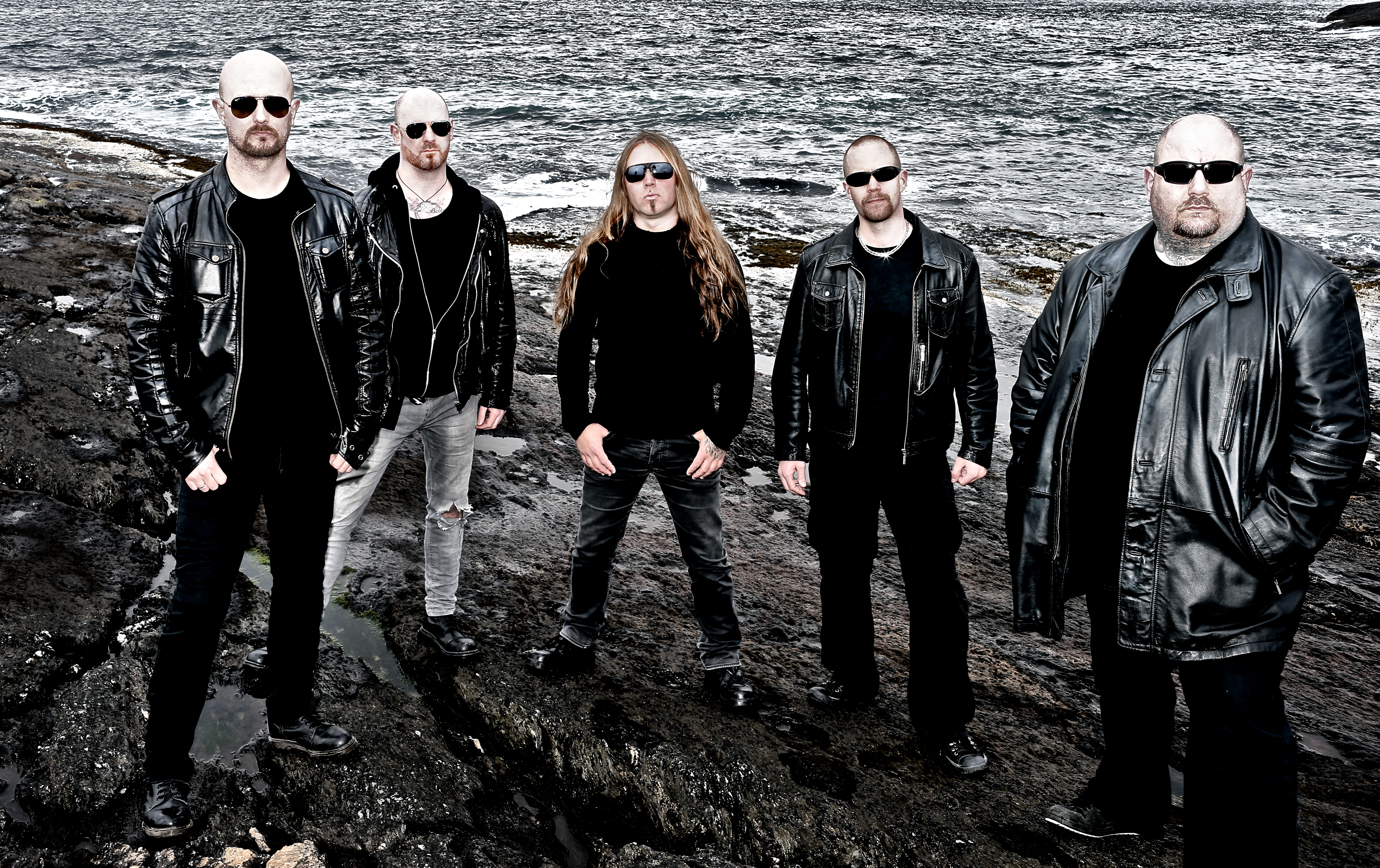
Twilight of the Gods bring together great metal forces on debut ‘Fire on the Mountain’

TOTG_04_(c)Steinar_Sortland-Edit_Costin_ChioreanuWe talked yesterday about–and I gulp heavily as I write this–supergroups. I write that word just because it’s an easy way to describe a group of musicians who have made music in other bands and come together to form a new one. Period, and that’s it. I know a lot of people hate that title, and I totally get why.

Anyway, that brings us to Twilight of the Gods and their debut album “Fire on the Mountain,” an album that should warm the hearts of anyone who grew up feasting on Iron Maiden, Judas Priest, and Bathory. It’s classic heavy metal. It’s gloriously played, it’s huge, it’s epic, and it not only celebrates the roots and very existence of heavy metal, but it rolls in it and enjoys the very feel of the genre’s mud on its back. There is no reason for anyone to feel bad about basking in metal and its history, and fuck all the people who think there’s something to snicker at. We are greater than them, we will prevail, and bands like Twilight of the Gods will stand behind us all.
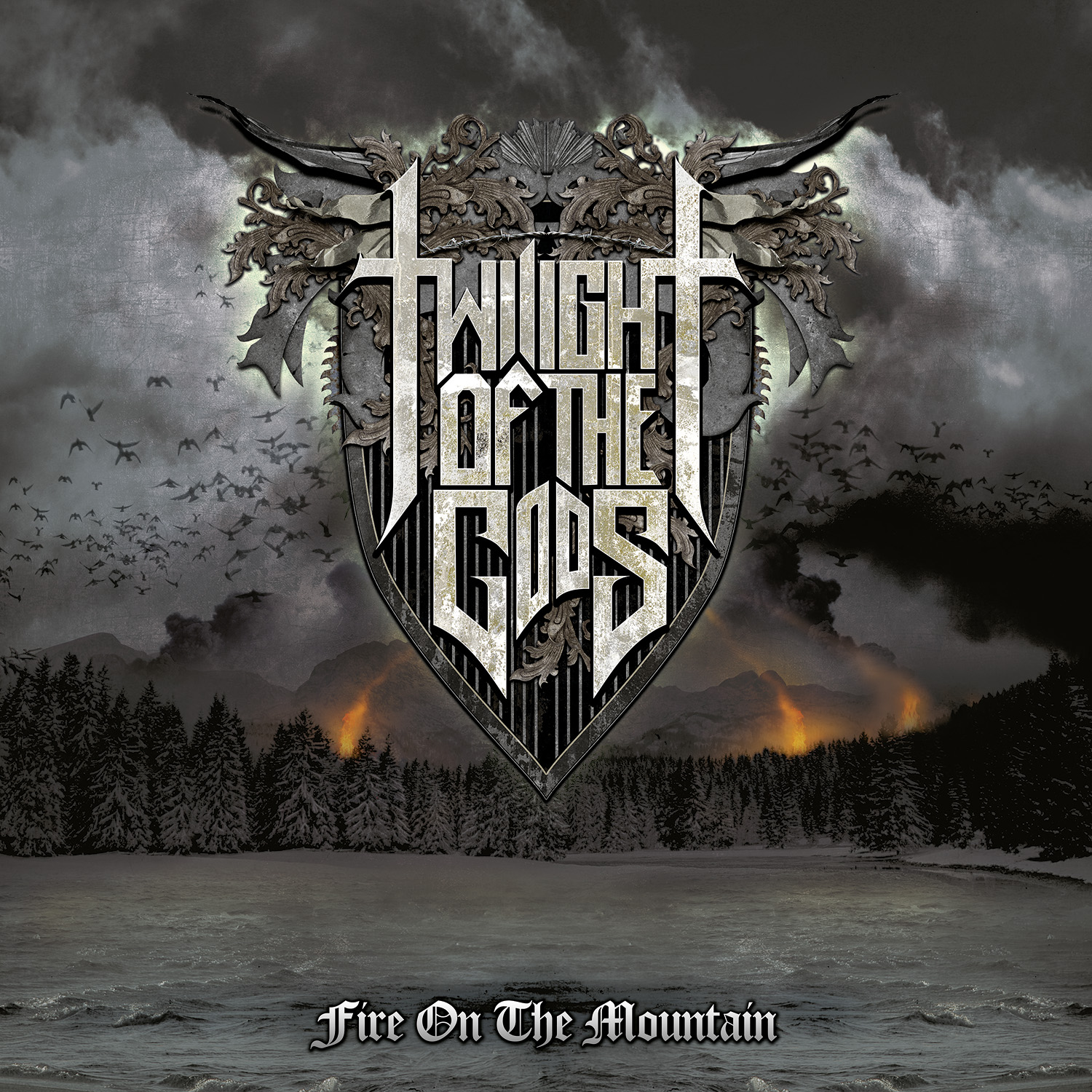
Twilight coverTwilight of the Gods has Alan Averill as its leader, the same man whose voice makes Primordial such a devastating, glorious force in metal and who also sings for the criminally under-appreciated Blood Revolt, as well as Dread Sovereign and Plagued. He’s joined by other killers such as guitarists Partrik Lindgren (Thyrfing) and Rune Eriksen (ex-Mayhem, Aura Noir), bassist Frode Glesnes (Einherjer) and drummer Nick Barker (Dimmu Borgir, Testament), who make up a deadly collection of players whose collective goals seem to be paying homage to classic metal, be it death, thrash, or black. This record is a poetic, adventurous collection of seven songs that might feel different to listeners who just came onto metal the last few years but will feel like a homecoming for those of us who have been in the genre’s defending forces since the 1980s and grew up during one of the style’s greatest eras.

Oh, speaking of Bathory, Twilight of the Gods actually started off as a tribute to that titanic band that was led by the late, great Quorthon, and the band’s name is taken from the 1991 album of the same name. But there’s more power and classic heavy metal contained in this, as they morphed past their primary influence, and you’ll notice just how much Averill is letting his voice soar and explode, sounding as powerful, charismatic, and in command as ever before, and he just sells the living hell out of these songs. He’s beyond great here.

We kick off with “Destiny Forged in Blood,” a true anthem for a genre flooding with them, and when Averill howls, “This is our heathen metal call to arms!” you can imagine him and his band standing alongside Dio, Dickinson and Harris, Sabbath, Fenriz, and, of course, Quorthon as a metallic guard you would not dare cross. Just a great opening cut. “Children of Cain” swelters and rides hard, like a classic Maiden cut. There are some solid NWOBHM-style guitars, military drumming, and more passionate singing that pushes this song through the stratosphere. “Fire on the Mountain (1683)” is a mammoth cut about the Battle of Vienna that opens with driving bass and war chants, groove-heavy verses that allow Averill to retell the tale and bury you with rhythm, and a tone that could help you reimagine cavalries and armies clashing, pitting soldiers of the Ottoman Empire and the Holy Roman Empire as they spill blood over faith. This is the same type of song that made Maiden great, and Twilight of the Gods could boast they’ve come up with an historical crusher along the same lines.

“Preacher Man” is harsh and scathing, with Averill delivering his most poisonous vocals on the whole record, later vowing, “I’ll be the devil in your hearts.” “Sword of Damocles” has its roots in an ancient tale that warns about the pitfalls of power and riches, but it stretches those lessons to modern times, where world leaders have deadly weapons at their disposal. The song has an awesome chorus that has to become a live favorite, with Averill declaring, “We are the sons of the hammer.” Excellent cut, and a pure and real metal classic in the making. “The End of History” runs 8:12 and obviously is packed with darkness and fear, which you could figure out from the title alone. It’s a little doomy in places, which is fitting for the subject matter, and behind the somber haymakers are explosions and a spray of gunfire. Before the song ends, Averill offers listeners a chance to evaluate where they are in their lives and if they’ll make another difference by asking, “Do you have the will to rewrite the past and alter the future?” Closer “At Dawn We Ride” takes a little while to get cooking, as it pulls back on the intensity and takes time to reflect on the devastation in front of it. Thunder cracks, the band keeps a steady, bruising pace, and the song lets the fires burn out, the smoke settle, and the war subside for now.

Hopefully this is just the beginning of Twilight of the Gods and that they’ll add many more chapters in the future. This is a band of some very busy musicians who have many, many irons in the fire, but they’re onto something special here. They deserve to fill a great hall where they can tell their stories and really unfurl their true majesty, and the crowd would be slain without question. This is a great new band, and I beg they have many more albums under their armor.

For more on the band, go here: https://www.facebook.com/totgofficial

To buy the album, go here: http://e-shop.season-of-mist.com/

For more on the label, go here: http://www.season-of-mist.com/
Like gimmicks? Go away. Sarke return with fiery, platter of true metal on ‘Aruagint’

sarkeCombining huge metal forces to create a greater whole sounds like it should be a wonderful idea, but more often than not, it isn’t. But we have two great examples of metal supergroups, per se, we’re going to roll out the first two days this week that prove you can make a mighty band out of players who made their names elsewhere and still come away with something magnificent.

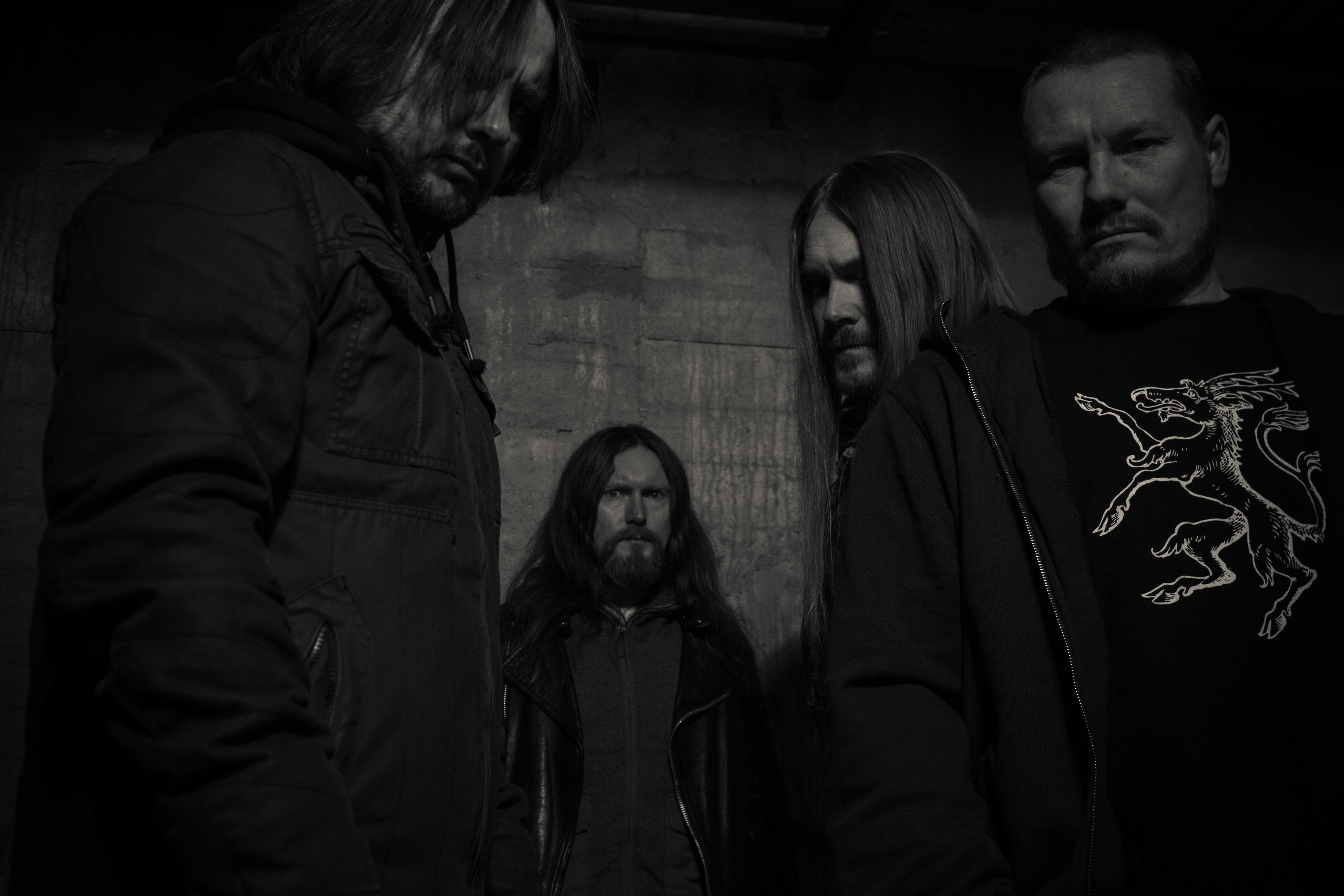
Today we’ll look at Sarke, a group that brings together a number of experienced, influential players into a band that has made some of the truest, most fun metal of the last half decade and have done so again on their new record “Aruagint,” the follow-up to 2011’s “Oldarhian,” itself a fantastic little platter that provides hours of great, honest metal fun. What started as a solo project for bassist Sarke, himself a veteran of bands such as Tulus, Khold, and Valhall, has morphed into something even greater. Joining him is Nocturno Culto, one of metal’s most honest, ardent warriors who you know from Darkthrone, and he has provided vocals for this band since its start in 2008. If you don’t like Culto, you don’t like metal. Period. Over the years, the band has taken on guitarist Steinar Gundersen (ICS Vortex, Spiral Architect), drummer Asgeir Mickelson (a zillion bands including Scariot, Thornbound, Ihsahn), and keyboard player Anders Huntstad (Tulus, live member of Satyricon) to form a new whole. They destroy. Simple as that.

sarke coverSarke, who will appear at next year’s Maryland Deathfest in an absolute must-see performance, also have beefed up their sound on “Aruagint,” still plying their trade heavily in death metal but also adding thrash and even prog tendencies, making them a really involved, mentally bruising unit. The result of their creative process for their third record is nine songs that run the gamut of metal power, bend your brain here and there, and provide nearly 40 minutes of fun that is free of trying to live up to genre standards, in total defiance of trends, and serve as a reminder of these guys standing as metal’s guard who are here to show what living this style is all about.

You get a great taste of what’s in store with opener “Jaunt of the Obsessed,” a song that’s full of punk fury, Culto taking total command over the song, and the rest of the group driving hard, putting deep bruises all over your psyche. “Jodau Aura” follows and has an Apocalyptic pace, with Culto sounding like Tom G Warrior, slowly delivering his diatribes, while the rest of the band settles into a nasty, muddy pace. The song is gurgly and menacing, and the music has a fantastical feel to it, like it’s one chapter in a great storybook. “Ugly” is a change of pace, getting somewhat light-hearted, but still crushing, with Culto howling, “I’m ugly, ugly as hell!” “Strange Pungent Odyssey” is bluesy and swaggers, something you might not expect from this band, and its groovy shuffle manages to maintain that sense of evil flowing through it.

“Walls of Ru” is really where the prog tendencies start to rise up, and they remain a major part of the band’s musical offense for the remainder of the album. This track is jerky, punchy, and thrashy, yet toward the end of the song, some wooshy, windy keyboards come in and give the atmosphere a whole different feel. “Salvation” is violent and charged up, with the rhythm section declaring war and pulverizing your senses, awesome riffs flowing, and Culto taking complete command of the sound, sounding a little gravelly and raw. “Skeleton Sand” is the most interesting cut on here, as it opens with an eeriness and synth lather and eventually goes doomy. There are heavily melodic parts, and Culto even tries to smooth out his growls a bit, while the prog fire once again flares up. “Icon Usurper” has that Celtic Frost feel again, especially with the vocals, and the guitar work has a sci-fi, outer space adventure feel to it. Closer “Rabid Hunger” is that savage, uncompromising conclusion you expect, with creative guitar work, fluid, mind-altering soloing, and more devastating vocal work from Culto, who puts his bloody stamp on this record and demonstrates once again why you should hang on his every word.

Sarke are a joy to behold, a great blast of metal that is honest, true, and free of modern influences that have watered down the scene. Each record finds the band progressing and getting more ambitious, and “Aruagint” is just a fucking blast. Don’t worry about what everyone else is listening to or what morons on the Internet are pressuring you into hearing. Take a bite out of true, pure metal and enjoy the power that Sarke brings to the world.

For more on the band, go here: https://www.facebook.com/sarkeofficial

For more on the label or to buy the album, go here: http://www.indierecordings.no/

PICK OF THE WEEK: Wolvserpent’s ‘Perigaea Antahkarana’ certain candidate for record of year

wolvserpentWriting about music certainly has its perks, and I am not complaining about one of them. OK, sometimes there are way, way too many press releases in my inbox that I never intend to read, but that’s not that bad. That’s what the delete button is for. Other than that, I get to hear just about every metal release weeks, sometimes months, in advance, and have built up enough goodwill that I don’t have to do much to get access to music I want to write about on this site.

Sometimes the music does get burdensome, however. There are tons of promos sitting in my inbox I’ll hear maybe once because there isn’t enough time in a week, and the deluge of music makes it tougher and tougher to unearth real gems just because there’s so much through which to sift. OK, I said I wasn’t going to complain. But now and again something will come along that wakes me the fuck up and instantly declares itself. No matter how many records are waiting on your plate and no matter how many critical pieces you have to write, this record keeps calling back to you, distracting you, acting like a  lover who wants to pull you away from your tasks, and you can’t say no because the allure is just too great. That’s exactly what happened when I took on “Perigaea Antahkarana,” the new album from Wolvserpent, their second full-length under that moniker, and their Relapse debut.

12 Jacket (Gatefold - Two Pocket) [GD30OB2-N]I’ve been following this band ever since they were Pussygutt, and their adoption of a new moniker seemed like a wise choice if they wanted to get their music to more people. Or maybe that had nothing to do with the decision at all. Anyway, the Boise, Idaho, duo of Blake Green (guitarist/vocals/keys) and Brittany McConnell (drums, percussion, violin, viola) always have made swelling, challenging music that’s hard to pin down and isn’t easily digested if your idea of art is three-minute songs with hooks. Their albums (2010’s awesome “Blood Seed” was their debut under this name) are experiences you must take on and engage with completely, otherwise, you’re missing the point. They spill lots of guts from various sub-genres into their music, from doom to black metal to drone, and the strings add a folk and chamber element to what they do, making their music an even richer experience. The perfect setting to hear Wolvserpent, especially this album, would be isolated in the forest in the middle of the night, with only a campfire and wildlife to keep you company.

Classically trained and certainly out-of-the-box thinkers when it comes to metal compositionally, Green and McConnell made “Perigaea Antahkarana” a sort-of life’s work mission. They wrote, recorded, rewrote, re-recorded, delivered a free demo version called “Perigaea,” and then reinvented the music again into this five-track, 82-minute beast that is one of the year’s best metal records, if not its very best. It’s one that you can take to those closed-minded naysayers who think all metal is just grunts and scrapes and demonstrate that no, we really do have great thinkers and doers among us, and the evidence is in this immaculate, devastating, heart-filling record that I cannot get out of my system or out of my headphones for that matter. It has taken me away from my mass of work elsewhere because it keeps calling to me, inviting me for another visit. And I always take it. It’s an incredible album that I could stay here all day offering praise and adulation, but let’s get to the music itself, that creates this magical world.

“Threshold Gateway” is an atmospheric introduction piece, like entering the woods at the start of a long journey, as birds chirp, winds whip, and light melodies bubble to the surface, making way for “Within the Light of Fire,” a song that begins with strings swelling and emotions rising. Black metal-style guitars erupt, Green’s growls begin to have a presence, and a great canopy of sound opens up over you. The band continues to explore and the sound expands, as growls turn to shrieks and the music gets trippy and mesmerizing. But just as the fog lifts, a nasty, groove-filled doom riff kicks in and dumps the sinister power into the picture, exploding like a powder keg and crushing you entirely. Eventually the storm subsides, as organs sweep into the track and the song bleeds out in drone. “In the Mirrors of Water” is a 21:39 journey, with the opening seven minutes leaning heavily on McConnell strings, which she builds into a moody, folk-like wave that laps over and over again, leaving you dizzy but enthralled. Gazey guitar kicks in and changes the environment, simmering and sweating, and a few minutes later drums kick in and the song begins to build into its full lather. Toward the end of the track, Green unleashes savage growls, and the cut melts into black metal fury, pounding until the final moments when calm is restored and the birds return. Already this is a weighty experience, and we’re only part of the way there.

The second half of the record opens with fluttering strings, fires crackling, and a deep woodsy ambience as “A Breath in the Shade of Time” begins, running a healthy 23:53. Bells begin to chime and the song achieves a rustic feel, perfect for connecting with nature and traveling deeper into the isolated forest. The song has a movie score essence, keeping the drama on high and coloring in the story, and buried growls and a sea of strings serve to keep the textures changing. This also has heaping doses of funeral doom, with the song lurching slowly and a somber expression unfurling before you. Guitars continue to spill in, as the song veers toward the stars, with a female voice calling and chanting, the song bleeding into the night. Closer “Concealed Among the Roots and Soil” is a 17-minute serving of some of the most direct playing on the album, as the bottom drops out almost immediately and the doom blows the doors down. The song is humid and sticky, the metallic melodies are drubbing and cause swelling, and Green growls forcefully over punishing chugging and ceremonial magic. It caps one of the truly special records of the year, one that deserves repeated play despite its challenging length.

So here you have it, one of the best metal albums of the year, and potentially the top choice. There still are a few months remaining to figure this out, but “Perigaea Antahkarana” is a serious contender for that spot. This is a collection of interconnected movements, a true human experience that should connect you to your animal side, and a fascinating piece of work created by two gifted musicians whose creativity knows no bounds. All hail to Wolvserpent, a band that is becoming one of metal’s greatest forces right before our eyes.

For more on the band, go here: http://wolvserpent.com/

To buy the album, go here: http://www.relapse.com/store.html

For more on the label, go here: http://www.relapse.com/

Grave Miasma’s debut finally slithers to surface in form of grisly ‘Odori Sepulcrorum’

Grave MiasmaWe are entering a period when death will be at its apex. Leaves will die. Plants will die. Vegetation will die. Sunlight will die. We will celebrate the passage of human souls from this place to the next plane, if that’s even a thing, and we’ll adorn our houses with decorations of skulls, ghosts, ghouls, and blood, something commercialization has turned into comical items but actually are things you never want to encounter.

Because of all of this, and the drab grayness and damp cold that’ll soon chill our bodies, having music to make that period darker and more morose is ideal. Who wants to be happy all the time? Why not immerse yourself in the decay and the madness and embrace the oncoming dead period as we transition out of light? If you’re into that idea, you might find a perfect companion in the heavily anticipated debut from U.K. death metal killers Grave Miasma, whose “Odori Sepulcrorum” finally has arrived via Profound Lore (jointly released with Sepulchral Voice), perhaps the most obvious destination for this band’s dark arts.

PrintWe often bitch and whine about the current state of death metal and how it’s become overly polished and even commercialized and pine for bands who make us remember the first time we heard, say, Incantation and Morbid Angel. Grave Miasma is that band, as their doom-encrusted, gritty, ugly death metal already is the stuff of legend, having developed a sterling reputation among underground fans and giving listeners a preview of what they could accomplish with a proper long-player with their two EPs “Exalted Emanation” and “Realm of Evoked Doom.” Their style is crusty, punishing, covered with tar, brutal, evil, and furious. If you desire having a band that truly understands the roots of death metal, what it’s about, and why it’s supposed to be terrifying, you need to hear this album, one of the most explosive in the genre all year.

Grave Miasma began life as Goat Molestor (band name of forever) before taking on their new, more fitting moniker. The four members, who adopt singular letters as names, also have played or do play in well-regarded bands such as Cruciamentum, Indesinence, and Adorior and perfectly capture the evil and horror that should comprise true death metal in this band. There’s a reason Grave Miasma already have gotten so much love and that people have been clamoring for “Odori Sepulcrorum,” and their first record absolutely delivers but also plants the thought of just what this band could accomplish in the future. But let’s not get ahead of ourselves.

The shroud is lifted, and the ugliness and worm-infested chaos greets you right away on “Death’s Meditative Stance,” with its grind of guitars, doom-flooded punishment, dizzying leads, and dissonant melodies, and that’s not even mentioning the cold, harsh, brutal growls and hisses that drive the campaign and serve to dement you. “Ascension Eye” is more than seven minutes of slurry mashing, guttural damage, and warped soloing that sounds a bit like early Slayer, only more intense and out of control. The song is just monstrous, and the vocals that bubble up toward the end pushes the track into vicious madness. “Ovation to a Thousand Lost Reveries” is totally morose, as drums splatter all over like flesh being diced by a combine, as the growls singe, and the guitar work finds a new level of notoriety, with the finger-tapped soloing feeling like one’s psyche being flushed down a drain. It’s awesome and exhausting. “έσχατος,” a track you may have heard online already, is sickening and dank, with one of the band’s signature darker-than-night openings and a setting filled with smoke that’ll rob you of breath, make you choke to tears, and convince you those death bells ringing out are for you.

The title cut immediately infuses more doom into picture, with slow-slithering pounding and foggy transmissions, but there are pockets that convulse violently, with the vocals sounding like they were put through a glass shard filter for maximum pain and suffering. Yes, melody does play a part toward the conclusion of the song, but what dominates is the terror spilling out at every seam. There is an interlude that sounds like it’s conjuring ancient spirits, and that spills into “Seven Coils,” a song that has Middle Eastern inflections, like a dusty mummy coming with intention to suffocate. There are sounds that just smother everything, similar to what Portal have made into their specialty, and the vocals have a whispered intensity to them as the growls spew forth and cause nightmares. Toward the end, there even is a section that has prog-rock-style noodling. Granted its face is smeared in concrete when it’s over. The closer “Ossuary” is a real eye opener, one that gives another gigantic hint at what this band could accomplish. Yes, it’s doomy and reeks of death, but there is atmosphere, there are strange horns (at least I think they’re horns) that gives an eerie ambience to the track, and the band explores more with their playing. It never compromises the band’s power or charnel force, but instead it puts an interesting, compelling cap on one hell of an impressive debut record.

The wait was worth it for Grave Miasma’s debut, and it’s a perfectly bloody dose of true death metal that will go down just right as the temperatures and sunlight turn against us. Death is in the air, morbid thoughts begin to dominate, and this band is here to slam shut the dusty, stinking coffin door. This is one of the year’s best death metal records, one that proves people still remember how to play this stuff and can do so with an unstoppable vengeance.

For more on the band, go here: http://www.gravemiasma.co.uk/

To buy the album, go here: http://www.profoundlorerecords.com/products-page/

Or here: http://www.sepulchralvoice.de/shop/

For more on the label, go here: http://www.profoundlorerecords.com/

And here: http://www.sepulchralvoice.de/index2.htm

Fyrnask, Lustre expand metal’s boundaries, reveal new colors on each of their new records

Fyrnask

Fyrnask

Metal very much can be looked at like beer. You have those folks who have their one or two beers, drink them for life, and don’t want to hear about people brewing things a different way, new tastes, or new concepts. Beer is one thing, and that’s it. Then you have you more adventurous types who like to try all kinds of new craft brews, enjoy the colors and the tastes, want to always have something new and exciting in the fridge and have an open way of thinking about the beverage.

For some people, metal always will be about the riff or the brutality, a certain thing that must fit into a certain mold, otherwise it isn’t metal at all. Then there are those who like when bands go off in all kinds of different directions, throw bizarre spices into their concoction, and really stretch the field of metal to make it more expansive and, as a result, able to survive well into the future because the genre doesn’t have to adhere to a certain pattern. Bands like this are akin to, say, Dogfish Head’s carrot-based, served-warm brew Hot Thoup, where you first want to asks loudly, “Is this even beer?!” before settling in, trying it on and realizing you’re enjoying an imaginative, one-of-a-kind beverage that your Budweiser drinker is probably too blocked by walls and doors to ever consider. Metal can be that way, too.

Fyrnask and Lustre really could not be more different from each other sonically, but each operates within the parameters of metal in exciting and innovative ways, carving out a section of their own but also digging tunnels well past metal to reach other areas. They generally aren’t on the tip of the tongue of most metal fans (yet, anyway) but already have a warm circle of followers in the underground and have made music that has captured the hearts and minds of listeners everywhere. Certainly if you played these groups, and their new records, for fans at the summer’s annual meathead-driven Mayhem fest, dudes would have way too much testosterone to even consider what these bands bring to the table. They’re also probably drunk on some shitty mass-produced swill. But for those who put more thought into metal and want their experiences to be enriching and unpredictable, each band very easily should fulfill again and again.

One thing each band does have in common is they are made up of just one member. Germany’s Fyrnask is the project of Fyrnd, whose black metal leanings make this the heaviest of the two bands by far, but it isn’t savagery for the sake of it. There is plenty of atmosphere, folk-like, woodsy instrumentation that might you feel like you’re baking in front of a campfire in the middle of nowhere, and passion you can feel. “Eldir Nott” is the follow-up to 2011’s magnificent “Bluostar,” and it manages to push the creativity and power to an even higher level. Sweden’s Lustre is the dream of Nachzeit, and he has offered up four full-length offerings since the project’s conception, each acting as a dream-state step into a fantasy land, where you encounter strange creatures, odd land masses, and fogs that soothe and calm as much as obscure your vision. It’s not heavy, pulsating music by any means, but if you’ve followed the life of the project all the way up to new “Wonder, certainly you get the crossover appeal.

Fyrnask coverWe’ll start with Fyrnask and their astonishing new record, that’s grisly and furious, but also colorful and wondrous. Fyrnd really explores the capability of this project on Eldir Nott,” an eight-track, 50-minute record that’s a mix of dark, storming epics and ambient passages that tie together each explosive chapter. The obviously titled “Intro” is what you expect it to be, the door opener into the record that begins to light the pyres so you can see the start of the maze. “Vigil” then ignites, with pure black metal power, lush atmosphere, and the feeling the sky is opening up. The vocals go from shrieky to a rumbly growl, and right before the concluding carnage that caps off the song, a pastoral-like section sweeps in to establish the misleading calm. “Jarðeldr” is a 12-minute-plus journey, beginning with weird, windy noises before heathen-like hammering and sheer power is ushered in to blacken everything. As one can expect from this project, the tempos and moods go back and forth from oppressively dark to hope-filled light, but the most impactful moments of the song come with the harsh, shout-filled vocals and the penetrating drone that feels like a hole is being burned into the middle of the forest.

“Suoannas Sedir” is another interlude, this one filled with thick drone and acoustic splashes, and that takes you into “Saltrian,” one of the most molten and aggressive songs in this project’s catalog, a total firestorm of power and audio violence. Shrieks rain down, the metallic overtures pulverize, and the clubbing power eventually drowns out into a swirl, as it’s sucked into a frozen vortex, ripping you into the heart of a time warp. “Samas Stigr” blows more frosty sentiment into the record, making the transition into “Síaiða,” a song with a doomy beginning but eventually chugs mightily. Fyrnd unleashes more hellacious screams, haunting dulcimer (at least it sounds like dulcimer) creates a sense of eeriness, and the song becomes unhinged at the end, unleashing hell. The closing instrumental “Sut” whirs, chimes, and drones, letting the album’s spirit pass into the night, looking for another soul to chill.

Another awesome creation from Fyrnask, two albums into a promising run with only a gaping-wide future in sight. “Eldir Nott” is another stunning jewel in this project’s crown, a record that separates itself from the brilliant “Bluostar” but stands alongside it as a powerful foundation.

For more on the band, go here: https://www.facebook.com/pages/Fyrnask/114847128596890

To buy the album, go here: http://templeoftorturous.com/shop/

For more on the label, go here: http://www.templeoftorturous.com/

Lustre

Lustre

“Wonder” is one. It’s the fourth Lustre full-length and another in a line of records that captures an atmosphere that’s alien and odd. The music on “Wonder” feels a lot like a soundtrack to a weird, questionably shot sci-fi movie from the ‘80s, one that may seem a little strange on the surface but that gets into your blood and gives you weird feelings. Opener “Moonlit Meadow” is aptly named, as the keys shimmer and a fantasy dreamstate stretches out before you. You can hear some guitar growl behind the blanket of sound, with detached shrieks floating around feeling kind of Gollum-esque. The music achieves a trance state and should have your mind existing elsewhere once the song trickles out. “Green Worlds” has a chimey, watery introduction, and the keyboard line slips in and settles as the main melody. The song has a chambery feel to it, and it could exist on any plane of existence, in any era, and still be able to capture your imagination.

Lustre cover“A Summer Night” might make you think of the days recently expired, especially as night greets us earlier and the cold air starts to move in. Keys woosh, drums pitter patter over the melody, and the music is like something that could be bubbling in the back of a strange lab somewhere, ready to take over your mind.There are minimal vocals that sound like ghosts from ages past reaching back to modern times to tell their tales, trying to live again through you. Closer “Petricher” pulls back the primary melody line from the record, tying everything on this 37-minute album together nicely, and the bubbling, foggy transmission settles over, rises here and there, and eventually slips away, leaving you a wealth of new ideas and old dreams to examine and absorb.

Lustre really can’t be considered a purely metal project at all, as this music really just travels on the outer edges of the genre. The music is full of murky blues and greens, and it’s a nice soundtrack to summer subsiding and fall arriving. “Wonder” won’t let you thrash and bleed out all of your energy, but it might help level you and get a hold of your anxieties. That might not seem brutal, but that’s kind of the point. Metal can be many things, and Lustre help ensure that there are no such thing as limits.

For more on the band, go here: https://www.facebook.com/lustresweden

To buy the album, go here: http://www.nordvis.com/store/product_info.php?cPath=22&products_id=120

For more on the label, go here: http://www.nordvis.com/

PICK OF THE WEEK: Pinkish Black lather the senses in disturbing murk on ‘Razed to the Ground’

pinkish blackDo you like being disturbed by your music? I don’t mean being slightly off put or kind of tilting your head at something when it doesn’t fully compute with your senses. I mean music that crawls inside your belly, builds nests, churns you, freaks you out, and gnaws at your soul. Are you cool with that kind of experience? Because I am, and I wish it happened a little more often.

I have a friend who cannot listen to Pink Floyd because it just freaks her out to no end and cannot handle their weird, claustrophobic psychedelics. I know what she means about how strange some of their music is and how it can make you feel like you’re being abducted and jettisoned into space, but that’s one of the things I like about that band. Not hearing the hits on repeat, but letting it get into my blood cells and freeze me to death with its chilly ambiance. It’s the same way I feel when I listen to Pinkish Black, the Fort Worth, Texas, based duo that is getting ready to unleash its second record “Razed to the Ground” upon an unsuspecting world.

pinkish black coverThe band made an immediate impact on me when Handmade Birds sent me their debut full-length, one of the most bizarre, spiraling, impactful records I had heard that year, and their penetrating synth drone, knuckle-snapping drumming, and detached, buried, haunting vocals made that album one that I listen to regularly to this day, especially if it’s late at night and I want a chill up my spine. The duo of Daron Beck, who handles vocals and synth, and Jon Teague, who is on drums, keys, and loops, were something completely different, a band that mixed cold, isolated darkwave, post-punk, and doom into a wholly unique package, one that is completely unclassifiable. So why are we talking about them on a metal site? Well, there’s definite crossover for the more ambitious listeners out there (especially those who, like me, are enthralled any time a release from a label like Handmade Birds comes down the pike), and because they know are signed to Century Media, a decidedly metal-heavy label where these guys seem particularly not at home. And because they are fucking great, and “Razed to the Ground” takes their cold, cosmic, mentally punishing music to new levels and have created one of the year’s most captivating records. In any genre.

If you’re not familiar with the band’s story, they used to play as a trio with bassist Tommy Atkins as The Great Tyrant, but Atkins committed suicide and was found in a bathroom. The appearance of his blood on the walls took on a pinkish-black color, hence how they got their name. Morbid? You bet. So is the music. This time, the synth and drone is not quite as penetrating, letting the synth breath and swirl through the cosmos. The record definitely has a more atmospheric feel to it, but at the same time, a more sorrowful one. The songs are amazingly dark tapestries of human emotion, pain, and anguish, and the record gets more infectious with each listen, much like their debut.

Opener “She Left Him Red” is the song most like what you heard on their debut, with synth grinding through your senses, noises rising and bathing you with chaos, and Beck’s vocals buried a million miles beneath the surface but still existent nonetheless. “Ashtray Eyes” is the best song this band ever has written, and it’s one of the eeriest and most cosmic track they’ve ever done, making you feel like you’re being swept away on a cold wave. The vocals are somber and emotional, the melodies feel like a funeral dirge, and the brooding ambiance weighs down hard, leaving no way for you to be unaffected. It’s a killer. “Kites and Vultures” is threatening and murky, with keys stabbing and Beck sounding a bit like a despondent Ian Astbury as he wails over the dizzying melodies. The title cut also is abrasive as the keys drone and noise just drills you. It has crunch, keys ring out like sirens, and they even get a little doomy for a while.

“Bad Dreamer” is awash in sadness, as piano drips over the opening, but then it ignites, and vicious growls accompany parts of the vocal lines, giving the song an animalistic edge. The singing is downright dour and depressed, as it eventually works into a vexing display of bloodletting and drone that feels like it’s trying to bore a hole right through you. “Rise” is sharp, yet rough, with some of the deepest and most charismatic vocals on the record as noises rise to the surface and keys whir like lasers driving through the Earth’s atmosphere from space. “Loss of Feeling of Loss” has synth that hovers over like a deranged UFO, as you wait to either be attacked or abducted by whatever’s on board. “Run with me,” Beck howls, practically longing for an answer, and the emotions and dark wailing trickles away, letting the murk wash over everyone. Actually, if you let the record keep playing, you’ll run into an ambient hidden track complete with delicate keys and bizarre gusts of air that pretty effectively let you down from the turmoil you just experienced.

They might not be a metal band, per se, but you’re hard pressed to find music darker, less upbeat, yet totally fulfilling. Pinkish Black let you get in touch with the scars inside of you that you try really hard to keep buried under the surface This record will make you uncomfortable, might make you quiver, and certainly won’t let you ignore its darkness. This band is menace to its core, and they only seem to be getting started with their mission of putting to music what a human trainwreck might sound like.

For more on the band, go here: https://www.facebook.com/pinkishblackband

To buy the album, go here: http://www.cmdistro.com/index.aspx

For more on the label, go here: http://centurymedia.com/

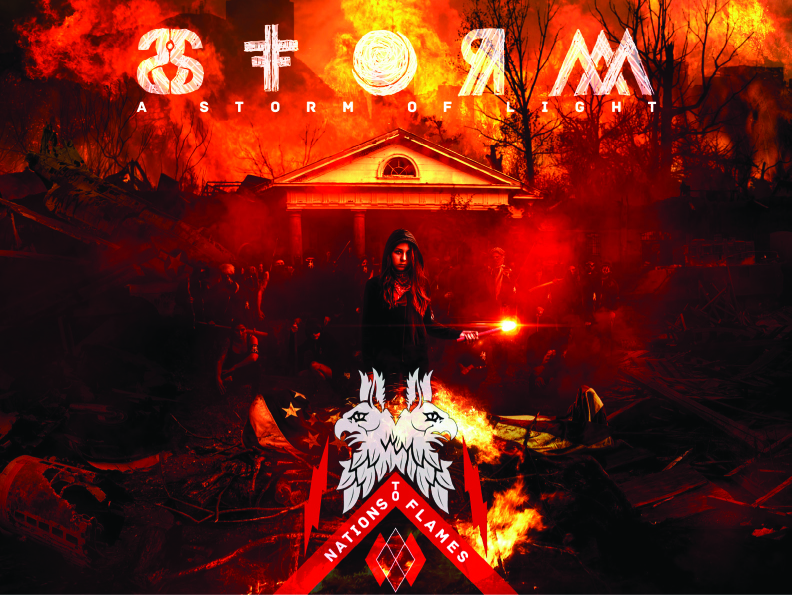
A Storm of Light re-invent their sound, imagine society’s decay on new ‘Nations to Flames’

ASOLI always joke–at least I think I’m joking–about one day enduring way too much of society that it is going to make me move into the woods forever. In my time on this planet, I don’t remember humankind nearly being this annoying and practically impossible to handle, from people shoving their political and religious beliefs down everyone’s throats with no regard for anyone else’s feelings to watching government officials we elected act like children.

While I’m not so sure society and the world falling into decay is the best thing for humankind, all of the drawbacks to their existence aside, it sure is fun to think about. I’ve always been on the side of the political fence that anyone who gives himself/herself a label likely isn’t worth paying attention to and people who use what is supposed to be a pathway to love and acceptance as a means to persecute others should burn in hell, but I don’t actively seek their demise. Yet, again, if we’re playing fantasy land here, it’s always fun to think about all the evil in the world, all of the things that keep people down and prevent them from being happy suddenly uprooted and burned to a crisp. Empires have fallen since they have been things and leaders always find gigantic ways to fail, but I’m not so sure society ever will crumble to pieces in our lifetimes.

ASOL coverThat didn’t prevent A Storm of Light, the long-standing project helmed by Josh Graham, from thinking pretty deeply about it and letting the destruction play out in their minds and their music. While always a band that leaned into the doomier sides of things, they’ve never been as dark and bleak as they are on their new album “Nations to Flames,” their fourth overall and their most divisive to date. These songs are awash in human failure, destructions of government, and the dissolution of religions, boiling humanity down to just flesh and bones, leaving us with just ourselves to fend for survival. It’s depressing and smoke filled, but it’s just the sobering statement people need to hear about now, when no one agrees on anything and everyone thinks everyone else is wrong.

This fourth record by A Storm of Light is a shocker right from the moment you hit play, simply because they sound like an entirely different band. Sure they have evolved from their beginnings playing close to the Neurosis line (Graham is their former visual artist, after all), making some radical changes on 2011’s “As the Valley of Death Becomes Us, Our Silver Memories Fade,” which found them going more a direct rock root, with some doom and post-rock mixed in for good measure. But on “Nations,” the band takes another sharp left, this time toward industrial rock, sparking thoughts of Killing Joke and Ministry, along with dashes of metal and early hardcore. It’s a forceful record, the one with their most songs to date, and it’s a bleak, charred, hopeless journey, but one that, musically, should keep you enthralled and on edge.

“Fall” lets the chaos erupt immediately, with the sound of riots in the streets and fury, and when the chugging thrashing rips open, it sounds like the boiling over of emotion, the darkening of humankind that has been predicted by so many. Graham’s vocals are noteworthy from the start, lathered in effects that remind of Al Jourgensen’s wild howls and fitting the music to a T. In fact, this approach takes place on the bulk of this record. “Apostles of Hatred” is ominous and sinister, but also disarmingly melodic and catchy at the same time. It certain lets the menace cut a path, yet you might be surprised to find yourself willing to rise up and revolt against the forces that corrode. “The Fore Sermon” is gritty and sludgy, the first real serving of doom heaviness on the record to this point, and even Graham’s vocals take on a more brutal approach.”Omen” is the most Ministry-style track on the record, as it chugs, mauls, and talks of blindness, though I’m sure it’s not just in the physical sense. “Dead Flags” gets off on a burly bassline roll, static, and some weirdness, and whirring guitars and clips of leaders trying to whip the masses into a fury gives the song a bleak, fear-mongering edge.

“All the Shining Lies” and “Disintegrate” are decent cuts, but not the best tracks on the record, allowing the middle of the album to sag just a bit. “Shining” is the slower, darker of the two, while “Disintegrate” is noisy and doomy. Things pick up, funny enough, on “Lifeless,” a confrontational, explosive cut, where Graham urges, “Let’s become the weapon!” as the band wails behind him and you can practically imagine disenfranchised citizens taking up arms for a great march to fight or die. “Soothsayer” is a chilling interlude, where more clips are used of people talking of plagues and black destruction about to unfurl itself across the land, and that leads to “You Are the Hunted,” which swelters and pulverizes, with the vocals stepping back a bit but the drums taking the lead role, thumping and pounding you into submission. Closer “The Year Is One” is an all-encompassing instrumental, with the band achieving scary, world-altering tones, more voices swirling and conjuring a sense of confusion over whether this is the beginning of something new or the end (or both), and the album ending on a note that hints at total apocalypse.

Opinions are certain to vary over “Nations to Flames” because of how different it is, not just from their last record but their entire catalog. A Storm of Light is starting to feel like a project that could shape and shift as long as Graham keeps thing running, making each record an adventure unto themselves that you cannot possibly anticipate in advance. The band’s turn toward industrial sounds on their new album suits the dark material very well, and the band does a good job getting their point across and sounding destructively renewed. This is a record that not only should make you consider what’s becoming of our world but what we can do about it. A Storm of Light deserve credit for sparking such intense, relevant thoughts, and for keeping their music on edge, constantly changing, and exactly how they want it to sound, backlash be damned..

For more on the band, go here: http://astormoflight.com/

To buy the album, go here: http://southernlord.com/store.php

For more on the label, go here: http://southernlord.com/

Seidr’s dark, sobering new ‘Ginnungagap’ looks into the stars for meaning in existence

SeidrMy friend Carl and I figured out we were philosophers at a pretty young age. Lots of other kids were talking about superheroes, space warriors, and things of that nature, but Carl and I were trying to figure out how everyone got here, what was going to happen when we died, and how something that holds together all existence could not have existed at one point. We scared the hell out of ourselves as we tackled the ideas, and these topics often kept me awake at night.

Maybe other 10-year-old kids also were terrifying each other on humid summer evenings with the same existential conversation matter, but we felt like we were the only ones and that we had no way of knowing the answers to our questions. That struck me all over again when, on the opening track on Seider’s second full-length “Ginnungagap” (a gap or void that various mythologies talk of existing before the dawn of creation) during the clip they use of Carl Sagan talking about the creation of the universe, how a god could have been involved, and how if we’re going to just assume a higher power is there and always has been, why can’t we just assume the same of the universe? We don’t know, we can’t prove anything, and when it comes down to it, does it really matter at all to our lives and what we do with ourselves?

Seidr coverReally, we’re just specks. We’re irrelevant to the universe as simple beings, and one day when the world is gone and so are we, no one will care. Maybe that’s not the happiest thought to take away from “Ginnungagap,” this band’s impressive 87-minute new statement, but I defy you not to think of some of the same things after taking on this six-track, penetrating epic that could make you seriously consider your place in the universe, how fragile it is, and how your brief existence on this earth might have no impact on anyone at all, which is a sad thought. But we’re still here, and we have time to change that at least a little bit, and the guys who make up this band are doing their best to make a permanent mark on the metal world no one will forget anytime soon.

As you may know, Seidr is comprised of a notable cast of musicians who have become well known and loved in all kinds of metal circles, including guitarist/vocalist/etc. Austin Lundr (Panopticon, Kolga, etc.); guitarist W. Crow (Wheels Within Wheels); bassist A. Nicholson (Below, Alegionnaire); and drummer John Kerr (Vit). Putting all that creative energy together makes for a creative explosion, one that proves they put their ambitions and hearts before anything else. As good as their debut “For Winter Fire” was (and is), they really surpassed that effort with this new record, that does take an effort to absorb.

We hinted at opener “A Blink of the Cosmic Eye,” a 17:13 journey that begins with sitar and a New Age lathering that moves you into the cosmos. Chants trickle into the picture, doom drone unfolds, and a huge pocket of atmosphere leads into the Sagan quote and then a sludgy, violent explosion with grisly vocals and swirling murk. “The Pillars of Creation” has a clean intro that’s breezy and relaxing at times before the tumult totally drops and gurgly vocals spill out. The band eventually works itself into a proggy frenzy before finishing the song with doom tonnage. The title cut runs a challenging 17:03, starting off with a detonation and unforgiving heaviness, complete with vocals that sound both dangerous and emotional. The bulk of the song is massive and drubbing but also pleasingly melodic so that even when they’re breathing fire, they’re letting other colors trickle into the waters. The final few minutes let the song dissolve into drone.

“As You Return” is nearly seven minutes long but acts more as an interlude into the rest of the album. It has folky woodwinds, woodsy acoustics, and chant-driven singing that feels mesmerizing. “The Red Planet Rises” seems like it will ease past you gently, but minutes in the song it explodes into a mucky, thrashy monster that tears a hole in the universe. The growls are gritty, and the song hits an emotional climax with a few  minutes remaining, before the music drowns out with a drone assault and guitars quivering cosmically. The closer “Sweltering II: A Pale Blue Dot in the Vast Dark” (the first “Sweltering” was a track on their debut)  is a pretty good explanation for the marble we’re all living on, and the 25-minute epic brings the record to a huge, mournful close. The vocals drip with anguish and pain, and as good as they are throughout this album’s run, they really reach their peak here. The song is a pure blackening, as it’s easy to imagine the Earth shriveling and dying in its corner of the universe. The wails are desperate, the band lets its energy burn its brightest, and the frenzied caterwaul eventually subsides in a bed of swollen noise. You can’t help but be anything but exhausted when this song reaches its end.

Seidr never has been an easy band to get to know, as it takes travelling alongside them to really get inside their headspace. Because of some of the things I started thinking about existence when I was a kid that carries over into today, I really identified with the subject matter on the surface and was moved even more by the music. You’ll want to sit down, find a dark corner, and experience this record when you have time to truly invest yourself in it. “Ginnungagap” is Seidr’s best work yet, and as long as you don’t mind going into some dark places that might sober you about your existence, you might find this one of the year’s most rewarding metal albums.

For more on the band, go here: https://www.facebook.com/SeidrRitualdoom

To buy the album, go here: http://eihwazrecordings.com/distro/

For more on the band, go here: http://bindrunerecordings.com/

Death/grind legends Carcass return after 18 years with glorious ‘Surgical Steel’

CarcassWhen the new “Star Wars” trilogy came out, it was exciting but a little bit terrifying. We were talking a major risk at ruining something that was a major part of many people’s childhoods and lives, and there was a great chance that, if anything went awry, that whole magic could be ruined. As we all know, the whole thing went awfully badly, and many people don’t view the “Star Wars” franchise the way they once did.

Same thing can happen with our favorite bands. We develop relationships with them, they become a part of our lives, and they inform a lot of our experiences. But sometimes they go the wrong way and leave us alienated, often never to recover again. Which person who grew up loving and worshipping Metallica still feels the same way about them? I sure don’t. Slayer’s packed and on the road to doing the same exact thing. Iron Maiden and Judas Priest almost undid a part of their legacy and well being by replacing irreplaceable voices with dudes who certainly tried their hardest but just could not fill the enormous shoes.

Carcass - Surgical Steel - ArtworkWhen word came down that Carcass, the legendary pioneers of melodic death metal and medically gruesome grindcore, were going to try their hands at a new record (18 years after 1996’s “Swan Song”), my initial reaction was worry. They already had a great back catalog, and there had been times when the band said there would be no new Carcass music. I don’t think anyone would have been upset had they done their occasional tours and festival appearances and left their musical legacy in place. But that wasn’t their desire, and the Jeff Walker-led group decided they had more to say, more blood to draw, more flesh to carve. Yeah, it was pretty exciting on one hand to imagine new Carcass music, but would it ultimately prove a foolish move that would leave a dent in their legacy?

Well, simply answered, fuck no it didn’t hurt their legend. In fact, the unreal, savage, heavily spirited “Surgical Steel” is one of the year’s most pleasant surprises, and it definitely will end up on year-end lists everywhere and surely top some of them (ahem, Decibel). It’s arguably one of their best albums to date, and Carcass sound as channeled and furious as they ever have, and this is one hell of a fun, plasma-soaked romp that just grows you on every time you take it on. Ruin their legend? All they did was solidify their standing and prove they’re the masters of this and that everyone who followed them are still trying to catch up.

As noted, bassist/vocalist/all-around madman Walker remains at the head of this thing, and with him is longtime guitarist Bill Steer, whose work is a major reason this record is so good. His riffs are violent and thick, he still has a knack for deliriously catchy melodies, and he’s as important as Walker to making this thing work as well as it does all these years later. The new fellows in the band are guitarist Ben Ash (who has played with bands such as Pig Iron and Desolation), who didn’t actually play on the record, and drummer Daniel Wilding (The Order of Apollyon, Trigger the Bloodshed), whose playing holds up pretty damn well. Live, they are a formidable version of Carcass, and these songs should go over deliriously well with their fans.

It takes less than four minutes for the band to rip through their first two songs on “Surgical Steel,” though that isn’t because they’re back to their grind roots. Instead, “1985” is a brief instrumental opener awash in classic metal glory, and “Thrasher’s Abattoir” is a speedy dose of death that has Walker growling as maniacally as ever, teasing, “Time to die in pain.” Then the album really starts to set up on “Cadaver Pouch Conveyer System,” a track with great lead work, charismatic and catchy vocals, and razor-sharp playing that proves just how on top of their game these guys really are. “A Congealed Clot of Blood” may sound gross on the surface but wait until you cut underneath the crust and get bombarded by meaty thrashing and throaty barks that are commanding through and through, while “The Master Butcher’s Apron” is a cut that starts like relentless death, with Walker howling, “The sun never sets, the blood never dried.” Then once the devastating storming subsides, the song eases into a thrashy groove and starts mauling the world. This is the best cut on the first half of the record.

“Noncompliance to ASTM F 899-12 Standard” is one of many references to steel used to make surgical equipment, and its fluttery power metal style sounds more epic and magical than one might expect about sliced skin and sawed bones. You’re bound to like it if you dork out on stellar playing or if you want your metal blood-splattered. “The Granulating Dark Satanic Mills” opens with a sinister guitar line that seems to have nothing but evil in its sites, but when it fully develops, it becomes an explosive masher with one of the finest, most memorable choruses on the album that I’d expect people to shout back at the band. Not sure what the number sequence “6-0-2-6-9-6-1” stands for, but it sound potent as Walker howls each digit. “Unfit for Human Consumption has a tasty technicality to it, sort of like early ’90s Megadeth before they wimped out, and the shriek lines behind the main vocals make for a fun approach. “316 L Grade Surgical Steel” isn’t tough to decipher and is as chunky and gritty as it is melodic. “Captive Bolt Pistol” is pretty to the point and is one of the tracks most people have heard by now,” while closer “Mount of Execution” (8:24 long) begins with swampy acoustics before slipping into a pure thrash vein. It’s angry and mean but also very approachable. It’s probably the most digestible song on the record, with the slide guitar that keeps coming back, and honestly it’s the one song on here I’m still not overly excited about even after many listens. Maybe it’ll click for me eventually.

Admittedly it took me a little while to fully embrace “Surgical Steel” because of the overwhelming hype and praise most writers heaped upon this record. But once that subsided and I was able to really immerse myself in the music and understand it for what it is, I was thrilled with it and have played it on heavy rotation ever since. Carcass is one of the great metal bands of our time, a group that created new sounds, stretched the genre’s walls forever, and still are making incredible music today, and “Surgical Steel” is one of the best comeback albums in metal history. Hell, in music history. Yeah, this record has been praised and lauded to death, but it’s for damn good reason. Carcass are back, and they’re as bloody good and deadly as ever before.

For more on the band, go here: https://www.facebook.com/OfficialCarcass

To buy the album, go here: http://shop.nuclearblast.com/en/shop/

For more on the label, go here: http://www.nuclearblast.com/en/

PICK OF THE WEEK: ‘Blood Vaults’ the most ambitious work to date for Ruins of Beverast

ruinsWitches, am I right? Just can’t seem to keep them down. People have been trying for years, all over the world, and they just keep popping back up for more. We’ve tried burning them, putting them on trial, ostracizing them, and they just keep coming back like they don’t care about what lunatic groups of people think about them (if they’re really witches in the first place).

OK, so there really isn’t so much witchcraft fervor going around today per se, but they’ve been replaced by other groups of people who generally are criticized, demonized, and traumatized by people who usually use a thousands-of-years-old text to justify their fears/paranoia/hatred. I think we all know what I’m talking about, and I don’t want today’s piece to turn into a political/sociological critique of people who just can’t get their shit together and realize their views are ancient and hate-based, so we won’t go any further down that road. But it always makes me think back to the way witchcraft–or the belief it existed in and was practiced by people–caused so many to be tortured, murdered, and cast out of society. We’ve come pretty far as humans, but then again, we haven’t.

Ruins of Beverast coverWeirdly, that brings us to the Ruins of Beverast, the longtime project of Alexander von Meilenwald, the German musician who not only has made impressive, world-altering black metal under this banner but also has played with Nagelfar and Kurmania. Over the course of four full-length albums he has released the past decade, von Meilenwald has managed to make the Ruins of Beverast a destination point for those of us who love the heathen sounds he makes but also want to be provoked to think, dream, and reason. None of his records are easy to handle and take some concentration to fully engage with the music, and that’s never been more true than with the project’s new fourth record “Blood Vaults – The Blazing Gospel of Heinrich Kramer  (Cryptae Sanguinum – Evangelium Flagrans Henrici Institoris),” a three-movement, wholly ambitious piece of work that is von Meilenwald’s most haunting, sorrowful, and full-bodied releases to date, and one you might have to spend a lot of time alongside to fully appreciate.

The name Heinrich Kramer takes us back to the topic of witchcraft as he, as an inquisitor for the Catholic church in the 15th century, and one hell of a voice at the pulpit, took up arms against this supposedly evil force. He also became one of the primary figures behind fighting back against sorcery and witchcraft on behalf of the church, eventually working on the “Malleus Maleficarum” (translated means “Hammer of the Witches”), used as a guide for prosecuting witches and fighting back against those who did not believe witchcraft even existed (including the church during periods of time). This led to trials and punishments becoming more brutal, though Kramer eventually would be written off by some as a kook and relegated to the speaking circuit, but his impact could not be denied. Clearly von Meilenwald took interest in the story, crafting this nine-track, 78-minute album after him and turning in a very haunting, very liturgical sounding amalgamation of black metal, grime, and doom that’ll stick with you and keep prodding you long after it’s done playing. In fact, it might shake you to your core like it did to me, making me realize that humanity’s penchant for justifying hatred based on theology never gets out of our bloodstream.

The first third of the record begins with “I. Apologia” that is a strange intro that finds von Meilenwald offering a growly narrative, keys, and chilling chants (an element that returns quite a bit on this record), and that leads into “II. Daemon,” built on slow-moving, muddy, grinding riffs and darkness.The song is moody and gloomy, and alien effects eventually dress the vocals, giving the song an otherworldly, chilling feel. It’s a really effective, churning track, and it’s just the start. “III. Malefica” has more extraterrestrial strangeness with the sound effects, chants that swirl into outer space, and emotional clean vocals that take place of the snarling growls, at least for a little bit of this 10:24 epic. The music does a fine job pushing out the boundaries and exploring every ounce of von Meilenwald’s ambitions, and yeah, when he starts growling viciously again amid bloody organs and muddy madness, you’re reminded of the evil afoot. “IV. Ornament of Malice” caps off the opening triptych, spilling over eight minutes, with more growling narration, filthy riffing, funeral doom bubbling, and odd melody zaps and mournful, clean singing that help the song reach its conclusion.

As demanding as the first part of the record is, its middle section is its weightiest and mightiest. “V. Spires the Wailing City” runs more than 13 minutes, opening with a drape of clean guitars and wondering, eventually being disrupted by noisy stabs, quivery monologues, and sludgy Celtic Frost-style brutality. Organs moan, doom spits back at you, and tribal drumming and angelic choral sections leave you in a deep freeze. “VI. A Failed Exorcism” not only is an interesting, telling song title, it’s also the longest track on this document, running 15:33 and scorching every step of the way.There are grisly growls, more infernal chanting, and some Middle Eastern-style melodies that add a sense of mysticism to the music. Doom returns again–in fact, there’s more of that than black metal essences on the whole album–and the entire run is very involved, terrifying at points, and even when you think von Meilenwald may have bitten off more than he can chew, he jerks your attention and grinds you back into focus.

The final third opens with the strange, choral-heavy, deliberately drummed soundscape that is “VII. Trial,” that leads the way into “VIII. Ordeal,” a compact but blood-freezing piece complete with crashing drums, noises that cause a storm of panic, and a female voice pleading, praying, confessing, something of that nature. These two pieces all set up the finale “IX. Monument,” 12 minutes of pastoral-sounding warbling, gothic fog, gritty doom, and churning metal that’s thick, suffocating, and blistering. But as the song draws to a close, those old spirits rise again, voices come out of the night, and a single soul, insisting, “Drink the blood of Christ, eat his flesh,” sounds more ominous and evil than the spirits he’s apparently born to fight. Funny, but you get that sense about the Ruins of Beverast’s message over this entire record.

This is one challenging, attention-demanding journey that requires you to pay attention and immerse yourself in what’s going on. No Ruins of Beverast is ever easy to get along with at first, and that’s something I’ve come to love from this project because I always have to earn the records in order to totally appreciate them. “Blood Vaults” is Ruins’ most ambitious record to date, one that might not be topped as long as von Meilenwald creates music, though it wouldn’t surprise me if he finds a new target to direct his creativity next and come up with something that’ll stretch your brain even further.

For more on the band, go here: https://www.facebook.com/pages/The-Ruins-Of-Beverast/116265971848680

To buy the album, go here: http://www.van-records.de/content/en/store.html

For more on the label, go here: http://www.van-records.de/