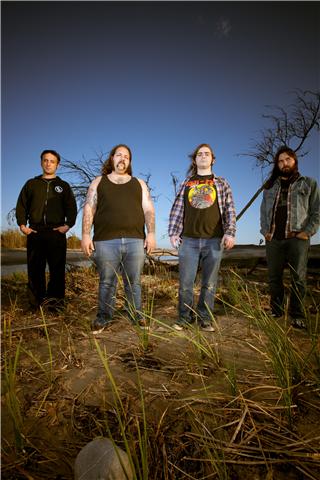
FTF continue to adapt, fight and survive on ‘Die Miserable’


A good friend of mine doesn’t understand why bands select names that often are unprintable in many publications, potentially limit their career possibilities and could get younger fans slapped in the mouth if they even utter the group’s moniker. And I understand where this person is coming from, and that line of thinking does make some sense. Except for one thing: Topping the Billboard charts and selling out hockey arenas isn’t everyone’s primary goal. Sometimes there’s a little bit more to what a band does.

But having what is, in some people’s minds, a questionable name doesn’t have to limit one’s success. It all depends on what the person creating the art considers a success, and not every band can have the No. 1 record in the country. Some bands and their members find it more important to maintain their integrity, do whatever they want, and be able to sleep at night knowing they called their own shots and made the statements they find important to them. Fuck the Facts always have come across as one of those bands whose art comes before any monetary reward, and while I’m sure if one of their records exploded and dominated the sales charts in any country they wouldn’t curse such success, they likely won’t tweak any parts of their machine to do so.

Having stuck it out for more than a decade and created a comprehensive discography that’s intimidating to try to compile in its entirety at home if you’re a fan, Ottawa grinders Fuck the Facts already are a major success story. They may not be the biggest name on Relapse and they might not play your town’s largest club, but they’re survivors and road warriors, and with each release, they just get better. Their ninth album “Die Miserable” is about to drop, their first full-length since 2008’s “Disgorge Mexico” (they’ve offered up countless other mini releases in the meantime, it should be noted), and the results are nothing short of totally impressive. I’m blown away by this band once again.

Something I’ve always admired and appreciated about FTF’s music is that, while it’s grindcore at heart, there’s so much more going on besides that. Yes, you’re going to get demolished, there’s no question, but that’s not all they do. On “Die Miserable,” you clearly can pick out pieces that sound like thrash, black metal, punk, and even classic rock. Now, that’s musically speaking. Vocally, Mel Mongeon unleashes a savage, relentless attack that refuses to release its grip on your throat. Oh, and that thing locked around your throat that’s drawing blood and robbing you of precious oxygen? That’s her mouth. She’s one of best, most unforgiving vocalists in metal, and she brings it even harder live. She drops the hammer over and over again on “Die Miserable,” only changing paces during the closer “95,” when she speaks in French over the conclusion.

The album rips open on “Drift,” a song that splatters all over you with grind and mathcore DNA, and that leads right into the waiting clutches of “Cold Hearted,” where guitarists Topon Das (FTF originally was his solo project) and Johnny Ibay bring the thrash and jangly noise. “Lifeless” has more of a hardcore feel, and the chugging gets your blood flowing and that feeling of wanting to destroy lawn furniture in front of your neighbors moving to the front of your mind. “Census Blank” is a bit more atmospheric after its steamrolling opening, with Mongeon using more guttural tones in spots, and the rest of the band settles into some post-rock fog and that aforementioned classic rock thunder when they’re not in volcanic mode. “Alone” initially takes things down a notch, with a clean intro that includes some quiet piano, but it’s a red herring as the song eventually detonates into a pipe bomb with a keen sense of melody. The title cut and “A Cowards Existence” are awash in fury, while closer “95” has a punk rock vibe, soaring lead guitar lines, and a doomy, post-rock finish.

Just about every time I’ve taken on “Die Miserable,” I’ve hit repeat when the whole thing ended. That’s tough to do for me since I have so much music to sift through each week in order to drum up coherent, hopefully relevant thoughts. But this record has claimed me, and I’ve listened to it dozens of times since it arrived digitally a few weeks ago. That shouldn’t be a huge surprise, though, as I always found myself doing that same thing with their other releases. I’ve also found this is excellent treadmill music, because it has the proper peaks and valleys for warm up and cool down moments. Can’t believe I just wrote that.

“Die Miserable” is another in a long line of success stories for a band who might have too vulgar a name for a magazine cover, a T-shirt you wear to the grocery store, or a topic of interest you drop into conversation when talking to your mother on the phone. But my guess is a decade from now, when everything that’s so relevant to pop culture now is relegated to VH-1 talking head shows, that Fuck the Facts still will be mauling audiences somewhere. Someone will be seeing this band somewhere and going home exhausted. So what is success when music and pop culture is so disposable? Fuck the Facts have shown time and again they aren’t a flash-in-the-pan commodity that’s here today, gone tomorrow, and “Die Miserable” is another entry on a laundry list of proof of that … fact.

For more on the band, go here: http://www.facebook.com/FuckTheFacts

To buy “Die Miserable,” go here: http://www.relapse.com/die-miserable.html

Or go here: http://fuckthefacts.bigcartel.com/

For more on the label, go here: http://www.relapse.com/

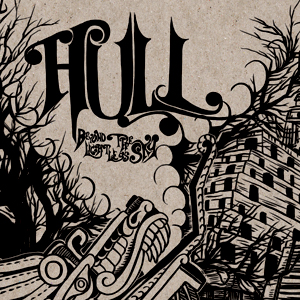
Hull rise above genre expectations on ‘Beyond the Lightless Sky’


The sludge and post-metal communities are crowded ones. Blame everyone geeking out on Neurosis and ISIS (or their fan-appointed associative term NeurISIS) if you’d like, but there’s just a ton of this stuff out there, and more often than not, the music isn’t terribly enlightening.

One of the bands that seemed to have a brighter light bulb than most is Brooklyn’s Hull, who debuted on initial, single-song EP “Viking Funeral” and their first full-length “Sole Lord,” released in 2009. While their first two entries didn’t exactly change the direction of the sub-genres or make them one of the first band names that popped out of people’s mouths when discussing sludge and post-metal, they made a positive impression and seemed to indicate that while they had some good ideas, they were going to be capable of much more down the road. Now that their second album “Beyond the Lightless Sky” is in our grasps, we have our answers as to whether they built on their potential.

This new entry from Hull is impressive, thoughtful, full-bodied and satisfying through and through, so yes, what I suspected when I heard “Sole Lord” is confirmed, in that the band had better days ahead. The nine-track record has an interesting structure that other bands have tried and failed to make compelling, in that they put together five epic cuts that are broken up by four wind-changing interludes. So you get mashed and then you get a breather. But the interludes aren’t just there to bloat the song count and stretch what could be an EP into an LP (1349 suffered that accusation on “Demonoir”), because they all play their parts really well and logically and sonically lead you into what’s next. I don’t think the record would be as seamless without these pieces in place.

Another change that I like is they used far less clean singing on “Beyond the Lightless Sky.” My only qualm with them using cleaner tones is theirs didn’t do them any favors. They always sounded like they were designed for a Linkin Park track and didn’t seem to make the songs any better. There still are moments on this album when they’re used, and they’re not any better than they were on “Sole Lord,” but they also don’t detract from my enjoyment of the songs. For the most part, guitarist Nick Palmirotto’s howls and growls are all over the place, giving a monstrous personality to these often spacious, psychedelic-minded songs, and the cleaner stuff makes up maybe 5 percent of the singing.

Things rip right open on “Earth from Water,” a song that runs more than 11 minutes and shape-shifts itself into atmospheric adventures, bluesy guitar licks and eventually destructive corrosion. The title track is a devastating piece of chaos that hulks and slithers over the land but eventually settles into a cool little thrash groove halfway through the cut that you never hear coming; “Fire Vein” blows open from the start, with monstrous growls, mind-bending guitar work and some of that wide-open outer space travel they do so well; and closer “In Death, Truth” is a burly beast that settles deep into the mud pits, with guitar screeching that recalls the early Soundgarden madness and that levels your senses in a calculating, mid-tempo pace. As noted these songs are set up by ambient cuts such as the Western-flavored, acoustic-led “Just a Trace of Early Dawn” and quiet, serene, nature-colored “Curling Winds.”

Yes, Hull’s music should satisfy those who have surrounded themselves by bands such as ISIS and Neurosis, the pioneers of this type of thing, and even those who get into early Mastodon and the more recent work by The Atlas Moth could find a ton of enjoyment in “Beyond the Lightless Sky.” This band clearly is not just satisfied with being your run-of-the-mill sludge and/or post-metal band, and they prove their ambition is beyond that rigid designation. This record is a very positive step forward for the band, and I hope their next album takes things ever further. This is a band that deserves your attention now and going forward, and my guess is they’re never going to deliver something you expect 100 percent. They do have the sludge/post-metal spine, and that’s important, but their willingness to bloom beyond is what should keep Hull special and relevant well into the future.

For more on the band, go here: http://www.hullandhighwater.com/

To buy “Beyond the Lightless Sky,” go here: http://www.theomegaorder.com/HULL-Beyond-The-Lightless-Sky-CD-Shirt-Bundle

For more on the label, go here: http://theendrecords.com/

Outer edges: True Widow, Dum Dum Girls

True Widow

As mentioned from Day 1 of this site, we’re here for meat, mead, and metal, but we also reserve the right to visit some music that isn’t necessarily metal but that we like and that maybe you’ll like as well. Sometimes there’s some really obvious crossover, and sometimes there isn’t. But whatever.

Today, we have two bands to talk about, one of which could be right up the alley of a doom and drone fan, while the other … well, let’s just say I’m going to have a tougher time justifying its presence on this site but that I’m going to tie to a record that certainly DOES have a clear home on Meat Mead Metal. Again, metal absolutely rules my life, and I’m sure there are many of you who frequent this site daily who feel the same way. But I also have interests that go elsewhere, and for those who also have a wide variety of tastes, check out either, or both, of these albums because they are highly recommended.

First up is Dallas, Texas, trio True Widow, who we discussed earlier this year when they dropped their excellent full-length “As High as the Highest Heavens and From the Center to the Circumference of the Earth,” a record that’s a serious contender for my year-end top 10 list and is one hell of a mouthful to say. The band’s shoegazey, slo-core, droning rock sound is intoxicating, and the dual vocals of guitarist Dan Phillips and bassist Nicole Estill make their mix even more satisfying. Their singing is fairly laid back, by the way, and you don’t get a lot of energetic volts from the band, but you’re not supposed to get that here. Instead, the adrenaline comes from how they make your mind wander.

True Widow are now releasing a new EP called “I.N.O,” made up of songs from the “As High as the Highest Heavens …” session, as well as some material they drummed up in their practice space. It’s only five songs long and runs about a half hour, but it’s another glimmering collection from the band that’s certainly worth your while. The piece kicks off with a folk acoustic instrumental piece that leads you into the 14 minute, 25 second title cut, which Estill leads vocally and that bleeds at a blissful mid-tempo pace before eroding into noise as the song concludes. “Bathyscaphe” has Phillips in control of the singing, and the piece is a fuzzier, more up-tempo number that reminds a bit of Sonic Youth. “S.Y.B.” rumbles and plods along, feeling warm and sugary; while closer “S.F.H.D.” has more of a ’90s college rock feel, with both Phillips and Estill blending their voices and drummer Timothy Starks driving them home.

This is a fantastic stop-gap release from a band that’s become one of my favorites this year. You can find their stuff on Kemado, a label that houses metal powerhouses such as The Sword and Saviours, bands whose music sound nothing like True Widows’ but certainly makes sense being played next to theirs.

NOTE:  The original post said the band is from Austin. They’re from Dallas. I corrected it above. I suck.

For more on the band, go here: http://truewidow.com/

To buy “I.N.O.,” go here: http://www.kemado.com/shop/true-widow-i-n-o/

For more on the label, go here: http://www.kemado.com/home/

Dum Dum Girls

So, the sophomore album from Dum Dum Girls probably doesn’t scream headbanging magic, and it shouldn’t. I also admit I’m really pushing it by including them on what’s mainly a metal site, my tastes aside, but I can’t help but champion this album. “Only in Dreams” is a great collection, one that takes the band’s girl-group throwback aesthetic and adds more elements, such as ’70s and ’80s rock such as the Go Go’s and the Pretenders, punk, and even shoegaze cloudiness reminiscent of Mazzy Star. I admit I’ve gotten caught up with a lot of other artists often related to the Dum Dum Girls, such as Vivian Girls and Frankie Rose, but these ladies just go above and beyond here and rise well above those other acts.

Noticeable right away is the focus placed on Dee-Dee Penny’s vocals, which have a far greater presence this time around and often just soar out of your speakers. She sounds amazing here, and her singing is back to what is was like when she was with Grand Ole Party, only with more confidence and a total grasp of pop sensibility. Much of the record, thematically, focuses on Penny’s mother’s death to cancer, and in case you’re not aware, a vintage photo of her mom was on the cover of the band’s first full-length “I Will Be.” So as bustling and hook-filled as much as this sounds, and as great as it would feel playing loudly at a party, there’s an inescapable sadness that permeates the mood. Listen closely to songs such as “Caught in One” and “Hold Your Hand,” and it becomes clear she’s in mourning. Now, a loose association to the metal world is what, thematically, comprises the debut album “A Fragile King” from death metal supergroup Vallenfyre. That band’s singer Greg Macintosh (Paradise Lost) lost his father to cancer, and much of what you hear on this record also is awash in mourning.  I’m not suggesting the two bands’ fans will want to party down together, but what you hear lyrically on both records aren’t all that different from each other.

Yes, as noted, “Only in Dreams” is poppy and uptempo, with the exception of crushing gaze ballad “Coming Down,” but anyone with an open mind who likes great songwriting and powerful hooks should be able to get into “Bedroom Eyes,” the buzzy, dancey “Wasting Away” and hand-clap powered “Just a Creep.”

For more on the band, go here: http://wearedumdumgirls.com/

To buy “Only in Dreams,” go here: http://www.subpop.com/releases/dum_dum_girls/full_lengths/only_in_dreams

For more on the label, go here: http://www.subpop.com/

OK, so hopefully I didn’t lose you on this one, and if I did, then that’s just silly. Great music is great music. But if you’re still uncertain, come back tomorrow when we discuss a cement truck explosion of a sludge metal album.

Friday review round-up: Hammers of Misfortune, TFW, Machine Head

Hammers of Misfortune

With September at its end (and what a busy month it was), it’s a good time to take some inventory and get some things to you that either just hit the shelf or is about to be unleashed. That way we can move to October with a clear conscience that we didn’t leave anyone behind.

All three records likely will have entirely different audiences, which I like and, to me, makes doing these roundups more interesting. That way I don’t have to write about the same damn style of music through the whole piece. It’s good for me, better for you the reader, and we get the word out about some noteworthy releases that might find its way onto your shopping list this weekend. Am I the only person who makes a record list each weekend of things I want to track down?

Actually, we’re going to kick off with a record you cannot buy just yet but that I want to talk about because it blew me away. The new album from San Francisco’s Hammers of Misfortune called “17th Street” won’t be in stores until the end of October, but because I was assigned a review by Outburn magazine for Issue 62 (Issue 61 should be on shelves any day now, and some guy I know has the cover piece), I’ve been playing it on rotation for the past couple weeks. I’ve long been a fan of this band, which really is more of a hard rock outfit than metal, though there’s surely some crossover to doom and prog-metal fans, and their new opus was high on my most anticipated discs for this year. And it hit the mark.

The band shuffled its lineup again, as leader John Cobbett had to replace female vocalist Jesse Quattro and guitarist/male vocalist Patrick Goodwin. Not to worry, as he brought in hard-hitters Leila Abdul-Rauf (Vastum, Saros, Amber Asylum) on guitar and vocals and super-powerful pipes-owner Joe Hutton (The Worship of Silence) to round out the best incarnation of this band ever since Mike Scalzi was in the ranks. “17th Street” is an instant classic from one of America’s most exhilarating, creative and sadly, unknown bands, but here’s guessing their new association with powerhouse Metal Blade will help inflate their profile. I don’t want to say too much about the record because my Outburn review will do that for you in more detail, but let’s say that this record should help fans of Slough Feg, Queen, Led Zeppelin, Priestess and really many of the bands on the Tee Pee label get their thrills. It’s full of drama, incredibly hook-filled songs, and one of the best cuts in this band’s entire collection in “The Grain,” a song that Hutton just owns. Try to hear that chorus and not get swept away.

I’m a big supporter of this band, and this fifth effort (or sixth if you consider “Fields/Church of Broken Glass” two separate pieces) is incredibly pleasing. Even with more band member changes aside, it’s hard to expect anything less than awesome when you have Cobbett in command. Go get this when it’s released Oct. 25.

For more on the band, go here: http://www.hammersofmisfortune.com/

To buy “17th Street,” go here: http://www.indiemerchstore.com/item/12639/

For more on the label, go here: http://www.metalblade.com

The Fucking Wrath

All you have to do is read the name the Fucking Wrath, and you know what’s in store. How can you not? You have to figure right away that they will blow the doors off your house with their music and you’re probably not in for some schmaltzy R&B or something. And you get exactly what you expect, which has been the case ever since the release of the band’s first record “Seasons of Evil,” and their new full-length “Valley of the Serpent’s Soul” is a lot more of the same doom-laden, sludge-flooded goodness that makes me love this band so damn much. In fact, it’s a noted step up not only from their debut but also from last year’s stop-gap “Terra Fire” EP that also was deliciously pulverizing but can’t even hold a candle to the hell and demolition on their new platter.

The burly quartet packs this record with a ton of riffy horror and bluesy bludgeoning, making for one hell of a great air guitar album. This also would sound amazing if you happen to need music for an out-of-control beer party where the objective is to get smashed and destroy all of the furniture in the house. I’m sure there are heavier albums that came out this year (though there aren’t many) but I’m not sure there’s one as rowdy as “Valley of the Serpent’s Soul.”

“The Question” opens up this bastard with some uptempo doom that has a bit of a punk-rock spine and an abrasive outer coating, and that leads us to the bluesy mud stomp of “Rebellious Axe”; the slow-driving, Black Sabbath-friendly riffing on “Swan Song of a Mad Man”; the punchy speed metal that trades off with NWOBHM overtones of “Altar of Lies”; the bloody three-part movement “The Neurodyssey,” that ends in a firestorm that would make Slayer proud; and the earthquaking closer “Goddess of Pain.” This record will smash your face and insult your mom, and you won’t have the heart to fight back because your body will be worse for the wear. Buy this and play it as loudly as you can. Never mind the neighbors.

For more on the band, go here: http://thefuckingwrath.com/

To buy “Valley of the Serpent’s Soul,” go here: http://teepeerecords.com/

For more on the label, go here: http://teepee.hasawebstore.com/

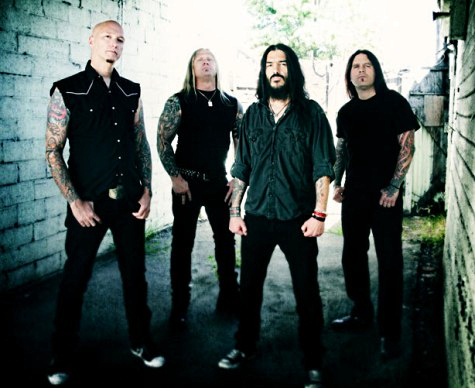
Machine Head

If you have those cargo shorts wrinkled in your closet and you just can’t wait to get more ’90s-influenced groove metal in your ears, then please leave this site right now. Ah, I kid, and I’m sorry I have to drag Oakland’s Machine Head through the dirt like that, but it’s not inaccurate of their audience, is it? Actually, much like how the Deftones get incorrectly stuck into the nu-metal designation, I feel like this band gets written off by some people for rising to prominence during the reprehensible ’90s Ozzfest era, though they did make some really bad records toward the end of that decade. But they’ve more than made up for that on their last two albums “Through the Ashes of Empires” and “The Blackening.”

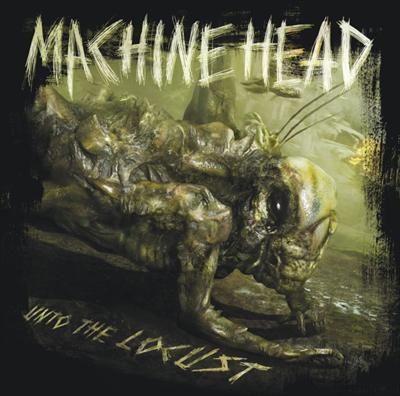
So now the band fires back with their seventh studio album “Unto the Locust,” an ambitious, somewhat experimental (not in a bad way) disc that probably will thrill their core and may even turn other heads who swore off this band a decade ago. Frontman/guitarist Robb Flynn still has that affinity for, well, machine-like, sometimes monotone yelling, which does re-surface on this record during songs such as “Be Still and Know” and “Darkness Within,” but he’s also stretching his range more than before, crooning capably on “Locust” and “Pearls Before the Swine,” one of the not-so-great songs on this album. Most surprising is the way the whole album begins, as the band participates in an a capella vocal harmony that sometimes veers toward the Beach Boys on the first section of three-part opener “I Am Hell (Sonata in C#).” I thought the label sent me the wrong file when I heard this, but luckily I stuck around to find out on my own.

The one area where stretching out goes awry is on closer “Who We Are,” that begins with a child chorus that sounds like they employed one too many out-there ideas, and the lyrics to the song are just rife with cliché. Otherwise, this is a pretty decent Machine Head record (with putridly ugly album artwork) that should enlighten their live audiences. I never was a very big fan of this band, though I certainly always gave their records a proper chance before forming my opinion, and “Unto the Locust” isn’t exactly going to ramp up my enthusiasm for them. But that’s just me, as it simply isn’t my thing, but perhaps it’s yours. If so, give it a shot.

For more on the band, go here: http://machinehead1.com/

To buy “Unto the Locust,” go here: http://www.cmdistro.com/Item/Machine_Head_-_Unto_The_Locust/39463

For more on the label, go here: http://www.roadrunnerrecords.com/

Amebix breathe fiery new life on ‘Sonic Mass’


There are those bands that, for some reason for another, don’t enter into your music listening world until much, much later in your life. Not even for any reason, really. It just happens that way. Tom Waits was that way for me, and granted I’ve now been listening to him for well over a decade, but his music wasn’t in my ears when I was a kid, it didn’t shape who I was in my formative years, and he didn’t help me get through college, awful relationships and a lot of other crap he could’ve helped make more sense.

I don’t really know why it happened that way, but it did, and luckily my eyes were opened to Waits’ music. Once I got married, I magically inherited a ton of Waits’ music (and my wife now co-owns a ton of Celtic Frost!) and have it all at my disposal. A win for me. Another band like that, in that they failed to find their way to me, is English crust-punk/metal veterans Amebix, who haven’t put out a new record since 1987. To put that in perspective, when “Monolith” dropped 24 years ago, I was busy obsessed with pro wrestling, He-Man cartoons, and finishing up my middle school career. Come to think of it, not much has changed, other than that middle school thing. But there was no Amebix in my world.

I also never have been a huge punk rock fan, and maybe that has to do with the fact that when I got heavily into metal, I was something of a target to that crowd. It was totally different than it is now and for the past 15 years or so, and when you get punk and metal bands on the same bill, no one goes home stabbed. But I tended to shy away from punk, even though it had a huge role in the development of the thrash metal I loved so much. Also, Amebix didn’t get a lot of attention from Headbanger’s Ball or the magazines I read, which shaped my worldview at the time, and sadly, this band never made an impact on me or formed who I was. But recently, that changed.

A few years ago when I read Amebix had reformed and were going to tour and do a new album, I had one of those awakenings where I wondered why I never tried to get into the band’s music. I remember reading the band’s name listed as influences in countless interviews with admiring artists and from the description of their sound, they seemed like something I’d like. So I tracked down 1985’s “Arise!” and “Monolith” (as well as their 2010 EP “Redux” of reworked old stuff) and the rest was history. Turns out their music was way, way more metal than the brash punk I imagined (though those strains certainly are there), and had I had their albums next to my early Megadeth, Overkill and Nuclear Assault cassettes, my guess is Amebix would have blended in nicely. And now that the band finally has returned with their long-awaited new opus “Sonic Mass,” I was lucky enough to be one of those people in the waiting line to hear the thing, swelling with anticipation of what the reformed band – vocalist/bassist Rob “The Baron” Miller, his brother and guitarist Stig C. Miller, and new drummer Roy Mayorga (Nausea, among, um, other bands) – had in store on this record.

If you were into “Monolith,” you’ll more than likely enjoy what you hear on “Sonic Mass.” It isn’t quite the same approach, as you can hear some of the industrial and post-doom and post-metal sounds that rose to prominence once Amebix disbanded in the ’80s, but those threads feel like they were absorbed organically by and became a part of the group’s DNA. I’d say anyone whose record collection consists of Swans, Killing Joke, Motörhead, and Ministry should be blown away by these 10 tracks, which bear the marks of an awakened giant stomping back with new life. Opener “Days” is a gorgeous, haunting song that reminds me of Primordial, with Miller promising, “These days will never come again.” It sounds like a last will and testament, yet it’s a new beginning instead. Instrumental “Shield Wall” crashes full force into “The Messenger,” a throbbing song where Miller sounds like Lemmy Kilmister at his most sinister. “God of the Grain” has some Middle Eastern melodies and chanting and has an industrial feel; “Sonic Mass Part 1” is a gentler, acoustic-led cut, where Miller sounds like a mix of Johnny Cash and Michael Gira as he weaves his tale of doom, and that sets up the bulldozing “Sonic Mass Part 2,” that scrapes land and swallows buildings. “The One” feels like thrash metal done right, in the way all these younger bands don’t seem to understand; and closer “Knights of the Black” is an ominous storyteller of death and destruction that has a folk underbelly.

I’m stunned how good, vital and relevant this record sounds, especially after Amebix disappeared for a quarter of a century. They are as hungry and devastating as ever, and they still have something to say. In fact, “Sonic Mass” puts to shame with its sheer passion a lot of the other metal and heavy music releases that saw the light of day this year. You feel every ounce of this thing and live the band’s fury. It’s a new dawn for Amebix, and if this record is evidence of what they have left in the tank, we’re not going to be seeing the sunset of their career for a long time.

For more on the band, go here: http://amebix.net/

To buy “Sonic Mass,” go here: http://shop.amebix.net/

For more on the label, go here: http://www.easyaction.co.uk/

Old Silver Key spark fantastical wonder


Not sure how many of you are old enough to remember this, or depending on where you live if you ever even saw this, but there used to be an ad for Reese’s Peanut Butter Cups where one person was walking around with an exposed chocolate bar, another person with an open can of peanut butter. They smash into each other, smearing their respective treats together, and after some terse words, they realize they accidentally invented an incredible new snack. Then the H.B. Reese Candy Co. came along and stole the idea like bloody corporate thieves in the night. Damn suits!

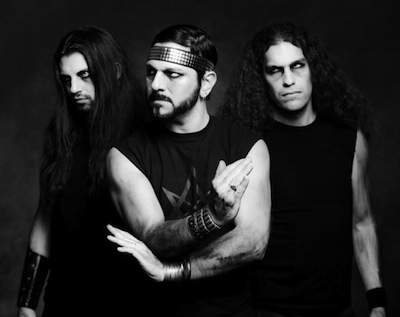
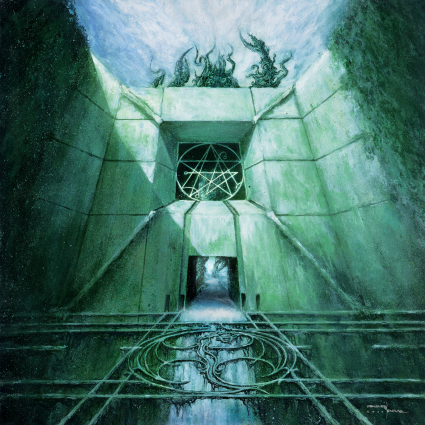
That old commercial jumped into my head when I got down to tackling “Tales of Wanderings,” the debut from Old Silver Key, a band made up of the four members of Ukraine folk-black metal band Drudkh and French artist Neige (Alcest, Forgotten Woods, Lantlôs, among many others). No, the music isn’t like a sugary confection that’ll stick to the roof of your mouth, but it does combine two of my favorite black metal flavors. The only question was, before listening to the thing, would this be a meeting of the middle for the two parties, or would it lean more heavily toward Drudkh’s (or their other project Blood of Kingu’s) thunder or Neige’s lush beauty. Turns out it’s more like the latter, though if you go back and listen to “Handful of Stars,” Drudkh’s most recent record, you hear the footsteps turning down this path.

The music on the band’s first, and hopefully not last, album is awash in shoegaze and post-rock influences, and it really doesn’t flaunt many of the combined artists’ black metal resumes. And that’s all well and good, because we get to hear a different side of the Drudkh members’ abilities, and it makes for a perfect setting for Neige’s delicate croon to add more emotion and sensitivity. If you were hoping for darkness and thunder, you’re only getting one of those things because it’s a record that’s barely heavy at all, save for the opening to “Nineteen Winters Far Away from Home.” But yeah, it’s murky, and the music makes me think of fog-marred mornings and rain-filled nights. It’s incredibly moody, and the music is infectious and very listenable. Ever since I got the promo, I’ve listened dozens of times, which doesn’t always happen considering how much new music I hear per week.

Another element that matches Neige’s presence is Drudkh mastermind Roman Sayenko’s adventure into fantastical elements on “Tales of Wanderings.” Neige’s music in Alcest focuses on a make-believe, dreamlike world from which he draws inspiration, and on here, Sayenko leaps full-bore into a realm of “witches, cunning foxes, talking wolves, where the poor farmer’s boy wins the hand of a princess while the prince sulks as a frog.” At least that’s how it’s described in the bio materials for the record. It’s an adventure back into childhood imagination, where the impossible is possible, and sitting by your windowsill dreaming is the way you pass your days. Doesn’t sound very metal, does it? Well, broaden your mind and take a trip with the music if you don’t think so. It sounds exactly like how it’s described, and it’s a true escape, especially when your real life has you beaten into the ground.

The record opens with a quiet, delicate instrumental “What Once Was and Never Will Happen Again,” a fairly dissonant number that floats right into “November Night Insomnia,” a dark rock song where Neige sounds angelic and the music achieves a frosty tone. “Cold Spring” has an uptempo shoegaze approach, with Neige’s singing taking on a lower register, something you don’t often hear from him, while “Star Catcher” has some indie rock and European folk underpinnings, and “Burnt Letters” is a rich, steadily driving song that also should sound great once snow starts falling here on the East Coast. This all sets up the eight-minute closing ballad “About Which An Old House Dreams,” where Neige is at his absolute finest, pouring every bit of his heart into this emotional song, as the rest of the band follows up with mellow keyboards, calculated drumming, some barbs here and there, and epically soaring guitar work. It’s the final salvo of a band leaving every bit of themselves in a piece of work, and when you hear the tape machine give out at the end, you know it’s time to close the book for now. It’s a stunning adventure.

Sometimes dream collaborations such as these don’t work out for the best (have you heard any of the Lou Reed/Metallica stuff? Hideous …), but this band really delivers. It suits Neige’s imagination and abilities perfectly, and for those open-minded Drudkh fans who also can get with bands such as Anathema, My Dying Bride and other dark shadows, you should find plenty of enjoyment in these yarns. Every time I hear it, I get lost in it, and “Tales of Wanderings” is one of the most moving, picturesque albums to come along this year. It’s the best of both worlds, the chocolate in your peanut butter, and it satisfies those pangs of wonder you haven’t felt since you were a child.

For more on the band, go here: http://www.season-of-mist.com/bands/old-silver-key

To buy “Takes of Wanderings,” go here: http://www.season-of-mist.com

For more on the label, go here: http://e-shop.season-of-mist.com/en

Absu’s mystical journey both classically thunderous and riotously fun


As seriously as I take the entire heavy metal genre, I’ve always willingly admitted that some of it is really funny. For example, a couple years ago my wife (non-metal fan) and I went to see Sunn 0))), and when Attila Csihar came out dressed as a tree, my better half lost her mind laughing. I completely understood her reaction, even though I thought the performance was mesmerizing and kind of scary. But yeah, I can see how it’s also humorous. All depends on who is processing the scene.

I even have found myself chuckling at some of the histrionics and dramatics unleashed by some of my favorite bands, such as Iron Maiden, Helloween, and Slayer, because sometimes what they do is delivered so seriously and earnestly, you can’t help but laugh a little bit. Any time I chuckle at bands I like, it’s always with affection. It’s OK to find something you like also tickles you from time to time. It’s something that’s always made Absu appeal to me, be it their image, their over-the-top sound, or drummer/vocalist Prescriptor McGovern’s between-song banter live, where he never dials down the high-pitched shriek he employs in his vocals when he’s merely talking. I love it. I laugh, yes, but not because I’m making fun. It makes me happy that it’s so ridiculous.

Actually, King Diamond is an artist I can closely associate with Absu. I love his records, his ambition, his imagination, but never is the line, “Grandma, welcome home! You have been gone for so long,” not funny to hear or to sing back myself. Much of Absu’s catalog hits me the same way. I love their music, and their new disc “Abzu” is another that I’ve thoroughly enjoyed from front to back. But I know if I play it for my wife, she’ll chuckle at a lot of this, especially the banshee shrieks that greet you on opener “Earth Ripper.” I think I may have experienced that song vicariously through her the first time I heard it, because even I smirked when hearing McGovern just go off. It’s pure heavy metal bliss, something you can hear as loud as possible emanating from your stereo and, when your guts are strong, you can wail back in your living room. Absu’s formulas is one of those that reminds me of why I fell in love with metal music in the first place.

The band’s new record is the second in a trilogy that kicked on with their last album, a self-titled opus that was released in 2009. It’s nice we’re getting a new record from this Texas-based band so soon because when they returned in 2009, it was their first fresh album since 2001’s “Tara.” But apparently they have stories they must tell urgently, and this album delves even deeper into Thelemic realms and Crowley-based occultism and magick that they dug open on their last opus. Of course, unless you have a lyric sheet in front of you, and I do not as of this writing because I don’t yet have the physical product, it’s hard to process what McGovern and his mates – guitarist Vis Crom and bassist/vocalist Ezezu – are trying to say on these songs. Instead, you have to get caught up in the spirit of the music, which it’s fairly easy to accomplish when listening to “Abzu.”

Absu’s dramatic, pulverizing black metal also has some thrash and prog elements to it, which gives their material some variety. Of course, you also have McGovern (who handles main vocals) growling and shrieking over the stuff, adding his unique character and charisma to their music, all the while handling a mind-blowing pace on drums. Having witnessed him live, I can’t believe he performs both so effectively, but he does! As noted, “Earth Ripper” is way over the top but also a pretty awesome display; “Circles of the Oath” begins to subtly spill some mystical elements into the album, with synth lines lying underneath the chaos; “Skrying in the Spirit Vision” reaches back into more traditional death metal, with growling that sounds more gurgly; and the six-part, 14-minute movement “A Song for Ea,” shifts to its individual building blocks methodically, each sounding different from each other, so you can tell when you’ve gone from piece to piece, and the acoustic, eerie whirring that sets up the song’s thunderous conclusion will make your skin crawl. There’s something about their music that’s blended into the sound that makes you feel that magick, that strange mysticism. It’s why I feel bad just calling this a black metal album, because there’s so much more lurking beneath, and it really raises up your mind when you hear it. You almost can envision the band’s transformation as they play these songs.

All in all, this is a great, spacious, experimental, thought-provoking piece of black metal that pays homage to a world that many don’t understand or even realize exists. It may take some studying even once you do have the lyric sheet to grasp what’s happening, and I had to do a lot of reading before even writing a rudimentary review of “Abzu.” So get ready to learn something if you’re not already well-schooled in Crowley’s ideas and teachings. If you don’t care about any of this, just get lost in the record, because it’s a fascinating listen that, yes, may make you grin from time to time because it all sounds so damn serious. Or maybe McGovern even has a bit of his tongue in his cheek as well. Who’s to say? Bottom line, however, is this is a kick ass album that should go over great live. I’m excited about seeing the band again, partially to hear the new songs in that setting, but also to hear McGovern shriek like a vulture from his stool.

For more on the band, go here: http://absu.bandzoogle.com/home.cfm

To buy “Abzu,” go here: http://www.candlelightrecordsusa.com/store/product_info.php?products_id=1135

For more on the label, go here: http://candlelightrecordsusa.com/site/

For more on Thelemic mysticism, go here: http://en.wikipedia.org/wiki/Thelemic_mysticism

The Atlas Moth tear open souls on ‘An Ache for the Distance’


I quite often hear albums that, from listen one, I enjoy. That doesn’t mean the record is etched into my heart forever, that it changes my life or that months later it’ll still be with me, but I at least can identify that I like what I hear in the music. It’s a little less common for me that I like a record right away and, when I go back and visit further, it begins to have an enormous, powerful effect on me. Those are the special ones you’re certain will stay with you as long as you live.

I had that kind of experience with the new album from Chicago’s The Atlas Moth called “An Ache for the Distance,” released by Profound Lore, a label that never steers us wrong. The effect it had on me was unexpected. I always liked the Atlas Moth’s psychedelic-smeared sludge metal and spent a lot of time digesting their full-length debut “A Glorified Piece of Blue Sky,” but as much as I enjoyed it, I wouldn’t call it a collection of songs that is special to me. It’s good, and it was kind of weird that it was released by Candlelight just because this type of band isn’t something they typically offer. Their wacky covers EP “The One Amongst the Weed Fields” was more funny than good, and that seemed to be the point of it anyway. When the band’s new album was announced months ago (done, at first, by weird graffiti-style etchings of a moth and the 9-20-11 release date), I was more intrigued that Profound Lore was putting it out than I was by the music itself.

Like many, many other bands I like but don’t follow religiously, I looked forward the hearing the Atlas Moth’s new material like I would any other record from a band that I recognize as making good music. It was just kind of another intriguing metal release for me. The first few visits cemented those feelings as I liked the music, was interested in the even-deeper psychedelia on the songs, and figured I’d come back a few more times before it was time to write about in full. Then something happened. It infected me. Not like a scratchy cough, but like a full-bore flu. Hot head, sweats, sore muscles, weird physical reactions. Then I sat there stunned. I couldn’t believe what was happening and slowly grew more and more excited about what was pouring into my ears. I decided I had to hear it in all different ways: my ear buds, traditional headphones, on my stereo, in my car. Every time I switched to a new means, I heard the record and its parts differently. I can’t remember another album this year with which I had the same relationship. I’m not saying it’s the album of the year, though it’s really awesomely great, but it’s the one that totally changed my mind about this band. It also did something else, in that it replaced ISIS as my go-to band when I want to reflect and let my mind wander. Turns out you no longer were needed, ISIS, and you haven’t really delivered something like this in the past half-decade or so. Sorry.

The nine-cut record has a more fully realized sound than their debut and it’s much richer. It’s actually quite enveloping, and it’s something with which you need to participate intellectually to totally appreciate. At least I think so. A friend of mine, who I won’t name, told me “An Ache for the Distance” is a great album to hear when you’re high. I’m not surprised by this because there is a druggy overtone to a lot of the music, and I can at least attest to listening to thing while drunk. And it sounded pretty amazing then, too. “Coffin Varnish” kicks off the record with a heavier, nastier edge, and that leads into “Perpetual Generations,” which turns down the intensity decibel-wise but not emotionally. The vocals are cleaner and headier (they remind me of Folk Implosion’s “Natural One,” quite weirdly), and the melodies just soar. It’s one of the more approachable songs in their catalog. “Holes in the Desert” is both savage and nighttime cool, especially when the keys bleed in, and Stavros Giannopolous and Dave Kush take turns hammering out the message. The title cut settles into a satisfying slow-tempo groove, before shoegaze lightning dashes across and lights up the sky, with a final salvo of, “The sun burns out,” delivering a sober reminder of what’s at this planet’s end. “Courage” has more slinky, frosty keyboard work and would be the real oddball of the record if closer “Horse Thieves” didn’t exist. That song sounds like Mike Patton at his most bizarre trying his hand at avant-garde doom metal, with horrifying shrieks, free-jazz horn skronks and squeaks, and a moody mud storm that ends this thing on a really ugly note. Ugly in the best way possible.

I’m not sure if everyone will have the same experience I did with this record and if it’ll alter the way you think about the Atlas Moth. Maybe your mind frame doesn’t need altered, but mine did. The Atlas Moth went from just another band whose music I happen to like to one that’s going to get significantly more play in the future. I’ve even gone back to “A Glorified Piece of Blue Sky” and am getting far more enjoyment out of it because I feel my ears are better educated or they just opened up a little to help me better appreciate this band. Hearing “An Ache for the Distance” makes me feel like I’m wrapping myself in a cold blanket of stars for a night of life-altering rest, where my dreams’ context, messages, hidden meanings and intentions are clear. I wake up a different person. It’s not every day a record makes you feel these things, so I embrace the gifts this album delivered and will try to do my best to spread them around to other people.

For more on the band, go here: http://www.facebook.com/pages/The-Atlas-Moth/51536261736

To buy “An Ache for the Distance,” go here: http://www.profoundlorerecords.com//index.php?option=com_ezcatalog&task=detail&id=782&Itemid=99999999

For more on the label, go here: http://www.profoundlorerecords.com/

Mastodon further deviate from metallic fury on ‘The Hunter’


I’ve mentioned many times, both on this site and in my writing elsewhere, that I don’t hold it against a band for changing their sound. As a band gets older, the members do as well, and perhaps what lit their fires when they were younger isn’t as exciting now that they’ve aged. It happens, and I understand it.

Not all bands do this. AC/DC, of course, have been making the same album since Brian Johnson joined the fold, and people lap it up every time. Same goes for Slayer who, with the exception of their mid-90s output, have been doing the straight-on death thrash since their formation. People know what to expect from these bands, and for the most part, they deliver what’s anticipated. Obviously this idea doesn’t work for Mastodon, a band that used to make some fiercely savage sludge metal that bordered on death before making a stunning move to Warner Bros./Reprise after their landmark “Leviathan” album.

Things started to change with Mastodon on their first Warner Bros. release “Blood Mountain,” a record that has some of the band’s trademark savagery but also hinted at them going into a different, more palatable direction. There was more singing, more melody, more intelligible screaming and yowling. It certainly was more approachable than, say, 2002’s “Remission,” but it still was heavy enough to avoid a lot of second-guessing. Then 2009 concept album “Crack the Skye” dropped, and it marked the most significant artistic evolution for the band yet, with way more clean singing, far less growling, and music that bordered closer to psyche hard rock and stoner rock than metal. It also marked the first Mastodon record I didn’t love through and through. As hard as I tried, I couldn’t get with it, and even two years later, when I try to approach the thing, I can’t make it through to the end.

This brings us to their new opus “The Hunter,” a structural departure from “Crack the Skye,” in that this is a collection of songs unrelated to one another other than they’re all on the same platter. The album is a tribute to bassist/vocalist Troy Sanders’ brother, who passed away, and the title track is one of the most emotional songs in the band’s catalog. It’s surprisingly tender, not that it’s a ballad (it isn’t), but emotion drips from the thing, proving this band of wackos can be sensitive. We get 13 cuts, the most ever on a Mastodon record, and my guess is if some of these songs get radio airplay, this record could make the band superstars. It’s shockingly catchy, filled with rock hooks, and for listeners who are growing tired of their Foo Fighters or Muse records, they might find bliss on “The Hunter.” And they’ll also probably think this is their version of Burzum or something because the material is more dangerous and harder than what you hear on typical rock radio. “The Hunter” is not bland, I’ll say that.

Now, if you were hoping for the band to go back to their old, punishing, Relapse-era ways, then prepare to be disappointed. There are only fleeting moments of those days on this record, namely the aggressive chorus to “Blasteroid” and the obligatory Scott Kelly (Neurosis) guest spot “Spectrelight,” which is a short explosion of sludge goodness that acts more as a pace changer toward the end of the album. The rest really tests what you can call metal, because I’d label most of it stoner hard rock, and there’s nothing wrong with that. I’m not criticizing them for it, just calling it what it is. And truth be told, there are some really good songs here, from opener “Black Tongue,” that has a song structure that reminds me of “Blood Mountain”; swampy, ZZ Top-esque “Curl of the Burl,” that has a really weird, sort of uncomfortable video and snarky, nasal vox from Brent Hinds; spacey, dreamy “Stargasm,” that has a nice, catchy chorus; “Creature Lives,” that has an opening that sounds suspiciously like Pink Floyd before launching into a cosmic piece sung by drummer Brann Dailor; and closer “The Sparrow,” the furthest the band ever has delved from traditional metal, with a gentle tempo and Beach Boys-like vocal harmonizing. That track might not make a metal fan very happy, but it’s really well done and, most importantly, it sounds good.

There are some clunkers here, such as “Octopus Has No Friends,” “Dry Bone Valley,” and “Thickening” that didn’t interest me a whole lot no matter how many times I heard them. I think trimming these from the list and making them B sides would have made “The Hunter” a trimmer, more effective album, but that’s not the decision they made. So be it. I’m sure other people will like those songs, but I didn’t.

So this all probably sounds pretty positive coming from me, and like I said, “The Hunter” is a good, catchy record that has some strong songwriting. There are hits on this thing, and all those weird predictions that Mastodon would become the new Metallica when they jumped to Warner Bros., this album could justify those claims. This band should blow up into the mainstream right now. But it really isn’t for me. I can identify an album as being pleasurable to hear and having serious potential to put a band over the top and still not really want to spend a lot of time with said music. I don’t fault Mastodon for growing, and if they felt they were stymied by their old style, by all means, they should have gone where they have. They did the right thing for them as musicians. It’s no different than what Opeth just did with “Heritage,” a record I happen to really enjoy. And no, I don’t think Mastodon sold out to Warner Bros. wishes. So let’s not dwell on that silliness. It’s just that I love early Mastodon so much and treasure their first three records (“Remission,” “Leviathan” “Blood Mountain”) to such a significant degree that I can’t get on board where they went with their music.

Mastodon haven’t bastardized themselves like Metallica have, and you still hear some strains of what they were doing in their early days. It’s an evolution, really. Metallica didn’t evolve. They woke up one day and decided to be something different. I give Mastodon a heap of credit for growing as a band and refusing to adhere to boundaries they had matured beyond. I just don’t feel the new Mastodon does anything for me emotionally or spiritually like their old music did. I guess I prefer Mastodon heavier and more explosive, like you think a mountain is about to fall on you or you’re going to be gutted by a rhino. “The Hunter” just isn’t for me, but it wasn’t made for me, was it? Mastodon did this for them, as well they should have. “The Hunter” is bound to be a dust collector on my shelf alongside “Crack the Skye.” Yet, I’ll remain interested in where Mastodon go next, so they haven’t totally lost me.

For more on the band, go here: http://www.mastodonrocks.com/

To buy “The Hunter,” go here: http://store.warnerbrosrecordsstore.com/prodList.aspx?sid=CC91BEC1195D47C2BCC956E7824A3912&nocookie=true

For more on the label, go here: http://www.warnerbrosrecords.com/

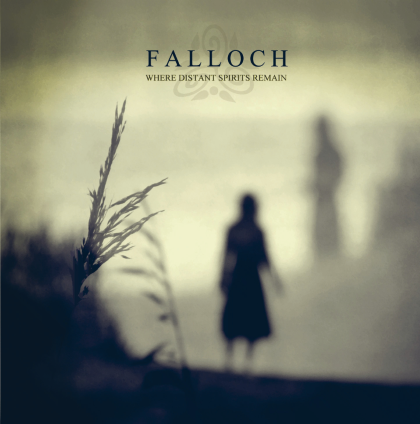
Falloch unfurl majestic wonder on ‘Where Distant Spirits Remain’


Leaves are about to get crispy here on the East Coast of the United States. The evenings already are refreshingly chilly, zip-up sweatshirts have returned, and pumpkin beers are on the market. It’s the time when, as far as I’m concerned, nature is at its apex. It doesn’t get better than this, and I tend to dig into woodsy metal when autumn comes calling.

This is a time when bands such as Agalloch, Alcest, Primordial, Ulver and Woods of Ypres creep back into my collection, and while all of those bands don’t pay tribute to nature (in fact, only Agalloch explicitly do that), their styles make for smooth consumption these days. But a new band Falloch emerged from Scotland that shares the same philosophies and styles as the aforementioned groups, and their debut album “Where Distant Spirits Remain” not only will be one that remains in heavy rotation for me the next few months, but in subsequent years, this will be on the list of go-to records once the trees start changing colors. Needless to say, I’m excited.

Falloch’s style is described as post-black metal and folk metal, as those labels certainly fit, and their music is decidedly gorgeous. Yeah, I know it probably isn’t cool to tag a new metal band with that description, but can you not say the same about Agalloch, Alcest, Primordial? It’s OK to be more sensitive, and Falloch certainly address that side and let you fawn over the majesty unfurling when you simply look at a pocket of woods, a rushing stream or a lawn full of orange, red and brown leaves. This music fully engulfs you and fills you with wonder, and I found my blood surging many, many times when listening to this record. Funny, I did see some reviews elsewhere that derided this band for being labeled as metal because the music doesn’t fit into their rigid little window of what the genre entails. Don’t be so pigheaded, kids. You’ll miss out on an amazing record if you snub your nose at delicacy and melody, all of which are present in full.

What also stuns me about Falloch is this band is but a duo, which is amazing when hearing how full-bodied and dynamic this sounds. Andy Marshall and Scott McLean create something that sounds like six or seven people would be needed to achieve, and the vocals are clean, soulful and emotional, never reaching into growls or shrieks (other than over the chorus of “Where We Believe”) that most other bands of this ilk employ in abundance. That also gives “Where Distant Spirits Remain” a unique voice, because it seems so few bands are confident enough to just sing and use the ability with which they were gifted. Yeah, maybe it comes off as less brutal, but this music doesn’t sound intended to be savage in the first place.

Here’s where I’m contradicted, by the way. While Falloch’s music, to me, sounds best in the autumn, this duo has frost and snow on their minds. So we’re not in agreement on seasons, but it’s their music, so I guess I’m the one who’s wrong. Oh well. The band said that “Beyond Embers and the Earth,” a heart-stopping epic that begins aggressively before melting into gothy/poppy passages and folk whistles, was inspired by the Isle of Skye in the Scottish Highlands during winter, and you can hear in this track how inspired and moved they were by the landscape. Opener “We Are Gathering Dust” has nice acoustic flourishes dancing behind the harder-edged stuff here, and the song eventually trickles out into babbling water and ambiance. “The Carrying Light” gets into some progressive rock and metal while also allowing in some shoegazey guitar squall to put the edge on this bloodletting, throbbing track that could be labeled a ballad; and “To Walk Amongst the Dead” has plenty of traditional folk in its mix and its lush for the most part, but the tempo and volume rise and caterwaul near its conclusion, making it a sweeping, surging song that’s nothing short of awesome.

Falloch officially, from just this album, are one of my favorite new bands. I could gush on and on, but why bore you with all of that? I love this style of metal, and I’m already setting some time aside Saturday afternoon to take this in again while I have some lovely brews. If you let yourself get caught up in “Where Distant Spirits Remain,” my guess is you’ll be hooked as well. It’ll give you a head rush, cause your heart to swell and connect you more spiritually with what’s going on outside. And OK, I’ll concede, maybe the winter is just as good a setting for these songs as autumn. Whenever you listen, prepare to be infected by one hell of a new band that should set the standard for post-black metal and atmospheric folk metal in the future.

For more on the band, go here: http://www.falloch.com/

To buy “Where Distant Spirits Remain,” go here: http://www.candlelightrecordsusa.com/store/product_info.php?cPath=21&products_id=1045

For more on the label, go here: http://candlelightrecordsusa.com/