
PICK OF THE WEEK: Striving for perfection works wonders for Avichi’s ‘Catharsis Absolute’

Andrew “Aamonael” Markuszewski

Andrew “Aamonael” Markuszewski

Being a perfectionist can have its ups and down. On one hand, you’re going to do your work until you absolutely, positively believe it is finished, awaiting masses be damned. On the other, you can overcook, overthink, and overdo your project until you strip it of its character, power, and interest. Axl Rose just gave me the finger.

Andrew “Aamonael” Markuszewski (also of Lord Mantis and Unholy Trinity, and formerly of Nachtmystium) is one of those perfectionists, and when it came to his Avichi’s much-anticipated third record “Catharsis Absolute,” nothing but the very best record was going to satisfy him. If you followed the plight of this record, you know this thing should have been in our hands a half a year or so ago, but Markuszewski continually wasn’t happy with what he was hearing and kept going back to the lab to refine his creation. I kept reading updates, mostly from his label Profound Lore, with bated breath, so much so that it was turning into some mythical thing that never really was going to materialize. Or once it did, it would sound overdone and end up being a disappointment. That wasn’t out of the question. Luckily, that’s the furthest description of “Catharsis Absolute” I can think of. This thing is a triumph.
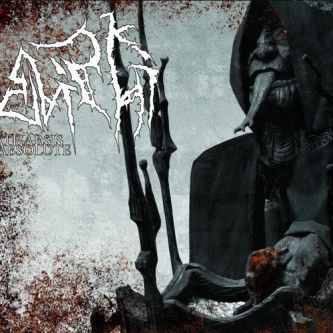
avichi coverWe last heard from Markuszewski in 2011 on “The Devil’s Fractal,” itself one hellacious record that set itself apart in the black metal field. Now, three years later, we’re hearing Avichi grow into a more refined form, one that isn’t afraid to destroy boundaries on “Catharsis Absolute.” Fuck what black metal is supposed to be, and forget the rigid rules that always get spread over the subgenre, Markuszewski obviously was hellbent on doing something that not only extended his canvas but that would satisfy the creative fire burning inside of him. It’s a record that sounds like an artist truly coming into his own and hitting all the right buttons. It’s a defining record for Markuszewski and Avichi, and it’s sure to be one you’ll hear about all over again 11 months from now when those pesky year-end lists pop up.

The album trickles open with introductory “Repercussion,” a brief song dressed by simple piano and a sense of foreboding. Then “Flames in My Eyes” just ignites, with metallic savagery, wild shrieks, and even some monotone clean singing behind it all, adding an extra sense of frozen sentiment. “Your soul is in my eyes!” Markuszewski howls, as the song rambles and slashes to its vicious finish. “Lightweaver” is an incredible song, one of the best in Avichi’s arsenal, and a perfect example as to how much this project has grown and progressed. While it’s heavy and uncompromising, there’s a dark, murky, New Wave-style keyboard line that slinks in, adding an extra dark pocket of melody. There are monstrous vocals and powerful guitar work, raging with power and emotion, and it’s everything Nachtmystium always seemed to be aiming for but never really accomplished. Markuszewski sure as hell figured it out.

“Voice of Intuition” begins feeling dreary and depressing, but that gives way to a volcanic eruption with Markuszewski howling, “Speak to me!” with such force, you think he’s talking to you. There are ominous sheets of guitars that rain down on the track, adding more blackness to the proceedings, and once the song reaches its conclusions, the growls reach a new animalistic level. It’s just crushes. “All Gods Fall” is another head turner, running 12:36 and acting as the perfect epic. It begins slowly, with chimes slowly blowing in, like a ghost sleigh traveling through the night, and eventually doom thunder erupts and begins the storm in earnest. The singing is cleaner through most of the song, with more keyboards setting up behind all of the thunder, and it’s a totally different glimpse into Markuszewski’s personality. As the song builds, it does get heavier, as do the vocals, with Markuszewski crying, “A new awareness reveals itself to me.” It feels like that line could be a summary for this record. The closing title cut is a near-eight-minute track played entirely on piano, which some may see as a risk for a black metal album but that works beautifully on bringing the album to a close. The song is eerie, somber, emotional, morbid, and dark, and when the music finally fades away, you cannot help but feel utterly transformed by what you just witnessed.

Avichi has gone from being a great band to one that’s figured out how to get to that next creative level. Markuszewski took chances, trusted his instinct, and made one of the most interesting black metal albums in some time. It’s only January, but there’s not likely to be another record that sounds like this one in this subgenre in 2014. Of course, pretenders will arise, but we all know the source material. “Catharsis Absolute” is Avichi’s masterpiece, though it might just be the beginning of what’s going to be a really special run. Go buy this.

For more on the band, go here: http://www.metal-archives.com/bands/Avichi/87428

To buy the album, go here: http://www.profoundlorerecords.com/products-page/

For more on the label, go here: http://www.profoundlorerecords.com/

Deadly reissues: Tech maulers Demilich release discography; Dark Funeral classics return

Demilich

Demilich

The reissue game can be a tricky one, and it’s a good way to infuriate people who get tired of rebuying things they already own. But they serve really good purposes as well, such as helping listeners get up-to-date copies of classic albums or helping newcomers catch up on releases they perhaps haven’t had a chance to grab yet. I think we all can agree reissuing a record that’s a year old just to grab more buys from hardcore fans sucks though.

Today we have two reissue projects that very much fall into the hellaciously worthy category, as they bring into circulation fresh versions of music from two bands that have had their influence on today’s crop of artists that followed their path. Now, again, there are going to be people who already own these albums/recordings who will moan because they don’t want to have to buy them again. Simple solution, really: they don’t have to. I have found a lot of value in both of these projects, and each of them more than prove its worth.

demilich cover

We’ll start off with the awesome “20th Adversary of Emptiness” collection from Finnish technical death pioneers Demilich. They’re one of those bands that I got into years after their active period, and the whole reason I did is I’d see their indecipherable logo on shirts whenever I’d go to metal shows and wanted to know more about them. This 2-CD, 3-LP set is for listeners who want their hands on everything Demilich ever released. Literally. It is all here in one package, along with old and new artwork and a 40-page booklet for fans to salivate over. Granted, the band’s catalog isn’t the deepest thing of all time, but having everything in their arsenal in one compact place makes it easier to lug their greatness around with you.

The band’s run has been short and sporadic, with their active years only ranging from 1990-1995 on their first run, with a reunion in 2005 that spawned some new music, and another show in 2010. Their only full-length is 1993’s “Nespithe,” released on Necropolis Records, that influenced a generation of death metal bands that followed. This set opens up with that album, which now is remastered from the original 24-bit unmastered tapes, and it sounds pretty damn impressive. Funny, but their technical death is not as bizarre and out there as some of today’s bands, which actually is refreshing on the ears. Yeah, they showed their prowess and dexterity on comically more-than-a-mouthful songs such as “The Sixteenth Six-Tooth Son of Fourteen Four-Regional Dimensions (Still Unnamed),” “Inherited Bowel Levitation–Reduced Without Any Effort,” and … get ready for it … “The Planet That Once Used to Absorb Flesh in Order to Achieve Divinity and Immortality (Suffocated to the Flesh That It Desired …),” but they have a heart, a monstrous soul, and a lot of mind-warping melody. Add to that guitarist Antti Bowman’s gurgly, burping death growls, and you have a record that somehow stands the test of time and still sounds damn relevant. I’ve never gotten my hands on a physical copy of this record before, so having a chance to get it now has been a long time coming.

On the other disc/LPs, we get three new tracks from 2006’s “Vanishing Sessions,” finding the band as alien and deranged as ever before, with “The Faces Right Below the Skin of the Earth” feeling thunderously awesome, with less belchy vocals; “Emptiness Of Vanishing” exposing buzzing guitar work and awesome metallic mauling; and “Vanishing of Emptiness” unleashing swirling guitars, lizard-like growling, and a punishing, satisfying finish. Also included are “The Echo” demo from 1992; the “…Somewhere Inside the Bowels of Endlessness…” demo also from 1992; “The Four Instructive Tales of Composition” demo from 1991”; and their more-than-raw one-song demo “Regurgitation of Blood” from 1991, that sounds like it’s melting as it plays. Most of the material on their demos contains early versions of “Nespithe” songs, so it’s cool to hear how they changed leading up to their full-length. All in all, this is one hell of a great collection, one that should be in the home of every death metal fan, especially those who think they must overplay and outthink themselves to make memorable, technically proficient music. Demilich only were with us a short time, but they left us some bizarre treasures.

For more on the band, go here: http://www.anentity.com/demilich/

To buy the album, go here: http://www.svartrecords.com/shoppe/en/

For more on the label, go here: http://www.svartrecords.com/

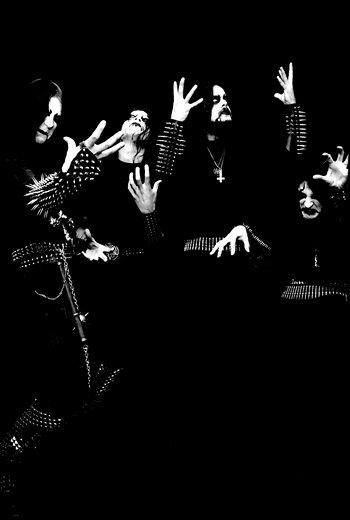
darn funeral band

Dark Funeral (circa 1996)

We shift from death metal to one of the most savage members of the second wave of Nordic black metal in Dark Funeral, a band that’s never kept secret their intentions of evil and blasphemy. The band engaged in a proper reissue project with Century Media late last year that started with their first three landmark releases, some of the most notorious, celebrated albums from that subgenre’s history. The expanded editions contain detailed essays about the creation of the records, new photos that were culled from the band’s history, and, of course, full lyrics so that you can howl back with great terror along with the band. Also, the albums sounds pretty damn great and make for spectacular headphone sessions. Oh, and all of this comes on the heels of Dark Funeral seeking a new vocalist as they ramp up for a new record, so now’s a nice time to get back into the band and remember what made them special in the first place.

in the signsecrets ofvobiscum

Naturally, we begin with their “In the Sign…,” comprised of their 1994 debut EP (which was self-titled), as well as two songs from their contribution to a planned Bathory tribute (eventually released by their former guitarist, the late Blackmoon, in 1998), that being their maniacal takes on “Equimanthorn” and “Call From the Graves.” They prove more than adept at these black metal classics, and these are fun to have. Tacked on at the end are three live cuts from South America in 2003, that give you a deep taste of their savagery live. That takes us into their classic 1996 full-length debut “The Secrets of the Black Arts,” a record originally made at Unisound Studio with producer Dan Swano that didn’t meet the expectations of Dark Funeral. That’s discussed in the essay inside the booklet, with Swano quoted as admitting he wasn’t up to task in his work, so it was redone later with Peter Tagtgren. This includes both versions of the album, the one we’ve all come to know, as well as the Unisound version, so it’s pretty cool to hear what is and what might have been (though the shelved version has been available before). The official version of the record also has some bonus content, including a cover of Von’s “Satanic Blood” as well as “Dark Are the Path to Eternity (A Summoning Nocturnal)” that originally was on the tracklisting for the Unisound version.

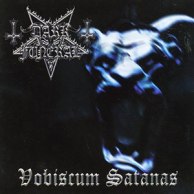
Finally, we go into their second album, 1998’s “Vobiscum Satanas,” a record that saw a major lineup shift, with a change in lead vocals/bass from Themgoroth to Emperor Magnus Caligula (who also played in Hypocrisy and God Among Insects, among others); the departure of Blackmoon and arrival of Typhos on guitars; and drummer Equimanthorn leaving and making way for Alzazmon (who eventually went on to Dissection and Gorgoroth). That left only guitarist Lord Ahriman as an original member, but the band didn’t lose their intensity or bloodthirst for black metal. The vocals are a little deeper and a little less demonic sounding, but they work nonetheless, and the band rips toward its new era with cuts such as “Ravenna Strigoi Mortii,” “Thy Legions Come,” “Evil Prevail,” and “Ineffable King of Darkness.” Added to the end of the album are four live cuts from their 1998 appearance at Sweden’s Hultsfred Festival in 1998.

So yeah, maybe you have the originals or the Regain reissues of these records, but the CD spine art that’ll pop on your CD shelf, the comprehensive booklets, the improved sound, and the overall coolness of this project makes it more than worth the investment. The band’s final three records also have been reissued by the label, so we’ll work to get our hands on those and let you know if they measure up to these killer releases. I’m guessing they will.

For more on the band, go here: http://www.darkfuneral.se/

To buy the albums, go here: http://www.cmdistro.com/

For more on the label, go here: http://centurymedia.com/

Grimoire Records unearth underground killers with new EPs from Torrid Husk, Myopic

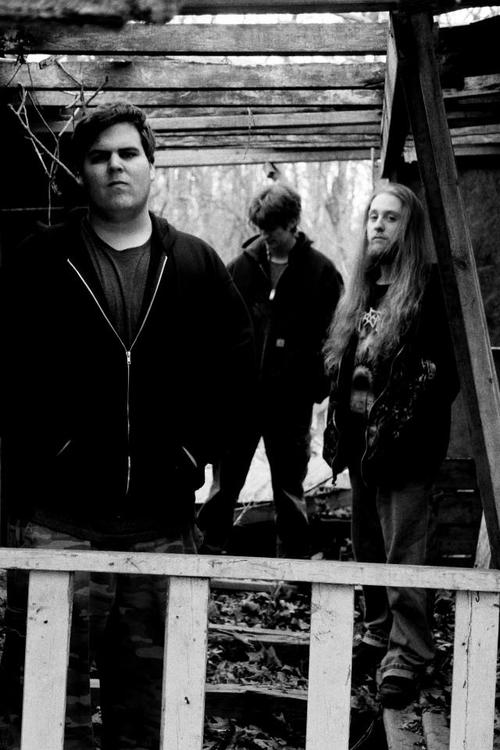
Torrid Husk

Torrid Husk

There are many, many forces operating in metal’s creative circle to keep it moving forward, some of them really large, some of them a little smaller. It’s scary to think where this style of music would be without its big players like Metal Blade, Peaceville, and Nuclear Blast, as well as its soldiers beneath them in size and scope such as Profound Lore, Gilead Media, and Dark Descent. But let’s not forget those the very closest to the ground.

There are other labels operating that perhaps aren’t as well known to you, but they also play a vital part in metal and finding fems hidden well below the surface, and one of those is Baltimore-based Grimoire Records. They have given a spotlight to bands near their operating area who have great music they want to spread further than by their own means. For this site, it’s our first time talking about Grimoire, and we’re really excited not only about what they have to offer now but what they’ll do going forward. Every label starts somewhere, and with good taste, smart business practices, and passion, perhaps can turn into the next, say, Southern Lord somewhere down the line. Grimoire sure has proven itself musically so far.

The label also is pretty hands on with their operations. They engineer, mix, master, design, market, and distribute their releases, which is one hell of a task that’s generally completed by a bunch of different arms. The two in charge of the operation–Noel Mueller and Phil Doccolo–see Grimoire as a hybrid studio/label, and they’re only interested in putting out new music by fresh acts. No reissues here. That ensures you can trust they believe in what they do, because no way anyone puts that much effort into something that doesn’t move them completely. And with an impressive, diverse roster of metal and heavy rock acts such as Cavern, Dopecropper, Highpriest, Snakefeast, and upcoming music planned by Organ Trails, Billows, and Black Lung, among others, there is plenty for you to sample, and all of it offers a taste of something different.

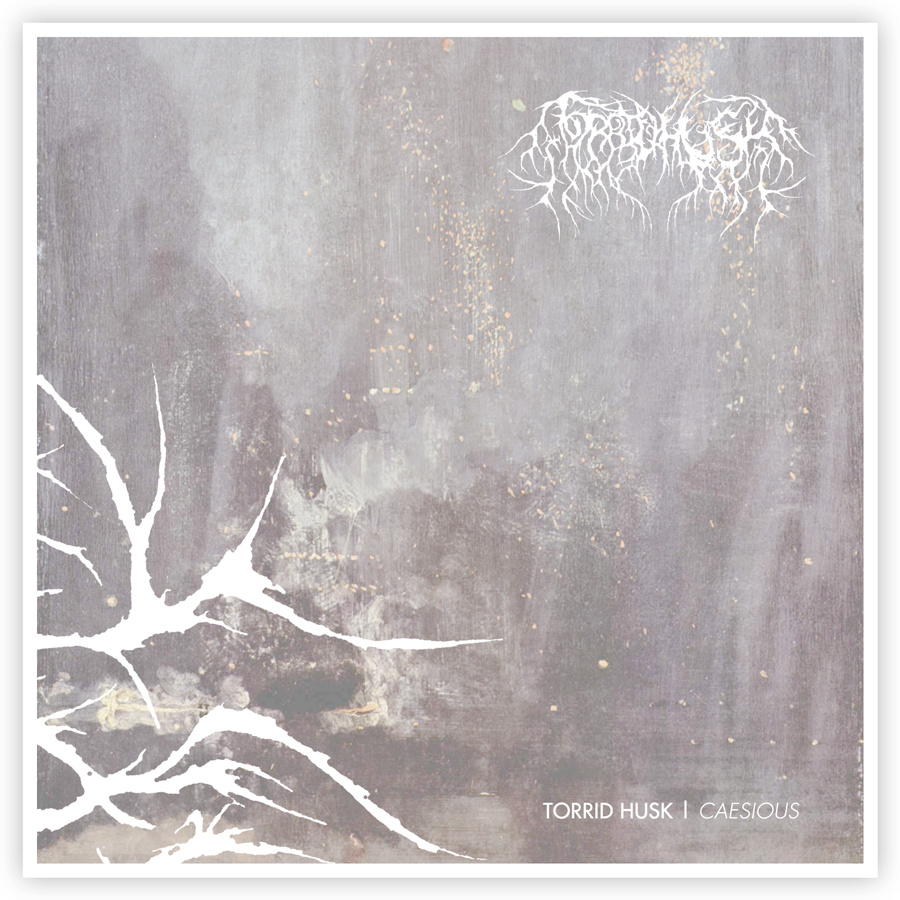
Torrid Husk coverToday, we’ll look at two other bands not listed above, both of which have really great releases that deserve your time, First up is Torrid Husk, a West Virginia-based melodic black metal band that put out their debut full-length “Mingo” last year. To say that album was overlooked is an understatement (and we’re just as guilty), as they also did the so-called “Cascadian” thing as well as any band actually living in that area, and their wild, untamed sound was a force to behold, one we get in better focus on their new EP “Caesious.” This three-track effort finds the band–vocalist/guitarist Tyler Collins, bassist/synth player Jonathan Blanton, drummer Tony Cordone–growing even more into their sound, maintaining an animalistic edge they had on their debut but also improving as songwriters as well as a band as a whole. This is a damn impressive recording you should go out of your way to hear.

The EP kicks off with “Cut With Rain,” a track that opens with a downpour but that actually takes on an icy, frigid feel as it goes on. The song practically explodes moments into its run, with creaky growls and fierce shrieks, a violent sense of adventure, and a massive gallop that kicks up at the tail end of this devastating seven-minute track. “Thunder Like Scorn” begins with intricate melodies that sound like they could be hinting at power metal (a compliment, by the way) before it rips out of its skin and starts its attack, with ferocious vocals, punishing playing, and eventually a calm that sets in before the storm starts anew and begins flooding the place with melodic tension. Closer “Paranoia” has an opening where noise rings out and stings your eardrums before the drumming starts to totally clobber your senses with sprawling playing and insane blasts. The growls begin coarse and mean but often change throughout the track to a piercing shriek, the guitar work unloads catchiness but also dissonant charging, and the finish conjures a sense of fright and panic that could leave you shaking as the song reaches its conclusion. It’s a powerful effort that should put Torrid Husk on everyone’s black metal watchlist. Go get on this before everyone else figures out what’s going on.

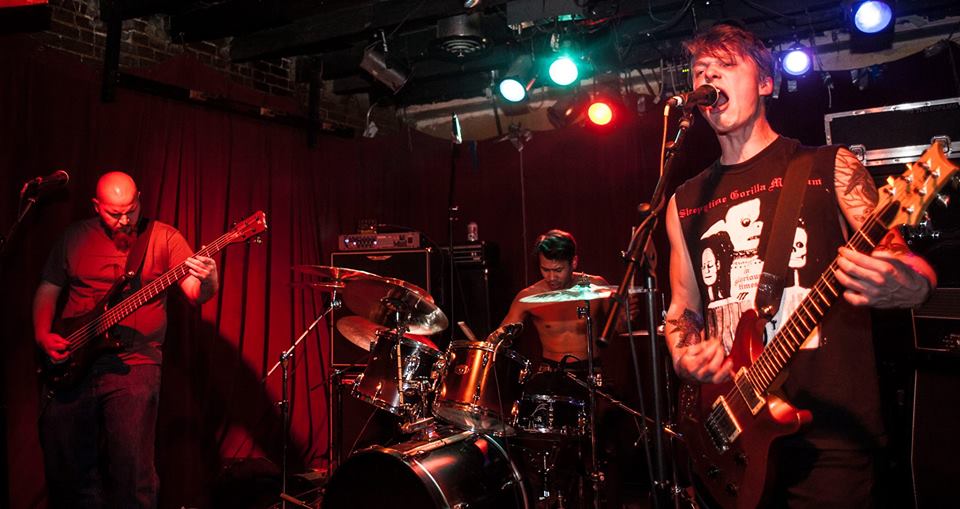
Myopic

Myopic

Shifting to another end of metal’s broad spectrum, Maryland’s sludge and doom warriors Myopic (guitarist/vocalist Sean Simmons, bassist/vocalist Nick Leonard, drummer Michael Brown) are on their second EP “Beyond the Mirror’s Edge” (there are two version of their first EP “Vacuous,” both released last year) and could make friends with those who swear by records from Eyehategod, Neurosis, and Northless. They have their heavy, bruising ends, but they also have more melody than the aforementioned bands and a great deal of atmosphere, so you’re not just being suffocated by what they do. Not that that’s a bad thing, necessarily, but it’s also cool that Myopic have more ideas and ambitions than that, and that shows on this new EP. These four songs, that stretch over about 25 minutes, give hope that there are bands out there that stay true to their sludgy roots but also aren’t afraid to push boundaries. That bodes well not only for those who buy this EP, but for where Myopic go from here.

Myopic coverThe title cut gets things kicked off properly, with imaginative melodies, gruff barked vocals, and punchy attacks that weave in perfectly with the mud and hints of hardcore. It’s a song that makes me think if I went to one of their shows, I would not necessarily be beaten to death because there might be people listening, hanging on to the music, who need more than brutality. That’s refreshing. The massive “Iron Towers” is up next, starting with aggressive guitar work that leans a bit toward black metal terrain, and a nice dose of speed and power that blasts you in the gut. The vocals are mean and menacing, with screamy shouts mixed in, an the mucky mashing could leave you feeling bruised and battered. But later in the song, the band switches things up and gets damn-near jazzy in their playing, adding in some colorful texture before they go back to destroying bodies again. Instrumental “Backstitch” is where the band really lets loose musically, doing some adventurous noodling, getting into post-punk sounds, and eventually hitting on some passages that remind of Pelican and Russian Circles. This one’s a real eye-opener. We’re sent on our way with a totally unexpected cover of Swedish death metal experimentalists’ Carbonized’s “Lord of Damnation,” that stays fairly faithful to the original but does get healthy doses of Myopic’s collective personality. It’s a fun ending to a really strong effort from a band that’s mighty and thoughtful, a mix we don’t get nearly often enough these days.

In addition to Torrid Husk and Myopic, go check out what else Grimoire has to offer on their Bandcamp page. No matter what kind of metal you prefer, or if you’re like me and like a little bit of everything, something will resonate with you. Everything I’ve heard on there so far has me excited about this label’s future, and we definitely plan to bring a whole lot more in the weeks and months to come. I sound like “Mean” Gene Okerlund setting up a house show.

For more on Torrid Husk, go here: https://www.facebook.com/torridhusk

For more on Myopic, go here: https://www.facebook.com/MyopicBand

To buy either album, go here: http://grimoirerecords.bandcamp.com/

For more on the label, go here: http://www.grimoirerecords.com/

Lethe conjure trip-hop, outer space on ‘When Dreams Become Nightmares’; Manes cull oddities

Lethe band
We’ve had a lot of brutality, destruction, and doom in these parts lately, because for the most part, that’s what we do here. So it’s nice when we can step back and try something a little different. We could be in that territory where today’s musical selections might not be embraced as true metal, but certainly there’s going to be crossover appeal. I’m evidence of that.

Lethe is a new project from members of two notable bands, and the music contained here finds both of them branching out beyond their better-known projects. Anna Murphy (who handles hurdy-gurdy and vocals for Swiss folk metal stalwarts Eluveitie) sings for Lethe and also takes on lyrics, bass, piano, and computer-based effects. Joining her is Tor-Helge Skei, of Nordic band Manes (he’s on guitars, keys, and programming), who started their path far grislier than what they offered up over the bulk of their run, when they also took a more experimental bend in their music. With Lethe, he plays synth, guitar, bass, programming, and some of the lyrics, bringing his wealth of experience into this new journey. The duo collaborated with Eivind Fjøseide (guitars, composition) as well as a number of other players for an album that’s an enthralling dark trip down corners most metal fans may not commonly examine.

Lethe coverThere definitely are some metal edges to this record, some powerful expressions, and parts that could make your blood surge, but those are kept to sections that show up now and again. There is a generous trip-hop, electronic, and dark rock presence as well, enough that it pretty much dominates what you’ll hear on the band’s debut full-length “When Dreams Become Nightmares.” People who love Ulver’s most ethereal work, as well as the Gathering, Katatonia, Dead Can Dance, and Portishead also could find themselves lost in this adventure, excited to see what dark flashes this record has to offer. It’s easy to be overcome by this album, and I recommend listening late at night while relaxing, reflecting, or meditating.

Opener “In Motion” will give you a good taste of what’s ahead, with its pulsating keys, Murphy’s strong, slightly raspy vocals, psychotic moans, and a nice pop sensibility that gives the song an extra kick. “Haunted” opens with some doomy riffs before keys sweep in again, blipping and creating a sense of cosmic wonder that stays in place for the song’s duration. “Come Look at the Darkness With Me,” one of the songs they released on a two-track preview offering last year, opens with vocal samples of people talking about depression, suicide, and that path no one wants to tread, and with Murphy singing lines such as, “I want it to end a little more each day,” she conveys the right amount of anguish and pain into the song. It’s a definite highlight. “Ad Librum” is both eerie and a little heavier, with male vocals leading the way (both Asgeir Hatlen of Manes and Niklas Kvarforth of Shining are credited with vocals, but I believe it’s Hatlen here) into a spooky, eerie territory. “Love Pass Filter” is the only song that doesn’t fully resonate with me. It has some doomy part, weird beats, and glitchy effects, but it isn’t taking hold.

“Oblivion” brings things back into focus, with clean guitars giving way to some satisfying crunch, dreamy textures, and Murphy wondering, “Where do I go from here?” “You,” the other track they previewed last year, is another killer, with dreary guitar work, zapping keys, Murphy in full command vocally (though Hatlen lends his David Bowie/Peter Gabriel-style singing as well), and a heavy trance setting in. This is my favorite of all of these tracks. “Transparent” is mostly an instrumental cut, with voices talking of fearing being seen as abnormal, as the music pulsates around those words. “No Reason” is 9:23 of the band setting up dream-inducing repetition, softer melodies, and Murphy repeating lines such as, “Small road and narrow leads to nowhere.” It’s a really effective song that could lead to you staring into space, wondering, during its run. The closing title cut is a moody, slow track that’s a perfect album capper, with the song trickling along like a half-frozen stream and Murphy singing, “I never want to dream again.”

It’s strange saying Lethe have a bright future when their music is so dark, but you know what I mean. Listeners who can handle nothing but brutality might have a hard time adjusting to this, but if you like dreamy, edgy, depressing music that travels metal’s outer boundaries, you might find yourself fixated with this record like I am. I certainly can’t wait to hear more from this band, especially after they have a while to soak in their murky juices and get an even better understanding of what they’re capable of doing.

Manes cover
We mentioned Manes earlier, and if you’re new to the band and intrigued, or if you are a long-time fan that would like a collection of some of their rare, harder-to-find work, their weirdly titled new compilation “Teeth, Toes, and Other Trinkets” could help you get there. The collection contains obscure songs and alternate versions of some of their tracks and dates back to the band’s sophomore full-length “Vilosophe” from 2003 all the way to 2007’s “How the World Came to an End” long player, that last studio effort. So we’re talking a pretty specific period of time, rather than all the way back to their ’90s days (then again, when the band returned in 2002, they were a pretty different band), but it’s a pretty worthwhile investment. It also can warm you up for their planned comeback LP “Be All End All.”

New track “Blanket of Ashes” shows real promise for whatever the band has coming up on their fourth album, and it certainly has the chance to reach beyond metal audiences into, say, fans of the 4AD realm. A live version of “Ende” is a really strong rendition of this “Vilosophe” cut and shows their power live. There are some other fun pieces such as a remix of “The Cure-All” from “How the World Came to an End”; dreamy, Radiohead-like “One More Room”; spacey and transcendent “Transmigration”; and an 8-bit version of “Deeprooted,” the opening cut from “How the World…,” that might make you want to whip out your Nintendo, if you still have one. This is a worthy collection that either should reaffirm your affection for the band or make you a new fan.

For more on Lethe, go here: https://www.facebook.com/LetheProject

For more on Manes, go here: https://www.facebook.com/manes.no

To buy either album, go here: http://www.debemur-morti.com/en/12-eshop

For more on the label, go here: http://www.debemur-morti.com/en/

PICK OF THE WEEK: Lvcifyre roar back with hellacious, terrifying chaos on scorching ‘Svn Eater’

Lvcifyre
If you’re looking for destruction and chaos that sound like they were factory-made in the depths of hell and rubber-stamped by evil forces themselves, then you’ve come to the right place. I’ll sound like a broken record, but I love death metal that sounds like it is literally trying to destroy you, like it has you in its sights for utter decimation. Anything else just doesn’t measure up.

So today we have “Svn Eater,” the second full-length from Lvcifyre, the English-bred blackened death metal band that drums up such vicious, snarling fires, you’ll practically feel like you have a lung infection when you’re done with their nasty music. Infernal may be a descriptor you see thrown around a lot, but that tag perfectly matches this band that just smothers you in their sound, pummels you with power, and has such intensity that the album might make it feel like a legion of demons dragging you underground, judgment be damned. It’s that heavy, evil sounding, and catastrophic, and if you’re down with bands such as Portal, Impetuous Ritual, Aevangelist, and Paroxsihzem, then Lvcifyre should get your temperature rising to dangerous levels.

Lvcifyre coverThe band has been around since 2007, spreading their chaos and madness, offering up an EP “Dying Light ov God” in 2009, then their debut record “The Calling Depths” in 2011, both on Blood Harvest. It’s not a pretty sounding record, you’ll be looking long and hard for any catchy hooks, and much of what you hear on “Svn Eater” grinds at you mercilessly, pounding you with a machine-like intensity and a sound that often doesn’t sound human. It’s too terrifying, too relentless to be anything other than damned souls crying out and suffocating their listeners with the eternal damnation they have found themselves. Think that sounds silly? Listen to the record and see if that isn’t totally accurate.

The band is comprised of vocalist/guitarist T. Kaos (who also played in Hodur and Sons of Serpents), whose vocals are like scorched hisses and shrieks that are deranged and defacing; guitarist Dictator (also of his own project Dictator, as well as Necrosadist and Sepulchral Temple); bassist Cvltus (who played with Devilish Impression and Isolated); and drummer Menthor (also of Enthroned, Necrosadist, Nightbringer, etc.). Collectively, they bring a lot of experience and fury to this project, and together they make a hellish whirlwind of terror that should burn the faces off all those would-be, pretender bands claiming to play death metal.

The record opens with the dark, murky “Night Seas Sorcery,” a nine-minute, excruciating trip through the underworld, with slow-driving black doom (I hear some Deathspell Omega and Funeral Mist as well), a filthy pace, and vocals that force you to feel the pain. Eventually the pace speeds up and the band really starts delivering the punches, with gurgly, fear-inducing vocals and monstrous crushing musically. “Calicem Obscurum” follows with a sweltering heat, damaging drums work that spits rocks, and horrifying vocals that are one of the main highlights of this record. “Liber Lilith” whips open with a swirling wind and crackling that leads into the song breaking apart, and the violence erupting once again with creaky, throaty vocals and overall nastiness. The final moments of the song get particularly unhinged, as vocal and noise shrieks rise up and blacken everything. The title cut ups the ante yet again, with the drums the main attraction of the song, with raw growls and chugging guitars adding dark texture.

“In Fornication Waters” rises out of the title cut, with noise bristling, and growls dumping even more horror in the album, and “Nekuomanteion,” inspired by an area where one can speak to the dead, follows. That cut is full of screams and growling, thunderous mauling, and inhuman noises that is utterly terrifying to behold and might not be the best choice of song to listen to late at night sans lights. You may see shit. “Fyre Made Flesh” changes things up a bit, as it’s thrashy and a little more straightforward than the rest, with strong lead guitar lines and maniacal yells and shrieks. The unsettling closer “The Sinister Calling” runs 7:36 and opens with ghostly transmissions, bizarre chants, and strangeness, before the cut explodes and starts hammering at you. The vocals are just as dark and fire-scorched as ever, as muddy stomping and corrosive noise make up the rest of the assault, that never really lets you catch your breath. This is the first dangerous and truly wicked death platter of 2014. Here’s the bar, everyone else.

Lvcifyre’s brand of death metal is blistering and true, and if more bands would follow the same path these guys do, perhaps the subgenre wouldn’t be so hard to handle much of the time. You’re not going to feel good listening to this record, and you won’t be trading high fives with anyone over sweet riffs. You’ll be bludgeoned, made to bleed, and you’ll pay the price with “Svn Eater,” but you just might come out on the other side stronger and more cognizant of what really comprises a great death metal record.

For more on the band, go here: http://www.lvcifyre.com/

To buy the album, go here: http://www.darkdescentrecords.com/store

For more on the label, go here: http://www.darkdescentrecords.com/

Alcest defy metal’s boundaries, deliver a dramatic shoegaze wonderland on new ‘Shelter’

Alcest
“You’ll grow out if,” is something most of us hear from authority figures or parents or both when we’re growing up because of something we acquire an interest in. Usually they say that as a manner of relief so that they can rest assured one day this particular so-called scourge can be expunged and the person goes on to more acceptable interests.

Sometimes that ends up being true and a person does indeed grow out of something, or it turns out the person really liked the thing he or she discovered, sort of how I have been with heavy metal since I was, oh, 10 years old. But let’s not discount the growth factor, because sometimes people’s tastes and interests do change and morph throughout time, especially when it comes to musicians. The anger, angst, and brutality one wanted to show in the late teens or early 20s isn’t necessarily going to be there a decade or so later, so I’ve found it unfair when people pile on someone and take them to task for changing a sound. It happens, and as long as it’s done organically, and not just to make a fast buck, then what’s the issue?

promoThat’s sure to rise again now with Alcest’s new record “Shelter,” a collection that doesn’t really sound like something that would get reviewed on a site such as this. But the band began heavier in their early days of 2005 EP “Le Secret” and 2007 full-length debut “Souvenirs d’un Autre Monde,” though they never were grisly or violent ever. Alcest visionary Neige–a veteran of bands such as Peste Noire, Amesoeurs, Lantlos, and Old Silver Key just to name a few–used this forum as a way to project himself back into a fantasy dreamland he says he’d visit as a kid. It was an escape, a place of beauty and peace, and as time went on and more and more records showed up from this band, Neige and musical partner Winterhalter (Bahhrect, Phobos, and also formerly of Amesoeurs and Peste Noire) pulled further and further away from heavy metal and into a shoegaze fog that was far more serene and beautiful than the music from which both musicians originated. It was obvious for a long time Alcest’s ultimate goal wasn’t intended to be a metal band, but rather something far for ambitious and all encompassing, and that goal has been achieved to the maximum on “Shelter,” the album that is sure to drive off those who only desire metal. But it’s going to find a tidal wave of more listeners who can appreciate the dreamy sounds, melodies, and pretty sights. It’s a major shakeup but one anyone paying attention had to see coming. This can’t come as a shock.

Now it comes down to what you make of the music and if you can digest this phase of Alcest’s transformation. Neige himself has said that he considers influences far beyond metal when it comes to this band (we’ll be smacked right in the head with that later in the review), but there’s already derision rising over the record from some, and my guess is not because the music isn’t good. It’s because it’s not metal. And it isn’t. But why must that matter. If you can disassociate yourself from preconceived notions or the demand for brutality, you might find a collection of sweeping, dream-inducing, surging songs that find this duo realizing creative highs they never would have realized had they stuck to a rigid template. It’s a record that might even be dropping a little early, as it’ll make great, breezy spring listening when things are coming back to life. Hell, I have tons of metal albums, so I don’t need Alcest to mimic those. I happy with this duo as they are, and this progression feels and sounds right.

The record begins with a lush, greeny “Lungs” that sets the stage for the rest of the record and gives you an answer right off the bat as to what you can expect from the rest. That leads to “Opale,” that’s flush with shoegaze power, energetic vocal melodies (especially during the chorus), and a full journey into otherworldly wonder. It’s a really catchy thing, and you easily can get swept away by what the band’s conjuring here. Then it’s on to “La Nuit Marche Avec Moi” (which translated means “The Night Walk With Me”) that greets you with bent, almost surfy guitar work, a sense of spring fever in the melodies, and guitars that erupt in waves and rush all over you, making them the perfect companion of Neige’s clean, soaring vocals that always have been a strong point of this band. “Voix Sereines” (“Serene Voices”) follows and is far moodier and darker, benefitting from Birgir Jon Birgisson’s production as he pokes at that Sigur Ros sound he helped craft in the studio. Some distortion charges up here and there to give a hint of agitation, but for the most part this song is comprised of bright playing, wordless singing toward the end of the song, and a glorious personality they craft to near perfection.

“L’Éveil des Muses” (“The Awakening of the Muses”) has a murky, ominous open when compared to the rest of the record, though it’s not angry by any means. Dark melodies spiral behind the composition, cloudy guitars set up and begin to dampen the area, and Neige’s vocals carry through and then above all that fog. It’s the least shimmery song on the collection and it’s as close as you’ll get to feeling like death is near. The title cut has a mid-tempo makeup, but as the song develops, it really lures you into the big picture. There is an unforgettable, surging chorus that bursts with life, as well as an emotional outpouring you can’t help but feel deep inside of you, and once the final piano trickles and the song crescendos, you’ll feel like you’ve gone on a magical journey. “Away” lets Neige wear his influences right on his sleeve–and places them in front of the song–as Slowdive’s Neil Halstead handles lead vocals, delivering the only track written in English. The song begins and ends with deep pockets of folk melodies, and in the middle of the song, Halstead hits all the right buttons, delivering lines such as, “I wish my mind could wander without pain,” with depth and humanity. The 10:05 closer “Délivrance” is a massive conclusion, with noise wooshes, thick, gorgeous strings (courtesy of Amiina’s string section through the record) guitars dripping and then building into a frenzy, higher-register vocals from Neige to complement his normal laid-back tones, the band spitting light with their playing, and a final few minutes that lets the emotion crest and then gently fade.

There are bound to be listeners disappointed with this record–and Alcest as a whole–because this is a totally different record for the band. Yes, they’ve been building to this, but there still will be people who are shocked awake and will have knee jerk reactions. But don’t let that happen to you. This is a glorious, beautiful record that cements Alcest as one of this era’s most giving, emotionally honest shoegaze bands, and “Shelter” just might open this group to more people. There’s probably no turning back for Alcest, and that’s OK. Sometimes we grow beyond boundaries, and we should all be so lucky to do it as gracefully as Neige and Winterhalter.

For more on the band, go here: http://www.alcest-music.com/

To buy the album, go here: http://en.prophecy.de/index.php?cl=search&searchparam=alcest

For more on the label, go here: http://en.prophecy.de/#ad-image-1

Indian return with the scariest, most deranged doom of their lives on nasty ‘From All Purity’

Indian band
How many bands in heavy metal truly scare you? Are there really that many? A lot of times, bands trying to get across that terrifying image only end up coming off as wacky. Does anyone seriously shiver at the sight of a bunch of grown dudes in corpse paint? I didn’t think so.

It’s not so much the image of a band that conveys fright anymore, but the music. Again, there aren’t a lot of bands that even get that right and really find a way to shake you up, but one band that always answers the bell when it comes to freezing your blood is Chicago-based doom band Indian. Looking at a picture of these four, yeah, they look surly. They might not be the first people you’d want to approach to ask for directions. I’m just getting that from their picture. But their music is another thing entirely and can cause your guts to liquify in no time at all. They go the extra mile to get across their psychological terror and always make sure they pummel you as hard as possible in the process. In fact, their new record “From All Purity” ups the ante on that to a ridiculous level. It’s positively (negatively?) scathing.

indian cover“From All Purity,” the band’ fifth full-length effort and second for Relapse (2011’s “Guiltless” was their debut for the label), is a monster. Because it sounds like one. It’s like it was grabbed unwillingly from the underground, forced to gasp sooty air, and shoved into existence to maim and scar anything in front of it. You could imagine this thing as a beast slithering around, clawing the earth, bleeding everywhere, and causing screams and panic from anyone who encounters the thing. It would be damned by all, with ground troops forced to come in and attack the thing before it can destroy and sicken all. I know that all sounds a little silly, but put this killer slab on, turn it up as loud as you can, and see if it doesn’t make sense. I might have even sold it short.

Indian actually are one member short from the lineup that recorded “Guiltless,” but you won’t know it from this mammoth assault. On guitars and vocals are Will Lindsey (Anatomy of Habit and ex-Nachtmystium, among others) and Dylan O’Toole, who both keep things deranged, destructive, and demented. With them are bassist Ron DeFries and drummer Bill Bumgardner (also of Lord Mantis), who keep the low end thick and punishing, like you’re being beaten senseless in a pit of tar. Not a comfortable experience in real life, but it makes the band’s brand of doom coat you and maul you just right. I haven’t seen anyone credited with noise on this record, but there’s still plenty of that to make this collection even more suffocating.

You’re indoctrinated quickly in both sound and lyrical content with opener “Rape,” a pounding, maniacal, noise-rich track that is sweltering and mean. “The rape of everyone!” is shouted (at least that’s how it sounds, as I don’t have a lyric sheet), as the band hits on an off-kilter, psychotic fix that is unhinged and animalistic. “The Impetus Bleeds” pounds and drubs, with a dark melody slithering behind everything, and static rumbling while the band scalds you with their might. The sound is bathed in corrosion, the vocals are volcanic, and the final minute of solemnity gives off a hint of sorrow and pain. “Directional” is a slow-hulking crusher, with the vocals set to mental abuse, and the band clubbing you with throbbing doom that keeps kicking and punching at you until it finally subsides all of a sudden.

“Rhetoric or No” is one of the scariest songs in this band’s entire bank, as it is savage from the start, with massive doses of heaviness, mournful guitar lines that add an extra shade of darkness, and sizzling noise thats lead into fiery, damaging shrieks that dissolve into deranged madness. This is a huge undertaking emotionally, and I can only imagine how this song is going to kill live. Then it’s on to “Clarify,” a song that’s drowning in piercing noise, filthy drone, crazed zaps, and shrieked shouts that sound borderline torturous. The ambiance this track achieves is skin crawling, and the howls that are smeared over this, formless and hopeless, simply make the track that much heavier emotionally. Closer “Disambiguation” starts off cosmically slowly, like you’re being poisoned by some intergalactic clouds, and then gravel-filled growls roll in, howling lines like, “All I want is repetition!” A dark funeral doom wave laps up, adding a black texture to the mix, and then drums explode into a double-kick storm, as the song grows thunderous. The final moments are both anguish-filled and blisteringly devastating, as the final moments of relentless hammering suddenly dissolves into space. It’s the perfect exclamation point on the end of the murderous statement.

Indian’s campaign of terror is alive and well, and unsuspecting listeners might find themselves running for cover even from a smaller dose of “From All Purity.” This isn’t a riff-fest for you to hammer out at a party with session ales. It’s a dark, angry, potent record best served with a dark, barely legal-ABV beer, when you’re at your lowest trying to find meaning in your late-night haze. The only answers you’re bound to find are ones that’ll disturb you to no end, so hopefully you’re well enough to handle what Indian are likely to help you find.

For more on the band, go here: http://www.indiandoom.com/

To buy the album, go here: http://www.relapse.com/store.html

For more on the label go here: http://www.relapse.com/

Chicago’s Murmur stretch black metal’s possibilities into outer space on self-titled record

murmur
The words progressive and experimental probably scare off as many listeners as they attract, because it seems more and more, people are less willing to take risks on what music they absorb. I say that because I know when I drop those descriptors in conversation with people, they draw eye rolls for the most part. That always makes me sad.

Well, hopefully you’re up for a challenge today, because we’re here to discuss Murmur’s self-titled new record that’s being released by Season of Mist, and if you have ears that don’t like being pushed beyond your comfort zone, you might balk at this one. It’s an odd one. But if you’re like me and relish having your mind blown, then set aside an hour or so and take on this new nine-track record from this Chicago band that is as unclassifiable as they come. They’re labeled black metal, and there certainly are some of those elements, but there’s as much prog, doom, post-metal, and fusion qualities to their sound that no one word can properly define what they do. In fact, I’ll let my summaries of these songs do the rest of the talking as far as what you can expect from the music, because I could be here all day.

murmur coverThe band has been active since 2007, dropping the massive “Mainlining the Lugubrious” in 2010, that has one of the more interesting, potentially skin crawling album covers of the past few years, and there are zero horror elements to be found. That record also wasn’t an easy one to get to know, and if you’re familiar with it, or their work on the 2011 split with Nachtmystium, then at least you have a starting point for getting comfortable with the new album. But the new self-titled record goes so far beyond the black metal territory, that if that’s a necessary trait you need from them, you’re going to be in for a little bit of a shock. It’s not correct to say they gave their sound more of a streamlined approach, because it’s still a puzzle that’ll baffle most listeners, but they definitely are a more inclusive bunch now and apparently have a knack for spreading into more of metal’s territories and not limiting themselves at all. It’s a damn ambitious statement.

Perhaps a major reason for the band’s sound transforming the way it has is that Murmur’s lineup is almost entirely different than the one that created “Mainlining.” Matthias Vogels (guitars, vocals, noise, synth) has been around since the debut, with Shane Prendiville (noise, guitars, vocals, synth) and drummer Charlie Werber (of the mighty Guzzlemug) joining up for the split with Nachtmystium. In 2011, they were joined by bassist Alex Perkolup, whose has one hell of a presence on the new record, and that lineup appears to be the strongest to date for the band. While they do a lot of chem lab experimentation and playing, their compositions sound organic and explosive, and never like they’re piling on layers just to do so. They’re one of the more interesting metal bands to come around in some time, and they could just keep shapeshifting as they move forward and get more congealed as a band. It’s a scary thought.

Opener “Water From Water” already will clue you into some things changing, as there’s an eerie calm that begins the record that eventually gets swallowed whole by chaos. Murky, muddy black metal, growls and shrieks that sound tortured, and a strange chorus that has the title sung repeated almost robotically dot the track. Some calm settles in, piano keys drop, but then the chaos rises again and heads right into the burly, tough “Bull of Crete.” This is an impressive nine-minute masher, with off-kilter melodies, howled vocals, and a pathway into brainy melodies that sound a little bit like early Mastodon. After the band meanders through the swamp, they erupt with a thrashy, but bizarre section that sounds like Primus if they specialized in death metal, keeping them foaming at the mouth all the way to the song’s conclusion. The 11:34-long “Al-Malik” follows, and it continues to up the ante musically. There are strange, cosmic keys smeared across this track, plenty of tempo shifts that keep your mind racing and wondering, and long section of progressive playing that boil and splatter. The song seems to be achieving peace at times, but the final few minutes blow that idea apart with mad chugging and metallic strength. Most of the song is music, with vocals at a minimum, and it’s a pretty exciting ride.

Following instrumental “Recuerdos,” a four-minute stretch of Midwestern-flavored acoustic playing, classic rock, and jazz, it leads to a three-song stretch that’s all weaved together. It starts with “Zeta II Reticuli” (named for a binary star system) that trickles open but eventually explodes with power. The guitar work builds and really starts trucking, making for some of the heaviest music on the whole record. The band heads into a pit of sludge, with furious growling, a high-spirited prog-style jam, and a bed of spacey keys that leads right into “Zeta II Reticuli Part 2” that starts with Rush-style instrumental interplay. The song gets mean in no time, with menacing, intimidating growling, metallic punishment, and tricky playing that’s enthralling and panic-inducing, leading toward the final segment “King in Yellow.” This is where the psychosis sets in, as manic shrieks and animalistic growls spill forth, weirdness spreads across everything, and a long stretch of banging and smashing drag you to the finish line. You might need a breath once these three cuts are over. “When Blood Leaves” changes the pace of the album again, as they veer back into the atmosphere with numbing prog rock that might remind you of modern-day Cynic, passages of clean singing, and a strange sense of dream-inducing trauma. Finally, the band finishes off with an eye-opening cover of King Crimson’s “Larks’ Tongues in Aspic Part 2,” which also is the final track on the the KC record of the same name, and they treat it with reverence and some of their own touch. The song is crunchy and chugging, with keyboards blazing, the drums kicking in and exploding, and the guys building to the big finish perfectly, leaving you out of air in your lungs.

This is a record that demands your participation, and it’s a thick, meaty, dense affair. Murmur don’t make it easy for you, but if you hunger for bands that take something like black metal and stretch it as far as they possibly can, sort of like Oranssi Pazuzu, then this might be your band. They’ve grown in leaps and bounds the past few years, and if they keep expanding at this pace, who knows where they’ll be next record. Don’t let the idea of progression and experimentation scare you. Give this band a shot and you might find yourself in a metallic world you never knew existed before.

For more on the band, go here: https://www.facebook.com/murmurbm

To buy the album, go here: http://e-shop.season-of-mist.com/

For more on the label, go here: http://www.season-of-mist.com/

Canadian-Swedish doom killers Culted expand blackness on massive ‘Oblique to All Paths’

Culted's Canadian members

Culted’s Canadian members

Smoke rising from chimneys are fires always makes me think of doom. I’m not sure why. Maybe it’s the slow burning, or perhaps it’s the billowing smoke that can serve to suffocate and destroy, but it’s an image that always makes me think of that form of metal.

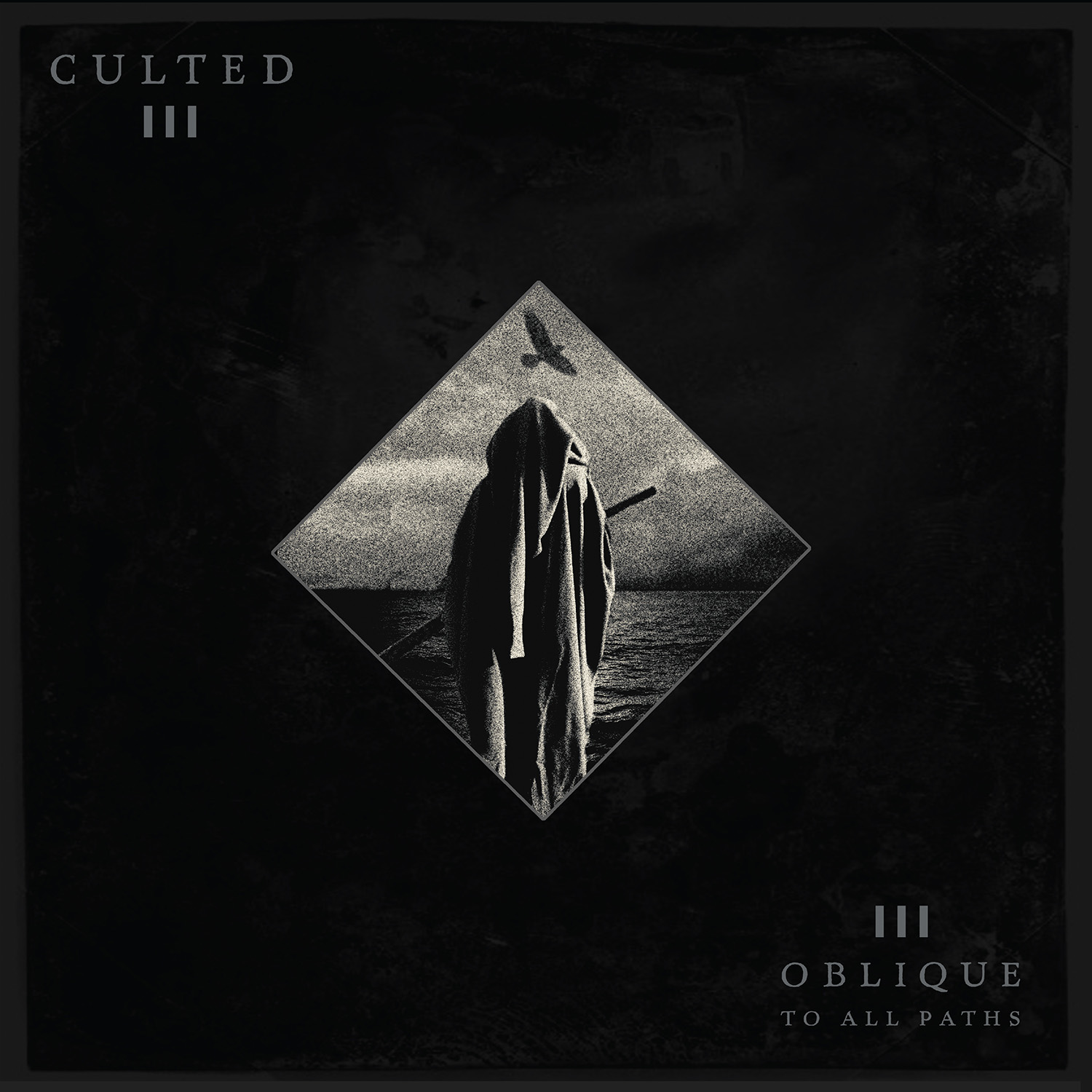
And that makes some sense today as we’re here to discuss “Oblique to All Paths,” the new opus from transcontinental blackened doom band Culted, their second album overall, and their longest document by far. We haven’t gotten a new album from the band in nearly five years, as their debut long player “Below the Thunders of the Upper Deep” landed in 2009 (they did follow up with an EP “Of Death and Ritual” a year later), and I was wondering if the project was still alive and kicking. But lo and behold, their new album landed in my inbox late last year, and any worries I had disappeared pretty quickly. Same with any concern if the project could match their debut.

Culted's Swedish vocalist Daniel Jansson

Culted’s Swedish vocalist Daniel Jansson

Culted’s setup is a pretty bizarre one, not one you see very often, if at all, in any style of music. The band’s members never have all been in the same room together before and, obviously, never have performed music as a full band. They have created every one of their releases through sharing files electronically, with the band’s Canadian-based musicians Matthew Friesen (guitars, bass, noise), Michael Klassen (also guitars, bass, noise), and Kevin Stevenson (drums), who all have been a part of the band Of Human Bondage, creating the group’s hellacious compositions and sending them to Swedish vocalist Daniel Jansson (Deadwood, Keplers Odd) for his mammoth roars and fits of ambient terror. It’s a formula that shouldn’t work, but they’ve proved it does for them, and “Oblique to All Paths” is all the proof you need.

OK, so doom might not be the proper term for Culted’s music, not that there isn’t tons of that element. They’ve branched out their sound a little on this record, which we’ll detail momentarily, and have pumped way more noise, static, and horror into their formula just to keep you feeling as uncomfortable as possible. Their songs are mostly pretty long, pulling you into a slow drubbing, and if you come out the other end unbruised, consider yourself one of the lucky ones.

GD30OB2-N.cdrThe record opens with the massive, nearly 20-minute “Brooding Hex,” one of the most impressive songs in the band’s catalog and a perfect example of how Culted’s sound has matured and stretched over the years. The track actually opens with some trickling deathrock and murky stretches that sound a lot different from the terrain they usually trudge, but it obviously gets monstrously heavy and vicious with chugging doom that’s matched with some imaginative psychedelic guitar work that’ll trip you out. This track will screw with your mind, as drone cascades down, heaviness keeps hammering you, and the song eventually blasts into outer space. “Illuminati” is a nasty cut, with galloping riffs that feel like High on Fire at times, layered vocals that create a trance state, and a pit of chaos that pummels until it eventually subsides. “Intoxicant Immuration” rises out of noise and rams right into cement-thick riffs, swirling voices, menacing growling, and funeral-heavy leads. As the song goes on, it gets heavier and heavier, with the final minutes rumbling, lurching, and mauling.

“March of the Wolves” is shorter and to the point, with dissonant guitars, doomy riffs, blistering drumming, and fury that bleeds into the interlude “Distortion of the Nature of Mankind,” a cut that brings down the fire momentarily before it blasts into the final two tracks on the record. “Transmittal” runs 11:52 and opens with industrial-style pounding, black metal-friendly melodies, and more psyche-smeared guitar work. Most of the song is lumbering and slowly paced, potentially lulling you into thinking things are going to stay at this clip before the final few minutes erupt into a blaze and get moltenly heavy. The ending crushes and terrifies, giving you a sobering reminder of just how nasty Culted can be. Closer “Jeremiad” is the track with the least amount of surprises, as it carves its doomy path, stays in it, and never really veers off the path. It’s sludgy, punchy, mean, and maybe just a bit formulaic. It’s not a bad cut by any means, but it feels a little static coming after six cuts with so much innovation. And trust me, it’ll bloody you anyway.

Culted have proved that long-distance relationships definitely can work, as long as all of the elements are there to keep things fresh and exciting. This may never be a band that gives us a new record every two years, but as long as they deliver mammoth riffs, horrific noise, and first-class blackened doom, who’s to complain? “Oblique to All Paths” is a massive step ahead from their debut album and the first devastating dose of doom in 2014. This is a mighty, scary band, and hopefully their campaign of disaster lasts long into the future.

For more on the band, go here: https://www.facebook.com/Culted

To buy the album, go here: http://www.relapse.com/store.html

For more on the label, go here: http://www.relapse.com/

PICK OF THE WEEK: Waldgeflüster return to soundtrack the deep freeze with ‘Meine Fesseln’

waldgefluster

If you’re in a territory like I’m in, it’s a perfect time to find a nearby forest or wooded area, grab a sturdy walking stick, and take in the beauty of winter. Snow crunching beneath your boots, the cold air filling your lungs, and the naked trees providing for a breathtaking look at the landscape you wouldn’t ordinarily get in the summer. Oh, and wear gloves. Can’t stress that enough.

What am I on about? Well, it’s always nice to have the perfect musical companion for those times, and no I don’t mean blaring Immortal while you’re on your trek, unless you plan to battle weird beasts. Instead, go for something that in itself is aligned with nature and will soundtrack your trip beautifully, like the latest album from Waldgeflüster called “Meine Fesseln.” This project’s music always works well with the elements, but none have grasped and embraced winter quite as effectively before as this new third record. Maybe some of that is because I listened to this a ton before Christmas, when we had more than a few whiteouts, but I have a feeling it’ll give me the same chills in, say, August when I’m at the beach,

waldgefluster coverIf you’re new to Waldgeflüster, let’s pepper you with a little background. The project is the brainchild of Winterherz, who went out on his own in 2005 to create this music so he could send his own version of black metal into the world. His sound definitely is savage and uncompromising, but there is so much more to the music than just brutality. There’s also rustic, woodsy beauty. Waldgeflüster (which translated means “forest whispers”) released its debut album “Herbsklagen” in 2009 and followed that up with “Femundsmarka – Eine Reise in drei Kapiteln” in 2011, where he continued to build upon his musical and philosophical ambition.

But those records pale in comparison to what he accomplishes on “Meine Fesseln,” his first for mighty Bindrune Recordings and one that finds Winterherz collaborating alongside a number of notable musicians including Austin Lunn (Panopticon, Seidr, Kolga, and more) on guitar and mandolin; drummer Tobias Schuler (Fuck You and Die); Johann Becker (Austaras, Vukari) on violin, Janne Väätäinen (Haive) on kantele; Lukas Danninger (The Course Is Black) on piano; Arvagr (Dagnir en Gwann) on added vocals; and Aimo Fuchs on electronics. That may sound like a hefty array of musicians for one black metal record, but they all blend together perfectly, with Winterherz’s black visions the directional light in the dark. Anyone whose record collection contains heavy doses of Agalloch, Panopticon, Winterfylleth, and anything on the Bindrune roster is bound to be right at home with this record.

The album kicks off with “Der Nebel,” which opens with acoustic strains and folkish wonder before it ignites into a fury that includes strong, infectious melodies, vicious growling, and a sense that you want to rush outdoors and see what you’ve been missing indoors. First time I heard this song, I was gazing out my window at dusk’s red skies with a beer, and everything seemed perfect. And it was. “Karhunkierros” follows, with a similar mix as the opener, blending black metal majesty with quieter, forestal wonders. You get hammered by the sounds, that’s for sure, but you always get room to breathe as well. There’s also some pretty nice vocal tradeoffs, going from guttural to clean and back again. Nice bit of texture there. “Wie eine Weide im Wind” is my favorite cut on the record and one that really captured my imagination. Acoustic rumbling meets trickling waters, gurgly vocals eventually give way to speaking passages and cleaner singing, the melodies scream winter’s dominance, and the final minutes are so dramatic, going from clean to impossibly heavy, that you’re forced to the edge of your seat.

“Trauerweide Teil I” is the first of two dreamy, cold interludes, with rain draining downward, cleaner tones leading the way, and savagery eventually slipping back in with crunch and throaty growls. Then we’re on to “Wenn die Morgensonn…” a 9:51-long journey that is trance-inducing and a little spacey, with some similar melodies making their way back into the story, moody keys giving a psychedelic edge to the proceedings, guitar work glowing and lighting up the night sky, and the vocals as passionate as anywhere else on the record. Pianos drop in, start-stop thrashing helps the back end of the song explode, and forceful shouts push all the way to the finish, standing as the last thing you hear. “Mit welchen Fesseln,” that runs 11:53, is another interesting piece that’s full of experimentation, from New Wave-style guitar work in spots, some clean vocals, other guitars that positively soar, and massive thrashing that makes up the final few minutes of the song, leaving you in a cloud of forest campfire smoke. Finisher “Trauerweide Teil II” is the second part of the aforementioned interlude, letting the album slip out quietly, unassumingly, with more acoustic guitar work, softer vocals, piano, and a breeze of strings. It’s the ideal way to end this record, and maybe even cap off your walk in the woods.

Unless you speak German (I do not), you might have to do some translation in order to understand what’s being said, but there’s no emotional barrier when it comes to the music. It’s righteously heavy when it needs to be, positively beautiful in spots, and perfect for this time of year in North America. Waldgeflüster is a project that helps you appreciate these days and see them as glorious and freeing, and “Meine Fesseln” is a magnificent way to spend these days. I can’t stop listening to the damn thing, and if you’re in the same mindframe as I am, you’ll be in the same frost-encrusted boat.

For more on the band, go here: http://www.waldgefluester.com/

To buy the album, go here: http://eihwazrecordings.com/distro/

For more on the label, go here: http://bindrunerecordings.com/